There are more than 22,000 tags used here, even if you eliminate the duplicates due to my typo problem, and still “intersectionality” is not among them. I have seen the term, mostly recently, but only in contexts that led me to dismiss it as leftist, scholarly jargon, the kind of word radicals throw around to confuse their opposition and make people think they are intellectual when they are really arguing nonsense. I wasn’t wrong: it is one of those words. Still, it is a useful one, because it helps explain several phenomena of great importance, which can be collectively described as the increasing totalitarian tilt of the political left, especially since the election of Donald Trump. I should have realized the importance of the word long ago and investigated: I apologize. Bias makes me stupid too.
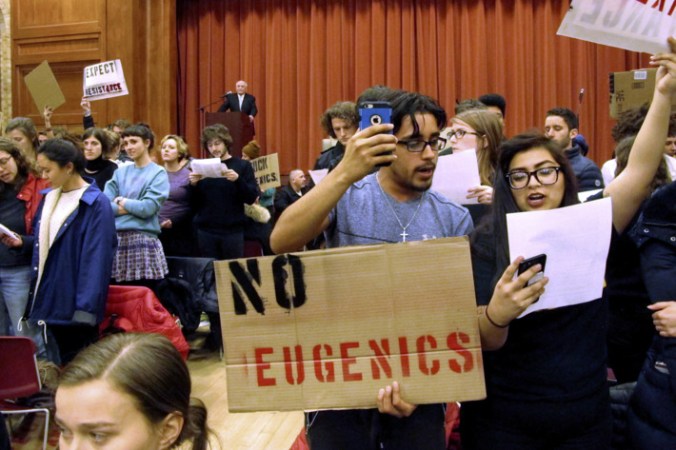
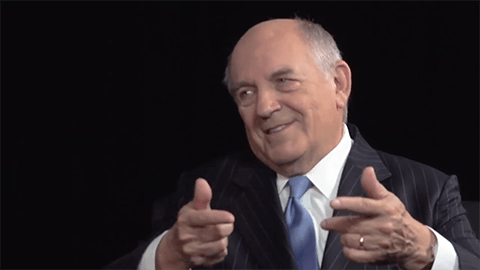
Over at New York magazine, Andrew Sullivan had one of his lucid moments—when he can bypass his anger at anti-gay attitudes (the bias that makes HIM stupid), Sullivan can be brilliant—, and delivered a perceptive essay about “intersectionality,” beginning with the recent disgrace on the Middlebury College campus, where a student protest designed to prevent sociologist Charles Murray from speaking turned into a violent riot, injuring a professor. Do read all of Sullivan’s article, but here are some key passages:
[W]hat grabbed me was the deeply disturbing 40-minute video of the event, posted on YouTube. It brings the incident to life in a way words cannot. At around the 19-minute mark, the students explained why they shut down the talk, and it helped clarify for me what exactly the meaning of “intersectionality” is.
“Intersectionality” is the latest academic craze sweeping the American academy. On the surface, it’s a recent neo-Marxist theory that argues that social oppression does not simply apply to single categories of identity — such as race, gender, sexual orientation, class, etc. — but to all of them in an interlocking system of hierarchy and power. At least, that’s my best attempt to define it briefly. But watching that video helps show how an otherwise challenging social theory can often operate in practice.
It is operating, in Orwell’s words, as a “smelly little orthodoxy,” and it manifests itself, it seems to me, almost as a religion. It posits a classic orthodoxy through which all of human experience is explained — and through which all speech must be filtered. Its version of original sin is the power of some identity groups over others. To overcome this sin, you need first to confess, i.e., “check your privilege,” and subsequently live your life and order your thoughts in a way that keeps this sin at bay. The sin goes so deep into your psyche, especially if you are white or male or straight, that a profound conversion is required….
Like the Puritanism once familiar in New England, intersectionality controls language and the very terms of discourse. It enforces manners. It has an idea of virtue — and is obsessed with upholding it. The saints are the most oppressed who nonetheless resist. The sinners are categorized in various ascending categories of demographic damnation, like something out of Dante. The only thing this religion lacks, of course, is salvation. Life is simply an interlocking drama of oppression and power and resistance, ending only in death. It’s Marx without the final total liberation.
It operates as a religion in one other critical dimension: If you happen to see the world in a different way, if you’re a liberal or libertarian or even, gasp, a conservative, if you believe that a university is a place where any idea, however loathsome, can be debated and refuted, you are not just wrong, you are immoral. If you think that arguments and ideas can have a life independent of “white supremacy,” you are complicit in evil. And you are not just complicit, your heresy is a direct threat to others, and therefore needs to be extinguished. You can’t reason with heresy. You have to ban it. It will contaminate others’ souls, and wound them irreparably….Murray’s old work on IQ demonstrates no meaningful difference between men and women, and Murray has long supported marriage equality. He passionately opposes eugenics. He’s a libertarian. But none of that matters. Intersectionality, remember? If you’re deemed a sinner on one count, you are a sinner on them all. If you think that race may be both a social construction and related to genetics, your claim to science is just another form of oppression. It is indeed hate speech….This matters, it seems to me, because reason and empirical debate are essential to the functioning of a liberal democracy. We need a common discourse to deliberate. We need facts independent of anyone’s ideology or political side, if we are to survive as a free and democratic society. Trump has surely shown us this. And if a university cannot allow these facts and arguments to be freely engaged, then nowhere is safe. Universities are the sanctuary cities of reason. If reason must be subordinate to ideology even there, our experiment in self-government is over.
This outburst was apparently too much for Andrew, his old libertarian/conservative persona emerging full-force after a long hiatus, so his piece suddenly shifts into a standard issue anti-Trump rant. It’s fascinating to see, because Andrew apparently hates the President so much that he can’t perceive that the same antipathy created by “intersectionality” that he rebuts regarding Murray (after all, Sullivan is friends with Murray), applies to the President (whom he detests) as well. The proof is how Trump’s misogyny and opposition to illegal immigration has led the Left to presume that he is racist, classist and homophobic as well. He’s not. But, to quote Sullivan against himself, “But none of that matters. Intersectionality, remember? If you’re deemed a sinner on one count, you are a sinner on them all.”
Thus Sullivan pivots to blaming all of the social and political tilt he correctly deems as dangerous on Donald Trump, and in doing so, he becomes the partisan hack he so often appears to be: Continue reading →
 Ethics Alarms