Brief Note: The Hall of Fame Passes Its Integrity Test

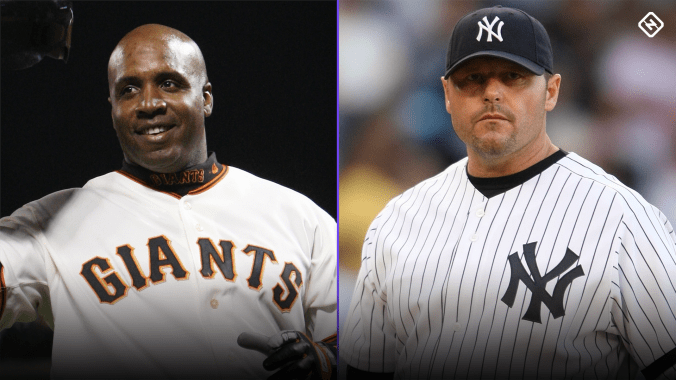
Barry Bonds, baseball’s all-time steroid cheat and a blot on the record book, was once again decisively rejected for Hall of Fame membership, this time by a special Hall of Fame committee, the Contemporary Baseball Era Committee, assembled for the purpose of reconsidering eminent but previously rejected candidates who are otherwise noteworthy for one reason or another. There were 16 members on the panel with a 75% (12 of 16) vote threshold needed for induction at Cooperstown. Bonds didn’t come close with only five, and neither did the other two tainted greats, Roger Clemens, whose own trainer testified under oath that he used banned PEDs (performance-enhancing drugs), and Gary Sheffield, who takes the bizarre stance that he did use PEDs once but didn’t understand what he was doing and besides, they didn’t help him anyway.

When I finally saw the composition of the committee I was pretty confident that Barry and Roger (above) as well as Gary were toast, because seven current Hall members were among the 16 participants and I doubted that any of them want to sully their own honor by admitting cheats. There were also non-cheating almost Hall-worthy players on the ballot, and only Jeff Kent, probably the least famous of the batch, received sufficient votes to be enshrined. Kent hit more homers than any other second baseman baseball history and the main obstacle to his election appears to have been an obnoxious personality; I have no problem with his election. Now the Three Cheats won’t have a shot at polluting Cooperstown at least until 2031, and under current rules, if they don’t get at least 5 votes then, they will be permanently ineligible.

Continue reading

Hey Look! Harvard Did the Right Thing For Once….

Of course, they didn’t have a lot of choice in the matter.

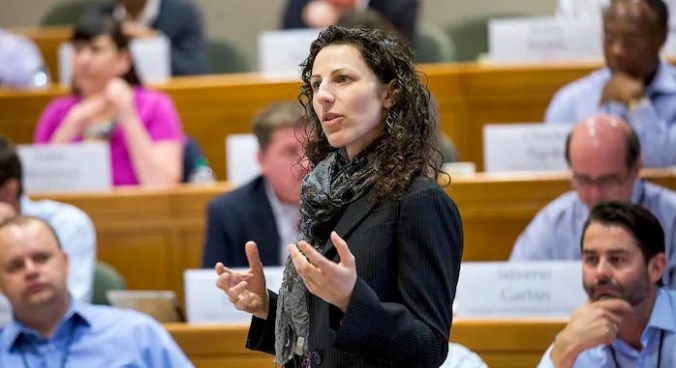
Francesca Gino is one of Harvard Business School’s best known professors. The behavioral scientist authored “Rebel Talent,” a 2018 book with the subtitle “Why It Pays to Break the Rules at Work and in Life.” Well, the expert on lying, cheating and dishonesty lied and cheated. She took administrative leave from the “B-School” after evidence surfaced that she had falsified her data…on cheating. Ironic, no? And stupid.

Gino, whose work has been widely cited, has been a professor of business administration at Harvard since 2014. She was first accused of fabricating data by the blog Data Colada in July of 2021 when the bloggers approached Harvard Business School with their allegations. The Dean negotiated a secret agreement with Data Colada to delay posting about their allegations until the Business School thoroughly investigated their claims.

An 18-month-long investigation by a three-person committee of former and current professors eventually concluded that the professor had indeed engaged in research misconduct. Gino insists that she is innocent and is suing for $25 million: she might as well, since an ethics professor and author of books about cheating caught cheating doesn’t exactly have a promising future. Of course, the ethical thing for an ethics expert to do in such a dilemma is to confess and apologize. But if she were an ethical ethics expert, she wouldn’t be in this mess.

In an article called “A Weird Research-Misconduct Scandal About Dishonesty Just Got Weirder,” the Chronicle of Higher Education reported that Harvard’s inquiry had found that one of Gino’s studies contained even more fraudulent data than had been alleged. Then Data Colada weighed in with a four-part series examining data in four separate studies co-authored by Gino. The blog authors wrote, “We believe that many more Gino-authored papers contain fake data. Perhaps dozens.”

This week, Harvard University stripped Professor Gino of her tenure at Harvard Business School. Her dismissal seems imminent.

Harvard might have tried to finesse the Gino affair were it not already shaken by the recent Claudine Gay scandal, when the university’s first black president had to resign because of scholarship plagiarism shortly after being appointed. In addition, the school is already on shaky ground in the terrain of public opinion, claiming financial distress as a defense against the Trump Administration’s assault despite Harvard having an endowment some nations would love to have as their their nest egg.

Professor Gino definitely picked the wrong time to embarrass Old Ivy.

Fencing Ethics: What’s Going On Here?

I’m afraid I don’t know enough about fencing to comment as intelligently as I need to regarding this episode, but I’m going to charge on anyway…

USA fencer Stephanie Turner was scheduled to face Redmond Sullivan at the Cherry Blossom Fencing Tournament held at the University of Maryland. As the match was about to begin, however, Turner “took a knee” and removed her mask, signifying that she would not compete against Redmond the Division 1A Women’s Foil event. Redmond, you see, is a formerly male fencer who has recently “identified” as female. Turner had decided that as a matter of principle she would not compete in women’s fencing against a “man.” “I saw that I was going to be in a pool with Redmond, and from there I said, ‘OK, let’s do it. I’m going to take the knee’,” she explained

After her protest, Turner was slapped with a “black card” signifying that she was suspended and out of the tournament.

“I knew what I had to do because USA Fencing had not been listening to women’s objections,” Turner said. “I took a knee immediately at that point. Redmond was under the impression that I was going to start fencing. So when I took the knee, I looked at the ref and I said: ‘I’m sorry, I cannot do this. I am a woman, and this is a man, and this is a women’s tournament. And I will not fence this individual.'”

U.S. Fencing responded with a wokey, weaselly statement undoubtedly drafted by the DEI Dept.:

Continue reading

Baseball Ethics: Now THIS Is Cheating…

Yesterday I discussed the silly controversy over “torpedo bats,” which are completely legal despite some commentators who should know better calling the use of them by some players “cheating.” Lo and Behold, no sooner had I posted that essay than news of a player being caught really cheating shook the baseball world.

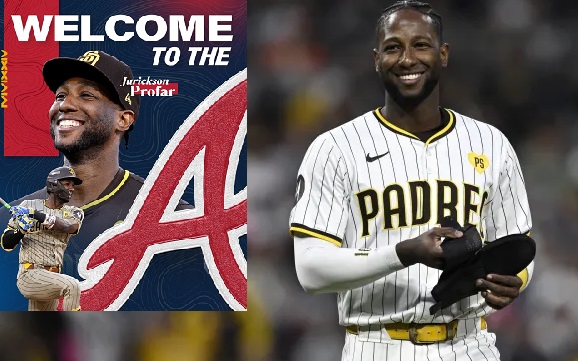
Major League Baseball announced that Braves outfielder Jurickson Profar has been suspended for 80 games after testing positive for the performance-enhancing drug Chorionic Gonadotrophin (hCG). Profar will be able to return during the season but won’t be eligible for the playoffs this year: that’s the restriction and part of the pentalty for all players in the year they serve a PED suspension.

The Braves released a statement that began, “We were surprised and extremely disappointed to learn that Jurickson Profar tested positive for a performance-enhancing substance in violation of Major League Baseball’s Joint Prevention and Treatment Program.”

Why were they surprised?

I wasn’t.

Continue reading

Baseball Ethics: The Magic Bats!

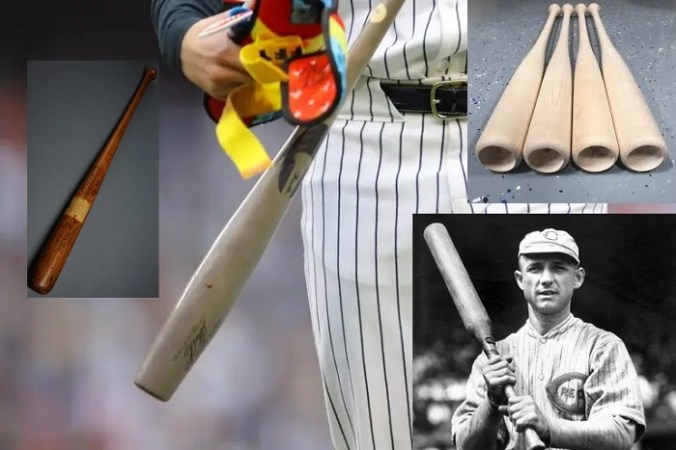
The New York Yankees opened their season by crushing the Milwaukee Brewers with a record number of home runs. Some of the homers were hit by players using a new bat design imagined by a one-time MIT physicist. The bat is shaped at teh end like a bowling pin, or a torpedo. The Yankees hit a franchise-record nine home runs in the first game—-notably the player who hit the most was Aaron Judge with three, and he used an old-fashioned bat. The series sweep served “as a live infomercial.”

The Yankees aren’t the only team with players using the new bats. The Cubs, Minnesota Twins, Toronto Blue Jays and Tampa Bay Rays have some players who are trying them out. “It’s legal,” says one enthusiastic player. “It’s under MLB rules and everything. Just basically moving the sweet spot down. Those balls that you’re getting jammed on are finding some barrels.”

Continue reading

Again, Hall of Fame Ethics, and Again, Ethically Inert Sportswriters Want To Elect Steroid Cheats

I know I’ve written a ridiculous number of posts about the logical, institutional and ethical absurdity of electing baseballs’s steroid cheats to the Hall of Fame in Cooperstown, but I have sworn to slap this down every time it rears its metaphorical ugly head until my dying day.

The 2025 Baseball Writers’ Association of America voted Ichiro Suzuki (one vote shy of being a unanimous selection), CC Sabathia and Billy Wagner into the Hall. Three quick ethics notes on this. First, whoever it was who left Suzuki off his ballot should be kicked out of the association using the equivilent of the Ethics Alarms “Stupidity Rule.” He is not only a qualified Hall of Famer, but belongs among the upper echelon of Hall of Famers with the likes of Ty Cobb, Babe Ruth, Ted Williams and Rogers Hornsby.

Second, I have no problem with CC Sabathia making the Hall, but that he was elected just a couple of months after Red Sox star Luis Tiant was rejected by a veteran’s committee, probably ending his Hall of Fame chances for good, shows just how arbitrarily the standards for Hall admission are applied. Tiant was objectively better than Sabathia, a bigger star, and while CC was a flashy presence on the mound, Tiant was more so. Luis (or “Loooooie!” as he was known in Fenway Park) died last year, and had said that if they weren’t going to let him into the Hall while he was alive, they shouldn’t bother after he was dead. Maybe the voters were just honoring his wishes…

Continue reading

“Lying, Losing and Cheating Is No Way To Go Through Democracy, Democrats!”

Do Democrats really cheat more often than Republicans? It sure seems like it over the last year at least, when the party faked out the nation as long as possible pretending that Joe Biden was really President, then made Kamala Harris their substitute nominee without her winning a single primary vote. In addition, its plan for winning the Presidential election was t put Donald Trump in jail, or at least set him up to be labeled a “convicted felon.”

From Minnesota comes a particularly ugly example of ethics rot on the struggling left. There are 134 Minnesota House districts. When the votes were counted after the last election, Republicans had gained enough seats to deadlock the state’s House, 67-67. Ah, but one of the Democrats’ candidates had cheated! In House District 40B, Democrat Curtis Johnson falsely claimed to reside in the district and he didn’t, making him ineligible to run or serve under the Minnesota Constitution. The GOP filed an election challenge and it was successful, so a district court issued an injunction barring Johnson from taking that seat. A special election will be held to fill the seat at some time in the future—don’t ask me why Johnson’s cheated opponent didn’t automatically get declared the winner: I don’t understand Minnesota (Al Franken, Jesse Ventura, Tim Walz…) at all, and less with each passing year.

Continue reading

The Academic Cheating Problem: It’s Not Just About Education

The Chronicle of Higher Education has a troubling, if not unexpected report, “Cheating Has Become Normal: Faculty members are overwhelmed, and the solutions aren’t clear.” It begins with an anecdote that would be funny if it weren’t so apocalyptic. A professor caught a student cheating, and warned him that the next time this happened, he would be failed in the course. The student wrote an abject apology, full of contrition and assurances. Then his next assignment was found to be composed by an AI bot. Then, just for giggles, the prof asked the same bot to compose a letter of apology for a student who had been caught cheating. The bot produced exactly the apology the student had submitted, word for word.

From the article:

Continue reading

On Pete Rose

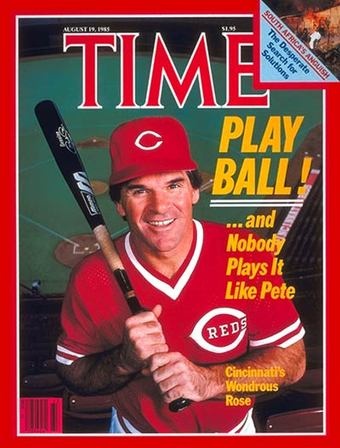
Pete Rose died yesterday: he was 83. A documentary on Rose came out this year, but there was nothing new in it except some more interviews with Pete in which he proved, again, that he just didn’t have functioning ethics alarms. Honesty, integrity, responsibility, trustworthiness, fairness, and a lot more on the list of ethical values, baseball’s all time hit leader didn’t understand at all. If you had any doubts that Rose was a sociopath, his own words in that documentary should have banished them.

Rose was the subject of my second ethics essay online, at the old, finally gone forever, Ethics Scoreboard. Here, I wrote about Pete for the first time shortly after launching Ethics Alarms in 2010. The topic: the discovery that Rose had used a corked bat (that’s illegal in baseball) as a player. I wrote in part, beginning by dismissing the theory that corked bats don’t actually help batters so using one shouldn’t count as cheating…

Continue reading

A “The Fish Rots From The Head Down Cultural Note”: Now You Can’t Even Trust Hot Dog Eating Contests

The President of the United States cheated in several ways last night, and we have been watching cheating become an accepted norm in the worlds of government, politics, law, academia, and sports. And so it has come to this: there was either cheating or an “appearance of impropriety” at Nathan’s Famous International Hot Dog Eating Contest over the Fourth of July.

When competitor Nick Wehry finished the 10 minute contest, judges ruled that he had eaten 46.75 hot dogs and buns, placing him 4th. But Wehry asked to have the officials check his results and they determined that there was an additional empty plate in his “finished” stack, which is how judges determine how many wieners an individual has eaten. The recount gave him a new score of 51.75.

Then the New York Post published “Buns of Steal”, reporting that witnesses accused Wehry of tampering with the empty plate total to add to his score. On EatFeats, an anonymous commenter posted links to videos with timestamps seeming to show that Wehry illicitly added to his empty plate count.

Continue reading