Spam Report: I Hate You, Lista De Emails!

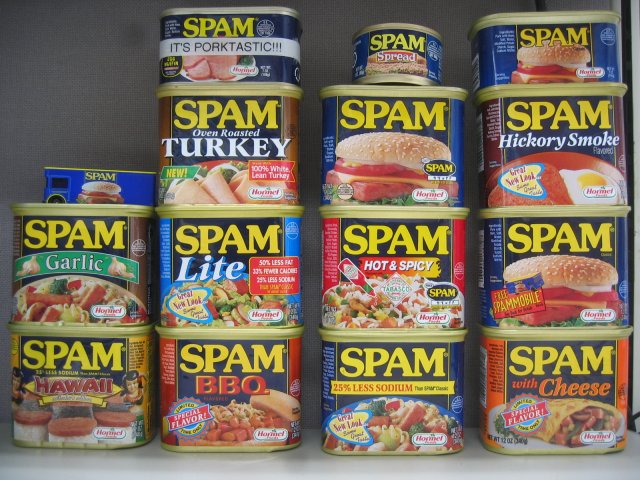
My spam filter has caught 260,504 spam comments to Ethics Alarms to date, and I have read every damn one of them. This is to make certain that one of your comments doesn’t end up in spam purgatory, which sometimes happens, especially if you include a link, or your parents named you “Penis Enlargement” for some reason. You also end up there if you send me a anonymous comment with a fake e-mail, or if you become too insulting or otherwise annoying to justify whatever enlightenment your opinions might provide. I just sent “Another Child of the Future” to Spam Land, as well as “Joe”.

To say I resent spam and spammers wildly understates the case. It is unethical conduct to say the least, and the companies that facilitate the process are beneath contempt. Lately, the field has come to be dominated by something called “lista de email,” which deposits about 100 pieces of junk on Ethics Alarms every day. I really, really hate it, and everyone connected with it. They are vandals, freeloaders, cheaters, liars and frauds. They have added to the abundant wasted time in my life, which was already seriously crowded with the hours I spent studying anti-trust law and the novels of Conrad and Butler,  the weeks I spent trying to read “War” by Raymond Aron, and every second I spent watching soccer, “Hart to Hart,” and “American Idol.”

That is not to say that reading all that spam doesn’t have its occasional rewards, for it is often amusing in a surreal way.  For example: Continue reading

Forget Balancing: Lance Armstrong Is a Villain

A constant conundrum faced by every culture is how it should categorize significant individuals whose positive contributions to society and civilization are marred by other acts that range from the unethical to the despicable. How much bad can a great man do and still be called “great”? How much wrong can a good woman engage in and still fairly be remembered as “good”? Can one wonderful act erase a lifetime of bad conduct? Are some bad acts so terrible that nothing can compensate for them? Every real human being is going to yield to some temptations, make some bad choices, be selfish, be cruel, lie, or worse. If we insist that all our heroes have an unblemished record in every aspect of their lives, we simply forfeit our heroes.

One reaction to this persistent dilemma is that we tend to be reluctant to look under the rock of a heroes accomplishments for fear that we will be disillusioned, or once the rock is lifted, we will attempt to rationalize into invisibility the ugly things we find there, or insist that they don’t matter. Of course they matter. It matters that Thomas Jefferson, who gave this nation its beating heart, didn’t pay his debts, cheated his friends and refused to live up to his own ideals. It matters that Clarence Darrow, who saved over a hundred men from execution, was a terrible father and husband and an unethical lawyer. It matters that Arthur Miller, whose plays dramatized the plight of the aging worker and the dangers of political persecution, rejected his mentally-challenged son, leaving him institutionalized and without contact from his father, though he knew who his father was. Charles Lindbergh, Jackie Kennedy, Diane Fossey, Thomas Edison, George Washington, Andrew Jackson, Frank Sinatra, Ted Kennedy, Pete Rose, Lillian Hellman, Walter Cronkite, Hillary Clinton—the list of the great, near-great, lionized and admired who behaved less than admirably or worse in significant ways can circle the globe. In assessing their character, as well as whether their lives deserve to be regarded as positive or negative influences on their society, fellow citizens and civilization, all we can do is apply a complex balancing formula, with factors in their lives weighted according to ethical principles, experience and our own priorities.

The question of how this balance should be applied has been raised in recent weeks in the wake of the final verdict on Lance Armstrong’s cycling career, which was decisively removed from the categories of “alleged misconduct,” “controversies,”and definitely “witch hunts” for all time as mountains of documentation, lab tests, and testimony moved it squarely into the categories of “outrageous cheating’, “criminal activity”, “corruption” and “fraud.” Continue reading

Funny! But Wrong: The Democratic National Committee’s Fake Romney Site

Unethical.

Don’t tell me I have no sense of humor. I get it, and it’s clever. Kind of fun, too. But just because a form of dirty campaigning is funny doesn’t change the basic principles it violates. Putting out a fake version of a political opponent’s supporter, poster, flyer, campaign material, web address, Twitter feed or website in order to trick people into either believing that the opposition campaign’s campaign or candidate is saying or doing something they are not really saying or doing for any purpose, including satire, crosses ethical lines into unethical campaign tactics territory. In a word, it’s cheating. It is unfair, deceptive and dishonest, but mostly, it is irresponsible, because it opens the door to far worse things, like sending obnoxious plants carrying racist signs to the other party’s rallies, robocalls making outrageous statements on behalf of the opposition, or putting the Obamaphone lady in fake Obama ads.

It has been a despicable campaign, and this Democratic National Committee fake Romney website not only makes it worse, it creates a slippery slope that leads right to the sewer.

_________________________

Pointer: Althouse

Comment of the Day: “’Miracle Flights’: More Air Travel Cheating”

Frequent commenter Barry Deutsch provides some useful counterweight (as usual) to an Ethics Alarms post, this one regarding fake handicapped flyers in airports. Here is his Comment of the Day, on the recent post, “Miracle Flights”: More Air Travel Cheating”:

“Eh. I’m sure some people do cheat – but I’m also sure that some people who the article implies are cheaters, aren’t doing anything of the sort.

“I’m not usually bothered by the five-minute walk from when I get out of security to my gate in the Portland airport. But standing on the security line is much harder. First of all, it can easily take up to 20 minutes if the airport is crowded, so I’m standing for much longer. And even if it’s only five minutes, standing still (with occasional shuffling) is just much, much harder on me than walking is. My bad knee and heel, normally slight nuisances that I ignore while walking, sometimes scream with pain waiting on line. Continue reading

“Miracle Flights”: More Air Travel Cheating

I wondered about this.

“If you don’t tell anyone that I won a Silver in the Olympic hurdles this summer, there’s 50 bucks in it for you… Deal?”

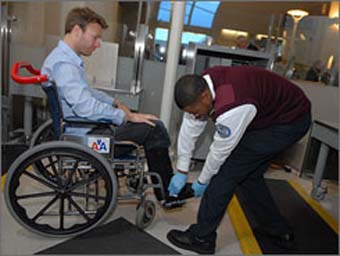
When I was recovering from a hip replacement, and even before, when it was getting painful to walk, I requested wheel chairs from the airlines when I had to fly. It was wonderful. A nice attendant whisked me in front of the lines and through security, and I was also the first person on the plane. Nobody ever asked me what was the nature of my disability; they just trusted that I wouldn’t engage in such a dastardly act as to fake being hobbled—you know, just like nobody would pretend to be someone else to steal a vote. Never happens—why do anything to  check? The system—I mean the wheelchair system, now, not the voting honor system—seemed ripe for abuse to me, but before today, I had never heard of anyone exploiting it.

According to a recent report, a lot of people do. Continue reading

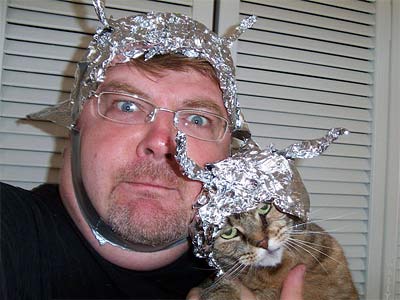
Ethics Quiz: Conspiracy Theories and the Disrespect Follies

One of the problems with the hateful, vicious, hyper-partisan politics that now grips the nation is that its most severe sufferers, inevitably the so-called “bases” of the two political parties and their most vocal advocates, end up making themselves look like fools because of it. Their fervor drives out rationality, and by refusing to assign decent and reasonable levels of  respect to their political opponents, they devalue their own credibility, sometimes to the vanishing point. They may not really be fools (though some of them are), but in a real sense, they have been driven insane…by hate, by lack of proportion, and a respect deficit that banishes both fairness and responsible conduct.

Crazy Accusation A: Republicans/Conservatives… Continue reading

Airport Ethics: And This Is How Cheating Becomes Respectable

The owners of these bags are suckers.

Traveling from Cleveland to Washington. D.C., today, I noted that the ridiculous airport baggage checking policies have borne predictable fruit. Easily 50% of the fliers on my plane cheated, sneaking their bags through security to avoid the luggage charge.

And it is cheating.

The airline charges $25 for each bag checked. The airport screeners don’t know or care who is on what flight, so it is easy to get bags through security that are too large to fit in the overhead compartments of some or all flights. Once you get them through security (slowing down the line for everyone else: the line in Cleveland went so slowly that I though I was in a Candid Camera stunt. Six travelers celebrated birthdays, two retired, and one girl went through puberty while we waited. And I had to shave repeatedly), the attendant at the gate will tell you that your bag won’t fit, and gives you a tag. You tag the bag, and leave it on the jetway. Then it is picked up and put on the flight. After you land, the bag is delivered to the jetway, meaning that the cheaters also get their bags without waiting for the carousel, or having to worry about them getting lost. Continue reading

The Ethics Incompleteness Dilemma and MLB’s Melky Cabrera “Solution”

Who cares what Melky wants?

[ When we last visited the messy Melky Cabrera situation, people were clamoring for baseball to rule Cabrera ineligible for the National League batting championship he seemed destined to win because the Giants outfielder had been suspended for the rest of the season for testing positive for steroids. The suspension froze his average, then as now leading the NL, and because he had already amassed sufficient at bats to qualify for the title, this meant that 1) he would benefit from what was supposed to be a punishment and 2) the most prestigious of all baseball season titles would be won by a proven cheater. I explained why taking the title away from Melky would be unethical as well as unwise:

“…There is a very good reason why the Constitution bans ex post facto laws—laws that make something illegal retroactively, so someone can become a criminal for something they did that was legal when they did it. Allowing such rules is an invitation to an abuse of power, culminating, in the worst case scenario, with the modern day equivalents of the Russian or French Revolutions, where people are executed for “crimes” that were not crimes at all. Even cheaters have rights, and one of them is to know what their risks are when they cheat. Cabrera knew that he risked suspension, a loss of millions in income, and permanent harm to his reputation and career. He did not know that he risked not winning a batting championship if he qualified for it, or being put in the stocks, being exiled to Portugal, or having his children subjected to human medical experiments. Should a player suspended for performing enhancing drug use after testing positive be disqualified from winning a batting championship that season? That seems fair and reasonable, but because Major League Baseball didn’t think of it when they were making the rules, it would be unfair for Cabrera to be subjected to such a penalty, which would embody the inherently unfair principle of an ex post facto law. Some people just can’t process this. People just shouldn’t get away with intentional bad conduct, they say. …Such people are unwittingly willing to dismember the bedrock principle of due process, which requires that we know by what rules and laws our conduct society will use to judge our conduct, and that we know what the penalties for violating them will be, or at least have a the opportunity to find these things out. No, of course it’s not fair for Melky Cabrera to win a batting championship by cheating, but a society that allows him to be penalized in ways he could not have anticipated using a rule imposed after the fact is an unfair society, and ethics is ultimately about building a more ethical society.”

Bud Selig, the Commissioner of Baseball who is always as likely to make a terrible decision as a good one, said that he would not take any action on the matter. But that was not the end of the story…]

Yesterday, Major League Baseball announced that Melky Cabrera would not be eligible for the batting title after all. Continue reading

Unethical Quote of This And Any Other Month: Bonnie Pollack

“It was a real dilemma. I decided to do the right thing.”

—-58-year-old Bonnie Pollack of Manhattan, a doctoral student in social welfare who lives in Manhattan, telling the Wall Street Journal about the time she threw away her husband’s absentee ballot after promising to mail it, because she knew he was voting Republican. She didn’t tell him about the fate of his vote for years.

This photo of a baby polar bear has nothing to do with Bonnie Pollack, but it cheered me up after having to think about her. UPDATE: Now I find out that it’s a toy, so I’m depressed  all over again. If you can’t even trust cute, all is lost.

Ms. Pollack’s jaw-dropping admission appears in an article called “The Marriage Problem That Comes Every Four Years,” but is an example of the year-round ethics problem that makes life intermittently miserable for us all: people whose concept of right and wrong consists of arrogance, self-righteousness, and a full embrace of “the ends justify the means” without any moderation.

Let us do an ethics audit of Bonnie’s words and deeds: Continue reading

Ethics Dunce: Novelist R J Ellory

“Jellybean”

Yes, he really did: best-selling British crime novelist R J  Ellory actually went on Amazon, and using fake names like “Jellybean” and “Nicodemus Jones,” wrote rave reviews of his own books . In one review, he called one of his novels a “modern masterpiece” and wrote that it “just stopped me dead in my tracks.”

How embarrassing. Sales a little soft lately, R J? He also used fake identities to post negative reviews of his rivals’ works. Continue reading