Ethics Heroes: The Baseball Writers Association of America

Nope.

Nope.

In the Baseball Hall of Fame balloting announced today, those who elect baseball’s greats to its shrine of heroes failed to give anyone the requisite 75% ballots required for election. That’s too bad: Craig Biggio, Jeff Bagwell, Tim Raines and Mike Piazza are deserving candidates.

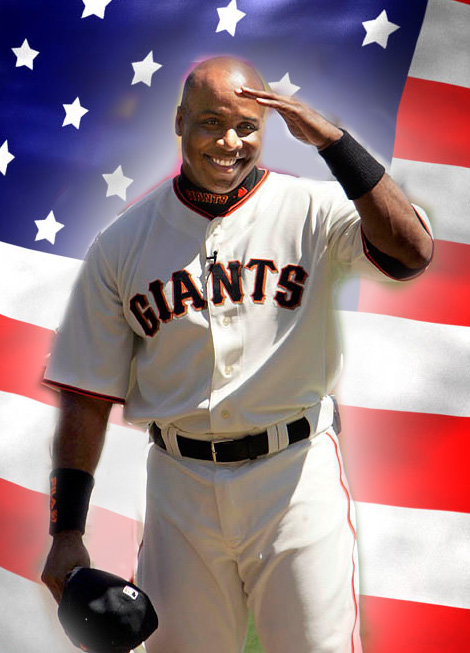
The writers also did not elect unrepentant cheater, record thief and game-corrupter Barry Bonds, however, who was on only 36.2% of the ballots, slightly less than suspected steroid cheat Roger Clemens (37.6).

Good.

Ethics Elephant In The Room: The ASPCA Was Wrong, And Should Admit It

circus-elephants-

The  Association for the Prevention of  Cruelty to Animals finally capitulated and has agreed to pay over 9 million dollars in damages to the Ringling Bros. Barnum & Bailey Circus. Way back in 2000, the ASPCA and other animal advocacy groups sued the circus company’s owners, alleging cruel treatment of elephants. The problem was, courts found, that the law suit had been built on the claims and testimony of a former Ringling barn helper who had been paid at least $190,000 for his participation in the lawsuit. This meant that the suit was dead.

Ringling Bros. Barnum & Bailey Circus counter-sued, as would I, as would you. I don’t doubt that elephants are abused sometimes in the circus; I’m sensitive to the argument that putting elephants in a circus is inherent abuse. It seems clear that a lot of dedicated, well-meaning people who care deeply about animals and their treatment couldn’t press their claims persuasively without help, so, essentially, they cheated. You can’t pay witnesses, whether the witness is telling the truth or not. It’s unfair. It’s illegal. It corrupts the justice system. Continue reading

Of Course Barry Bonds Doesn’t Belong In The Hall Of Fame

Buy a ticket, Barry.

Buy a ticket, Barry.

A full complement of baseball’s steroid class is among the 37 players on the 2013 Hall of Fame ballot, so it was predictable that a new round of arguments would surface claiming that it is unfair, illogical, inconsistent or otherwise unseemly to exclude Barry Bonds and others from enshrinement. Predictable but frustrating: the arguments in favor of Bonds are arguments against maintaining ethical values, in baseball, sports, and American society.  It is also an annoying debate to engage in, and I have been engaging in it in various forms for many years, because Bonds’ defenders typically represent themselves as modern, reasonable, and realistic, while anyone making the quaint argument that cheating on a grand scale should earn shame rather than honors is mocked as judgmental, sanctimonious and naïve.  As ever, I am a glutton for punishment, and since otherwise wise and perceptive commentators like NBC Sports’ Craig Calcaterra choose to ally themselves with Bonds, I really am obligated to point out what a corrupt, illogical and unethical position it is.  If I and people like me don’t persist in this, we’ll have cheating approved as a cultural norm before we know what hit us.

Calcaterra has been supporting Bonds as a Hall of Fame candidate for a while now, but the title of his latest essay, “It’s Lunacy To Keep Barry Bonds and Roger Clemens Out of the Hall of Fame” is a gauntlet that begs to be picked up.  “Bonds and Clemens,” Craig writes, “ are two players who, in a just world, would be unanimous selections for induction…”  I find this an indefensible, even shocking, statement, both before and after the writer attempts to defend it. In a just world, a member of a profession who achieved his prominence in part by breaking the law and the rules, as well as lying about it, should be accorded the highest honor that profession has!  What an astounding point of view.

For simplicity’s sake, I’m going to leave Clemens out of this, in part because I can see a Hall of Fame voter credibly deciding that there isn’t enough evidence to conclude that The Rocket really did use performance enhancing drugs on the way to forging one of the top five pitching careers of all time, and in part because I suspect Craig of pairing Bonds and Clemens to make his various rationalizations more pallatable than they would be in defense of Bonds alone.  Belief in Roger’s steroid cheating rests entirely on the testimony of a proven liar and slime-ball, his former trainer. MLB’s Mitchell Report sided with the trainer, and I’m inclined to as well, but Clemens’ unfitness for the Hall of Fame, unlike Bonds (and Mark McGwire, Rafael Palmeiro, and some others), is not an open-and-shut case.

I give credit to Craig for not raising my least favorite of the Bonds defenses, that he has to be regarded as innocent because he has not been “proven guilty.” Calcaterra is a lawyer, and he understands the over-use and misuse of that cliché, as well as how it only applies when “guilty” means “you’re going to jail.” Indeed, he begins by conceding the obvious, that the evidence that Barry Bonds used steroids is overwhelming, which it is.

His first argument, however, is terrible. Under the ironic heading “Baseball Bonafides,” Calcaterra begins by reciting Bonds’ (and Clemens’) impressive list of achievements, which taken at face value show Barry Bonds to be one the best of the best, not just a qualified Hall of Fame baseball player, but an epitome of a Hall of Fame player along with such legends as Babe Ruth, Walter Johnson , Ted Williams and Willie Mays. “Put simply,” Craig says in conclusion, Bonds is an “immortal.” But he’s not-–not if he cheated, not if he achieved his historic status by corrupting his sport and lying to team mates and fans. And, as Calcaterra admits at the outset, this he did. As a result, the fact that Bonds won a record seven Most Valuable Player Awards is irrelevant. He cheated to win some of those awards. He gets no credit for them.  In Bonds’s case, “baseball bonafides” are not bona fide at all. Continue reading

Spam Report: I Hate You, Lista De Emails!

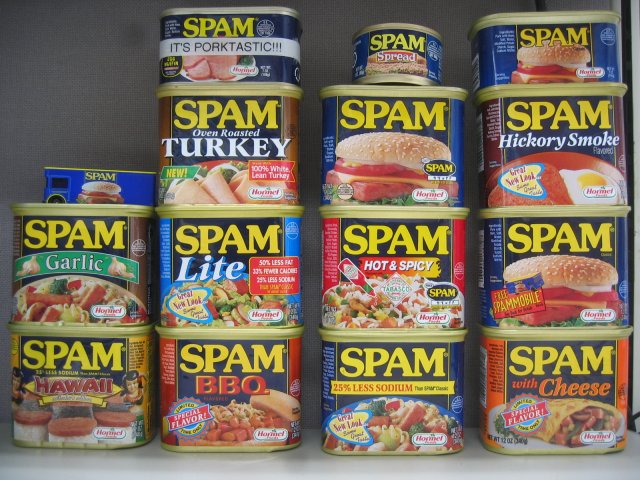
My spam filter has caught 260,504 spam comments to Ethics Alarms to date, and I have read every damn one of them. This is to make certain that one of your comments doesn’t end up in spam purgatory, which sometimes happens, especially if you include a link, or your parents named you “Penis Enlargement” for some reason. You also end up there if you send me a anonymous comment with a fake e-mail, or if you become too insulting or otherwise annoying to justify whatever enlightenment your opinions might provide. I just sent “Another Child of the Future” to Spam Land, as well as “Joe”.

To say I resent spam and spammers wildly understates the case. It is unethical conduct to say the least, and the companies that facilitate the process are beneath contempt. Lately, the field has come to be dominated by something called “lista de email,” which deposits about 100 pieces of junk on Ethics Alarms every day. I really, really hate it, and everyone connected with it. They are vandals, freeloaders, cheaters, liars and frauds. They have added to the abundant wasted time in my life, which was already seriously crowded with the hours I spent studying anti-trust law and the novels of Conrad and Butler,  the weeks I spent trying to read “War” by Raymond Aron, and every second I spent watching soccer, “Hart to Hart,” and “American Idol.”

That is not to say that reading all that spam doesn’t have its occasional rewards, for it is often amusing in a surreal way.  For example: Continue reading

Forget Balancing: Lance Armstrong Is a Villain

A constant conundrum faced by every culture is how it should categorize significant individuals whose positive contributions to society and civilization are marred by other acts that range from the unethical to the despicable. How much bad can a great man do and still be called “great”? How much wrong can a good woman engage in and still fairly be remembered as “good”? Can one wonderful act erase a lifetime of bad conduct? Are some bad acts so terrible that nothing can compensate for them? Every real human being is going to yield to some temptations, make some bad choices, be selfish, be cruel, lie, or worse. If we insist that all our heroes have an unblemished record in every aspect of their lives, we simply forfeit our heroes.

One reaction to this persistent dilemma is that we tend to be reluctant to look under the rock of a heroes accomplishments for fear that we will be disillusioned, or once the rock is lifted, we will attempt to rationalize into invisibility the ugly things we find there, or insist that they don’t matter. Of course they matter. It matters that Thomas Jefferson, who gave this nation its beating heart, didn’t pay his debts, cheated his friends and refused to live up to his own ideals. It matters that Clarence Darrow, who saved over a hundred men from execution, was a terrible father and husband and an unethical lawyer. It matters that Arthur Miller, whose plays dramatized the plight of the aging worker and the dangers of political persecution, rejected his mentally-challenged son, leaving him institutionalized and without contact from his father, though he knew who his father was. Charles Lindbergh, Jackie Kennedy, Diane Fossey, Thomas Edison, George Washington, Andrew Jackson, Frank Sinatra, Ted Kennedy, Pete Rose, Lillian Hellman, Walter Cronkite, Hillary Clinton—the list of the great, near-great, lionized and admired who behaved less than admirably or worse in significant ways can circle the globe. In assessing their character, as well as whether their lives deserve to be regarded as positive or negative influences on their society, fellow citizens and civilization, all we can do is apply a complex balancing formula, with factors in their lives weighted according to ethical principles, experience and our own priorities.

The question of how this balance should be applied has been raised in recent weeks in the wake of the final verdict on Lance Armstrong’s cycling career, which was decisively removed from the categories of “alleged misconduct,” “controversies,”and definitely “witch hunts” for all time as mountains of documentation, lab tests, and testimony moved it squarely into the categories of “outrageous cheating’, “criminal activity”, “corruption” and “fraud.” Continue reading

Funny! But Wrong: The Democratic National Committee’s Fake Romney Site

Unethical.

Don’t tell me I have no sense of humor. I get it, and it’s clever. Kind of fun, too. But just because a form of dirty campaigning is funny doesn’t change the basic principles it violates. Putting out a fake version of a political opponent’s supporter, poster, flyer, campaign material, web address, Twitter feed or website in order to trick people into either believing that the opposition campaign’s campaign or candidate is saying or doing something they are not really saying or doing for any purpose, including satire, crosses ethical lines into unethical campaign tactics territory. In a word, it’s cheating. It is unfair, deceptive and dishonest, but mostly, it is irresponsible, because it opens the door to far worse things, like sending obnoxious plants carrying racist signs to the other party’s rallies, robocalls making outrageous statements on behalf of the opposition, or putting the Obamaphone lady in fake Obama ads.

It has been a despicable campaign, and this Democratic National Committee fake Romney website not only makes it worse, it creates a slippery slope that leads right to the sewer.

_________________________

Pointer: Althouse

Comment of the Day: “’Miracle Flights’: More Air Travel Cheating”

Frequent commenter Barry Deutsch provides some useful counterweight (as usual) to an Ethics Alarms post, this one regarding fake handicapped flyers in airports. Here is his Comment of the Day, on the recent post, “Miracle Flights”: More Air Travel Cheating”:

“Eh. I’m sure some people do cheat – but I’m also sure that some people who the article implies are cheaters, aren’t doing anything of the sort.

“I’m not usually bothered by the five-minute walk from when I get out of security to my gate in the Portland airport. But standing on the security line is much harder. First of all, it can easily take up to 20 minutes if the airport is crowded, so I’m standing for much longer. And even if it’s only five minutes, standing still (with occasional shuffling) is just much, much harder on me than walking is. My bad knee and heel, normally slight nuisances that I ignore while walking, sometimes scream with pain waiting on line. Continue reading

“Miracle Flights”: More Air Travel Cheating

I wondered about this.

“If you don’t tell anyone that I won a Silver in the Olympic hurdles this summer, there’s 50 bucks in it for you… Deal?”

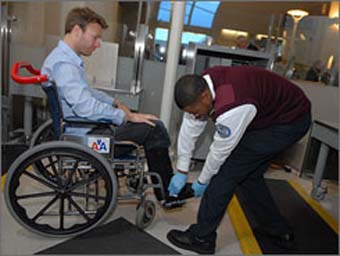
When I was recovering from a hip replacement, and even before, when it was getting painful to walk, I requested wheel chairs from the airlines when I had to fly. It was wonderful. A nice attendant whisked me in front of the lines and through security, and I was also the first person on the plane. Nobody ever asked me what was the nature of my disability; they just trusted that I wouldn’t engage in such a dastardly act as to fake being hobbled—you know, just like nobody would pretend to be someone else to steal a vote. Never happens—why do anything to  check? The system—I mean the wheelchair system, now, not the voting honor system—seemed ripe for abuse to me, but before today, I had never heard of anyone exploiting it.

According to a recent report, a lot of people do. Continue reading

Ethics Quiz: Conspiracy Theories and the Disrespect Follies

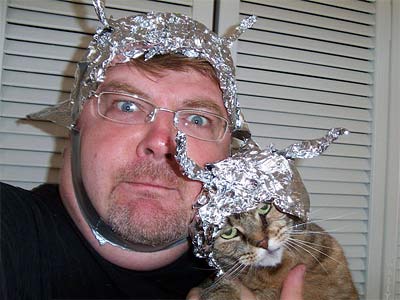
One of the problems with the hateful, vicious, hyper-partisan politics that now grips the nation is that its most severe sufferers, inevitably the so-called “bases” of the two political parties and their most vocal advocates, end up making themselves look like fools because of it. Their fervor drives out rationality, and by refusing to assign decent and reasonable levels of  respect to their political opponents, they devalue their own credibility, sometimes to the vanishing point. They may not really be fools (though some of them are), but in a real sense, they have been driven insane…by hate, by lack of proportion, and a respect deficit that banishes both fairness and responsible conduct.

Crazy Accusation A: Republicans/Conservatives… Continue reading

Airport Ethics: And This Is How Cheating Becomes Respectable

The owners of these bags are suckers.

Traveling from Cleveland to Washington. D.C., today, I noted that the ridiculous airport baggage checking policies have borne predictable fruit. Easily 50% of the fliers on my plane cheated, sneaking their bags through security to avoid the luggage charge.

And it is cheating.

The airline charges $25 for each bag checked. The airport screeners don’t know or care who is on what flight, so it is easy to get bags through security that are too large to fit in the overhead compartments of some or all flights. Once you get them through security (slowing down the line for everyone else: the line in Cleveland went so slowly that I though I was in a Candid Camera stunt. Six travelers celebrated birthdays, two retired, and one girl went through puberty while we waited. And I had to shave repeatedly), the attendant at the gate will tell you that your bag won’t fit, and gives you a tag. You tag the bag, and leave it on the jetway. Then it is picked up and put on the flight. After you land, the bag is delivered to the jetway, meaning that the cheaters also get their bags without waiting for the carousel, or having to worry about them getting lost. Continue reading