Unethical Quote of the Week: Adam Dachis

“All posts that belong to the Dark Side are going to feature some ideas that might be a little evil or at least require some flexible ethics. Some things will be downright horrible, and you should not do them, but are either for your information or simply for the point of interest (and will be noted as such). Your judgment and actions are your own, so think before you do anything you read here and only use your dark side for good.”

Adam Dachis, ethics corrupter, in the “Dark Side Disclaimer” that accompanies his column on the website Lifehacker, called “Secrets from the Dark Side.”

His current “Secrets from the Dark Side” column is entitled “How to Lie, Cheat, and Steal Your Way to a Perfect Flight,” which is an accurate description of its contents. Some of Dachis’s “tips” (scams? cheats?) are interesting, some are humorous, and all (well, maybe with one exception) are unethical. Dachis, for his part, doesn’t have the guts to advocate outright the conduct that he is explicitly promoting, nor does he condemn it. As his ethically incoherent ( “Only use your dark side for good”) disclaimer demonstrates, he thinks ethics is a game of some sort, and that being a “little evil” is cute, or trivial, or something.

A true ethics corrupter, Dachis wants to avoid personal accountability for the unethical acts of his readers spurred entirely by his post, while at the same time getting credit for his cleverness. This is the Richard Nixon approach to ethical corruption, planting seeds and disclaiming responsibility for the crop, telling followers, “We could do that, but it would be wrong.” Wink, wink.

Yechhh.
Loop-Hole Ethics and The New York Times

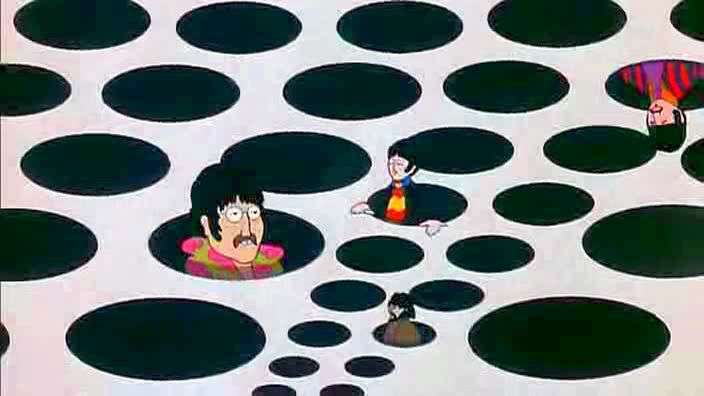
The NYT’s website paywall plan floats in a sea of holes.

Ariel Kaminer, author of “The Ethicist” column in The New York Times Magazine, made an interesting assertion in her answer to a reader who asked about whether he could exploit several loop-holes in the Times’ new paywall plan for its website.

Noting that he was a struggling freelance journalist who visits the Times website often, he asked if it was unethical for him to use his parents’ free access to the content, since they are subscribers.  Then he Mused about other scenarios. “If I buy online access, can I share the password with my live-in girlfriend, even if I move to New York for the summer? What about our other housemates?” Continue reading

The Professions Most Likely to Cheat on Their Taxes?

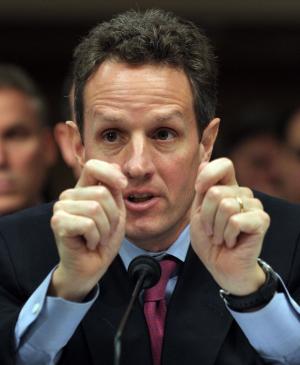
Gee, where do "Treasury Secretaries" fall on the list?

A study of I.R.S. data by a University of Chicago graduate student, now Doctor, Oscar Vela,  produced the following list of the professions most likely to file fraudulent tax returns, at least according to his analysis. Make of it what you will. The Time Magazine website blog post about the list is worth reading, first for the blogger’s highly questionable theories explaining, for example, why lawyers aren’t on it, but mostly to see conclusive proof that Time is hiring English-as-a-second-language night students, relatives of Ko-Ko the talking gorilla, or stroke victims to write their blogs. Sample sentence: “His conclusion was that as much as we would like to think so we pay taxes out of  the goodness of our hearts, or even because we are fearful of fines or worse.” Henry Luce just did a back-flip in his grave.

Dr. Vela’s theory is that the professions that are required to maintain a perception of integrity are less likely to cheat. Let us say that I am dubious. Why then are scientists so high on the list?

Here it is: Continue reading

Just So You Know The Legal Profession Is Trying…

The Massachusetts bar has suspended a lawyer for six months for running an advertisement on Craigslist offering to write  papers and essays for students to turn in as their own. The state Board of Bar Overseers of the state Supreme Judicial Court issued a memorandum April 1 announcing that lawyer Damian R. Bonazzoli was suspended from practice.  He also lost his job lost his job with the state Appeals Court.

Good. Continue reading

Ethics Dunce: Buzz Bissinger

It took about an hour after the  Barry Bonds verdict for the first ethics-challenged national sports writer to write something outrageous about it. Not surprisingly, it was Buzz Bissinger, a the member in good standing of the Daily Beast’s stable of annoyingly hypocritical, biased or appallingly cynical writers, Bissinger belonging to the last category.

His post, which pronounced the Barry Bonds conviction “a travesty” in the title, contained one ethics howler after another, any of one of which would have justified an Ethics Dunce prize.

Here they are:

“It is true that the case of Barry Bonds does hit a new low, a new low in the waste of millions of dollars of taxpayers’ money, a new low in the witch hunt of a player who, because he was considered surly and arrogant and unlikable, is now having intimate details of his life revealed (such as testicle shrinkage), a new low in outrageous abuse of government power.” Continue reading

The Bonds Verdict: Fair Enough

The results of the Barry Bonds trial, which today concluded with the jury finding baseball’s all-time home run champion guilty of obstructing justice by misleading a grand jury investigating the distribution of illegal and banned steroid to professional athletes but unable to agree on the perjury charges, helps to balance the ethical scales. It should silence the shameless Bonds defenders who misused the “innocent until proven guilty” standard to maintain poor Bonds was being unfairly suspected of inflating his biceps, head, statistics and income through the marvels of chemistry, though it was blatant and obvious in dozens of ways. Now he has been proven guilty—not of everything, but for celebrity justice, in a trial where much of the most damaging evidence was withheld from the jury, enough—, so the claims of racism and unfair prosecution will ring even hollower now. Continue reading

Manny Post Script: The Signature of a Jerk

Manny Ramirez, the now-retired ex-baseball slugger, provoked the predictable responses from the media and fellow players in the wake of his sudden retirement after being notified that he would be the first major league player to face a 100 game suspension for failing a mandated PED test (that’s “performance enhancing drugs” for all of you who don’t know who Barry Bonds is), because no player had ever been caught TWICE before.

Everyone was in agreement that this meant: Continue reading

Manny Ramirez’s Perfect Exit

The most unethical baseball player since the Black Sox

From  Major League Baseball:

“Major League Baseball recently notified Manny Ramirez of an issue under Major League Baseball’s Joint Drug Prevention and Treatment Program. Rather than continue with the process under the Program, Ramirez has informed MLB that he is retiring as an active player. If Ramirez seeks reinstatement in the future, the process under the Drug Program will be completed. MLB will not have any further comment on this matter.”

Perfect. Perfect.

Manny Ramirez was an impressively talented baseball player with discipline of an untrained Irish Setter, and the selfishness of a six-year-old. Throughout his career, he was a textbook example of the management fallacy known as the star principle, in which an extremely talented individual is allowed to break the rules and defy an organization’s culture in direct proportion to his perceived value. Continue reading

The Fireman, the Cheater, and Media Muddling

Come on, Robert! It's less embarrssing than Joey's gonorrrhea poster!

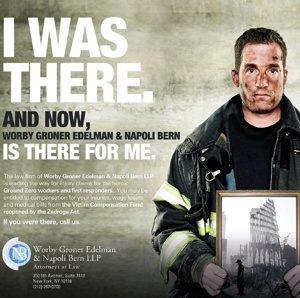
One of the reasons I launched The Ethics Scoreboard and later Ethics Alarms was that I felt  the media did not recognize ethics stories and failed to cover them. Well, more ethics stories are finding their way into the news, but true to the warning “Be careful what you wish for,” the reports usually botch them, and get the ethics lessons wrong. The saga of Enzo and the “Barefoot Contessa” was a particularly nauseating example, but there have been others recently. For example… Continue reading

The Ethics of Nailing Barry Bonds

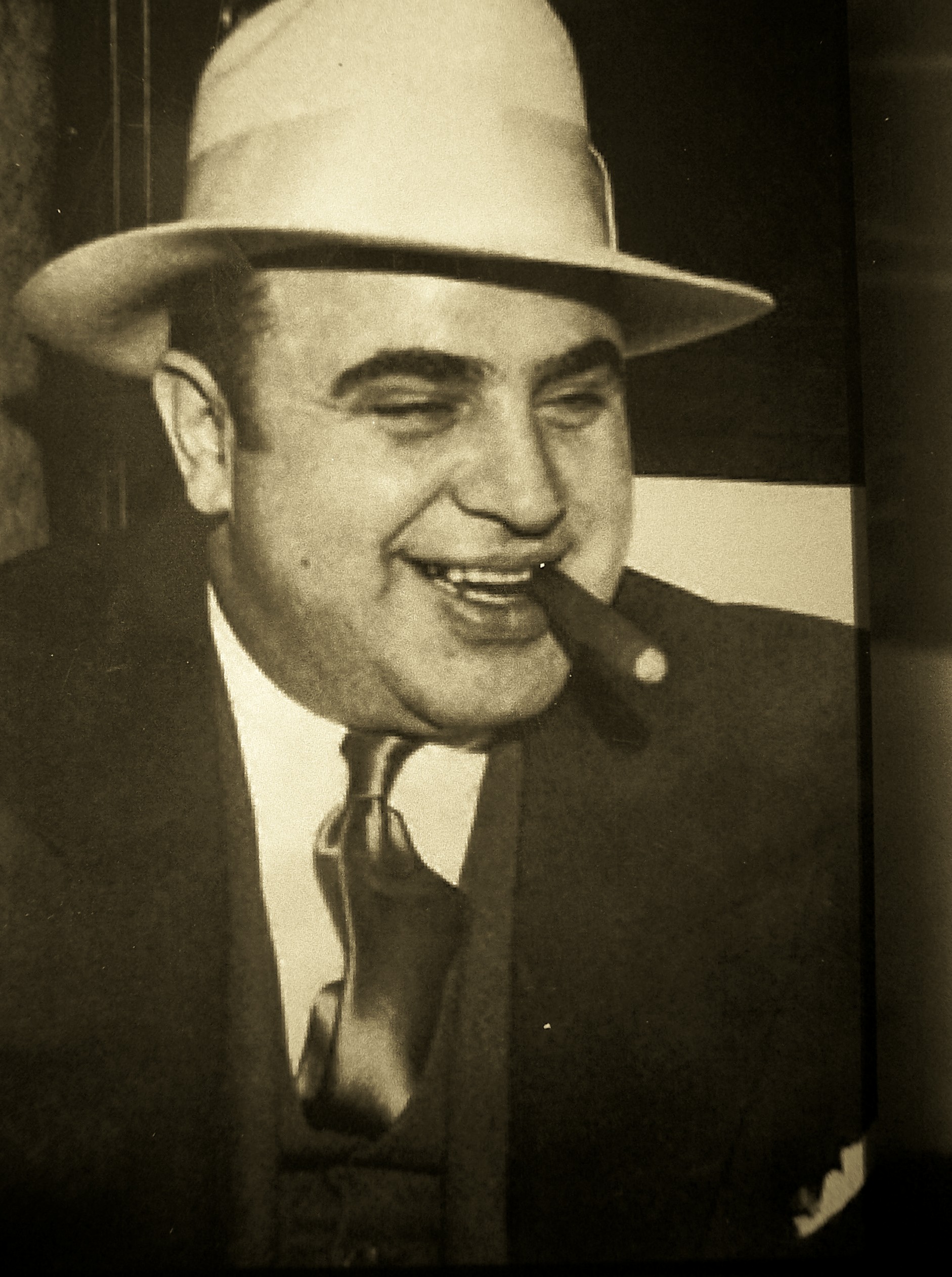
Is Barry Bonds getting the Al Capone treatment? Should we care?

Baseball’s all-time home run king Barry Bonds is finally on trial for perjury and obstruction of justice relating to his 2003 testimony before a grand jury that he never knowingly used steroids. It looks like he may get convicted too, even though the one man who could harm him most, his trainer and childhood pal Greg Anderson, once again has refused to testify and is in jail for contempt of court. (Many—including me— believe that Anderson has a promise of a pay-off from Bonds.)

Essentially everyone who isn’t actively trying to protect Bonds, completely ignorant of the facts of his career, or mentally handicapped knows he was lying and knew it at the time of the grand jury hearings. Barry has been both lucky and relentlessly dishonest, however, seemingly happy to spend the millions he made while cheating and permanently damaging his sport, and pleased with himself for retiring in possession of baseball’s most prestigious home run records, the most homers in a single season, and the most homers in a career.  That Bonds achieved these, and several of his Most Valuable Player awards, while enhanced with the surreptitiously induced body chemistry of a Bulgarian weight-lifter in the 1972 Olympics doesn’t seem to faze him at all. Meanwhile, critics are dredging up the old rationalizations to defend Bonds, none of which apply to his current fix. Continue reading