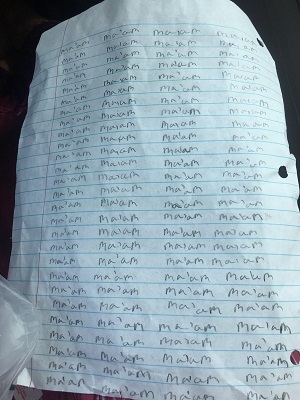
 In Tarboro, North Carolina, a 5th grade teacher punished a student for calling her “ma’am” in class. Parents of the child, an African-American boy, brought the incident to the administrators of the North East Carolina Preparatory School after he brought home for their signatures a sheet on which he had been required to write “ma’am” nearly two- hundred times. The parents said their children were taught to refer to elders as “ma’am” and “sir,” and that their son was obviously not intending to be disrespectful. Upon their request, he was removed from the class to that of another teacher. The school has refused to comment further on the incident, other than saying in a statement, “This is a personnel matter which has been handled appropriately by the K-7 principal.”
That’s not correct. This is an education profession issue that should be addressed by the profession as well as the school. And moving the student, who did nothing wrong whatsoever, sends the wrong message. The school and the teacher should have apologized to the student as well as his parents, and disciplinary action ought to have been taken against the teacher. Moreover, other parents have a right to know who this teacher is, and have the opportunity to have their children removed from her oversight. If that makes it impossible for her to continue teaching, since any responsible parents would insist on her being kept as far away from children as possible, then she might have to forfeit her job.
Good.
One purpose of professional ethics codes is that they prime the ethics alarms by putting core ethical principles related to the profession into black and white. Here’s one that might have saved the boy from his undeserved ordeal:
No students should be subjected to punishment without understanding what they are being punished for, and why. The punishment should be proportionate to the offense, which should be substantial enough to warrant more than a verbal warning or admonishment. Continue reading

 Ethics Alarms
Before presenting John Billingsly’s COTD, let me note up-front two of John’s points that I disagree with. First,while refusing to follow an illegal order is mandatory, the fact that one is given an order to do something unethical—and this patdown was unethical—does not reduce the responsibility to refuse if the harm to another is clear, obvious, and objectively unjust, as in this case. Second, everyone involved in a wrongful act is accountable, from the top of the chain of command to the bottom. I also have a third and fourth, but I’ll let others cover those.
Here is John Billingsley’s Comment of the Day on the post, From The Ethics Alarms “Res Ipsa Loquitur” Files: Now THAT’S An Unethical TSA Patdown: