Chris Christie and the Curse of Consequentialism

It will be scant consolation to Chris Christie, who probably lost forever any chance of becoming President, but his bi-partisan actions in the wake of Superstorm Sandy provide a perfect example of how a completely ethical and responsible decision can have consequences that cause it to be judged unethical and irresponsible.

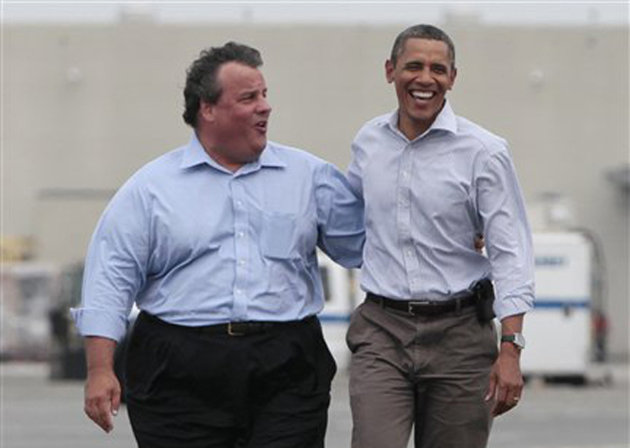
Even before Obama won Ohio’s electoral votes, guaranteeing his re-election, analysts were pointing to Christie’s much-photographed stroll with (and hugging of) the President, and the well-timed opportunity it provided to allow Obama to appear both Presidential and willing to co-operate with Republicans, as the tipping point in a close race, breaking Mitt Romney’s momentum and undercutting the argument that only he could “reach across the aisle.” I doubt that Chris and Barack’s New Jersey Adventure was in fact the primary reason Romney lost, but I have no doubt at all that conservatives will blame Christie, among others, for the loss. Continue reading

Ethics Hero: New Jersey Governor Chris Christie

WHAT? A Republican being cooperative and respectful toward the President? What’s the matter with him?”

In the wake of Superstorm Sandy,  New Jersey Governor Chris Christie is being labelled a turn-coat by some fellow Republicans and conservative commentators for supposedly “sucking up” to President Obama.

“The president has been all over this and he deserves great credit,” the Governor said.  “He’s been very attentive, and anything that I’ve asked for, he’s gotten to me. So, I thank the president publicly for that. He’s done—as far as I’m concerned—a great job for New Jersey.” Christie not only praised the President’s responsiveness to the plight of his state, along with New York the hardest hit of Sandy’s victims, but also toured disaster sites with Obama, giving the President photo-ops that could bolster his re-election campaign in the crucial final days. Rush Limbaugh bitterly slammed Christie, somewhat cryptically calling him Obama’s “Greek column,” and other talk radio hosts and political pundits followed suit. Here’s the Daily Caller’s Matt Lewis: Continue reading

The Flag and Whitney Houston

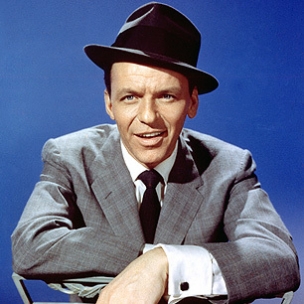
If Ol' Blue Eyes was worthy, why not Whitney?

New Jersey Governor Chris Christie  ordered New Jersey’s flags flown at half-staff in official mourning for Whitney Houston, and a lot of people are outraged. The critics of the honor fall into two categories: those who believe that the honor should be reserved for military heroes and high government officials, and those who believe that Houston is especially unworthy because of her well-documented substance abuse problems.

For his part, Governor Christie defiantly declares that Houston, as a daughter of New Jersey, deserves the state honor because of her contributions to the culture.

Technically and officially, Christie is out of line. Federal law is very specific about the proper treatment of the flag, including when it can be flown at half-staff. Simply put, celebrities don’t qualify, no matter who they are. A state governor can proclaim that the flag be flown at half-staff in his or her state for fallen soldiers, but not for non-military individuals. But governors ignore the law routinely, and have for decades. Tennessee’s governor lowered the flag when Elvis died. Massachusetts did the same for Red Sox great Ted Williams, though he was also a war hero, so no one was going to object. The law, in terms of custom and enforcement, is a dead letter, and probably should be.

True, some governors have abused the spirit of the law, including Christie, when he lowered the flag for Clarence Clemons, the saxophonist for Bruce Springsteen’s E Street Band—a great musician, but hardly a figure of transcendent national significance. If 4 USC Section 7 isn’t going to be followed or enforced, then we need some new standards, or before we know it they’ll be lowering the flag for Joan Rivers. Continue reading

The Third Annual Ethics Alarms Awards: The BEST of Ethics 2011

Why is the The Best in Ethics 2011 only about 33% the size of the “Worst”?

This troubles me. My objective is not to be negative. The problem, I think, is that ethical conduct is still much more common than unethical conduct, and it is usually less controversial to identify: most of the time, good ethics is self-explanatory. All of us learn more from mistakes and misdeeds, our own and those of others, than we do from meeting societal standards. Most of what Ethics Alarms does is to try to identify unethical conduct, what was wrong with it, why it happened, and how we can discourage it.

Which is all well and good, but I still would like to make 2012’s Ethics Alarms  more positive year than this one, if possible. Help me, will you, find more topics involving good ethics, so next year’s Best list can hold its own with the Worst.

Here are the 2011 Ethics Alarms Awards for the Best in Ethics:

Most Important Ethical Act of the Year: Acquitting Casey Anthony. The Florida jury charged with deciding if Casey Anthony murdered her daughter faced the ire of a lynch mob-minded public that wanted the unsympathetic Anthony convicted, based on suspicious conduct and a dubious explanation,  but the evidence just wasn’t there. Thus the courageous twelve upheld the American values of fairness, objectivity, and justice under the law. It is interesting that the most ethical act of the year also sparked some of the most unethical arguments of the year, by too many citizens who benefit from our nation’s ideals without comprehending them. Continue reading

The Media Pundits’ Bigoted Preemptive Attack on Chris Christie

THIS seems to be a logical method for choosing a President.

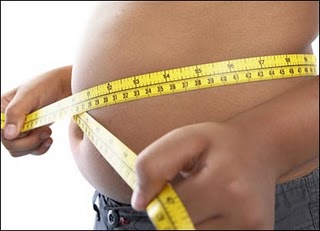
Democrats and progressives are apparently terrified that a Republican will enter the presidential race who isn’t a religious zealot, a libertarian ideologue, a political tyro, a Mormon or a Texan, but a charismatic governor of a big northeastern state who is pragmatic, credible and successful. That would be Chris Christie, Governor of New Jersey, who may be about to throw his hat in the ring. So the word has gone out to the media, or the media is just sufficient trained to protect Democratic presidents without further instruction, that it needs to define Christie before the American public has a chance to form its own opinion, and the definition it has arrived at is fat.

You know, fat. As in Rush Limbaugh fat, fat like the political cartoonist Herblock always drew lobbyists and “Big Business.” Diamond Jim Brady fat; fat like Sydney Greenstreet, the villain in all those Humphrey Bogart movies. Fat means bad; fat means lazy; fat means unhealthy, and ugly. Fat people consume more than their share, and are disproportionately responsible for global warming and soaring health care costs, don’t you know. They  have no self-control; they don’t have self-respect. We dread being stuck next to one of these porkers in an airplane. You can’t trust fat people. That’s really all you need to know about Chris Christie. This is America—we worship beautiful people. Fit people. Thin people….like, say, President Obama. Do we want to be led by someone who is fat? Of course not! Continue reading

The Facebook Founder’s Sinister and Unethical Hundred Million Dollar Gift

When is a hundred million dollar gift to help schools unethical?

It is unethical when it represents the power of money taking control of government. It is unethical when it induces politicians to breach their duty to obey the law. It is unethical when it demonstrates that the principles of democracy and law can be bought, sold, and distorted for a price.

In a shocking development last week that received very little thoughtful or critical coverage from the news media, Facebook mogul and co-founder Mark Zuckerberg gave the Newark schools $100 million in return for dictating how the schools are run. Zuckerberg, backed by Oprah Winfrey, another billionaire, who put the school governance sale on her TV show,  wants Newark Mayor Cory Booker to run them.  New Jersey Governor Chris Christie, who also appeared on the strange Oprah segment, has agreed in principle to make Booker the overseer of his city’s infamously bad school system. As for the fact that a New Jersey statute doesn’t allow the governor to put the mayor of a city in charge of its schools once the state has taken over control of them, well, money, not the law, rules in New Jersey, and that appears to be just dandy according to the state’s governor, Zuckerberg, Oprah, Republicans, Newark parents, news editors and citizens.

Meanwhile, that whirring sound you hear is Thomas Jefferson spinning in his grave. Continue reading

The Acceptable Slur

Reason Magazine’s website has an article today by Steve Chapman describing New Jersey Governor Jon Corzine’s tactic of ridiculing his opponent Chris Christie’s weight (among other barbs, Corzine has used an ad showing Christie looking unusually large with a voice-over about him “throwing his weight around.” Har Har.) as politically maladroit. He’s right, but Chapman neglects to discuss the ethical issue involved. Attacking someone for his or her physical attributes is unethical: rude, mean-spirited, unkind and uncivil, a pure violation of the Golden Rule. Suggesting that a person’s worth can be discerned from his or her physical attributes is, quite simply, bigotry. Corzine, a proud liberal, would never dream of attacking an opponent for his race, or a physical disability like a missing leg. But calling an opponent fat in a manner designed to appeal to the bigotry of others is acceptable to him, indeed, acceptable to many. Why is that?

This is an oddly popular form of bigotry for liberals, journalists (I know I’m approaching redundancy here) and media commentators. The most popular target of fat attacks is conservative talk show host Rush Limbaugh. Despite the fact that  Limbaugh has been in one of his svelte periods for some time, many newspapers and websites continue to accompany stories about his latest rants with an especially unflattering photo showing him roughly 100 pounds heavier.  John Kerry and other Limbaugh critics routinely include physical insults as they respond to his critiques. (They also frequently reference his problems with prescription pill addiction, an AMA-decreed medical malady. Their excuse for this is that Limbaugh has been unsympathetic to drug abusers in the past, an example of the unethical rationalization known here as the Tit for Tat excuse)  The junior U.S. senator from Minnesota got his job in part by making liberals giggle with his book entitled  “Rush Limbaugh is a Big, Fat, Idiot.”   But Limbaugh is just one target of many. The late, liberal Washington Post cartoonist Herb Block always drew the characters he didn’t like—Republicans, conservatives, bankers, “corporate interests,” “industrialists”—as human beach balls, to contrast with his poor, downtrodden, attractively thin liberal archetypes. Conservatives are guilty of fat-baiting too, of course; when they weren’t  using Mary Jo Kopechne to ridicule the late Sen. Edward Kennedy, they called him a tub of lard. Conservatives often have a more difficult time getting away with it, because liberals will rise in indignation to condemn such a tactic on the Right, especially if the target is a woman, as when conservative radio talk show Laura Ingraham was pilloried for referring to John McCain’s daughter Meaghan as “plus-sized.” Liberals appear to understand that using physical characteristics to deride and diminish someone is unethical, but believe there is an exception when the fat person in question is “bad,” as in “disagrees with them.”

Here is the sad truth. Many people, liberals and conservatives, are bigoted against fat people, and even those who are repulsed by bigotry based on race, religion or physical malady manage to rationalize regarding excessive weight as a sign of bad character, greed, gluttony, laziness, or, in the most recent trend, having too large a carbon footprint. Good, responsible people jog and exercise, like Jon Corzine. True, Corzine is a millionaire, and studies show that the higher correlation is not between wealth and fat, but rather poverty and fat, but never mind.  Though the culture now strongly reinforces the message that it is wrong for a white man to feel superior to a black man, it has yet assimilate the concept that a thin, fit, attractive American isn’t inherently preferable to a fat one, no matter what else the corpulent individual has to offer.

It’s time; indeed, it is past time. I think there is even  a case to be made that a fat individual may be overweight for ethical reasons. You can spend a couple hours a day jogging and pumping iron—14 hours a week, 56 hours a month, 672 hours a year—or you can spend the same time on pursuits that benefit people other than yourself, like your family, the poor, or society. Extra weight may be a form of sacrifice, a badge of honor.  What justification does Al Franken or Laura Ingraham, or a Hollywood actor who gets paid to be fit, have to question that choice or feel superior? If Oprah Winfrey wants to call herself fat, fine, but who can criticize how she uses her time? She cares about other things more than the scale and the mirror. Good for her.

But that’s just an argument that fat bigotry is unjustified. The primary point is that it is wrong, as wrong as any other form of bigotry. I don’t think Jon Corzine should necessarily lose the governorship because of it, because American culture, so far, has told him that fat bigotry is still tolerated. Still, if Corzine did lose, and lost in part because of his bigoted campaign, it would send an important  message—the message is that the “acceptable slur”  isn’t acceptable any more, no matter who the target is.