The Forgotten Meaning of Labor Day

Do you know who this is? You should! It’s Labor Day, dammit!

Labor Day commemorates one of the great ethical victories of American society, and not one in a hundred Americans know it. Labor Day marks the end of summer, and a time for retail store sales, and the last chance to get away to Disney World, but few of us think about the real meaning of the word “labor” in the name, and how it is meant to honor brave, dedicated men and women who fought, sometimes literally, the forces of greed, political influence, wealth and privilege in this country to ensure a measure of safety, consideration, fairness and justice for the hardest working among us.

Today labor unions are controversial, and with good reason. Many of them have been run as criminal enterprises, with deep connections to organized crime; many operate in a blatantly coercive and undemocratic fashion. Union demands and strong-arm tactics, while providing security and good wages to members, have crippled some American industries, and limited jobs as well. Today the unions  get publicity when one of them tries to protect a member who should be punished, as when the baseball players’ union fights suspensions for player insubordination or even drug use, or when school districts are afraid to fire incompetent teachers because of union power, or when the members of public unions protest cutbacks in benefits that their private sector counterparts would be grateful for. It is true that today’s unions often embody longshoreman philosopher Eric Hoffer’s observation that  “Every great cause begins as a movement, degenerates into a business and ends up as a racket.” *

That not what Labor Day honors, however. It is celebrating the original labor movement that began at the end of the 19th century, and that eventually rescued the United States from an industrial and manufacturing system that was cruel, exploitive, deadly and feudal. Why the elementary schools teach nothing about this inspiring and important movement, I do not know. I suspect that the story of the American labor movement was deemed politically dangerous to teach during the various Red Scares, and fell out of the curriculum, never to return. Whatever the reason, it is disgraceful, for the achievements of the labor movement are every bit as important and inspiring as those of the civil rights movement and the achievements of our armed forces in the protection of liberty abroad. Continue reading

First Amendment Ethics and the Conundrum of the Despicable Blogger

Attack-blogger Crystal Cox---exercising her rights, jeopardizing yours.

One thing that the public just doesn’t understand about lawyers is that their job sometimes involves fighting for the most despicable people imaginable, because those despicable people have legal objectives they have a right to pursue as citizens, and because the principles underlying the fight are important, even if the particular clients—and often their objectives too–are blights on humanity.

Over at Popehat, Ken has chronicled a classic example, in which First Amendment specialist Eugene Volokh (he of the Volokh Conspiracy) and the Electronic Freedom Foundation are backing blogger Crystal Cox as she appeals a $2.5 million defamation judgment against her, in which an Oregon judge ruled that bloggers did not have the same protection against defamation claims under the First Amendment as journalists do. Cox, of whom I was blissfully unaware until Ken’s post, is clearly the kind of person who is a menace on the internet, lacking basic decency, fairness, scruples and common sense, and yet stimulated by the power that the medium provides her. The signature act that established this for me is revealed by Ken at the top of his post:

“Here’s the most important thing you need to know about blogger and “investigative journalist” Crystal Cox: when she got angry at First Amendment attorney Marc Randazza, she didn’t just register the domains marcrandazza.com and fuckmarcrandazza.com and marcrandazzasucks.com in order to attack him. She registered jenniferrandazza.com and nataliarandazza.com — the names of Randazza’s wife and three-year-old daughter.”

Yup, that’s enough, all right: signature significance. Is there any chance that an individual who would do this even once could be an ethical, reasonable, fair person?  No! Only an unethical creep would even consider such conduct; with a normal person, the ethics alarms would be ringing so loud that they would be paralyzing. Continue reading

Incompetent Elected Official of the Month: North Carolina Governor Beverly Purdue

Gov, Beverly Perdue: Aspiring dictator? Ultra-Dry comedian? Doorstop?

As the United States struggles to solve a myriad of entrenched systemic problems—the list, according to NYT columnist David Brooks: “the lack of consumer demand, the credit crunch, the continuing slide in housing prices, the freeze in business investment, the still hefty consumer debt levels and the skills mismatch,not to mention regulatory burdens, the business class’s utter lack of confidence in the White House, the looming explosion of entitlement costs, the public’s lack of confidence in institutions across the board”…he may have missed one or two—it is alarming how many prominent individuals have announced their readiness to abandon representative democracy or part of it. Even the President himself has wistfully said that he wishes he could bypass Congress. His former budget director, Peter Orszag, has an essay in the current New Republic is which he calls for “less democracy.” Hollywood liberals have been quick to follow this theme; Woody Allen told an overseas journalist that the United States would be better off if Obama could be a benevolent dictator.

I think this is playing with fire and  irresponsible in the extreme, particularly given the last item in Brooks’s list. This position is especially irresponsible when it comes from elected officials in high offices, and thus it isn’t surprising that when Nouth Carolina’s Democratic governor, Beverly Perdue, told a rotary club event in Cary, N.C. … Continue reading

Ethics Quote of the Month: Clarence Darrow’s Closing Argument in the Trial of Nathan Leopold and Richard Loeb (1924)

When capital punishment is in the news, it's time to listen to Clarence Darrow.

I know I have previously quoted portions of Clarence Darrow’s famous courtroom plea for mercy in the “thrill killing” murder trial of teenagers Nathan Leopold and Richard Loeb. It can never be read too many times, however, and is an essential backdrop to any discussion of capital punishment. Darrow, who hated the death penalty and defended over a hundred clients facing it, never lost a capital punishment case. This, however, was the only time he articulated why he believed that capital punishment was wrong. 

Nathan Leopold and Richard Loeb were charged with the murder of fourteen year-old Bobby Franks. Both defendants were brilliant students (Leopold, the youngest graduate in the history of the University of Chicago; Loeb, the youngest graduate of the University of Michigan), Jewish and the sons of wealthy and successful Chicago businessmen. Neither showed any remorse for their act, which had been coldly undertaken as a demonstration of their superior intellects. Darrow was hired by the Leopold and Loeb families to keep their sons from dying on the gallows, and he decided to plead their case directly to the judge.

His summation on August 22, 1924, remains perhaps the most persuasive and eloquent argument against capital punishment ever made in court or anywhere else. And it worked: Judge Caverly spared Leopold and Loeb, and they were sentenced to life imprisonment. This is a somewhat shortened version, edited for The Essential Words and Writings of Clarence Darrow, a 2007 paperback compiled by historian Ed Larson with some help from me. Here is one of the great orators of the 20th Century, one of the great progressive thinkers in our history, and the greatest trial lawyer who ever lived, arguing for the life of two murderers and for the soul of our civilization. I do not share Darrow’s absolute rejection of the death penalty, but I wouldn’t want to have to argue against him either. Continue reading

Ethics Train Wreck Warning: Affirmative Action for the Hideous

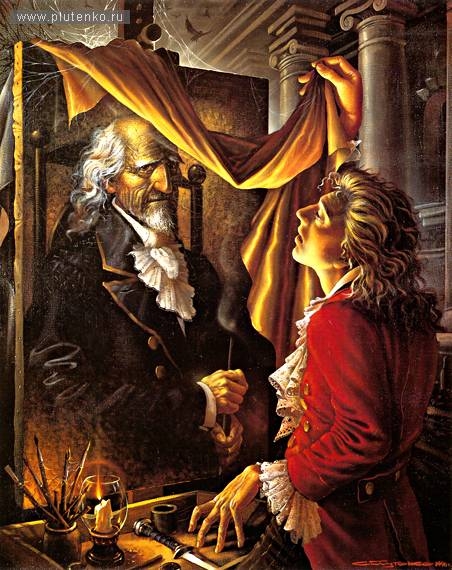
You won't need that portrait any more, Dorian...the Americans with Disabilities Act has you covered!

It is rare that an ethics train wreck of culture-wide proportions can be prevented with a firm, “Shut up, and go away!” This appears to be one of those times, however, and if anyone is reluctant, I hereby volunteer for the job.

Daniel S. Hamermesh, a professor of economics at the University of Texas, is shilling for his book, “Beauty Pays,” in which he proves the unremarkable fact that being attractive is an advantage in society , and being unattractive is an impediment. He recently hit the op-ed pages of the New York Times, writing, among other things, this:

“Why this disparate treatment of looks in so many areas of life? It’s a matter of simple prejudice. Most of us, regardless of our professed attitudes, prefer as customers to buy from better-looking salespeople, as jurors to listen to better-looking attorneys, as voters to be led by better-looking politicians, as students to learn from better-looking professors. This is not a matter of evil employers’ refusing to hire the ugly: in our roles as workers, customers and potential lovers we are all responsible for these effects.”

“How could we remedy this injustice?”

Whoa! There it is, the magic words that open the door for ham-handed social architects to do what they always to do, try to remedy the results of natural human proclivities and preferences with laws. Continue reading

Ethics and the Case of the “Large-Breasted Woman”


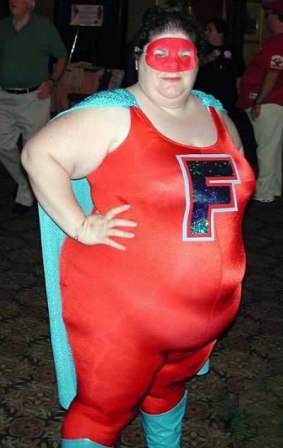
Now SHE'S what you call a distraction...

Illinois attorney Thomas W. Gooch III became the object of great hilarity in legal circles this week when he reacted to what he felt was an unethical courtroom tactic by his opposing counsel in a lawsuit by filing this motion in limine:

 Defendant’s counsel is anecdotally familiar with the tactics and theatrics of Plaintiff’s counsel . . . . Such behavior includes having a large breasted woman sit next to him at counsel’s table during the course of the trial. There is no evidence whatsoever that this woman has any legal training whatsoever, and the sole purpose of her presence at Plaintiff’s Counsel’s table is to draw the attention of the jury away from the relevant proceedings before this court, obviously prejudicing the Defendant’s in this or any other cause. Until it is shown that this woman has any sort of legal background, she should be required to sit in the gallery with the rest of the spectators and be barred from sitting at counsel’s table during the course of this trial.

Not surprisingly, the motion failed, and predictably, Gooch has become the latest villain in the gender wars, reducing a competent legal professional (according to attorney Dmitry Feofanov’s answer to the complaint) to the size of her bra cup and denigrating women generally. Continue reading

Sending Teenagers To Prison Forever

He's only 14. Could he really be irredeemable?

The Wisconsin Supreme Court has upheld a life sentence for a man who helped throw a boy off a parking ramp when the prisoner was only 14 years old. At issue was whether sentencing someone to life imprisonment without parole for a crime committed at such a young age was prohibited by either the U.S. or the Wisconsin Constitution. The Court ruled not, finding that no national consensus has formed against such sentences.

I can accept that this is the proper legal standard, and that the decision may be correct regarding the law. It is also ethically wrong.

All such problems involve line-drawing and its well-known slippery slopes: if a 19-year old can be sentenced to jail forever, how different is an 18-year-old? 17? 16? Before you know it, we are sentencing 6-year-olds to life imprisonment. We do not have to fall into that trap, however, to declare that it is unethical, though legal, to sentence a 14-year-old boy to an endless jail term. Why? The sentence lacks compassion, mercy, proportion and common sense.

Certainly the crime was a horrible one. Omer Ninham was convicted of first-degree intentional homicide for his role in the death of 13-year-old Zong Vang  in 1998. Ninham and four others between the ages of 13 and 14 accosted the boy  as he was riding his bike home from the grocery store. Ninham and another member of the group teased Vang, punched him, and when Vang ran into a nearby hospital parking ramp, assaulted him on the top floor. Ninham and a friend seized Vang by the wrists and ankles, and as Vang screamed for help, threw him over the edge. He fell five stories, and hit the ground “like a wet bag of cement hitting the pavement,” as a witness put it. Two years later, when Ninham was 16, a judge sentenced him to life without parole. Continue reading

Is Flogging More Ethical Than Incarceration?

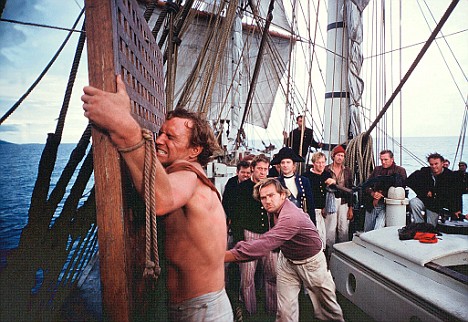
Ah, those were the good old days!

Peter Moskos is about to publish a book entitled “In Defense of Flogging.” He’s not really advocating a return to the Cat O’ Nine Tails, however, but engaging in a so-called “thought experiment”, which Moskos, an assistant professor of law, police science, and criminal-justice administration at the John Jay College of Criminal Justice, summarizes at the end of his article on the topic (in the Chronical of Higher Education) like this:

“So is flogging still too cruel to contemplate? Perhaps it’s not as crazy as you thought. And even if you’re adamant that flogging is a barbaric, inhumane form of punishment, how can offering criminals the choice of the lash in lieu of incarceration be so bad? If flogging were really worse than prison, nobody would choose it. Of course most people would choose the rattan cane over the prison cell. And that’s my point. Faced with the choice between hard time and the lash, the lash is better. What does that say about prison?”

I’ll answer that:  it says that imprisonment is a better and more efficient punishment for serious crimes than flogging, and who didn’t know that? Continue reading

Terry Jones’ Next Irresponsible Protest: Legal? Sure. Stupid? Yes. Ethical? Of Course Not.

We have to permit the stupid demonstrations to protect the important ones.

The latest drama surrounding irresponsible publicity addict, Quran-burner and gonzo Islam-hater Rev. Terry Jones is his attempt to get a permit to demonstrate outside  the Islamic Center of America in Dearborn, Michigan because, well, because it’s there, I guess.  Wayne County and Dearborn officials insist that he pay security costs that they estimate at about $46,000 before he will be allowed to incite more violence and riots overseas. These are a near certainty because a lot of people in other countries can’t understand why the United States lets its citizens say and demonstrate about any fool thing they want to. Continue reading

The Tears of Keith Ellison

The grand drama at Rep. Peter King’s Congressional hearings investigating the radicalization of American Muslims last week was provided by Rep. Keith Ellison, who broke down crying while telling the story of a Muslim-American hero, Mohammed Salman Hamdani, who rushed to lower Manhattan on the morning of Sept. 11, 2001 to assist in rescue efforts, and died in the collapse of the World Trade Center. Ellison said:

After the tragedy some people tried to smear his character solely because of his Islamic faith. Some people spread false rumors and speculated that he was in league with the attackers only because he was Muslim. It was only when his remains were identified that these lies were fully exposed. Mohammed Salman Hamdani was a fellow American who gave his life for other Americans. His life should not be defined as a member of an ethnic group or a member of a religion, but as an American who gave everything for his fellow citizens.

I found the performance odd and vaguely troubling, and now that I’ve thought about it for a few days, I know why. The statement by Ellison, who converted to Islam, and the tears that accompanied it, raise a few ethical issues, beginning with the Ethics Alarms standard, “What’s going on here?” Continue reading