
Social Science, Group Research and Bigotry: The Most Slippery Slope

Typical...

Decades ago, Arthur Jensen became a target of critics and a pariah in his field by publishing a controversial study that indicated that differences in racial performance on intelligence tests probably had a genetic component. He was, and is, called a racist, though Jensen has continued to produce respected research. Since the publication of the 1969 Harvard Educational Review article that made him infamous, Jensen has won the prestigious Kistler Prize in 2003 for original contributions to the understanding of the connection between the human genome and human society.

The problem with Jensen’s research results, whatever the legitimacy of the data and his methods, was this: What do you do with it? Like other studies that show women, as a group, with less aptitude for the sciences, or those that show superior traits in other races and ethnic groups, this information just serves as a catalyst for bigotry. Whatever the trends within a large group may be, they tells us nothing about any individual in that group. Yet the existence of a study creates a natural tendency to apply the claimed group characteristics to every group member. Most people think like that, always have and always will. This is similar to the problem with stereotypes. Many, perhaps most, stereotypes have some truth in them. I was raised in a Greek family, and Greeks are reputed to be clannish, cheap, bigoted, and gifted in the kitchen. Well, that would describe a large proportion of my relatives, too, but not all of them. My Aunt Bea is fanatically liberal. My Mom couldn’t cook a lick.  All right, they all were cheap, but the point is that it would be foolish and unfair to assume what any of them would be like without knowing them.

Knowledge is an absolute good, but perversely, some knowledge also guarantees abuse, and thus results in more bad than good. Jensen’s study, as far as I can see, has no good use in a democracy where every individual has the right to be assessed according to his or her conduct and character. Nor do any studies that “prove” character or ability differences in broadly defined groups.

This is all a prelude to my conclusion that the now widely publicized National Academy of Science study that has this conclusion-“Higher social class predicts increased unethical behavior”—is just throwing gasoline on a fire, and has no useful or benign purpose at all. Continue reading

The Great Norwalk Kindergarten Heist

The Tanya McDonald controversy

A homeless woman is facing 20 years in prison if she is convicted of stealing over $15,000 of Norwalk, Conn. taxpayer funds. The details of her crime are controversial: she lied about her residence to get her child into what she believed was a better school system, but one that, as non-resident, she was not entitled to use. The details also create a tangled mess of law, justice, ethics, fairness, compassion, public policy, finances, class and education.

Let’s try to unravel it, shall we? Continue reading

Trump’s Lament

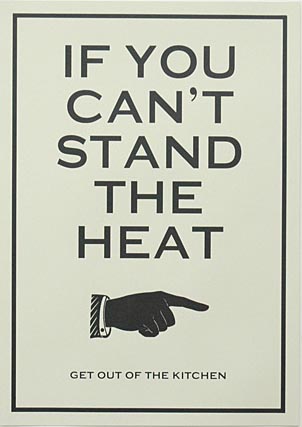
Can't you read the sign, Donald?

Was Donald Trump treated rudely and unfairly at the White House Correspondents Dinner, where he was made the target of sharp barbs by both President Obama and MC Seth Myers?

Trump thinks so, telling Fox and Friends, “Well, I really understood what I was getting into — I didn’t know that I’d be virtually the sole focus. I had no idea it would be to that extent, where you know, it was just joke after joke after joke. It was almost like, is there anyone else they could talk about?”

Trump is a poor sport, a whiner, a humorless fool, and deluded to boot. He spent the previous month accusing the President of the United States of being a liar, a fraud, a usurper, a poor student, and an illegal alien, appealing to the worst instincts of the most extreme Obama-haters and political foes. His conduct was most charitably and frequently defined as “a joke,” though it was worse than that. He comes to the Correspondent’s Dinner where the President has his one chance to skewer others the way comedians regularly skewer him, having provided by his own boorishness and hucksterism enough material to supply ten stand-up routines, not only claims to be surprised at the extent of his roasting, but is offended that he has to take his medicine. Continue reading

Ethics Dunces: Sen. Kerry’s Critics

Hypocrisy, unfairness…pick your own adjective for Republican and conservative attacks on Sen. John Kerry for saving himself some money by docking his $7 million yacht in Rhode Island, where he could avoid Massachusetts’ s $435,000 one-time tax and an additional $70,000 in excise taxes every year. Incredibly, talk show host Sean Hannity just called Kerry a “tax cheat,” although Kerry is breaking no laws, has no obligation to make sure his home of Massachusetts gets all of his tax money, and is doing what all wealthy Americans—usually championed by Hannity and others as those who create jobs and make the country prosperous—do: using  available loopholes, safe harbors and tax minimization methods to hold on to as much money as he can. Continue reading

Jeter, Bob Sheppard, and Funeral Ethics

Bob Sheppard, the “Voice of God” who announced batters in games at Yankee Stadium from Joe DiMaggio to Mark Teixeira, died this month at the age of 99. Yankee shortstop Derek Jeter announced that henceforth he would be introduced by a tape recording of Sheppard’s distinctively cultured tones, and the tributes from former players and current team members were generous and loving.

But when Sheppard was finally laid to rest over the All Star Game break, no Yankee player, past or present, took the time to attend his funeral. The team itself sent appropriate representation, and General Manager Brian Cashman spoke. Still, some journalists, bloggers and New York sportswriters found fault with the complete absence of the Yankee players, considering Sheppard’s iconic stature and their stated admiration of the man. The Daily News’ Bill Madden called it a blatant lack of class.

Perhaps. I’d call it coldness and insincerity. Continue reading

Ethics, Punishment and the Dead Child in the Back Seat

Washington Post columnist Gene Weingarten received a Pultitzer Prize for his feature, “Fatal Distraction: Forgetting a Child in the Backseat of a Car Is a Horrifying Mistake. Is It a Crime?” Focusing on the grief of parents who caused the deaths of their own children by negligently leaving them locked in over-heated cars, Weingarten, to his credit, doesn’t advocate a position in his article, although it would be impossible to read it without feeling compassion and empathy for his subjects, both those who have been prosecuted and those who have not.

The article squarely raises a classic ethical conflict, as well as the question of the role of punishment in society. As always with ethical standards, the issue ultimately encompasses how we decide what is in the best interests of society. Weingarten points out that there is no consensus on whether parents who inadvertently kill their children in this way should be brought to court: some prosecutors bring charges, others do not. Which is right?

I don’t like my answer much, but I think it is inescapable, once the emotion is left behind. Continue reading

Is Immortality Unethical?

When a writer posits an intriguing theory and then fails to support it credibly, there are only a few alternate conclusions the reader can reach. One is that it is a viable theory, but the advocate didn’t have the skills to explain it. Another is that it is a mistaken theory, and the advocate is wrong. A third is that the failure of the writer to make a case for his theory shows how wrong it is.

A recent article in The Guardian is in the last category, I suspect. It is an argument so inadequate and dominated by flaccid rationalizations  that it nearly disproves the proposition it is supposedly defending. The thesis: “Immortality isn’t unethical.” Continue reading