
The Message or the Messenger: The Mysterious Foundation For A Better Life

Does it matter who's behind the curtain?

The Foundation for a Better Life sponsors those slick TV spots promoting ethical values like kindness, sportsmanship, charity, and sacrifice. I have long wondered where they came from, and belatedly visited the organization’s website, Values.com, where I spent quite a while clicking through their extensive links to descriptions of core ethical values and inspiring stories. Not bad. The only deficiency I could see with the site was the lack of any explanation regarding how the Foundation was funded, who ran it and who was responsible for it. The site describes itself thusly:

“The Foundation is a non-profit 501(c)(3) organization, started in 2000. Our sole objective is to promote positive values, using print and broadcast media.

We want the stories we share about the positive actions and values of others to serve as inspiration for someone to do one thing a little better, and then pass on that inspiration. A few individuals living values-based lives will collectively make the world a better place.

The Foundation does not have a political or religious agenda. Our values are selected with the hope that most individuals would find these values universal, encouraging, and inspiring. The Foundation acknowledges that each person has a unique lens through which he or she views the world. Naturally there are religious, nonreligious, political, and cultural views that give meaning to our lives. Our objective is to provide a wide spectrum of values without any intended agenda or slant and provide an uplifting message around each one.”

And this appears to be exactly what the Foundation does. Continue reading
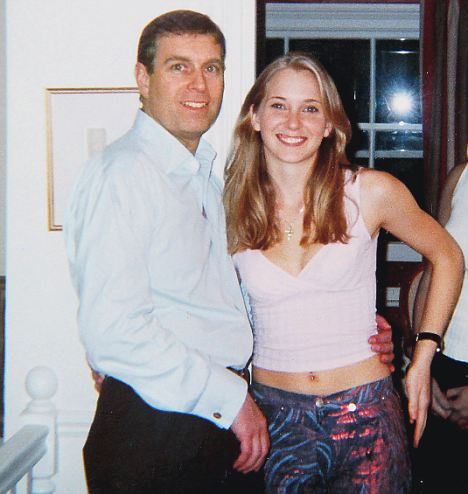
The Prince, The Sex Offender, and the Ethics of Friendship

Prince Andrew with one of his friend's victims in 2001

The ethics of friendship is complicated.

President Bush claimed to be friends with Vladimir Putin. F.D.R. once said that Josef Stalin was his friend. President Obama was famously friendly with dubious characters like Rev. Wright and William Ayres.

History is full of heroes and near-heroes who had infamous friends, though the extent of the often friendship is difficult to know. Sammy Davis, Jr. and Elvis were supposedly buddies with Richard Nixon. Bill and Hillary Clinton were close friends with Dick Morris. Wyatt Earp was a life-long friend of “Doc” Holliday; Andrew Jackson may have been friends with pirate Jean Lafitte, who helped him win the Battle of New Orleans. We simultaneously celebrate loyal friends, and yet we also judge people by the company they keep. Should we condemn individuals who have friends with serious character flaws or a history of unsavory acts? Or should we admire them for sticking with their friends when everyone else is turning against them? Continue reading

Five Ethics Questions and Answers: Bristol Palin’s Undeserved Survival On “Dancing With the Stars”

This week, once again, the clunky Bristol Palin, Sarah’s daughter, survived elimination from “Dancing With the Stars,” and now is in the Final Three. A far better amateur dancer, pop singer Brandy, who had one of the week’s best scores, was sent home instead. The entertainment media is howling with indignation. What does it all mean?

Question 1. Is Bristol Palin Sanjaya? Continue reading

Dishonoring Honors: Tina Fey, Derek Jeter and the Death of Award Integrity

We should have seen this coming. Once the most prestigious award of all, the Nobel Peace Prize, was bestowed on President Obama because, to paraphrase Sally Field, “They liked him! They really liked him!,” it was clear that the whole concept of maintaining the integrity of awards was being abandoned. More dispiriting proof arrived yesterday in the fields of comedy and baseball, when the Mark Twain Prize, given to artists who have made major and significant contributions to American comedy, was awarded to Tina Fey, and the Gold Glove Award for the American League’s best fielding shortstop went to New York Yankees shortstop Derek Jeter. Continue reading

Oscar, Jean Luc-Godard, and the Ethics of Honoring Talented Creeps

The Academy of Motion Picture Sciences will be giving an honorary Oscar to French director Jean-Luc Godard, and nobody who knows anything about film can object to the award on the basis of merit. Godard is one of the most influential film makers who ever yelled “Cut!;”  there are dozens of film classes about his work in schools all over the country. He makes great movies, and has for decades. He deserves the honor.

Or does he? Mr. Godard, it seems, has also been resolutely anti-Jewish, at least in his sentiments, for almost as long as he has been making classic films. Some in the industry and without are questioning whether Hollywood should be honoring a likely Anti-Semite.

Excuse me…did I miss something? When did the rest of the Oscars get junked, leaving only the Jean Hersholt Humanitarian Award? Continue reading

Obama’s “Enemies,” Pat Caddell, and the Cognitive Dissonance Misdirection

The Cognitive Dissonance Misdirection (CDM) is as old as politics. I’ve written about it here before, but finally have decided that it deserves a formal name–especially because it has been shamelessly employed by news media attempting to minimize, obscure or bury legitimate criticisms of Barack Obama and his Administration.

Cognitive dissonance is created when something an individual feels strongly about is associated in some way with something else. If the individual strongly likes, admires, or desires the first thing, cognitive dissonance will draw the second thing into his favor. If the individual intensely dislikes the first thing, he will begin to feel more negatively toward the second thing now linked to it. This why, for example, popular celebrities get product endorsement deals, and unpopular ones don’t. When Denzel Washington or George Clooney says he likes a car, people start liking the car too. If the same car were endorsed by, say, Lindsay Lohan or O.J. Simpson, a lot of people would assume it was a lemon…and they might not even realize why. Cognitive dissonance works its influence subliminally, and that’s why it is such an effective tool of persuasion…and bias.

The media’s version of this has been perfected over the last two years. When a legitimately troubling comment, action, incident or gaffe reflecting badly on the President, his Administration, or his staff occurs, the mainstream media has often not reported the issue straight, as in “This happened,” or “Obama said this,” but by immediately linking the story to the President’s presumably biased adversaries—Republicans, conservatives, and talk radio—and making the criticism the story, as in, “Republicans are attacking President Obama’s  communications director Anita Dunn’s comments that seemed to praise Mao Zedong.” The fact that a high-ranking White House figure praising the greatest mass murderer in history, even in jest, is news, and should be criticized by Left and Right, was muted by the reporting of it. Continue reading

Primary Ethics: Good and Bad Results for Civic Diligence

The tendency of American voters to hand over the reins of power to the sons, daughters, and wives of popular or successful leaders simply because they shared a last name, a bed or some DNA has always been an embarrassment, proof of the most unfortunate aspects of democracy when it is driven by civic laziness rather than diligence. Beneficiaries of this generations-long deficit in seriousness and responsibility include presidents (Adams, Bush); U.S. Senators (Kennedy, Gore, Clinton, Bayh,**), representatives (Kennedy, Bono, Jackson…), and governors (Bush, Bush…). Some have performed well, some not so well, but all of them were initially elected because voters knew their names, and illogically ascribed to them whatever it was that they admired about their family members, regardless of experience, qualifications, or evidence of governing skill.

In Tuesday’s primaries, voters rectified one especially egregious example of this phenomenon, and committed a new one. Continue reading

Ethics Dunces: Charlie Rangel’s Birthday Celebrants

From “The Hill”:

“Democratic leaders and major party donors plan to hold a lavish 80th birthday gala for Rep. Charles Rangel (D-N.Y.) at The Plaza Hotel in Manhattan next month, despite 13 ethics charges pending against the veteran lawmaker.”

Apparently New York’s U.S. Senators Charles Schumer and Kirsten Gillibrand plan to attend, as well as New York Gov. David Paterson and gubernatorial candidate Andrew Cuomo—Democrats all.

Here is the ethical problem—and it is hardly rocket science. When a public figure’s misdeeds are more prominent in the public’s view than his or her lifetime accomplishments, it is impossible to celebrate the latter without appearing to endorse, support, or other wise fail to show sufficient disapproval of the latter. Continue reading

Charlie Rangel, Ethics Corrupter

Rep. Charles Rangel—statesman, icon, war hero, and Congressional force of nature—stands accused of ethics violations many and serious, ranging from using his influence to raise money for an institution named after him, to accepting trips and other benefits from special interests, to failing to pay his taxes. Actually, “accused” is a technicality in Rangel’s case, or rather cases, because the facts are plain and damning in every single one. House Speaker Nancy Pelosi initially refused to do anything about Rangel (he was eventually asked to step down, if only “temporarily” from his position as Chairman of the Ways and Means Committee) by saying, “Wait for the results of the investigation.” She meant, considering the shameless politicization of the House ethics process, “Let’s see if he can skate by this time.” He couldn’t. Rangel did all of the conflicted, reckless and irresponsible things he has been accused of, and actually admits doing most of them. He refuses to resign, however, and proclaims his “innocence,” not because he didn’t do unethical things, but because he doesn’t believe it should matter. Continue reading

CNN’s Ocatavia Nasr: Another Victim of Cognitive Dissonance

Octavia Nasr, a CNN editor and reporter for two decades, just got her walking papers for a 140-character tweet reading, “Sad to hear of the passing of Sayyed Mohammad Hussein Fadlallah.. One of Hezbollah’s giants I respect a lot.” The problem is that this particular “giant” was an anti-American, anti-Israeli terrorist who advocated suicide bombings and who encouraged terrorist acts by Hezbollah. In an explanatory blog post that failed to save her job, Nasr blamed the limitations of Twitter, and explained that she didn’t really admire him, just his stance against the abuse of Muslim women.

Maybe. Continue reading