Different Symptoms, Same Ethics Illness: The Mike Rice-Rutgers Scandal And The Sandusky-Paterno-Penn State Tragedy

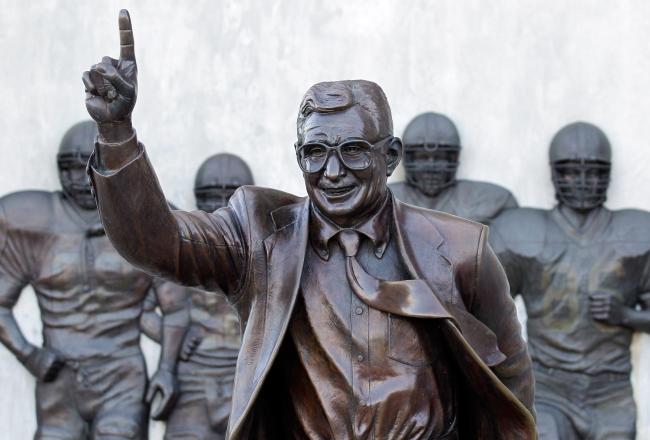
Missed out on your statue by thaaaat much, Mike.

Missed out on your statue by thaaaat much, Mike.

The question isn’t, as many news reports would have us believe, whether the Mike Rice affair mandates an administrative house-cleaning at Rutgers. Of course it does. The question is why, after the far uglier Penn State scandal, anyone possessing the gray matter of the Scarecrow from “The Wizard of Oz” thinks otherwise.

In case you are really smart and pay no attention to the dire ethics swamp known as college sports: Mike Rice was a very successful Rutgers basketball coach until ESPN got a hold of a video compilation of him abusing his players on multiple occasions. Though the Rutgers athletic director had seen the damning evidence in November, he let Wise off with a fine and suspension; then the recent national exposure forced him to fire Wise. This prompted Rutger’s president, Robert Barchi, to fire the athletic director (Tim Parnetti) for not taking appropriate action once he had discovered his coach was hitting, assaulting, and taunting players. And Barchi? Even though he knew, or should have known, that Rice’s methods were unacceptable, he never looked at the video (or so he says) that was available to him six months ago, until April. The New York Times reports that many Rutgers officials as well as the university’s outside attorneys knew that Rice was abusing his players,and that he had been doing so for years.

The net lessons learned from the Penn State disaster are zero. As the Times article says, “interviews and documents reveal a culture in which the university was far more concerned with protecting itself from legal action than with protecting its students from an abusive coach.” Yes, a coach attacking student is far short of child-molesting, but that’s  irrelevant: the corrupt cultural syndrome is exactly the same.  Rutgers, top to bottom, placed winning basketball games above sportsmanship, decency, fairness, and protecting their own students. The difference between Rutgers and Penn State is Joe Paterno and moral luck.

Let us be clear: if a teacher physically assaults a student, anywhere, at any level, ever, that teacher has to be fired, and probably prosecuted. A coach is no different. This isn’t open to debate. Yet I listened, as my gorge rose, to the glib and simple-minded conservative radio host Sean Hannity jabber with ex-Notre Dame football coach and facile “inspirational speaker” Lou Holtz about how Parnetti got a raw deal. Why? Parnetti built a great program! So he lets his coaches assault his players—anyone can make a mistake! Isn’t this hindsight? Second-guessing?

“Players are spoiled today; they just aren’t ready to be criticized,” said Holtz, who speaks in platitudes and nostrums that cover a Neanderthal sensibility (so you know he’s much in demand for corporate speaking gigs.)  These men are both ethics-challenged fools, but they have plenty of company.  Rutgers’ report on Rice’s abusive treatment assembled excuses and rationalizations by the authors and others. Rutgers athletic assistants said the video clips showing Rice kicking his players and throwing objects at them “were taken out of context.” What?? In what “context” is it appropriate for a college coach to do this? None! Many of Rice’s players said he prepared them well for tough competition. The report noted that under Rice’s abusive, tortious methods, the players’ grades rose to a B average. Oh! Well, that must mean assault and battery is okay, then, because it works!  This is the ethical standard Rutgers is teaching its students.

Parents everywhere: grab your student and run.

Elsewhere, Rutgers’s internal report called Rice “passionate, energetic and demanding” and concluded that his intense tactics were only aimed at improving his team and “were in no way motivated by animus.” Ah! So beating kids is okay, as long as it’s well-intentioned! This culture is sick, sick, sick and as with Penn State, it is part of a large sick culture that pervades university sports. Here’s one official from another sick school defending Parnetti:

“I think it was unfair for them to fire Pernetti. There were probably a lot of things that went into the decision not to fire Mike Rice in December. And as gruesome as that tape was, it was also a first offense for Mike Rice. I think Pernetti is taking the heat for everything and sometimes in leadership roles you take the glory probably more than you deserve and you take the heat more than you deserve. I think right now Pernetti is taking the heat more than he deserves.”

A first offense???? The video was compiled from dozens of incidents, and Rice’s penchant for violence and abuse were already known! Yeah, there were  “a lot of things that went into the decision not to fire”  Rice, none of which add up to a single good reason not to get rid of any coach who beats up kids in his charge.

The New York Post interviewed a college official who believes its all Facebook and Twitter’s fault:

“The whole situation, top to bottom is a shame. But my opinion is that there is no manual or rule book for how to handle these types of situations. To say (Pernetti) should have handled this situation a certain way, well unless you’ve been in his shoes, it’s hard to comment on it. Obviously there was a reason why Pernetti kept Mike Rice around. What was that reason? We don’t know. But one thing I saw was that his kids, his players backed him. So In my opinion do you know what got Mike Rice and Tim Pernetti fired? Social media got them fired. People make comments and form opinions without knowing all the facts sometimes. That’s the world we live in now.”

Yes, there is a rule book, and it’s called ethics, not that this guy, or whatever college he works for, would recognize it. “Unless you’ve been in his shoes”? The translation of this fatuous and offensive rationalization is simple: “Hey, there’s a lot of pressure on this guy to win, and he’s not going to let a couple of bruised sophomores jeopardize the won-lost record and alumni support. I bet you’d let the kids get beat up too.”

I wonder what schools those two anonymous officials work for? That’s the frightening part;  they could be working at almost any big time sports school, because that’s the predominant culture there.

__________________________

Sources: New York Times, Sean Hannity, New York Post

Sports Ethics: Come and Get It!

Kirk O. Hanson and Mark Savage have prepared useful and provocative materials on the broad topic of ethics in sports, and have posted them over at the excellent Markkula Center for Applied Ethics site.

It’s one of my favorite topics, and with Lance Armstrong finally shedding his mask, that Penn State scandal and surprise steroid suspensions in Major League Baseball, it has never been more current. These four essays, presented under the heading, Sports Ethics: Matching the Issues, can be found here:


Comment of the Day: “Is Buzz Bissenger Right? Should College Football Be Banned?….”

You’ve read the Comment of the Day….now read the book!

In his Comment of the Day, Michael elaborates on the ethics of college sports generally, going beyond the original topic of major football programs. The expenditures on student athletes is an ethics scandal all by itself, as Michael makes clear. When the headlines in the D.C. area were all about Maryland cutting eight varsity sports, I was stunned to learn 1) that the university spent a whopping $67, 390 per student athlete, and that this was the lowest amount in the the ACC (as opposed to Florida State’s $118, 813).  What possible justification could there be for this, when tuition costs are already crushingly high? Michael’s post makes the answer clear: none.

Here is Michael’s Comment of the Day, on Is Buzz Bissenger Right? Should College Football Be Banned? Is He KIDDING? Of Course It Should…:

“What is shocking is how big an impact this has on college student lives and how little anyone actually cares about learning and how little people actually care about the college students.

“If you have seen the news recently, there is a debate going on about college loans. There are also stories every few days about the high costs of college and skyrocketing college loan amounts that are the next big bubble to burst in the economy. It is obvious that this is going to end badly, with devastating consequences for the students, the education system, and the whole of US, but no one wants to actually do anything about it. Everyone wants to just stick their fingers in their ears and hope it will all turn out OK like that mortgage-backed-securities thing did. If you want to get to the bottom of the problem, you first need to start looking at where the money goes.

“How much does college actually cost?” Continue reading

Is Buzz Bissenger Right? Should College Football Be Banned? Is He KIDDING? Of Course It Should. And Everybody Knows It.

Scholars all, I’m sure.

Not for the first time, sportswriter and commentator Buzz Bissinger has everybody buzzing about one of his frank opinion pieces, this one launched in the Wall Street Journal. His provocative title: “Why College Football Should Be Banned.”

Bissinger deserves credit for being willing to bite the hands that feed him: he is the author of “Friday Night Lights,” and many of Bissinger fans, at least up to now, tend to be football fans too. His article, however, is also one of those periodic slaps in the face of cultural apathy that occasionally causes a shift, as when Harriet Beecher Stowe wrote a little novel that alerted a lot of people to the obvious fact that a system in which human beings were bought, sold, and bred like cattle might not be consistent with civilized morality. It doesn’t take a genius, a revolutionary or a careful analyst to conclude that big time college football is corrupt and corrupting to the core. It only takes a willingness to brush aside rationalizations and face the truth.

Here are the arguments Bissinger presents to support his thesis:

  1. Football has nothing to do with academics.
  2. It is a distraction from both the purpose of higher education and attention to the serious problems facing the university system.
  3. With college tuition reaching outrageous levels and the college loan system teetering, university expenditures on pricey football programs are unconscionable.
  4. The major beneficiaries from college football are the NFL, which uses it as its minor league system at minimal cost; pathetic alumni, who wrap their self-esteem up with the fortunes of their alma mater’s football fortunes; and obscenely-compensated football coaches.
  5. Football programs, contrary to what the public might think, often lose money and become a drag on tuition funds.
  6. Colleges like Maryland have cut other varsity sports (eight of them, in Maryland’s case) to allow it to pay for football.
  7. The representation that the athletes are students is largely a sham, with many of them failing to graduate and the majority spending minimal time on substantive course study.
  8. The athletes are exploited.
  9. The game entails serious health effects, primarily head trauma, that are only now being recognized.

I’m sure we can come up with a #10, too. Oh! I have one: Penn State. We were just given a front row seat to a frightening display of how even a “model” football program could warp the priorities and ethical values of an entire campus culture.

Of course Bissinger’s attack has college football supporters scrambling into a defense formation. What can they come up with? Not much, but it’s a fascinating study of how rationalizations rush into voids caused by the lack of substantive arguments. One college football-hyping blog’s first response was this: Continue reading

Ethics Quiz: The Purloined Championship Team

Within hours of winning a Final Four national championship, a triumphant college coach not only jumped ship and went to another university, the coach took the entire championship squad.

Nobody went nuts about this over at ESPN, however, because the championship was in chess.

Texas Tech chess coach Susan Polgar took her entire all-star squad of seven chess grandmasters from Texas Tech to private Webster University in suburban St. Louis, home to the World Chess Hall of Fame and the U.S. national championships. Polgar is unapologetic for gutting the Texas Tech elite chess program that she built there beginning in 2007 . “The program grew rapidly, and Texas Tech wasn’t ready to grow with the speed of the program. St. Louis today is the center of chess in America. It just seemed like a perfect fit.”

I’m sure it is, but that leads to your Ethics Quiz: Is it ethical for a coach to take a school’s championship team with her when she accepts a position elsewhere? Continue reading

Taking A Stand On Privacy, As Ethics Alarms Go Silent

"Oh, all right---as long as I get that job."

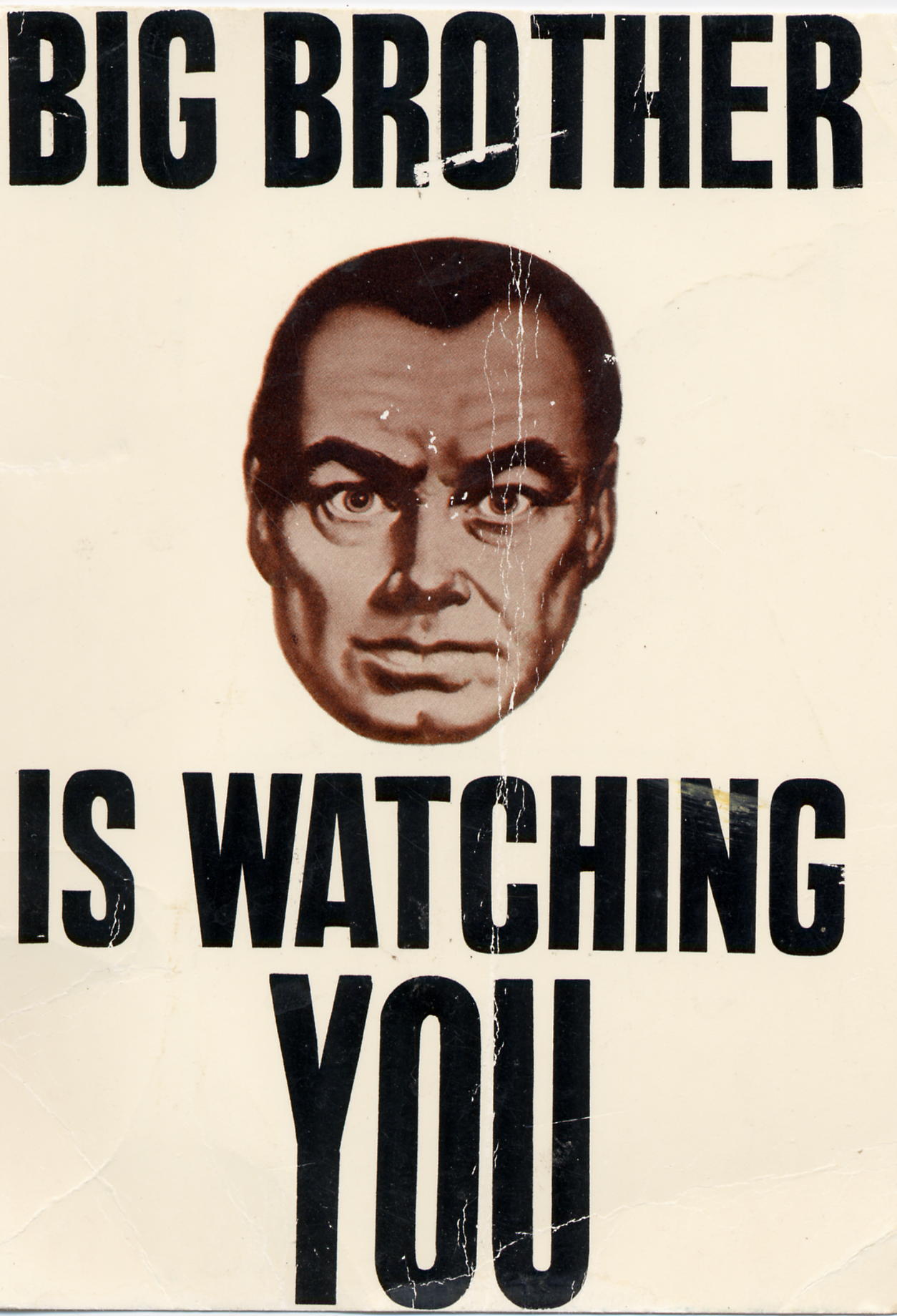
The cultural consensus on the boundaries of personal privacy are eroding more quickly than I imagined. There are a lot of reasons for this: the intrusions of technology, increased government intrusiveness as part of anti-terror measures, utilitarian calculations that conclude that privacy should be sacrificed for supposedly more worthy objectives, like preventing bullying, or discouraging sexism and anti-gay attitudes. Whatever the reasons, it is crucial that society puts the brakes on, hard, or George Orwell’s nightmare will arrive remarkably intact, just a few decades late.

A stunning report on the MSNBC blog Red Tape reveals that some state agencies are routinely requiring job applicants, as a condition of employment, to provide full access to their social networking accounts so their otherwise private communications can be monitored. Equally disturbing, college athletes at many colleges are being required to “friend” a coach or other university personnel, who can keep tabs on what the student is posting. From the University of North Carolina handbook: Continue reading