Now THIS Is An Ad Hominem Attack! or “Boy, Is Howard Dean An Ass, or What?”

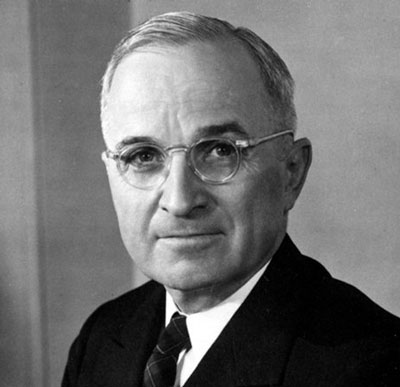
“True, Harry didn’t go to college, but he’s a Democrat.”

People commenting on Ethics Alarms constantly accuse me of making ad hominem attacks, when what they mean to say is “You’re name-calling.” I’ll cop to name-calling. It’s can be a bad habit, but it has its uses, best illustrated when President Ronald Reagan referred to the Soviet Union as an “evil empire.” The description was true, and it immediately focused values-based criticism on a government and culture that needed it and deserved it.

Ad hominem, in contrast, is a logical fallacy in which one attempts to counter a substantive argument by attacking the character or other aspects of the advocate that can’t possibly have any bearing on the argument’s validity. For example, “you’re uglier than a pug” does nothing to disprove the substance of your adversary’s position, even if he is. Similarly, Bill Cosby has argued, even before 34 women accused him of raping them, that his advocacy of black community responsibility should not be undermined because of questions about his own rectitude.

There is nothing inherently fallacious, however, about diagnosing the conduct or statements of someone as proof that he or she is a fool, or a liar, or a jerk. It may not be civil, and it may be unfair, but it is not an ad hominem attack. As I have  explained it before, if I say you are an idiot because I think your comments are idiotic, that is a legitimate, if rebuttable assumption. (I may also be using “you are an idiot” as shorthand for “you are talking/sounding/acting like an idiot, and should avoid that.”) If I say you are an idiot, and therefor everything you say must be dismissed and ignored as the rantings of an idiot, that’s an unethical debating technique, ducking the argument by impugning the advocate.

Distinguishing between these very different but similar-appearing phenomenon can be a problem when trying to be fair to someone whose prior statements and conduct have already generated a negative diagnosis, and thus a bias. I have concluded, for example, that Joe Biden is a dolt, that Michele Bachmann is not playing with a full deck; that Sarah Palin is intellectually lazy and irresponsible, that Newt Gingrich is manipulative and untrustworthy, that Bill Maher is a pompous, none-too-bright blowhard and that Howard Dean is a vicious and unscrupulous ideologue. Nonetheless, I have to fight to assess what they say on the basis of merit, not my well-considered assumptions. It’s hard. When an idiot asserts something, is it unreasonable to be more skeptical of the statement than one would if, say, a brilliant, credentialed, unbiased observer said the same thing? (Wow—I can’t think of a single one!) No. And this is why ad hominem attacks, especially coy, subtle, clever ad hominem attacks, work so well in politics.

This brings us to that vicious and unscrupulous ideologue, Howard Dean. Continue reading

Bizarro World Ethics At Harvard

Bizarro

We will pass with little notice or comment the weird exploits of Eldo Kim, the 20-year-old Harvard University sophomore accused of emailing a bomb threat that cleared out Harvard Yard this week during exams, apparently because be wasn’t ready for his. How completely devoid of ethics does one have to be to do something like this? And how dumb! He undermines the efforts of all his fellow students who are prepared for their exams, causes fear and panic on campus, causes disruption, inconvenience and expense to the university, and all because he either didn’t study sufficiently or wasn’t prepared to fake his way through an exam like most students, all while risking arrest, trial and conviction for a serious crime that will harm his future prospects far more than any poor exam performance might. Today we learned that Kim was a psychology major studying partisan taunting. He was worried about passing an exam in partisan taunting?

Adding to the strangeness, a controversy erupted this week when veteran Harvard professor Harvey Mansfield expressed his outrage that a recent study had revealed that the most common grade given to Harvard students is A, a practice, he says (and correctly so) that penalizes genuinely outstanding students and allows slackers to slide through Old Ivy without breaking a sweat. Jeff Neal, the hapless Harvard spokesman assigned the job of spinning this revelation, confirmed the accuracy of the Mansfield’s claim, and said, maybe without giggling: Continue reading

Ethics Quiz: “How You Gonna Keep Her Teaching The Class After It’s Seen Paree?”

horrified students

…..or “It May Not Be The Naked Teacher Principle, But It May Still Be A Problem.”

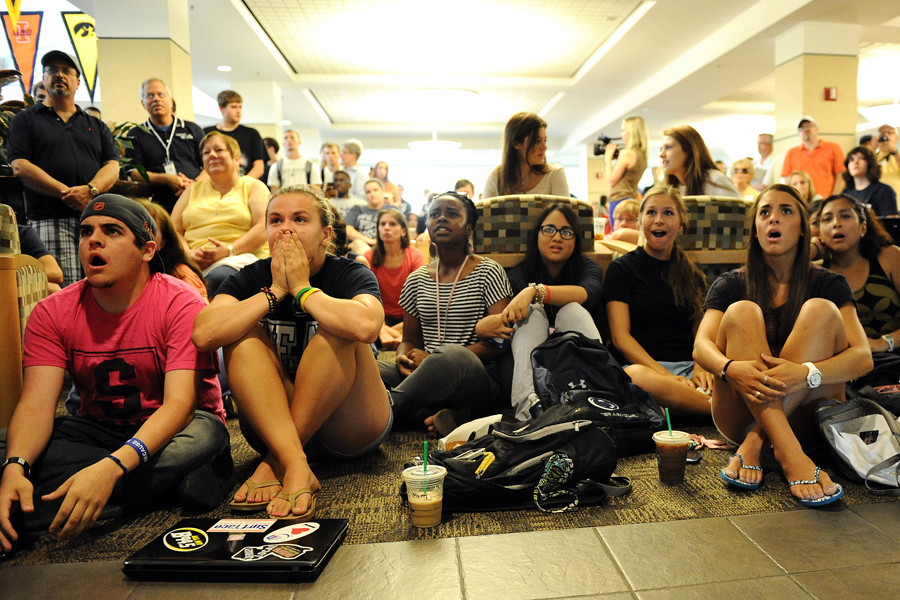
In the wake of the most recent post here about the Naked Teacher Principle, Ethics Alarms received many inquiries from readers who cited the news item about the hapless teaching assistant at the University of Iowa who somehow managed to send her class not merely sexually provocative photos of herself, not merely nude photos of herself, but something much more kinky. Attached to a message that read “Hi Class, I attach the solutions for number 76 and 78 in this email” were a series of images showing the young woman sans clothes and sans inhibitions having a lively cyber-sexting chat with a partner in which the two were pleasuring themselves in front of video equipment while streaming to each other.

Hmmm. That didn’t come out quite right.

Anyway, the question was: Does this conduct, which goes well beyond the conditions of the Naked Teacher Principle but which occurred at a university rather than a high school or middle school, trigger said principle, regardless of intent?

The answer is no, not regardless of intent. Continue reading

“The Ethicist” Gets Lost: Bad Advice, Worse Defense, In The Case Of The Self-Plagiarizing Student

Oh, Chuck, Chuck, Chuck...

Oh, Chuck, Chuck, Chuck…

Chuck Klosterman,The New York Times’ third “Ethicist,” ruffled ethics feathers last week when he decreed that submitting the same paper to multiple college courses was ethical. (You can read his advice to a guilty-feeling student here.) Essentially, his argument in the column came down to three rationalizations, The Compliance Dodge (No rules were broken!), the Trivial Trap (It’s no big deal, and nobody was hurt ) and my least favorite of all, The Comparative Virtue Excuse ( “You’re not betraying the public’s trust,” Klosterman says—in other words, “At least you didn’t kill someone.”),with nods to several more. On the first, which is a close relative of Marion Barry’s Excuse, so you know what I think of it, Klosterman essentially argues that following formal rules constitutes sufficient ethics, which is the hallmark of the unethical. On the second, he himself cheats: he says no one was harmed, yet he ignores the fact that the student intentionally kept the fact that he used one paper for two assignments from the professors involved. Why was that? The student didn’t tell the professors because he knew they wouldn’t approve. Thus the student withheld information that was material, that would have resulted in negative consequences, and that the professors making the assignment had a right to know. That’s a failure of candor and a breach of the duty of honesty in communications. That’s unethical. Continue reading

Policies Don’t Fix Unethical Professors

“Here is your assignment, class: Vote for who I tell you to.”

I saw this story and decided it was too obvious to write about. A community college math professor distributes to her class a pledge to vote for Obama and the Democratic slate, and demands that the students sign it—come on! Is anyone going to defend that as ethical? Then a reader sent me several links to the item (thanks, Michael), and after reading them, I was moved to reconsider.

The professor, Sharon Sweet, was put on unpaid leave pending an investigation; I can’t fault Brevard Community College (in Florida) for not firing her yet. What troubles me is the college’s statements that her conduct is just a breach of policy. BCC Spokesman John Glisch told the press that “The college takes this policy [prohibiting employees from soliciting support for a political candidate during working hours or on college property] extremely seriously. It is very important that all of our faculty and staff act in that manner at work and while they’re on campus.” So college provosts are reminding employees about the policy.

Let’s be clear. Associate Professor Sweet’s conduct was an abuse of power and position, an insult to the autonomy of the students and an attempt to take away their rights as citizens, disrespectful to them and the values of the nation, and an attempt to circumvent election laws and to subvert democracy. It was also, quite possibly, illegal. If a college needs to have a policy to stop teachers from behaving like that, it is hiring the wrong kinds of teachers—individuals whose ethics are those of totalitarian states, and whose respect for individual rights are nil. This was an ethical breach of major proportions, not a policy misunderstanding. No teacher should require a policy to tell her that this conduct is indefensible and wrong. Continue reading

Lesson of the Asian-Bashing UCLA Video: Shunning and Intolerance Work. Good.

Alexandra Wallace...cultural critic, YouTube star, pariah, GONE

Alexandra Wallace, the UCLA student who created an obnoxious and offensive video stereotyping her Asian colleagues as gibberish-spouting boors,  announced that she was leaving the school as a result of “being ostracized” by “an entire community.”  Yes, I’d say that was the idea, and it is how cultures enforce its values. And it works.

Wallace picked the day of the Japanese tsunami to post her anti-Asian rant on YouTube, where it promptly went viral. It also made her an instant pariah on her campus, where over a third of all students are of Asian heritage, and the rest of them, unlike Alexandra, have at least a vague concept of mutual respect and decorum.

You can read a complete transcript of the three-minute diatribe here, but this shortened version gives a sense of what infuriated Asians, UCLA, and just about everyone else: Continue reading

Handshake Ethics, Professionalism, and Rand Paul

Democrat Jack Conway, attempting to take down his opponent for the U.S. Senate seat in Kentucky, Rand Paul, decided to go low. He employed a number of personal attacks including questions about Paul’s participation in a harmless, if bizarre college prank that had been the subject of a blatantly unfair article in Gentleman’s Quarterly. It was a desperate, mean, and unprofessional performance by Conway. Paul was obviously and understandably furious.

At the end of the debate, Paul rushed by Conway, ignoring his outstretched hand. I sympathize with him. I empathize with him. In the heat of the moment, having just had my opponent smear me on television with tales out of school—literally—I might have even done the same thing, though I hope not. Nevertheless, Paul rejected a vital ritual as well as a cardinal rule of civility in the political arena, where, as in the sporting arena, the handshake after the contest sends a symbolic message of reconciliation, forgiveness, respect, and most of all, professionalism. Continue reading

GQ’s Unethical Rand Paul Smear

I had a college room mate who used to strip down to his BVD’s and put a traffic cone over his head. Then,using a broom as a baton, he would burst into a room where one of our other room mates was courting a date, and march around singing “Can’t get enough of those Sugar Crisp!”

He’s now a high school principal. Another of my roomies once won a bet by secretly planting a ;large pile of some form of excrement in my bed. He’s a well-respected Wall Street broker. Yet another roommate delighted in jumping out from behind doors, naked, and assaulting us with the painful move known as a “titty-twister. He a runs a construction company, and is the best father I know. And me? I spent much of my college career engineering elaborate practical jokes and capers, including an infamous scheme to steal  the new sofa in the suite of some classmates, which they had stolen from an upperclassman.

Which all goes to show that much of the conduct of college kids, in the insular womb of academia, has nothing to do with the real world, and less than nothing to do with the character, judgment, taste and decorum they will need to demonstrate in their careers and family life. Furthermore, conduct that would be wholly unacceptable and even illegal off campus is hijinks and social experimentation on it. Anyone who doesn’t know that either never went to college, or had a really boring four years there.

It is in this context that the so-called Rand Paul “expose” in Gentleman’s Quarterly is so unfair, so contrived, and such atrocious and unethical journalism. Continue reading

Ethics Quote of the Week

“One of my students this year has a vaguely Hispanic name but is literally the whitest girl you’ve ever met. Her mother straight out asked, ‘If we mark she’s Latino on the application, is that something that they would ever challenge?’ I told her honestly my best guess, which was no. And, if early admissions are any indication, it seemed to work.”

—-A  guidance counselor (and former Ivy League admission officer) at a private school in the South, quoted by Kathleen Kingsbury in her report for The Daily Beast on dubious college admission tactics.

This, of course, is completely unethical for both the student and the counselor, who is exactly like a tax attorney or accountant who lets a client know that his fraudulent return will almost certainly not be audited by the I.R.S. Both of those professionals violate their ethics codes by aiding and abetting such conduct, and the quoted counselor is just as bad.

What should the counselor have said? Continue reading

Ethics Dunce: Sally Herigstad

Sally Herigstad, the MSN website tells us, is a certified public accountant and author of the book,  Help! I Can’t Pay My Bills. She is a personal-finance writer, it says, who has been contributing to Microsoft and MSN Money since 1998.

And, based on her article, “6 Reasons Not to Save for Kids’ College,” she is also a fully-qualified Ethics Dunce.

It is fine to explain the various inefficiencies of putting aside funds for your children’s education, but Herigstad’s argument boils down to selfishness, and thus serves as an incentive for parents to abdicate the ethical duties of parenthood because an expert has decreed that it’s the reasonable thing to do. Continue reading