Two Faint Cheers For the Colorado Supreme Court in “Jerk vs. Jerk”

It looks like the political correctness Furies who have been swarming around Jack Phillips, the Masterpiece Cakeshop owner whose refusal to bake, decorate and sell same-sex wedding cakes had him targeted for destruction have finally been foiled.The Colorado Supreme Court has dismissed the latest lawsuit against him, though not on the merits. Legal Insurrection has detailed coverage and a retrospective on this almost decade-long drama here.

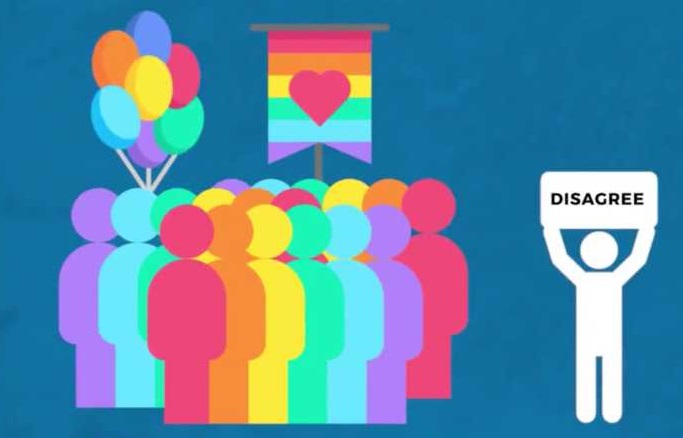
Remember the old Mad Magazine series called “Spy vs. Spy”? This has been “Jerk vs. Jerk.” I sided with the baker in the original lawsuit over the same-sex wedding cake, though holding even then that the adversaries were being unreasonable. Ethics Alarms advised one, “Oh, bake the damn cake!” and the other, “So find another bakery!” That battle got all the way to the U.S. Supreme Court, where the baker won on what non-lawyers call “a technicality.” Then Phillips was targeted again, as LGTBQ activists apparently considered it a matter of honor to bend him to their will.

Continue reading

More Trust Problems: Defunding’s Not the Answer, But What DO We Do About Our Untrustworthy Law Enforcement?

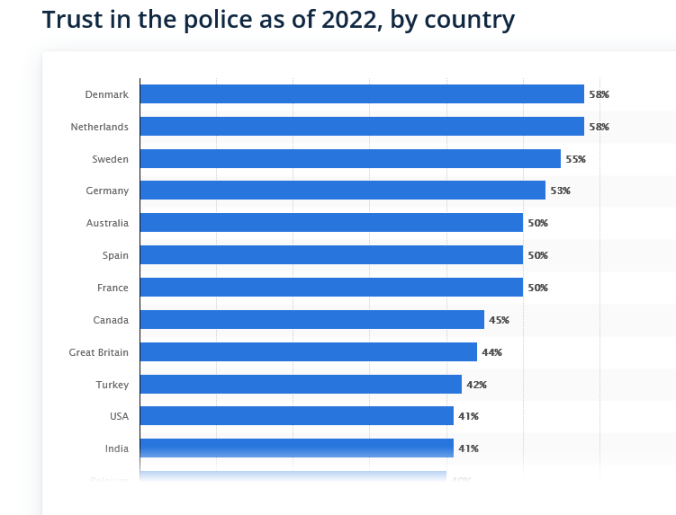
I guess the first step is admitting that it’s untrustworthy. [ I guarantee the 2022 level of trust represented above has declined.]

Out of Colorado comes the disturbing news that Yvonne “Missy” Woods, a Colorado Bureau of Investigation DNA scientist, breached standard testing protocols, manipulated data in the DNA testing process and posted incomplete test results in a staggering 652 cases.The agency called it “an unprecedented breach of trust.” I’m not so sure about the “unprecedented” part, but it certainly doesn’t encourage the trust of the public, or perhaps more importantly, juries. The affected cases occurred between 2008 through 2023, but there may be more: an investigation is reviewing Missy’s work dating back to 1994. She worked for the lab for 29 years, but the CBIonly became aware of irregularities in her work last September. She was placed on administrative in early October and retired a month later. [Pointer: valkygrrl]

Continue reading

Observations On The NeverTrump Section 3 Big Lie Push

Maine joined Colorado in barring from its GOP primary ballot yesterday, as Maine Secretary of State Shenna Bellows (D) decided that she “had no choice.” She had no choice because she is a rapid partisan Leftist who, like many Democratic operatives in various positions of power within the legal establishment, she is determined that President Biden be rescued from his election peril by any means necessary. Trump’s actions before and during the January 6, 2021, riot in the U.S. Capitol do not justify charging him with inciting a riot, much less an “insurrection” that would trigger Section 3 of the 14th Amendment. Maine’s completely partisan and anti-democratic move is sure to be appealed along with Colorado Supreme Court’s finding last week that Trump could not appear on the ballot in that state under the 14th Amendment provision designed to keep members of the Confederacy that prevents insurrectionists from holding office. The U.S. Supreme Court will review the case, one hopes quickly, and had better resolve the issue of whether Trump can run again or if the nation will be thrown into Constitutional chaos by allowing some states to block him.

Continue reading

Ethics Dunce: Jack Phillips (of Masterpiece Cakeshop):

It is a basic life skill: quit while you’re ahead.

In 2018, the U.S. Supreme Court ruled that the Colorado Civil Rights Commission acted in the grip of anti-religious bias when it enforced an anti-discrimination law against baker Jack Phillips. He had famously refused to bake a wedding cake celebrating the wedding of same sex couple Charlie Craig and Dave Mullins in 2012. But that was just a technical victory for Baker; SCOTUS chose not to rule did not rule on the macro-controversies over whether a business can invoke religious objections to deny service to LGBTQ people, whether a cake is art or just a product offered by a public accommodation, or whether forcing a baker to create a cake for a gay wedding is compelled speech.

Sadly, annoyingly, unethically and stupidly, neither Baker nor the activists who are determined to bend him to their will had the sense to declare a truce.

Continue reading

Ugh. This Again. Except That A Website Isn’t Like A Cake. [Corrected]

When Ethics Alarms first covered the case of a Christian website designer who was prosecuted for refusing to design a website celebrating a same sex wedding, I wrote at the top, “I will state up front that I am confident that this decision will get to the U.S. Supreme Court, and that if and when it does, it will be reversed.”

Now the case has indeed arrived at the Supreme Court. Its likely reversal (the website designer, a trial and a appeals court ruled, could not refuse to design a website celebrating a same-sex wedding) is being blamed by the LGBTQ suck-up media on all those evil conservatives who have invaded the Court since it ducked the matter of Christian baker Jack Phillips, who refused to bake a cake for a same-sex wedding. SCOTUS decided in favor of Phillips on technical rather than substantive grounds, with a waffling majority opinion by Justice Kennedy, who specialized in such things. Kennedy is gone, but the reason the web designer is likely to win isn’t the change in the composition of the Court, but because the 10th U.S. Circuit Court of Appeals was dead wrong when it ruled in 2021 that Lorie Smith and her company, 303 Creative, violated a Colorado law by refusing to create a website for a same sex union.

Continue reading

Not Cakes, But Advocacy: The Tenth Circuit Rules That Compelled Expression Is Constitutional

compelled speech

I will state up front that I am confident that this decision will get to the U.S. Supreme Court, and that if and when it does, it will be reversed.

The 10th U.S. Circuit Court of Appeals at Denver ruled 2-1 that website designer Lorie Smith and her company, 303 Creative, violated a Colorado law by refusing to create a website celebrating a same sex union. She was represented by Alliance Defending Freedom, a conservative Christian nonprofit, who also represented Christian baker Jack Phillips, who refused to bake a cake for a same-sex wedding. There is a material difference, however, between a cake and a website. A cake is not generally thought of as expression, and there is a colorable argument that a bakery is a public accommodation. But Smith, whose company designs wedding websites, argues that forcing her to make one that supports a same-sex marriage violates her religious beliefs. It isn’t frosting and cake shades at issue, it’s words.

A Colorado public accommodation law bars public accommodations from refusing to provide equal access to services because of sexual orientation. The law’s communication clause also says public accommodations cannot publish any communication indicating that full access to services will not be provided because of sexual orientation. The appeals court majority decreed that neither provision violates Smith’s free speech and free exercise rights under the First Amendment, even though it acknowledged that Smith’s websites are pure speech that involve her unique creative talents. But, the Court claims, indulging in an “it isn’t what it is” rationalization, Colorado “has a compelling interest in protecting both the dignity interests of members of marginalized groups and their material interests in accessing the commercial marketplace…We agree with the dissent that a diversity of faiths and religious exercise, including appellants’, ‘enriches’ our society…Yet a faith that enriches society in one way might also damage society in other ways, particularly when that faith would exclude others from unique goods or services.”

This opinion is way, way over the traditional judicially-drawn line between compelling public accommodations to be equally accessible to all and compelling artistic expression. Under this theory, a singer who performs at weddings would have to warble at a same-sex ceremony, even if her faith held that such a ceremony was a sin.

Continue reading

Weird Tales Of “The Great Stupid”: Another Kid Is Suspended Because A Teacher Saw A BB Gun In His Home

fear

What are normal, reasonable people who are concerned about the shrinking liberties around them to do?

(I don’t have an answer right now, but that is the urgent question episodes like the ones described in this post raise.)

In 2020, I’ve written about two head-exploding stories involving innocent children forced by their school’s hysteria over the Wuhan virus to allow Big Brother’s eyes into their homes, and who found themselves being demonized and punished because of the completely legal and harmless items a teacher saw there.

First there was the asinine June incident in Baltimore County Maryland, where a 5th grade teacher at the Seneca School saw a BB gun hanging on the wall in an 11-year-old student’s bedroom. She took a screenshot of the child’s room, then notified the principal, who alerted the school safety officer, who called the police. They, in turn, made an unannounced visit to the student’s home.

At least they didn’t kneel on his neck. “I feel like parents need to be made aware of what the implications are, what the expectations are,” the child’s mother, a military veteran, told reporters. “No,” Ethics Alarms concluded, “Parents need to tell schools, administrators and teachers, what parents will tolerate, and the public education system needs a thorough upgrade and overhaul.”

Then, in September, we discussed an even more ridiculous episode. Colorado seventh grader Isaiah Elliott was attending on online art class when a teacher spied Isaiah’s  toy gun, a neon green and black plastic “weapon” with an orange tip and the words “Zombie Hunter” printed on the side. The teacher notified the school principal, and the school called the El Paso County Sheriff’s Office, which conducted a welfare check on the boy without calling his parents first. Isaiah, meanwhile, was suspended for five days. The conclusion here on that fiasco:

Continue reading

Fearmongering Is Apparently All They’ve Got Now, And It Better Not Be Enough

Fearmongering

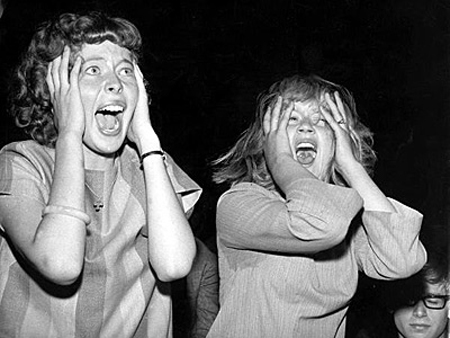
Unable to provide actual guidance that restricts the spread of the Wuhan virus, unable to be consistent in their various “scientific” pronouncements, unable to avoid utter hypocrisy by violating their own measures, and insulting our intelligence by implying that the pandemic doesn’t bother Black Lives Matter and the Democratic Party, the various state governments are now reduced to pure fearmongering, apparently in the vain hope that if everyone is terrified to do anything or interact with anyone, that will keep the Wuhan virus at bay, and, perhaps even more importantly, condition Americans to Love Big Brother.

Well, to hell with THAT.

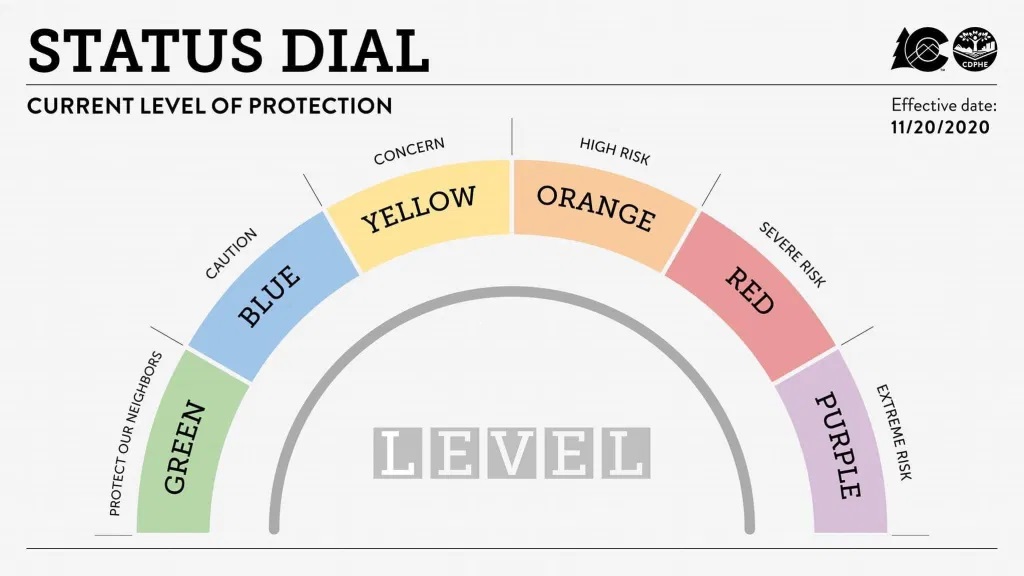
When I saw today’s new, revised, extra scary risk wheel from the Colorado Department of Public Health and Environment (CDPHE), I thought it was a Babylon Bee joke. Sadly, it’s not. Sufficient numbers of idiots and would-be human-sheepherders in the Colorado state government decided that the usual DefCon 5 Red Zone wasn’t enough to frighten Coloradans sufficiently to meekly allow the government to wreck their businesses, stunt their children’s social and educational development, make them poor, and confine them to house arrest. These bureaucrats are so dim that they don’t realize that the sillier and more desperate they act, the less likely anyone with self-respect and a brain is going to care what they say.

Continue reading

Sunset Ethics, 9/30/2020: Conflicts Of Interest, Sexual Harassment, Movies And Lies

1. Conflicts of interest on my mind. I narrowly averted a disastrous conflict of interest yesterday out of pure moral luck, so the topic is much on my mind; I’m still distracted by the near miss. Professionally, it was the equivalent of almost being picked off by a bus.

NPR Legal Affairs Correspondent Nina Totenberg reacted to the death of Justice Ginsburg with an essay on her 48-year friendship with RBG, saluting Ginsburg’s “extraordinary character.” That’s funny: Totenberg never told NPR’s listeners, nor did  NPR, that she had a personal relationship with the Justice, despite being charged with covering the Court and critiquing its decisions.  Kelly McBride, NPR’s public editor and senior vice president of the Poynter Institute, threw a metaphorical ethics foul flag,

“In failing to be transparent about Totenberg’s relationship with Ginsburg over the years, NPR missed two opportunities,”she wrote on the NPR website. “First, NPR leaders could have shared the conversations they were having and the precautions they were taking to preserve the newsroom’s independent judgment,” McBride said. “Second, having those conversations in front of the public would have sharpened NPR’s acuity in managing other personal conflicts of interest among its journalists.”

Ginsburg, who officiated at Totenberg’s wedding in 2000. Nonetheless, the correspondent,  who wears her progressive bias on her sleeve as it is, denied that the conflict compromised to her journalism, telling  the Washington Post that NPR’s listeners benefited from ther friendship because it gave her greater insight into and Ginsburg’s  thinking.

And that justifies keeping the relationship secret from listeners how, Nina?

2. From the “When ethics alarms don’t work” files: Lawyer Phillip Malouff Jr. of La Junta, Colorado, was censured for a series of episodes of unprofessional behavior and sexual harassment.

In November 2016, Malouff  winked at a magistrate judge and said, “When you get back from your vacation, I better be able to see your tan lines.” When he visiting the same magistrate’s chambers to discuss scheduling matters, he  said, according to the female judge,: “Ask your husband a question for me when you get home tonight. Ask him what it’s like to have relations with someone who wears the robe. It has always been something I’ve wanted to do, but there have never been any women judges until now.”

Malouff  was informed that his comments were unprofessional and a violation of the Colorado Judicial Department’s anti-harassment policy. Ya think?

In July 2019, Malouff asked a judicial assistant to check whether the mother in a parental rights hearing had an outstanding warrant. When the assistant replied, “She is good.” Malouff  responded, “Her husband told me that she is good.

Wink wink, nudge nudge. Continue reading

Morning Ethics Warm-Up, 8/5/2020: Words, Spin, And Millard Fillmore

Because “Glibby-glop-gloopy” or whatever the hell Oliver is singing here makes about as much sense as anything else I’m hearing…

1. Today in The Great Stupid’s cancellation orgy:

  • The ABA Journal reports that the Massachusetts Appeals Court  wants the word “grandfathering” to be “canceled.” Ruling in a zoning dispute, the court said a structure built before the enactment of zoning regulations had a certain level of protection, but the court  didn’t have a good word to describe that protection because  it wouldn’t use  “grandfathering.”  “Because we acknowledge that it has racist origins,” the woke and silly judges declared.

Apparently the phrase “grandfather clause” originally referred to laws adopted by some states after the Civil War to create barriers to voting by African Americans, explained Justice James Milkey in footnote 11 to the August 3 opinion. Interesting! And completely irrelevant to how the word is used now. Now, if I were Ann Althouse, who is word-obsessed, I might spend hours looking for other words used routinely today that have unsavory origins. I don’t care what words originally meant or when  they were first used. The objective with all words is communication. “Grandfathered” is a useful word. I used it in my baseball lecture for the Smithsonian to describe how spitball pitchers were allowed to keep throwing the unsanitary pitch after it was banned for everyone else in 1920. The court’s kind of virtue-signalling makes people stupid and communication difficult, and shame on the court for indulging in it.

  • The University of Buffalo will remove any reference to President Millard Fillmore on its campus,though he helped found the school and served as its first chancellor from 1846 until his death in 1874. School officials said in a news release that its decision to erase the memory of an individual the university owes its existence to “aligns with the university’s commitment to fight systemic racism and create a welcoming environment for all.”

No, it aligns with craven cowering to Black Lives Matter intimidation  and statue-toppling mobs.  Millard Fillmore—-great name, crummy President—signed The Compromise of 1850, which included the Fugitive Slave Act. Since it was a compromise, the school’s logic would require “canceling” all the anti-slavery crusaders who were part of it, as everyone at the time was desperately trying to keep the United States from ripping apart. When that effort failed, we got the Civil War, and more American casualties than any war before or since. How dare Fillmore try to stop that?

I think the Fillmore-cancelers should be obligated to explain how they would have handled the growing tensions over slavery and the cultural divide between North and South. I’m sure they have a brilliant answer ready.

As the suddenly “In” Fred Rogers would  say, “Can you say ‘hindsight bias’? Sure you can!” Continue reading