Ethics Quiz: Honoring The Dead and Deadly Team Mate

Taveras

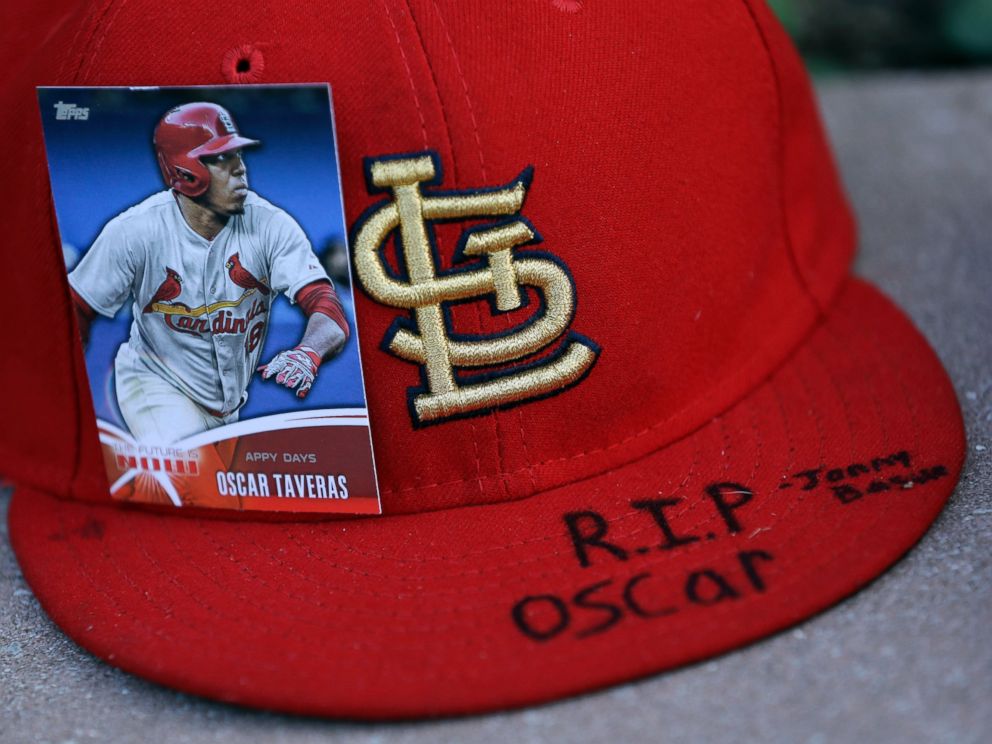
When they take the field in Spring Training and for the rest of the 2015 baseball season, the St. Louis Cardinals will be wearing a memorial patch reading “OT” in honor of outfielder Oscar Taveras, the 22-year-old budding star outfielder who died in a car crash in his native Dominican Republic last October. Such mourning patches have become common since 1972, when the Pittsburgh Pirates moved beyond the traditional black armband to a personalized patch following the tragic death of the team’s Hall of Fame outfielder Roberto Clemente in a plane crash, as he was flying humanitarian aid to Nicaragua.

Taveras, however, unlike Clemente, died in an act of reckless stupidity that took not only his own life but that of his 18-year-old girlfriend, Edilia Arvelo, as well. Toxicology tests showed that his blood alcohol level was five times the legal limit before the crash. situation is more complex because toxicology tests showed that his blood alcohol level at the time of his death was five times the legal limit. Moreover, Taveras’, also was killed in the crash. If Taveras had lived and Arvelo alone had died, he would have been prosecuted for manslaughter.

And thus your first Ethics Alarms Baseball Ethics Quiz of 2015 is this:

Is it ethical for the Cardinals to publicly honor Taveras with a uniform patch?

Continue reading

“Maybe Republicans should just keep their mouths shut whenever rape is being discussed” (Cont.)

To go into the "Gallery of Republicans Who Say Offensive Things About Rape  Making The Whole Party Look Stupid." The sad part is, the gallery is filling up...

To go into the “Gallery of Republicans Who Say Offensive Things About Rape Making The Whole Party Look Stupid.” The sad part is, the gallery is filling up…

I just wrote the quote in the title a couple hours ago, and now this.

Rep. Brian Kurcaba of the West Virginia House of Delegates was involved in the body’s debate over a proposed bill to ban abortions after 20 weeks of pregnancy, and that does not allow an exception in cases of rape. He said:

“For somebody to take advantage of somebody else in such a horrible and terrifying and brutal way is absolutely disgusting. But what is beautiful is the child that could come as a production of this.”

I’m sorry to be uncivil and blunt, but he’s an idiot, the comment is signature significance of a near-clinical deficit of compassion and common sense, and any man this dull should not be allowed within 50 yards of a legislature. Continue reading

Ethics Quote Of The Week: Gary Sinise

gary-sinise

“With all due respect, what the hell are you talking about?”

—Actor and Wounded Warrior ally Gary Senise, in an open letter responding to Howard Dean’s statement that the audience for “American Sniper” consisted of “angry people.”

Good question. What are the vicious and anti-military critics of Clint Eastwood’s box-office busting bio-pic about Navy Seal Chris Kyle talking about?

I saw the film yesterday. It’s not pro-war, pro-Iraq invasion, or political in any way. The various critics of the film out themselves as hateful and so biased against combat, the military and, I don’t know—life? Reality?—that they can’t even keep their minds open a crack for a thought-provoking piece of popular art. Dean had said, turning his review (I’ll bet anything that he hasn’t seen the film) into a gratuitous attack on tea party supporters:

“There’s a lot of anger in this country, and the people who go see this movie are people who are very angry. And this guy basically says ‘I’m going to fight on your side.’ … I bet you if you looked at a cross-section of the Tea Party and the people who go to see this movie, there’s a lot of intersection.”

In the same forum–his weekly HBO conservative-bashing fest–Bill Maher called Kyle a “psychopath patriot” (there is nothing whatsoever in the film that supports that diagnosis). Seth Rogen compared “American Sniper” to a Nazi propaganda film. Michael Moore used the film–which he couldn’t possibly have seen–to make the ridiculous observation that snipers were “cowards.” Kyle, the most effective sniper in U.S. military history, was wounded repeatedly and awarded two Silver Stars and five Bronze stars. For him to be smeared as a coward by the likes of Michael Moore is grotesque.

The film, among other things, shows just what kind of horror our service men and women endured in Iraq, how they suffered (and suffer still), what it did to them and their families, and accords them well-deserved compassion and respect. How sad, bitter and rotten inside someone must be to resent that. As I watched the film, it occurred to me that this was probably exactly what John Wayne wanted “The Green Berets” to be during Vietnam, but had neither the discipline to avoid agitprop and sentimentality, nor Clint’s directing skills to pull it off.

After expressing his disgust at Dean’s outburst in a tweet, the stage and screen star, whose foundation works to help and recognize the soldiers and veterans he calls our “defenders,” wrote,

To Howard Dean,

I saw American Sniper and would not consider myself to be an angry person. You certainly have a right to make stupid blanket statements, suggesting that all people who see this film are angry, but how is that helpful sir? Do you also suggest that everyone at Warner Brothers is angry because they released the film? That Clint Eastwood, Jason Hall, Bradley Cooper, Sienna Miller and the rest of the cast and crew are angry because they made the film? Chris Kyle’s story deserved to be told. It tells a story of the stress that multiple deployments have on one military family, a family representative of thousands of military families. It helps to communicate the toll that the war on terror has taken on our defenders. Defenders and families who need our support. I will admit that perhaps somewhere among the masses of people who are going to see the film there may be a few that might have some anger or have been angry at some point in their lives, but, with all due respect, what the hell are you talking about?

My guess is that Dean is talking about his own estrangement from basic American values, its history, and its essential role in the world, including all the sacrifices, risks and difficult choices that role demands. He’s the angry one.


The Special Needs Student, the Compassionate Teacher and the “Awww!” Factor (UPDATED)

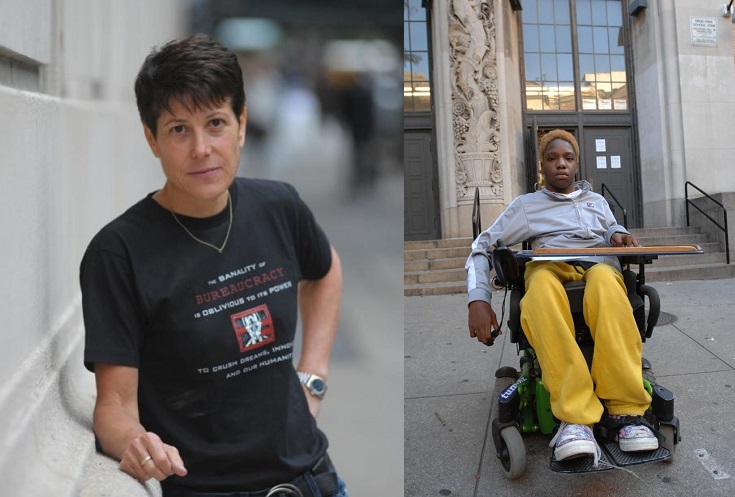
Debra Fisher

Regular readers here are familiar with the “Ick Factor,” the common phenomenon where a situation that causes an emotional response of revulsion, disgust or fear is labelled unethical when there is nothing unethical about it. Many kinds of conduct are icky, but still on the right side of ethics, if only one can put aside the gag reflex. The reverse of the Ick Factor is the less common “Awww!” Factor, where particular conduct seems loving, caring and nice, but is in fact unethical in one or more respects. Such is the case of New York City special needs teacher Debra Fisher.

In October, Fisher was suspended when e-mails were discovered on the school computer system showing that she had been spending school time raising funds for a special project on behalf of Aaron Phillip, a thirteen year old special needs student who is an aspiring animator with his own blog. The project’s goal was to raise $15,000 for a nonprofit devoted to developing Aaron’s talent, an organization called “This Ability Not Disability” founded and administered by Fisher.

Awww!

The problem was that while her efforts on behalf of the student were supported by the school, Fisher, an occupational therapist at Public School 333 with nine years of service, did not have permission to perform them during school hours. Thus she was suspended for six weeks. Now she is suing the school system for back pay, telling reporters, “I’m just trying to fight for what I believe is right.”

If she believes she is right, then she shouldn’t be working at the school at all, because she is in fact dead wrong.

But awfully nice. Continue reading

Abortion, “The Fly” and the Ethics Incompleteness Theorem

"AWWW! He looks just like his father!"

“AWWW! He looks just like his father!”

The most interesting aspect of ethics is at the margins, those situations where absolutists are challenged to hold to their principles because of unforseen variations that no general analysis could anticipate. The absolute ban on torture as unethical becomes shaky under the “hidden nuclear bomb” scenario.  Capital punishment opponents find that their compassion evaporates when asked whether Hitler or bin Laden deserved execution.

This is the Ethics Incompleteness problem, which I last wrote about at length in March of 2014:

“The human language is not sufficiently precise to define a rule that will achieve its desired effects, that is work, in every instance. There are always anomalies around the periphery of every normative system, no matter how sound or well articulated. If one responds to an anomaly by trying to amend the rule or system to accommodate it, the integrity of the rule or system is disturbed, and perhaps ruined. Yet if one stubbornly applies the rule or system without amendment to the anomaly anyway, one may reach an absurd conclusion or an unjust result. The Ethics Incompleteness Principle suggests that when a system or rule doesn’t seem to work well when applied to an unexpected or unusual situation, the wise response is to temporarily abandon the system or rule and return to basic principles to find the solution. No system or rule is going to work equally well with every possible scenario, which is why committing to a single system is folly, and why it is important to keep basic ethical values in mind in case a pre-determined formula for determining what is right breaks down.”

I was watching the Jeff Goldblum remake of “The Fly” (written and directed by David Cronenberg) last night, and rather than being properly horrified by Geena Davis’s nightmare of giving birth to a yard long fly larva, I found myself wondering how anti-abortion absolutists would handle her unusual dilemma. The film follows the tragedy of scientist Seth Brundle (Goldblum ) who has developed a means of teleportation. The process involves a computer breaking down a body, then transmitting the atoms electronically to a receiving “pod,” and reassembling them there. Unfortunately, when Seth tests the device on himself, an unnoticed fly gets into the sending pod, and the result is a version of Brundle that has fly DNA mixed in. (In the memorably campy Vincent Price original, what arrived in the receiving pod was a man with a giant fly head and a fly with a tiny human head.) Gradually Brundle mutates in form and mind into a monstrous hybrid, but before he knows what has happened to him, he impregnates girl friend Davis. Soon she realizes that something with insect DNA is gestating inside of her, though all tests show a healthy human embryo. Not surprisingly, she wants an abortion.

Would those who argue that abortion is murder maintain that she shouldn’t be able to have one, or that aborting the fetus is wrong? Let’s make the problem harder: let’s say she only learns that she has a fly-baby in the third trimester, when our laws wil not permit abortions unless the mother’s life is in peril. Some questions: Continue reading

Sarah Palin, The Animal Gene, and Some New Year’s Inspiration

Trig on dog

Gandhi famously said that the greatness of a nation can be judged by the way its animals are treated. I’m not sure that’s true, but it certainly is true that respect for the lives and welfare of animals is a useful symptom to diagnose sound ethical values, and the tendency toward animal cruelty is signature significance for a human being that I would not turn my back to in the dark.

The issue is complicated by the divergence of humans into “animal people” and “non-animal people,” with the latter claiming, with some justification, that they are not cruel or callous toward animals, just willing to recognize that they are, well, animals. These are the people who cannot understand someone wanting to take a sick day to mourn the passing of a cat. On the other hand, they are also clear-eyed about those animal lovers who dress their parrots in elaborate costumes and who hold birthday parties for their dogs. Those who live in the country or on farms are an interesting case: they are not prone to sentimentalize of anthropomorphize animals like city folk. Dogs and cats sleep outdoors unless there’s a freeze on, and they have jobs to do. My wife’s sister sold the family horse to a dog food company, and the two didn’t speak for months.

Sarah Palin blundered into this divide this week when she posted pictures (above) of her son Trig standing on the family dog in an inspirational post about overcoming obstacles. Now she’s being attacked for promoting cruelty to animals. Some points on this:

1. Many are always looking for justification to vilify Palin. This time, she gave them legitimate ammunition.

2. The sequence looks staged to me: otherwise, why was anyone taking photos of this?

3. If so, then this just wasn’t an innocent but mistaken choice by a special needs child, but the directive of someone who should know better.

4. Of course one doesn’t ever sit or stand on a dog, or allow or encourage a child to do so, unless we’re talking about a very small child.

5. We don’t know that Palin didn’t admonish Trig after the fact, while saluting his ingenuity.

6. It was still an irresponsible choice for the point she was making.

7. Assuming the dog isn’t ill, drugged of dead, however, he doesn’t seem in distress. One thing about dogs: if you are hurting or ignoring them, they aren’t shy about letting you know.

8. Trig is developmentally disabled. Animals, particularly dogs, have incredible tolerance and intuitive kindness in such situations. That was the real lesson of the photos.

Now, to wipe those images out of your mind, here are a group of photos showing normal, non-celebrity, non-Palin, human beings here and elsewhere demonstrating the kind of kindness and compassion for animals that we all should aspire to. Continue reading

Ethics Quiz: The Harvard Prof and The Erroneous Chinese Restaurant Menu

Perfect! Just what you need to handle that pesky flea, Professor!

Perfect! Just what you need to handle that pesky flea, Professor!

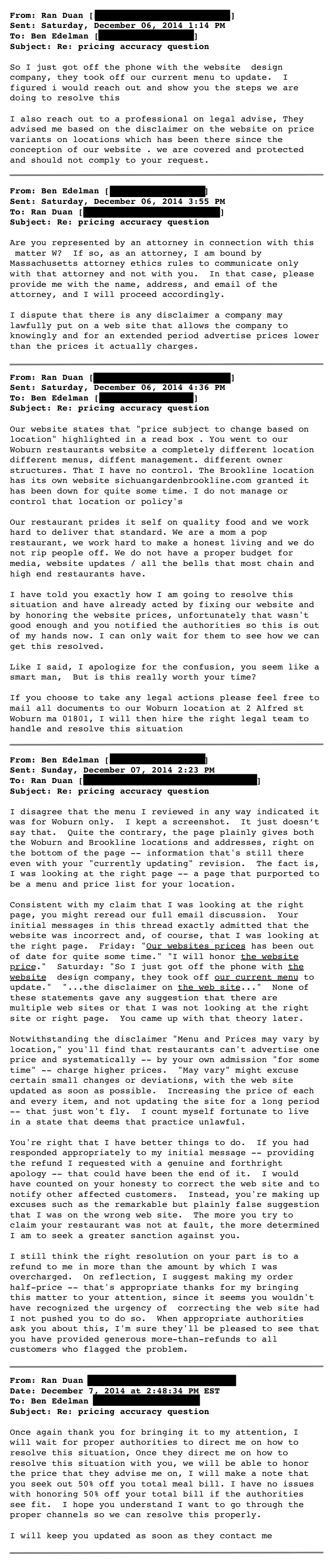
Ben Edelman, a rather well-noted Harvard Business School professor, had this fascinating exchange with a local Szechuan restaurant:

Edelman 1Edelman 2Your Ethics Alarms Ethics Quiz:

“Is Prof. Edelman’s conduct ethical?”

Continue reading

Cruel Activism: The Gay Rights Attack On Cynthia and Robert Gifford

The-Gifford-Barn-in-Schaghticoke-NY

It is said that close cases make bad law, and they often make bad ethics too. Legally, the culpability of Cynthia and Robert Gifford is not at all certain. Ethically, however, as right as they may be on the law, the conduct of their persecutors, same-sex couple Jennifer McCarthy and Melisa Erwin, has been unnecessary, without compassion, vindictive and cruel.

The Giffords are active Christians who own Liberty Ridge Farm, located in Schaghticoke in upstate New York. They supplement the farm’s revenue with attractions designed for kids and families, including a pumpkin patch, a corn stalk maze and a rustic barn for parties and weddings. That rustic barn has three stories. The Giffords reside on the top floor, with the bottom floor designed for events, and the second floor consisting of rooms for activities relating to their preparation and management.

When Cynthia Gifford received a phone call from Melissa McCarthy inquiring about having her wedding at the farm, Cynthia invited her to visit and assess the venue.In the follow-up phone call, McCarthy revealed for the first time that the affair would be a same-sex wedding. Cynthia explained that the family’s faith held that marriages can only be a union of a man and a woman, so they did not make their farm available for ceremonies. She said, however, that the couple was welcome to hold the wedding reception there.

Apparently expecting this response, Jennifer and Melissa surreptitiously recorded the phone call. Armed with the recording, they contacted the New York Civil Liberties Union who immediately filed a discrimination lawsuit against the Giffords on their behalf.

The Giffords argue that this was not a matter of discrimination, but religious practice. They had hosted events for gay clients before, and employed gays. “The Giffords’ objection was to hosting and participating in the wedding ceremony itself and not to providing service in general to lesbians,” their lawyer said.

They lost. Bronx administrative Law Judge Migdalia Pares rejected Giffords’ claim that the farm, which is also their home, is not a place of public accommodation and is therefore not subject to the anti-discrimination provisions of New York’s Human Rights Law. She ruled that Liberty Ridge qualifies as a public accommodation because it regularly collects fees for space, facilities, services and meals, so it cannot be considered “distinctly private.”  The fact that the Giffords reside at Gifford Barn does not render it private. The Giffords were ordered to pay $13,000 in fines and restitution.

The Giffords are appealing.

The Giffords, according to the judge, “unlawfully discriminated against complainants solely on the basis of their sexual orientation.” Another way of looking at it is that Jennifer and Melissa, now married, discriminated against the Giffords solely on the basis of their religious beliefs. Why couldn’t they agree to respect the Giffords’ religious beliefs, and use the property for the wedding reception only, having the actual ceremony elsewhere? Would that really be such a hardship, or a compromise in principles? Indeed, if the nation and committed progressives really aspire to tolerance, diversity and mutual compassion and understanding, why wouldn’t that be the ethical, desirable, reasonable compromise?

I know the response to that question, of course. This was a matter of principle. This would send a message. Crushing the Giffords was necessary to show that all opposition to same sex marriage would eventually be crushed under the advance of history. Never mind that these were not anti-gay bigots, and that they have as much right to practice their faith as a lesbian couple has a right to wed. This is a zero sum game, apparently. Besides the law—probably–supports McCarthy and Erwin.

I think the actions of Jennifer McCarthy and Melisa Erwin violate the Second Niggardly Principle, which is a rule of kindness, compromise and common sense. It holds…

“When an individual or group can accomplish its legitimate objectives without engaging in speech or conduct that will offend individuals whose basis for the supposed offense is emotional, mistaken or ignorant, but is not malicious and is based on well-established impulses of human nature, it is unethical to intentionally engage in such speech or conduct.”

The couple’s legitimate objectives in this case were to get married and celebrate the marriage in an attractive venue. I don’t think setting out to punish a couple for belonging to a religion that doesn’t accept same sex marriage is a legitimate objective, nor is turning their lives upside down, nor forcing them into the maw of litigation to bend them to their will. Does the gay rights movement really feel that all those who have not yet accepted the justice and inevitability of same-sex marriage must be exposed and made to suffer? It seems that this is McCarthy and  Erwin believe, and what this case will come to stand for.

If so, I think the story of the Giffords will do more harm than good, hardening opposition, confirming suspicion, undermining trust and ultimately making acceptance for gay couples harder, however it turns out in the courts. Just because you have the law on your side doesn’t mean you have to use it when doing so involves unnecessary harm to others. Gays want compassion, kindness, tolerance and fairness. It would help if they showed a willingness to give as well as receive.

______________________
Pointer: Steven Mark Pilling
Ethics Hero Emeritus: Edna Gladney (1888-1961)

Edna Gladney

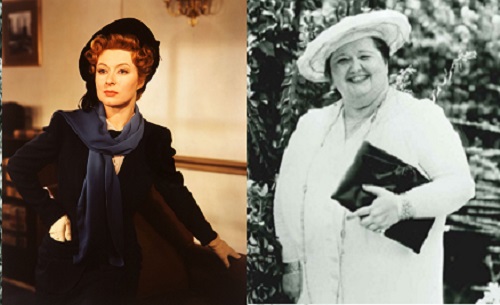
I am ashamed to admit that I never heard of Edna Gladney before I chanced upon a late night Turner Movie Classics showing of the 1941 biopic “Blossoms in the Dust,” which earned the great Greer Garson one of her many Academy Award nominations for her portrayal of Gladney (that’s Greer as Edna on the left). I was unaware of Gladney’s amazing life, legacy and contributions to society because 1) I’m not from Texas; 2) it is hard to learn about great people that society forgets about, and 3) feminists aren’t doing their job, perhaps because a strong and indomitable woman whose life was devoted to saving unwanted children rather than preventing their existence doesn’t interest them as much as it should.

Yet Gladney is exactly the kind of woman whose life should inspire young girls today, and young men too, for that matter. Still,  I recently asked 18 randomly chosen friends and acquaintances who Edna Gladney was, and not one of them knew.

And most of them didn’t know who Greer Garson was, either.

Sigh. Continue reading

A Young Ex-Actress Is In Crisis: Is The Media Capable Of Kindness? Are We?

Yesterday I flagged an independent film, a black satire, that tells the tale of a decent man who is sent into a homicidal rampage when the cruelty of the culture and especially the media overcomes him. I’m not to that point—yet—but the callousness of the national media in response to what it feels is consumer demand is oppressive.

I am going to omit names, graphics or links here, because I do not want to feed the phenomenon I am decrying. Continue reading