Ethics Hero: Major League Baseball

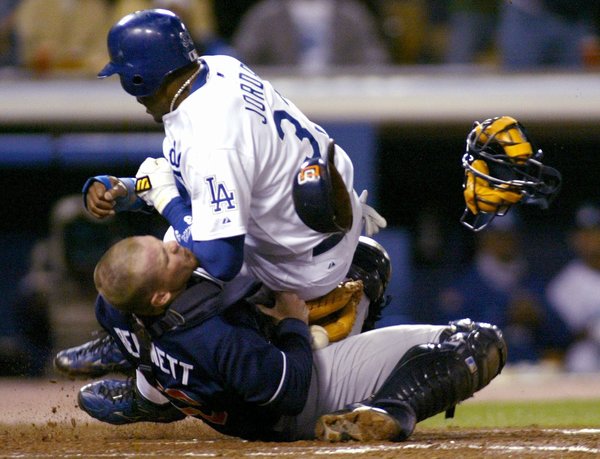
homeplate collisionsAt least one major league sport cares about its players’ health more than it does about highlight films.

Today Major League Baseball announced that it will be banning collisions at home plate, one of the most exciting plays in baseball, and one of the most dangerous. The violent and unpredictable convergence of large human bodies created when runner and ball arrive at home plate nearly simultaneously as a catcher positions his body to receive a throw while blocking access to the plate have decided games and championships, but wrecked careers and, quite possibly, brains. Football’s frightening record of player dementia prompted baseball to check its records, and there was tell-tale evidence that concussions take their toll on ex-catchers as well.

Last season, for the first time, baseball required players suffering concussions to stay on a special disabled list until they were cleared to play after a head examination. The new ban represents more progress.

The rules change will probably take this form, according to ESPN: Continue reading

Ethics Dunces: NFL Football Fans

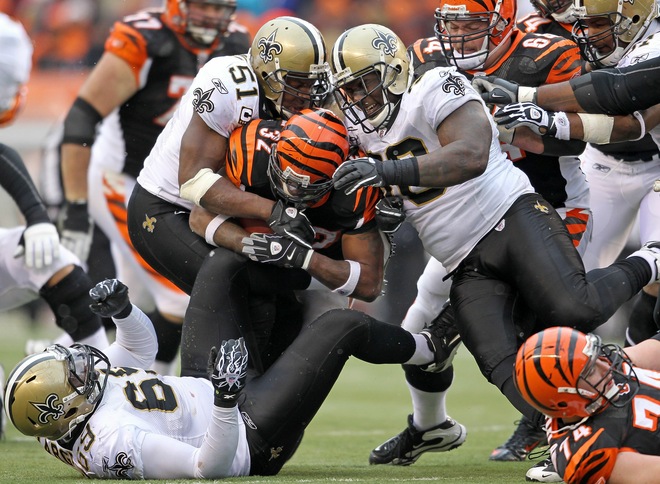
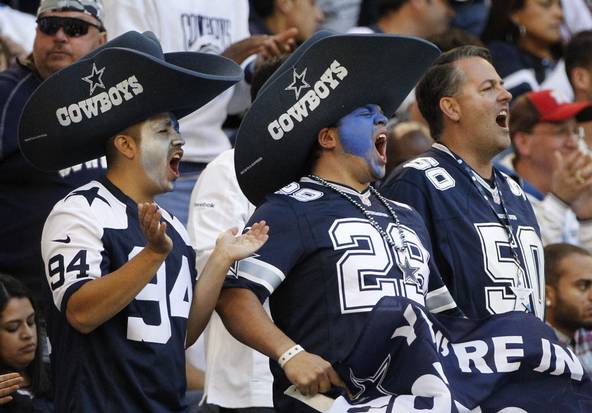
FOOTBALL FANSIn response to a question in a newly released CNN poll, a majority of football fans responded that the fact that the NFL intentionally withheld from its players evidence that repeated  concussions were inevitable despite the supposed protection provided by equipment, and that this would lead in many cases to devastating premature cognitive damage to players which would leave them disabled, depressed, violent, demented and/or suicidal until their early deaths didn’t trouble them at all, as long as they got their weekly Sunday football fix.

All right, that’s unfair. The results actually just showed that only 36% of respondents think that the NFL’s handling of the concussion issue has caused them to view the pro football league less favorably. No, on second thought, it’s not unfair at all.

I’m sure the NFL honchos who are determined to keep their billion dollar profit machine purring away, powered by the game’s consumption of the minds and bodies of young men lured by a short-term bonanza of fame and bucks, are whooping it up in their park Avenue suites. Yup, they did it! They have successfully converted much of America into crass, blood-thirsty sadists who are only different in degree from the Romans who cheered on Nero’s various bloodsports. Continue reading

Porn and the NFL: In Search of A Biased Referee

With condoms, what, 2.5 X’s?

55% of California voters decided yesterday to make porn stars wear condoms on the job—good for their health, bad for the health of the state’s booming XXX film industry. It is a reasonable guess that injecting condoms into the proceedings will put California’s porn products at a significant competitive disadvantage, and also a reasonable guess that the voters who enacted the measure couldn’t care less. So legal enterprises may go bust, their employees may lose their careers, and consumers may lose a form of entertainment they crave because of the policy priorities of those who hold all three in low regard, and who are unlikely to apply any kind of balancing standard. It’s safer for all concerned to require condoms, that’s all. Porn companies, porn careers, porn lovers—who cares about what they want? Continue reading

Lance Armstrong As The Status Quo: An Unethical Essay From An Ethics Expert

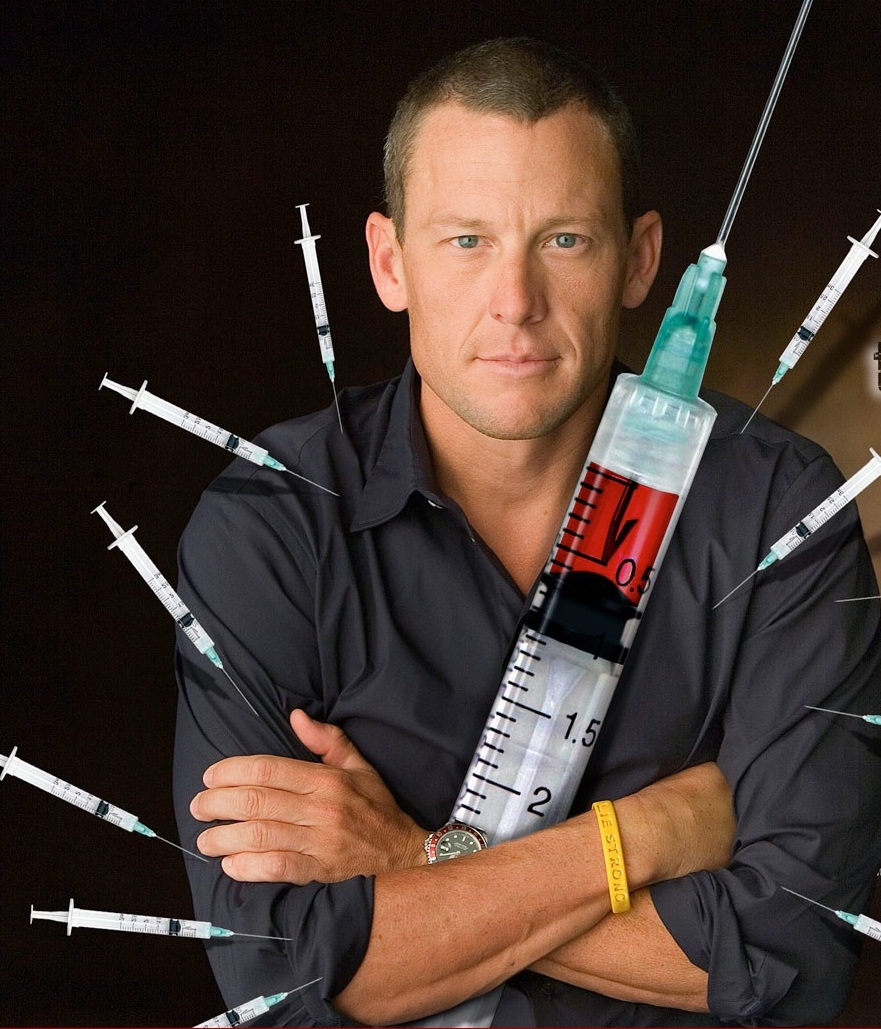
Don’t worry, Lance. Braden Allenby understands you. You were just ahead of your time, that’s all.

There are many things to learn from Prof. Braden Allenby’s Washington Post essay, “Lance Armstrong’s fall: A case for allowing performance enhancement,” none of which have anything to do with Lance Armstrong. Among the lessons:

  • “Everybody does it “really is the most seductive and sinister rationalization for unethical conduct.
  • Someone really shouldn’t write about sports ethics when they know nothing about sports.
  • If you only understand an author’s bias after reading the short biographical sketch at the end of the article, then he wasn’t responsibly correcting for his bias in his article.
  • When someone uses the worst of all rationalizations, the deplorable, “It’s not the worst thing,” neither their judgment nor their argument can be trusted.
  • Some ethics experts have appalling judgment in regarding ethics.

Allenby’s essay takes the position that all sports should allow athletes to take whatever performance enhancing drugs that become available, beginning with the tragedy of Lance Armstrong’s final disgrace as a cheater and corrupter of his sport. Seldom do you see an argument clothesline itself so quickly: here is Allenby’s opening sally:

“In the past month, cyclist Lance Armstrong has been stripped of his seven Tour de France titles. His commercial sponsors, including Nike, have fled. He has resigned as chairman of Livestrong, the anti-cancer charity he founded. Why? Because the U.S. Anti-Doping Agency and the International Cycling Union say he artificially enhanced his performance in ways not approved by his sport and helped others on his team do the same. This may seem like justice, but that’s an illusion. Whether Armstrong cheated is not the core consideration. Rather, his case shows that enhancement is here to stay. If everyone’s enhancing, it’s a reality that we should embrace.” Continue reading

Ethics Hero: NFL Commissioner Roger Goodell

Today the National Football League announced the following response to the results of its investigation of bounties being offered and paid by the New Orleans Saints to its players for injuring key opposition players in games. From the NFL press release:

“Commissioner Roger Goodell notified the New Orleans Saints today of the discipline that will be imposed on team management for violations of the NFL’s long-standing “bounty” rule that endangered player safety over a three-year period.

“Discipline for individual players involved in the Saints’ prohibited program continues to be under review with the NFL Players Association and will be addressed by Commissioner Goodell at a later date. The program included “bounty” payments for “knock-outs” and “cart-offs,” plays on which an opposing player was forced to leave the game. At times, the bounties even targeted specific players by name.

“The NFL’s extensive investigation established the existence of an active bounty program on the Saints during the 2009, 2010, and 2011 seasons in violation of league rules, a deliberate effort to conceal the program’s existence from league investigators, and a clear determination to maintain the program despite express direction from Saints ownership that it stop as well as ongoing inquiries from the league office.

“We are all accountable and responsible for player health and safety and the integrity of the game,” Commissioner Goodell said. “We will not tolerate conduct or a culture that undermines those priorities. No one is above the game or the rules that govern it. Respect for the game and the people who participate in it will not be compromised.”

“A combination of elements made this matter particularly unusual and egregious,” Commissioner Goodell continued. “When there is targeting of players for injury and cash rewards over a three-year period, the involvement of the coaching staff, and three years of denials and willful disrespect of the rules, a strong and lasting message must be sent that such conduct is totally unacceptable and has no place in the game.”

…Based on the record, Commissioner Goodell has imposed the following discipline on Saints management: Continue reading

Self-Promotion Department

Fortunately, you won't have to look at me...

I’ll be “appearing” on NPR’s “Tell Me More” tomorrow with Michel Martin, discussing the NFL’s bounty scandal and maybe another issue or two. Check local times in your area, or just plan on rearranging your sock drawer.

The NFL, Battling Its Own Sick Culture

"OK, it's a deal then: we put this guy in the hospital, and split the bounty 50-50..."

The last Super Bowl was phenomenally successful, as its audience size shattered previous records. Yet for many years, I have not been able to enjoy the sport, because of the unethical conflict at its core. Pro football’s appeal and swagger is based on violence, and we now know that the violence damages its players to an unacceptable extent. The players are paid both to accept the crippling and often-life shortening abuse, as well as administer it. For this former fan, that makes football too close to boxing from an ethical perspective. If the NFL is paying  players to do permanent harm to each other, then so are the fans that pay the NFL.  Sorry: there are too many other forms of entertainment that don’t require me to endorse and subsidize brutality. Thus I was not surprised to read this, in the New York Times:

“During the past three seasons, while the National Football League has been changing rules and levying fines in an effort to improve player safety, members of the New Orleans Saints’ defense maintained a lucrative bounty system that paid players for injuring opponents, according to an extensive investigation by the N.F.L. The bounty system was financed mostly by players — as many as 27 of them — and was administered by the former defensive coordinator Gregg Williams, who also contributed money to the pool. The N.F.L. said that neither Coach Sean Payton nor General Manager Mickey Loomis did anything to stop the bounties when they were made aware of them or when they learned of the league’s investigation.  According to the league, Loomis did not even stop the bounties when ordered to by the team’s owner. “

This practice is not only unethical and against NFL rules, it is criminal.  Continue reading

Ethics Heroes: NFL Owners

The less THIS happens, the better.

I was wrong about the N.F.L.

On Tuesday, the N.F.L. owners voted to move kickoffs back to the 35-yard line, where it was until 1994. The new rule will make the game less exciting but more safe. I didn’t think they’d do it.

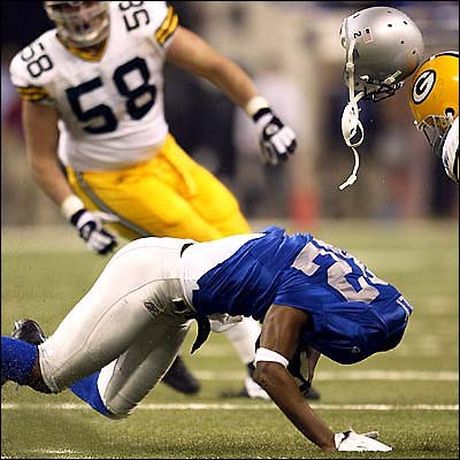
The league has a problem—I mean, other than the impasse in labor negotiations that threatens to disrupt the coming season and lose owners and athletes millions. Its game is more popular than ever, but little by little, the evidence is mounting that it is also lethal. Playing pro football injures the brains of a higher percentage of the athletes than anyone suspected, and far worse than suspected. Players are quite literally sacrificing their lives, or at least two or three decades of them, for the Sunday entertainment of America. Continue reading