More Ethics Of Terrible Secrets : Falling Bullets, Moral Luck, And The Accountability Check Of A Lifetime

Somebody's happy!

Somebody’s happy!

Seven year-old Brendon Mackey was walking with his father in the parking lot of the Boathouse Restaurant in Midlothian, Virginia at around 9 p.m. last Thursday when a bullet, apparently shot into the air by a Fourth of July celebrant, fell through his skull, killing him.

“We don’t think this was an intentional shooting. We think that somebody in or around the area was celebrating the Fourth of July. Unfortunately we think they were shooting a gun in a reckless manner and this young boy is a victim,” a police spokesman told the media. The bullet, experts say, may have been fired as far as five miles away.

There is an investigation ongoing, but if history is any indication, Brendon’s killer will remain a mystery. Last Independence Day, a Michigan State student, engaged to be married, was killed the same way, by a bullet believed to have been launched into the sky by a celebrating stranger. Michelle Packard was 34. This spring, her still grieving  fiancé committed suicide.

Has a reckless celebrant with a gun  ever stepped forward voluntarily to accept responsibility for causing such a tragedy? I cannot find any news accounts that suggest it. Deaths from stray bullets fired into the air are rare: most fall to earth harmlessly, and even when they hit someone, the result is seldom a fatality. Still, firing a gun skyward is illegal, and truly reckless and stupid. My father told me that during World War II, he warned the men under his command that he would see that anyone firing a weapon into the air without good reason would be court martialed. “They really seemed surprised when I told them that the bullets came down,” he said. Continue reading

Danger! Shameless Opportunists At Work!

Lance Armstrong wouldn't understand this movie at all.

Lance Armstrong wouldn’t understand this movie at all.

Less than two weeks after Ethics Alarms wrote about the ethics-free deliberations in the Lance Armstrong camp about whether or not to finally tell the truth and “apologize,” Armstrong prostrated himself in a 90 minute confession to Oprah Winfrey, who has branded herself as America’s confessor, capable of washing away sin and shame with a hug, a tear, and a stern word.

It makes me want to vomit, frankly.

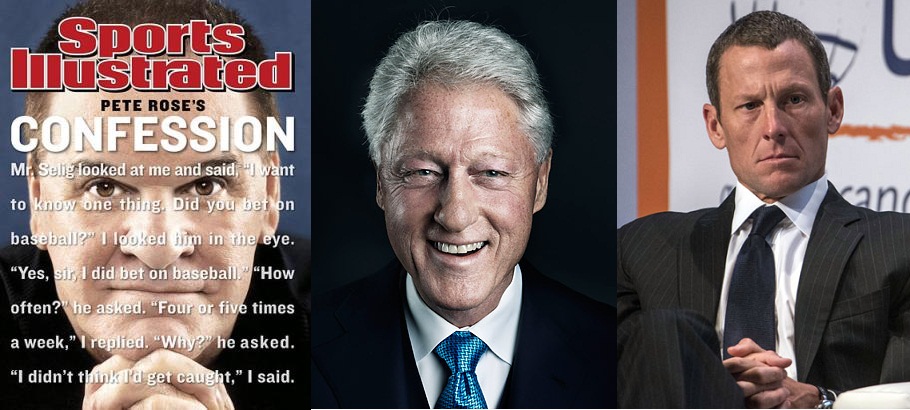
I saw this coming, of course, as did you. One thing we could count on with Lance (and Bill, and Pete, whose odious club Armstrong joins with the Oprah tactic) was that he would do whatever was necessary to benefit him. There is nothing, absolutely nothing, in common with a genuine confession and a real apology in Armstrong’s 180 degree reversal with Oprah, or in the necessary preparations for it he engaged in, like apologizing to the cycling community and the Livestrong staff. When Armstrong thought he could continue to fool some of the people all the time by lying, posturing, and viciously attacking—sometimes with lawsuits—those who he knew were telling the truth about his cheating, he continued to lie. Now that the jig is up and he has no other options, he’s going to come clean and weep softly with the Big O. Sociopaths are usually very good actors. Some of them have won Academy Awards. Continue reading

Lance Armstrong and the Sociopath’s Dilemma: When Honesty Is No Longer Ethical

Welcome to the club, Lance.

Welcome to the club, Lance.

Rose

In 2004, 15 years after he had been banned from baseball after a finding by the Major League Baseball’s Commissioner’s Office that he had violated the games rules against betting on Major League Games, Pete Rose publicly admitted that his denials over that time were all lies. Yes, he had bet on baseball, and he was very, very sorry. Rose’s admission did little to change the verdict in and out of baseball that he was a rogue and a liar. His confession was obviously part of a cynical and calculated strategy to get reinstated in the game, after the strategy of denial and waiting proved ineffective. In addition, Rose needed money, and the confession was part of the hook for his new autobiographical book, which was released at the same time he withdrew his protestations of innocence.

For Pete Rose, honesty was not an ethical value that he respected or returned to in penance after years of straying. It was just another means to an end.

Clinton

In 1998, President Bill Clinton was in the midst of the Monica Lewinsky scandal, denying that he had ever “had sex with that woman.” He called up his old friend, advisor and pollster, Dick Morris, and asked what he should do. Together they decided that Morris ought to take a poll to see what the public’s reaction would be if Clinton retracted his denials and admitted the affair. Morris reported back, after taking such a poll, that while the public would forgive the sexual relationship, anger over the President’s untruthful denials might sink his administration. Clinton decided that honesty would not work to his advantage, and continued to lie.

To Bill Clinton and Morris, honesty was just one of several tactical options to solve a political crisis. If had nothing to do with ethics, or doing the right thing.

Armstrong

It is 2013, and the New York Times reports that Lance Armstrong, now stripped of all his cycling titles, banned from athletic competition worldwide and separated from his commercial sponsors and the cancer charity that bears his name,

“has told associates and antidoping officials that he is considering publicly admitting that he used banned performance-enhancing drugs and blood transfusions during his cycling career, according to several people with direct knowledge of the situation. He would do this, the people said, because he wants to persuade antidoping officials to restore his eligibility so he can resume his athletic career.”

Armstrong, it is clear, is traveling in the well-worn and slimy footsteps of Rose and Clinton, fellow sociopaths to whom conscience, shame, contrition and remorse are alien concepts and for whom atonement and redemption are just games to win, with honesty being an indispensable, if unpleasant, tactic. When one is considering whether or not to be honest and admit what one has long denied based on cold calculations of personal costs and benefits, truth-telling is no longer a matter of ethics, or doing the right thing regardless of consequences. It is merely another weapon, along with lies, manipulation, deceit and posturing, in the arsenal of one of the lifetime predators whose sole goal in life is to prevail and profit over the rest of the trusting suckers who share the Earth with them, and who will do anything, even to the extent of briefly embracing ethical principles, to get what they want.

Should he decide to finally admit what everyone knows and he has long denied, even to the extent of suing those who declared his guilty, Lance Armstrong should be seen as no more ethical or noble than the criminal who pleads guilty in court on the advice of his lawyer, because the evidence is overwhelming, conviction is certain, and confession is the only route to a lighter sentence.

Individuals like Pete Rose, Bill Clinton and Lance Armstrong defile ethical values by their brief embrace of them.

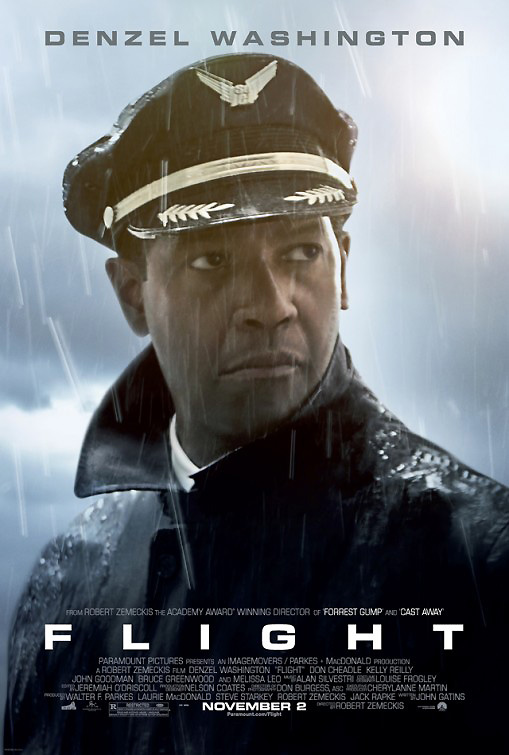
There Is Nothing Noble About A Deathbed Confession…

Don’t you just hate it when you think you are going to die and confess a horrible crime and then you miraculously recover?

…which is why this O. Henry-esque story makes me smile.

Someone stabbed Joyce Goodener in the neck, set her on fire and bludgeoned her to death with a cinder block in 1995. Nobody was arrested for her murder. But three years ago, James Washington, a Tennessee prisoner, thought he was dying from a heart attack. The downside of confessing to a crime right before you kick off is nil, and the up-side might be admission through the Pearly Gates, so Washington confessed to a prison guard that he had killed Goodener. “I have something to tell you. I have to get something off my conscience and you need to hear this,’” he told the guard, James Tomlinson. “I killed somebody. I beat her to death.”  He confessed all the gory details. Then, conveniently unburdened, Washington waited to go into the light, to mercy, forgiveness, and maybe a nice pair of wings and a golden harp.

Oops. He recovered. Now he’s facing at least another 50 years in prison.

There is nothing admirable or ethical about a death-bed confession. It doesn’t show contrition, honesty, accountability or good citizenship. Such confessions are examples of self-serving cowardice. Although it is true that the world would be a better, safer place with Washington gone, the fact that he now has to face earthly retribution rather than reap the benefits of heavenly absolution is the essence of justice.

But hey, thanks for sharing, James!

_____________________________________________
Facts and Graphic: Daily News

Unappreciated Ethics Hero: Facebook? Oh, Yes!

Unlike more primitive methods of mind control, Facebook is painless!

I think perhaps we have not been giving Facebook its due, and now, as the social networking monster is still reeling from its botched IPO, is a good time to right that wrong. We’ve been looking so hard at Facebook’s privacy settings, dadta collection, layouts and pointless games that we’ve missed the most important feature of it—magic. Like Wonder Woman’s golden lasso, but  a really, really big one, Facebook magically persuades people to not only tell the truth about the rotten things they are doing (like going dancing or golfing after persuading an employer to pay them disability because they are permanently unable to work), will do (like planning, in advance of the hearing the evidence, to vote guilty on a jury) or did (we’re getting to that), but to tell it to millions of people, potentially, so that they get punished.  Facebook’s power to compel confessions causes users to post videos or photographs of themselves in the process of doing incriminating things, so they can be then used as evidence in court. You have to admit, this is a wonderful thing. I don’t know how Mark Zuckerberg and his pals figured out how to do it, or what book of spells they stumbled across at Harvard, but they have performed a boon for humanity, and we ought to stop giving them grief.

Take the case of Michael Ruse, a charming Brit standing trial, accused of helping a friend beat up his father using a baseball bat. Micheal’s trial was going well for him, until Facebook took over his mind, such as it is, and flooded it with virtue. Suddenly, he was sending out a the message to his friends—and everyone else, for it was a public message—that he thought he would “get away with it.” An anonymous observer of the post—it could have been Wonder Woman, come to think of it, or at least Linda Carter— printed it his incriminating words and brought them to the court’s attention.

Under the advice of his barrister, Ruse changed his plea to guilty. The judge was not impressed, telling Ruse, “You pleaded guilty part way through the trial only really because you were stupid enough to put on Facebook what amounted to a full confession.” Well, yes, but as usual, he’s not giving Facebook credit for its uncanny ability to compel the truth. (Ruse’s lawyer replied to the judge, “He needs help with regards to thinking skills.” Perhaps. )

Ruse was  sentenced to 46 weeks in jail, another example of justice through Facebook magic. But apparently Zuckerberg’s magic lasso isn’t finished with him yet, for after sentencing Ruse got back on his Facebook account and insulted the judge.

Thank you, Facebook!

________________________________________

Pointer: Fark

Facts: Gawker

Graphic: Mind Control Blog

Ethics Alarms attempts to give proper attribution and credit to all sources of facts, analysis and other assistance that go into its blog posts. If you are aware of one I missed, or believe your own work was used in any way without proper attribution, please contact me, Jack Marshall, at  jamproethics@verizon.net.

Reporting the Confessed Killer in Your Midst: An Ethical Dilemma That Isn’t

Pedro Hernandez, now under arrest for the murder of Etan Patz, the  6-year-old boy whose 1979 murder was a national mystery, confessed that he had strangled the child just a few years later to his prayer group at St. Anthony of Padua, a Catholic church in Camden, New Jersey.  No one, including Hernandez’s relatives who learned of his confession and the prayer group leader, reported the confession to authorities.

Hernandez’s sister, Milagros Hernandez, confessed what she described as a “family secret” to a reporter for the New York Daily News over the weekend, setting off “What would you do?” internet polls and blog posts, as if there was any question about the proper conduct for a family member or church group member who hears a murder confession. There is no question.  You report it. There are no debate issues, no competing considerations, no claims of loyalty or confidentiality.  It isn’t a Golden Rule dilemma, as in “Would I want someone to report me if I confessed to him in confidence that he had strangled a little boy?”  It isn’t a dilemma at all. There is only one right thing to do, and if you think otherwise, you missed a couple of key meetings when the ethics were being handed out. Continue reading

Randy Cohen Watch: “The Ethicist” vs. Integrity, Accountability, and the Law

Randy Cohen, “The Ethicist” of the popular New York Times Magazine column, frequently gets in trouble when he opines on the law, legal ethics, and how lawyers interact with society. This week he was at it again, and he got in trouble, all right. Big time.

Bruce Pelligrino wrote to the column to get “The Ethicist’s” take on the actions of a friend, who told Bruce he wanted to hire a lawyer to challenge a speeding ticket even though he had admitted to the police officer, in the presence of his children who were passengers in the car, that he had been driving 51 m.p.h . where the limit was 35.

“I think he should accept the consequences, learn from the experience and give his children a lesson in ethics,” wrote Pelligrino. ”Shouldn’t he just pay the ticket?”

Cohen sided with the speeder, opining…

“Even those who think themselves guilty are entitled to their day in court, and there is civic virtue in their exercising this right. A trial is a way to hold officials accountable for their conduct. Was the radar gun accurate? Was the speed zone clearly marked? Did the police officer behave properly? And what, given all the circumstances, is an appropriate punishment? Little of this could be scrutinized if everyone simply paid the ticket. It would be a court-clogging nightmare if every self-confessed speeder demanded a trial, but it is a fine thing if, now and then, some people do.”

Randy appears to have misunderstood the question, believing that Pelligrino’s friend was being charged with an arcane S.E.C. violation, or some intricate form of criminal conspiracy. The guy was driving too fast, knew it, and got caught! What does Cohen mean “Even those who think themselves guilty”? The driver admitted he exceeded the speed limit on the basis of his own car’s speedometer; he didn’t “think” he was guilty; he knew with complete certainty he was guilty, and said so to the cop who stopped him.

“The Ethicist” thinks “it’s a fine thing” for that driver to renege on his admission and impugn the policeman’s behavior, challenge the speed limit posting and question the radar gun to get out of a wrongful fine for an act he admits he committed. How could this course of action possibly be called ethical?

Here is what really is “a fine thing,” Randy: integrity—sticking to one’s word and backing it up with action. The driver said the ticket was correct. It is dishonest and irresponsible for him to turn around and challenge it as Cohen suggests. Here’s something else that is “a fine thing,” Randy: accountability—admitting when you have done wrong when you know it and accepting the consequences. The purpose of the legal system is not to encourage citizens to try to avoid just consequences for admitted violations of the law. Yes, as Cohen correctly notes, everyone has a right to challenge charges in court, but as anyone who calls himself an ethicist is supposed to know, it is not always ethical to exercise a right. Banks have the right to kick elderly homeowner out onto the street as soon as they fall behind on their mortgage payments. I have the right to limit my circle of friends and business associates to straight, white, Protestant bigots. I have the right to be blatantly incompetent in my free ethics commentary, and, like Randy in this case, to give mistaken and even harmful advice. All of these things are still unethical, however.

The Ethicist’s answer to Mr. Pelligrino’s query is unethical too, dramatically so. Cohen is saying that it is reasonable and ethical to force a trial on a traffic offense when…

  • The driver admitted the offense to the police officer…
  • …in front of his children…
  • …in order to challenge the veracity of the officer, who took his admission in good faith…
  • ….requiring the officer to appear in court, taking him away from community law enforcement duties…
  • …taking up court time, using taxpayer-funded personnel, that should be devoted to cases where the facts are genuinely in dispute…
  • …with the objective of avoiding the payment of a just fine to the government, where it would be used for community purposes, in order to transfer money instead to the pocket of, not just a lawyer, but the unethical species of lawyer who is willing to take unconscionable cases…
  • …thus teaching the driver’s children, if the driver prevails, that the objective in life is use the system to avoid accountability, even when you deserve to be punished, and..
  • …that respect for the law is less important than avoiding a thoroughly earned fine, and
  • …that speeding is all right if you can get away with it, thus…
  • …increasing the likelihood that the children themselves will regard excessive speed this way when they become drivers, and also increasing the chances that their driving habits will cause harm to themselves or others.

I have  read “The Ethicist” for years, I have learned that Randy Cohen has unseemly problems with honesty, a reflex prejudice against law enforcement, and shocking and brazen cluelessness on matters of legal ethics and the exercise of legal rights. Bruce Pelligrino managed to ask a question that involved all of them, and the result was one of the most indefensible answers I’ve seen from Cohen yet.

Mark McGwire’s Steroid Confession, Part 1

Former slugging first baseman Mark McGwire finally admitted yesterday that he indeed was a steroid-user while playing.  Telling the truth, even, as in McGwire’s case, when it is done too late and in a self-serving manner, is a good thing.  Nevertheless, his admission should have no bearing at all on the judgment of him as unworthy of  post-career honors. McGwire cheated, and his use of steroids damaged his fellow players and the game.  Nothing he said changes any of that. Continue reading