An Untrustworthy Study About Perceptions Of Untrustworthiness That Shows Something Else Entirely

Research is frequently polluted by confirmation bias; personally, I believe this is the case more often than not. A particularly vivid example is the work on “vocal fry,” described as “slowly fluttering the vocal cords, resulting in a popping or creaking sound at the bottom of the vocal register.” Supposedly a 2011 study determined that two-thirds of college women were doing it, and now a paper by Rindy C. Anderson, Casey A. Klofstad , William J. Mayew, and Mohan Venkatachalam announces the results of further research showing how harmful it is. I admit: I’ve now read a lot of stuff about vocal fry, which I had never heard of until recently, and I’m still unclear on exactly what the hell it is, other than “talking in an annoying fashion.” The Atlantic tells us that this is vocal fry, which means it consists of talking like Zooey Deschanel does here:

Got it? OK, now you can explain it to me.

Anyway, what the exact phenomenon is doesn’t matter to the ethics issue; all you have to know is that a respected, serious, scholarly study has spawned lots of media attention by claiming that its data shows that women and men who exhibit vocal fry in their speech patterns will tend to be hired less often than job interviewees who don’t, because employers view them as untrustworthy, among other things. (The study’s catchy title is “Vocal Fry May Undermine the Success of Young Women in the Labor Market,” because, as we know, women are all that matter these days, having had war declared on them and all.) Continue reading

Hurricane Ethics: Bias, Bias, Who’s Got the Bias?

"So 'Hurrucane Snoopy' it is, right?"

“So ‘Hurrucane Snoopy’ it is, right?”

Here we have a bias study that appears to have been infected with bias, designed to show bias, with no useful use for the data—even if it is valid, which is dubious—except to encourage bias!

Researchers  at the University of Illinois and Arizona State University examined six decades of hurricane death rates according to gender, spanning 1950 and 2012. Of the 47 most deadly hurricanes, the female-named  produced an average of 45 deaths compared to 23 deaths in male-named storms, or almost double the number of fatalities. They felt this was indicative of the fact that masculine-named storms were scarier to those in its path, so the female storms caused more death and destruction due to the trusting, sexist fools who didn’t take them seriously.

The problems with this study are legion, beginning with the fact that older hurricanes caused more damage than those of recent vintage (Katrina was left out of the study because it was deemed an outlier. It also would have blown up the data so completely that the study’s pre-cooked conclusions would be even less credible than they are.) when male names were used for the first time.  Do you think advances in medicine, storm warnings and other factors contributed to the reduction in death totals since male-named storms were introduces? Naaaah! Continue reading

Confirmation Bias or Contrived Ignorance: The New York Times and the Inadvertent Voter Fraud of Mario Hernandez

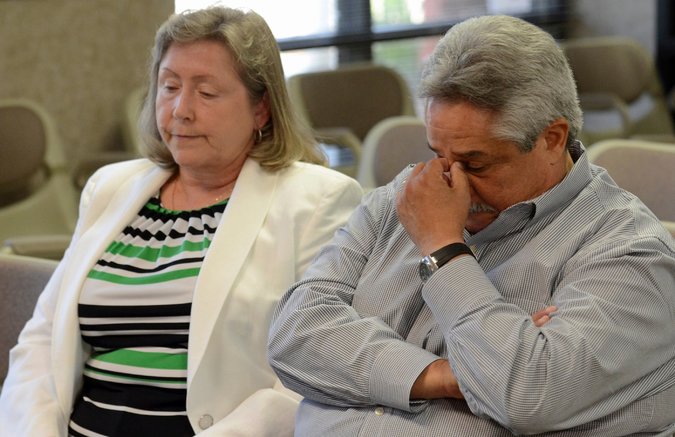
Accidental illegal Mario Hernandez waits to finally get the citizenship he thought he already had. Those 10 votes he cast without being eligible don't matter, because he wasn't trying to defraud anyone. What else is there to the story? That's it, right? Problem solved!

Accidental illegal Mario Hernandez waits to finally get the citizenship he thought he already had. Those 10 votes he cast without being eligible don’t matter, because he wasn’t trying to defraud anyone. What else is there to the story? That’s it, right? Problem solved!

Last week, the New York Times happily related the heart-warming tale of Mario Hernandez, a former federal employee and an Army veteran who for decades thought he was a United States citizen but wasn’t. The problem was rectified at last when he was sworn in as a citizen in a ceremony in Jacksonville, Florida. In the process of telling the story, the Times casually notes that he voted in every major election since Jimmy Carter’s in 1976. The Times’ ethics alarms are long dead: to them, this is just a detail on the way to arguing one of its pet agenda items, that the immigration system needs fixing. It does, but one weird story where a series of record-keeping errors resulted in a botched citizenship status doesn’t prove it. Because he has a different concern, however Wall Street Journal blogger James Taranto did the math. Hernandez, a non-citizen, voted in ten elections, by his own admission, and nobody knew.

That is significant, and does prove something. It proves that the Democratic, NAACP, Eric Holder mainstream media claim that there is no evidence that people are voting in elections who shouldn’t is a problem worthy of addressing is a cynical excuse to cry racism to tar Republicans who are pushing for an obvious, practical, responsible requirement of photo ID cards to establish voter eligibility. As Taranto points out, such a system would have not only prevented Hernandez’s invalid—but tallied*—votes, but also would have alerted him decades ago of his citizenship problem. More important, the incident illustrates the inherent dishonesty of the argument that because a large number of such votes by non-citizens haven’t been caught, they problem doesn’t exist. If one non-citizen, however innocently, could have voted ten times over decades without it being noted, it is fair to assume that there is a problem. Voter IDs address the problem; it is irresponsible not to address the problem, and to argue that only racism could be behind an effort to improve the integrity of a system that allows a single non-citizen to cast ten votes is unfair, irresponsible and intentionally misleading. Continue reading

No, NPR, The Ice Cream Truck Isn’t “Racist,” But I Know Why You Want Us To Think So

ice cream truck

“Racism! Come and get your delicious racism!”

I will not be surprised to see a formal course of study emerge in the near future in our institutions of higher learning, teaching the skills necessary to become a certified race-grievance manufacturer. One would be trained in such classes as Advanced Race-baiting, Historical Distortions, The Uses of Paranoia, and The  Permanent Victim Mindset, and a typical honors thesis would be exactly like the essay featured on NPR’s website, by Theodore Johnson III, but with footnotes. Come to think of it, maybe that’s where Johnson’s article did come from. If so, I’m sure he got an A.

And, as was the objective, other race-baiting lackeys, like RYOT’s Viola Knowles, picked up the baton by taking Johnson’s thesis to the next level, with her opus, “So It Turns Out Your Beloved Ice Cream Truck Is Actually Super Racist.” Like its origin, the piece is a lesson in confirmation bias and intellectually dishonest research. Also like the NPR piece—and tell me again why my tax dollars support an institution that encourages racial distrust—it is sinister in intent. “If you’d rather I not crush all of your beautiful childhood memories with ugly racism then you may want to leave now,” she begins ominously. For NPR has discovered that the jingle traditionally played by the friendly neighborhood ice cream truck—“or the racist truck,” she says, is “one of the most racist songs in America.”

Here, in brief is Johnson’s thesis— Continue reading

Good News On Business Ethics? Maybe: The Ethics Research Center’s 2014 National Business Ethics Survey

ERC surveyThe Ethics Resource Center, a distinguished Washington, D.C. based ethics research and consulting firm, performs a survey of business employees every two years to measure trends in workplace ethics. It’s 2013 survey and report was released last week, and appears to bear good tidings. Workplace misconduct is on the decline, the data says.  41 percent of employees observed misconduct in 2013, way down from 55 percent in 2007. Moreover, ERC’s “National Business Ethics Survey,” which polled 6,400 U.S. employees, found that only 9 percent of employees polled felt pressure to compromise their standards in 2013, down from 13 percent in the previous survey in 2011.

ERC Chairman Michael G. Oxley  (of Sarbanes-Oxley fame) said in a release,“The results of the survey are encouraging and show that companies are doing a better job of holding workers accountable, imposing discipline for misconduct, and letting it be known publicly that bad behavior will be punished.”

Among the survey’s intriguing findings:

  • “Over the last two years, observed misconduct fell in every one of the 26 specific categories we asked about in both NBES 2011 and NBES 2013.
  • “Pressure to compromise standards, often a leading indicator of future misconduct, also was down – falling from 13 percent in 2011 to nine percent in the latest survey.”

Less encouraging are these: Continue reading

Proposed PSA: “This Is Matthew, And He Is The Face Of The Tragedy Called Confirmation Bias. Please Help!”

PSA

It is so easy—and tempting—to dismantle Matthew Lynch’s  jaw-dropping essay on the Huffington Post titled “12 Reasons Why Obama Is One of the Best Presidents Ever” that it is unethical, like shooting fish in a barrel. Nearly everything about the post is snicker-worthy, beginning with its timing: this is the equivalent of writing a paean to JFK the morning after the Bay of Pigs.

I have no similar reticence about slamming the Huffington Post for running such an embarrassing screed. If it was intended as satire (and I still think this is a possibility), the piece is incompetent, because when satire is so close to reality that readers can’t tell it’s satire, then it becomes a hoax. There is a possibility, I suppose, that the editors published this because Lynch’s glossy-eyed, alternate reality ravings were entertainingly absurd (they are not: they are tragic), but this would be cruelty, the equivalent of Sean Hannity’s practice of allowing an ignorant, usually poor and uneducated liberal caller to make a fool of herself, slyly impugning the intelligence of the entire American Left. Yet the Huffington Post is largely Obama-friendly: his obeisant  media may finally be moving away from the President, but not that quickly. I think “12 Reasons…” was run because the editors believed the article had substantive merit, in which case, they should all be sent to the Home for Bewildered Editors. (It also may have been planted as link bait.)

If the post was run on its substance, then the editors failed their responsibilities in another respect: they didn’t check Lynch’s facts. His opinions and justifications for them may be Oz-worthy and his alone, but when he writes a flat-out misrepresentation like this… Continue reading

Examining The President’s Non-Apology Obamacare Apology

sorry

Those of you who have emailed concern that my field, this blog and the task of exploring the depths of dishonesty in our national politics will make me cynical, I can officially assure you that so far, I am unsullied. Here’s the proof: I am actually surprised that the national news media so eagerly accepted whatever it was the President said in mitigation of his 3.5 year long Affordable Care Act lie as an “apology.”

It was clearly not an apology. Yet in a rare show of solidarity, reporters right and left rushed to their respective keyboards to dash out “President apologizes!”  The solidarity was illusory, of course: while the Right wanted to say the President apologized as proof that all the rationalizations, excuses and tortured explanations from Obama’s allies and enabler were as phony as his assurances, and now, by apologizing, the President had admitted it, the Left’s motive was to pronounce the scandal over so the President could “move on.” Okay, he’s apologized; what more do you want? This is confirmation bias, leading to different mistaken conclusions: both conservatives and liberals heard what they wanted to hear. What they should have heard was an incoherent expression of regret without accountability, retraction, admission, or contrition…in short, not an apology at all.

On the Ethics Alarms Apology Scale, I see no way to rank what the President actually said to NBC’s Chuck Todd as anything better than a 9 or 10 (I’d call it an ugly  hybrid of the two), on the scale, the Stygian realm where dishonest, manipulative, non-apology apologies dwell:

#9. Deceitful apologies, in which the wording of the apology is crafted to appear apologetic when it is not (“if my words offended, I am sorry”). Another variation: apologizing for a tangential matter other than the act or words that warranted an apology.

#10. An insincere and dishonest apology designed to allow the wrongdoer to escape accountability cheaply, and to deceive his or her victims into forgiveness and trust, so they are vulnerable to future wrongdoing.

Here is the section of the interview that generated the “apology.” Todd, who has said that he felt he had to pull an apology out of the President, began the “apology’ sequence (emphasis is mine): Continue reading

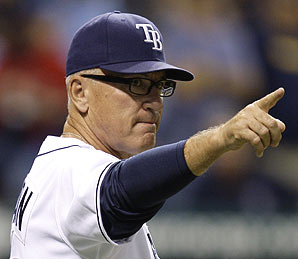
Ethics Lessons From The Baseball Playoffs: Joe Madden’s Confirmation Bias

Joe Maddon...victim.

Joe Maddon…victim.

Confirmation bias is the most pernicious of all biases, the most natural, and the hardest one to deal with, since it is hard-wired into everyone’s brain. It is nearly indistinguishable from wisdom and experience, you see, but it is a bias nonetheless, and like all biases, makes us stupid. Confirmation bias prevents us from accepting and processing new information objectively, and leads us to see it in the light most favorable to what we already believe, sometimes when that light is decidedly dim or even non-existent.

Baseball is full of vivid ethics lessons, and the post-season, with such high-profile games and thick media coverage is annually an ethics smorgasbord, if you look hard enough. Saturday, Tampa Bay manager Joe Maddon, widely regarded as the smartest manager in the game, showed us how confirmation bias works, and the damage it can do. Continue reading

Leadership Trust: Is This Finally The Public’s Tipping Point On President Obama?

giant-jengaTipping points are events that establish major shifts in public attitudes and the culture, and what determines a tipping point varies from circumstance to circumstance. When the switch is flipped on public trust, a leader is done for, at least in a democracy. This is why, in a parliamentary system,  prime ministers call for elections at such times, or even resign. It’s a tradition the U.S. might do well to consider.

The tipping point on the George W. Bush presidency was glaringly obvious: it was the botched handling of Hurricane Katrina, even though that particular fiasco was mostly an example of effective  blame-shifting by New Orleans mayor Ray Nagin. Bush had already accumulated many legitimate reasons to doubt him, but the traditional American eagerness to like and trust whoever holds the same job as Washington, Lincoln and FDR had kept his presidency afloat…until it drowned in Katrina. All was downhill from there.

Interestingly, nobody at the time argued that Americans should support the lousy response to Katrina because not doing so would cripple the Bush presidency going forward. But I digress..

Now it appears that the Obama proposal/decision/ argument—who knows what it really is?—to engage in a limited missile attack on Syria may be the public tipping point on Obama’s leadership, the moment when the veils fall and the nation reluctantly but decisively admits that the man it elected—twice—as its leader cannot be trusted. If so, it is remarkable this took so long, testimony to how much we all wanted our first African-American President to succeed. The tipping point for me was years ago. Following the Bush experience, I thought that the bungled government handling of the Gulf oil spill would clinch it, but no. Then came the Benghazi mess, with an ambassador and other Americans murdered without any decisive response other than deceptive spin and obfuscation to avoid electoral consequences—the I.R.S. tea party harassment (still being investigated, and looking worse all the time)—the NSA revelations, and the growing evidence that while the Affordable Care Act may not be the cataclysmic socialist disaster conservatives claim it is, it is also far from what the President promised. No tipping point though, until Syria, and the consequences flowing directly from the President’s undisciplined off-the-cuff rhetoric—a constantly repeated flaw in his leadership style.

Now, as tipping points do, this current controversy is resuscitating all of the past incidents, and serving as the catalyst for a reappraisal of Obama’s leadership. The looming conclusion is that he cannot be trusted.

Occasionally am beaten to the punch by a pundit or blogger who delivers an essay that says exactly what I was preparing to write, even as I was almost finished writing it. Such a pundit is Forbes contributor Merrill Mathews, who delivered an article on that publication’s website over the weekend, titled “What Happens When You Can’t Believe A Thing The President Says?” (My title was going to be “When Trust Is Gone”).

Some key quotes from the article: Continue reading

Ethics Quiz: Playing Follow The Leader

To follow or not to follow?

To follow or not to follow?

I live in the Washington, D.C. area, and at this moment even the beginning of the NFL season, usually the one thing everyone here (except me) usually cares about, is being over-shadowed by the drama of the looming Congressional vote on Syria. What was assumed—why, I cannot imagine–to be a likely rubber stamp with only an insufficient number of Republicans providing opposition because, as we all have been told repeatedly, they will oppose the President on anything, has materialized as strong bi-partisan opposition. The Washington Post estimated last night that the votes in the House are currently running 3-1 against the symbolic-and-deadly-but-promised-to-be-non-committal missile strikes on pre-announced targets. This is the most encouraging development in the government since President Obama was elected, I am tempted to say. It shows that this is not a nation of lemmings, and that the separation of powers has its virtues after all. Nonetheless, interesting ethical arguments are arising in favor of votes both no and yes.

The no arguments are varied, and reach the same conclusion from different positions, some more ethical than others. The pacifist Left and the isolationist Right, both irresponsible and dedicated to ideology over reality, are on the same path here, and would be on that same path even if the President’s argument for missile strikes was strong. Others, including me, but also those who supported more extensive military action in the Bush administration, fault the plan because of its dubious results, its contradictory logic, and the feckless and troubling way the President brought us to where we are.

I just heard an interview with a Republican House member who announced that he reversed his initial support for the missile strike after hearing Obama’s remarks in Sweden. After hearing Obama appear to deny that he drew the red line—a rhetorical point that was too cute by half and clumsily stated—this Congressman decided that he couldn’t believe anything Obama said or promised regarding Syria, including his assurances that nothing would lead to “boots on the ground.” (I would argue that his assurances that nothing would lead to boots on the ground is, if not dishonest, frighteningly irresponsible.)

The yes arguments are more perplexing. Naturally, there are those who, against all logic, simply adopt the contradictory and militarily nonsensical arguments John Kerry was asked to present to the Senate (apparently because President Obama knows that he appointed an inarticulate—but loyal!!!—dim-bulb, Chuck Hagel, as Secretary of Defense—but that is another, though related, issue). Liberal columnist Eugene Robinson,  who has won an Affirmative Action Pulitzer Prize and who has proven that he will cheer whatever his fellow-African American in the White House does, even if he makes a decree like the South American rebel-leader-turned-dictator in Woody Allen’s “Bananas”...

“From this day on, the official language of San Marcos will be Swedish…In addition to that, all citizens will be required to change their underwear every half-hour. Underwear will be worn on the outside so we can check. Furthermore, all children under 16 years old are now… 16 years old!”

made this “argument”…

“The issue can’t be who wins that country’s civil war. It has to be whether the regime of Bashar al-Assad should be punished for using chemical weapons — and, if the answer is yes, whether there is any effective means of punishment other than a U.S. military strike…Let me clarify: I believe that a U.S. strike of the kind being discussed, involving cruise missiles and perhaps other air-power assets, can make it more likely that Assad loses. But I also believe that — absent a major commitment of American forces, which is out of the question — we cannot determine who wins.”

Gee, thanks for clarifying, Eugene!

Other, more coherent voices argue for endorsing Obama’s plan do sent a few missiles—not any that might hit Assad or his weapons, mind you– because they argue, even if the plan is weak, misguided, dangerous or certifiably bats, the President and, by extension, the United States will be dangerously weakened if a call to arms is rejected. This is essentially the argument of rational conservative James Taranto. Here is former Bush speechwriter Michael Gerson, this morning:

“…During the Syrian crisis, the Obama administration has generally waged a war of words and then used those words casually and clumsily. President Obama declared that Assad “must go” when his departure seemed inevitable — without a strategy, or even the intention, to achieve this goal when it became difficult. He drew a chemical-weapons “red line” that became a well-trodden thoroughfare. The Obama administration revealed details of an imminent military operation, which was promptly repudiated by the parliament of our closest ally, then abruptly postponed. The administration seemed to indicate that United Nations support for a military strike was needed — before declaring it unnecessary. It seemed to indicate that a congressional endorsement was superfluous — just before staking everything on securing it. Obama is inviting members of Congress to share responsibility for a Syrian policy that has achieved little to justify their confidence. In fact, he has undermined political support for the legislative outcome he seeks. For more than five years, Obama has argued that America is overcommitted in the Middle East and should refocus on domestic priorities. Now he asks other politicians to incur risks by endorsing an approach he has clearly resisted at every stage…”

Wait…this is how Gerson argues that Congress should vote yes? Indeed it is…

“Legislators are not arguing between preferred policy options, as they would on issues such as health care or welfare. They are deciding if they will send the chief executive into the world with his hands tied behind his back. This would be more than the repudiation of the current president; it would be the dangerous weakening of the presidency….even if this military action were wrong or pointless, it would have to be sufficiently dangerous to justify the gelding of the executive branch on a global stage. A limited military strike may be symbolic. But for Congress to block that strike would be more than symbolic. It would undermine a tangible element of American influence: the perception that the commander in chief is fully in command.”

This is a good time to stop and offer today’s Ethics Alarms Ethics Quiz, based on the reasoning of Gerson and others:

Are members of Congress ethically obligated, by loyalty and responsibility for the image and credibility of the U.S. abroad and to avoid weakening the institution of the presidency, to support the missile strikes on Syria, even if they and their constituents believe that to do so is wrong and misguided?

And here’s a poll:

Continue reading