Obama, Trayvon Martin, Biases and Kansas City Burning

In Kansas City, Missouri, a 13-year-old East High School student was walking home after the end of his daily classes when he was grabbed by two older teens just as he reached his front porch. They pinned his arms behind his back,  poured gasoline on him, and set him on fire. The victim of the attack was rushed to an emergency room, where he was treated and released. Doctors fear possible damage to his lungs and eyes, but outside of losing his eyebrows and some hair, he only suffered first degree burns.

The boy is white; his attackers were black. They allegedly said, as they were lighting him aflame, “You get what you deserve, white boy.”

This frightening incident occurred on March 2. I only recently learned of it, because the news media didn’t treat it as a national story. Though the boy’s attackers have not been found, no activists are demanding that the police chief resign. There have been no marches or protests, and students aren’t walking out of Kansas City schools. Nobody, as far as I can determine, has claimed that this is just the tip of a lurking race iceberg, and that it shows the racial hate of blacks toward whites that is hidden by the media and the culture. Most of all, the President of the United States did not say , just to give a wild, hypothetical example… Continue reading

Super Tuesday Confirmation Bias Lesson, Or Why We Can Never Trust Media Analysis

Checking the Republican primary results as Super Tuesday neared an end, I got an unexpected demonstration of confirmation bias in the news media, so vivid that it could be used in an educational video.

On CNN, John King, Gloria Borgia and the gang were analyzing the razor-close contest in Ohio, widely regarded as a must-win for Rick Santorum, just as Mitt Romney seemed to be pulling ahead for good. Welcome news for Romney? Not so fast!

Gloria Borger, whose contempt for all things Republican is always writ large on her face and unmistakably expressed by her tones of disdain (Does she even attempt to appear objective? It doesn’t seem so, as her demeanor when discussing GOP politics always suggests to me that she thinks she is covering some kind of demeaning novelty event, like a four-poster bed race or a dwarf-bowling, that the audience knows as well as she does is a colossal waste of time), vigorously took the floor and emphasized that Romney was winning in the very communities where Democrats were strongest, and losing to Santorum where Republicans usually did well. This, she said, eyes rolling (“I can’t believe I’m here talking about Republicans when I could be home watching a repeat of ‘Big Bang Theory!'”) showed that Romney would be in likely trouble if he were the nominee in November, since his strength would be wasted in Democratic strongholds and he wouldn’t be getting the support of the blue-collar types that a Republican presidential hopeful couldn’t win Ohio without. “To illustrate Gloria’s point,” King interjected, and then produced a computer graphic showing Romney’s fatally flawed vote patterns. Everyone nodded sagely. Mitt’s victory in Ohio showed that he was a loser.

Meanwhile, over at Fox, they were discussing the exact same phenomenon. Local politics maven Michael Barone weighed in, and said that this could bode well for Romney in November. John McCain, though losing Ohio in 2008, still “cleaned up” in the blue color districts, noted Barone, so even though Santorum was beating Romney there tonight, they could be still counted upon to go Mitt’s way in 2012 when Obama was the opposition. Meanwhile, the well-educated, wealthier areas that gave Barack Obama the critical swing state’s electoral votes that year have in the past swung Republican, and Mitt’s showing with that group tonight just might indicate that he could seriously cut into Obama’s strength, taking the state red. And Michale Barone knows his stuff, the Fox-ites gushed. Continue reading

The Knight Scale

I love extremes, especially the bottom of the barrel. Once we can agree on the worst of the worst, everything else can be ranked from there. I was once in a community theater production of “Sugar,” the stage musical version of “Some Like It Hot,” that was so hilariously messed-up that I was excited about it; I was certain that it would finally set the elusive rock bottom for the worst theatrical production of all time. For example, the actress playing the Marilyn Monroe part had gained about 40 pounds during rehearsals, and the actor playing the tap-dancing gangster was recovering from a heart attack, and could barely move. Sadly, the show was cancelled before it could open. I’ve seen a lot of dogs since then, but nothing close to the disaster that “Sugar” would have been.

<sigh>

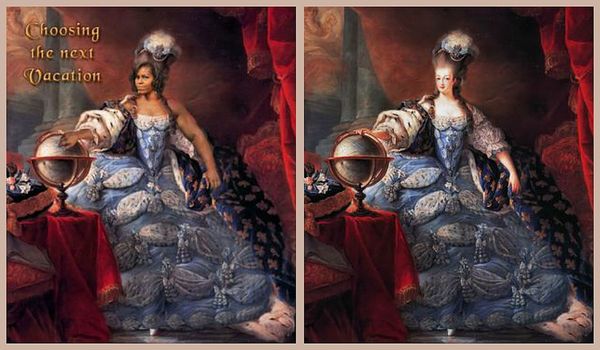
This is why I am so grateful for Los Angeles Times blogger Christopher Knight’s demented post claiming that a satirical cartoon above (first published on the right-wing blog Gateway Pundit) is “baldly racist.” Continue reading

Can’t Someone Be Appreciated for Being NICE Anymore? Even Michele Bachmann?

Yes, a video of the last Republican presidential candidates debate (in Iowa) shows Rep. Michele Bachmann voluntarily filling the water glasses of her fellow contenders before the event, since apparently the organizers expected them to pour their own. The Horror.

The Huffington Post is sure this is a significant and unseemly display of subservience to men by Bachmann, whose fundamentalist Christian beliefs suggest that she accepts the concept of women submitting to their husbands in the marital relationship. Over at The Frisky, Jessica Wakeman accuses Bachmann of staging the whole thing for the cameras, so she will be perceived as nicer than she really is…and she thinks it gives women a black eye: Continue reading

The Herman Cain Web Hoax, Confirmation Bias, and Untrustworthy Commentators

Other possible titles for this entry include “Now THIS Is Confirmation Bias!” and “How Ideological Passion Can Make You an Idiot.”

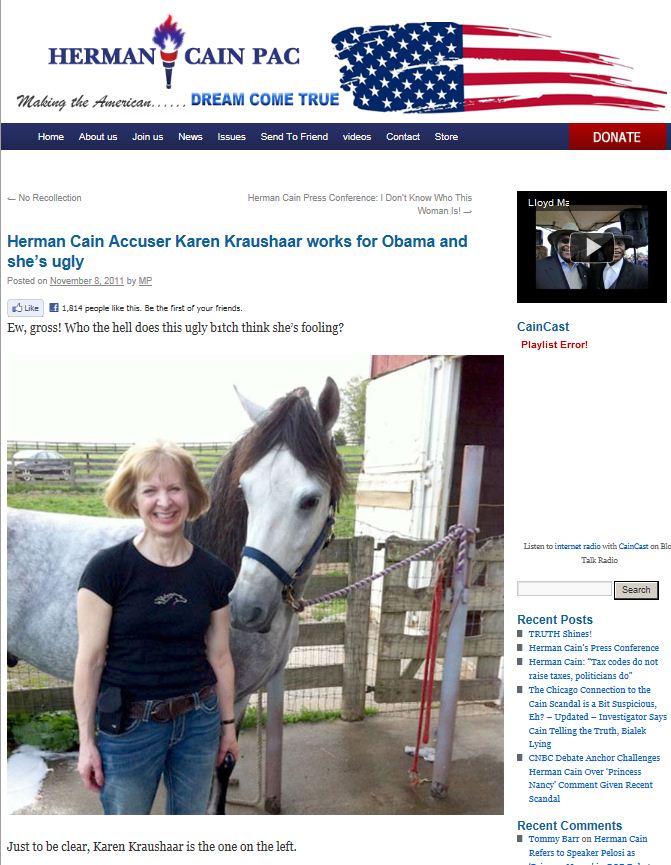
Here is a screen shot of a  Herman Cain PAC website that surfaced this week:

Did you think it was real? Do you think it was intended to fool anyone above the age of 12? Did you not see the horse gag coming a mile away? I guess the real question is, did it take you three seconds, or only one to figure out that it was a gag? Continue reading

Most Troubling Comment During The GOP Debate: Mitt Romney

The runner-up in this category, as I have come to expect, was Michelle Bachmann’s…

“The president, he put us in Libya. He is now putting us in Africa.”

If any other candidate, or President Obama, had said this, no one would blink: an innocent misstatement, obviously. With Bachmann, however, and her record of historical and factual howlers, one has to pause. Does the Congresswoman really not know that Libya is in Africa? After all, a large portion of Americans don’t. It is not unfair to judge Bachmann’s comment in the context of our general impression of her knowledge and precision of expression, but avoiding confirmation bias is almost impossible. If you think Bachmann’s a dolt, then the gaffe is just more proof. If you admire and respect her, you ignore the mistake (we know what she means, after all) and the criticism confirms that everyone is predisposed to be unfair to your candidate. I will say this: Bachmann is at fault for eroding her credibility to the point that a statement like this raises any doubts at all. I am inclined to give her the benefit of the doubt, but the doubt is there, nonetheless.

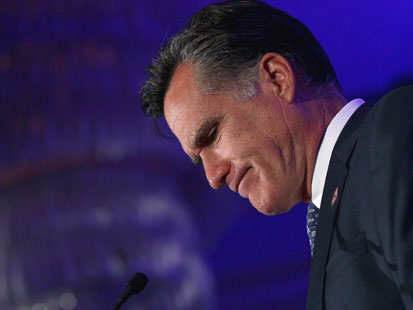
The winning entry in the debate, revealing a disturbing ethical orientation in a spontaneous remark, was Mitt Romney’s comment in the midst of objecting to Gov. Perry’s allegation about Romney’s hypocrisy in criticizing Perry’s record on illegal immigration after employing illegals himself: Continue reading

Patrick B. Pexton: Worst Ombudsman Ever

Interestingly, you can find Patrick B. Pexton's picture in the dictionary under both "bad ombudsman" and "bad hair."

Well, at least we know that the Washington Post’s new ombudsman, Patrick B. Pexton (who apparently escaped from a Charles Dickens novel) is a dud. That’s one good thing that came out of his column about his employer’s unethical coverage of the “Niggerhead” rock, otherwise known as “Let’s smear that scary Republican, Rick Perry, so he’ll never come close to being President.” Other than that useful but unfortunate fact, however, Pexton’s piece represents the most incompetent and ethically clueless analysis by a media ombudsman that I’ve ever read, and I’ve read a lot of them.

Pexton, who is supposed to present an objective and critical response to ethical issues in Post reporting and editing, instead adopts the stance of its partisan defender. Wrong. That’s not his job. His job is to keep his paper honest and to reinforce stringent journalistic ethical standards. Continue reading

The Washington Post, Rick Perry, and “Niggerhead”: A Confirmation Bias Conundrum

I'm bending over backwards trying to be fair about this...

The Washington Post splashed a strange front page story across its paper face on Sunday. I have no idea what to make of it, because I am trying as hard as I can to be objective, and the story repels objectivity like my cousin repels women. It is shot through with confirmation bias: what you think of it is hard to separate from what you already believe.

It appears that Rick Perry, early in his career (when he was a Democrat), used to host events at a hunting camp where there was a large boulder that had the word “Niggerhead” painted on it. Ranchers called the camp by that name—-once a common one for rock formations and creeks in Texas and other parts of the country—long before Perry and his father, Ray, began hunting there in the early 1980s. Perry’s father leased the property in 1983, and according to Perry, the first thing he did was to paint over the word on the rock.  Perry says that when he first saw the rock, it was already painted over. But the Post found seven individuals who say they remember seeing the name on the rock during the time when Perry’s father’s name was on the lease. Apparently the old name is still visible through the paint. Eventually, Perry’s family paid to have the boulder flipped over so it couldn’t be read. Meanwhile, the Post says,  “Longtime hunters, cowboys and ranchers said this particular place was known by that name as long as they could remember, and still is.”

What are we supposed to take away from all this? Continue reading

Ethics, History, and Robert Redford’s “The Conspirator”

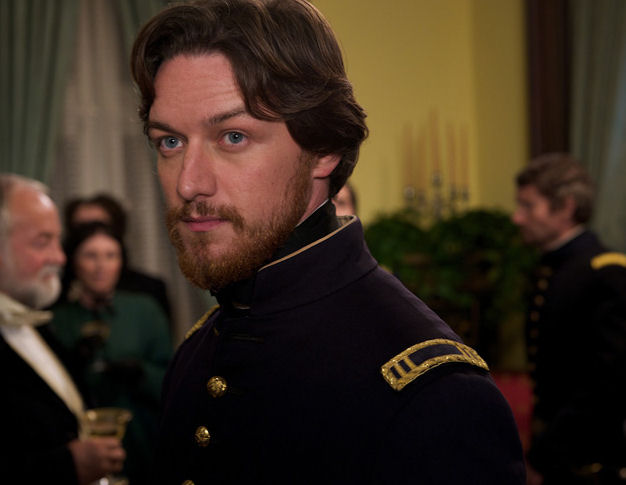
James McAvoy as Frederick Aiken, a Civil War era Ethics Hero you've never heard of.

Throughout Hollywood history, there have been actors who regularly used their screen personas to explore ethical issues: Henry Fonda, Glenn Ford, Paul Newman, John Wayne of course, Clint Eastwood, and recently, George Clooney. None of these focused their artistic attentions on ethics more sharply than Robert Redford, however, in such films as “All the President’s Men,” “The Candidate,” “The Proposition,” and “The Natural,” and he has continues his exploration of ethics as a director, in such films as “The Milagro Beanfield War” and “Quiz Show.”

Redford’s most recent film, “The Conspirator,” is another ethics movie, as well as one that explores law and American history. I am a Lincoln assassination buff, and I was eager to see the movie until I read several reviews criticizing it as a heavy-handed allegory attacking the Bush administration’s response to 9/11. Score one for the confirmation bias trap: the movie is nothing of the kind. Continue reading

God, Beck, and the Confirmation Bias Trap

Hurricane Irene proves that God agrees with Glenn Beck. Glenn Beck says so, and he must be right, because God agrees with him. Hurricane Irene proves it.

Policy makers, decision-makers, journalists, and indeed all of us have an ethical obligation to be on the alert for confirmation bias, that insidious human tendency to interpret all external phenomena as confirmation of our established opinions and beliefs. Why do we have the obligation? We have it because confirmation bias makes us dogmatic, inflexible, close-minded, incompetent, and, in a word, stupid. Life can make us wiser, but not if we misinterpret everything so as not to disturb our most cherished certainties. Continue reading