The Ethics Agony of Angus T. Jones

How could such a lucky kid complain?

Angus Jones, the “Half” of CBS’s resilient sitcom “Two and a Half Men, ” is receiving heavy doses of criticism and mockery in entertainment circles (and Blog World, of  course) for being so ungrateful and graceless as to post a YouTube video condemning the very TV show that has made him rich and famous over the last nine years, taking him from childhood to majority. The video was posted by the Alabama-based church Forerunner Chronicles, which apparently Baptized Jones recently. “You cannot be a true God-fearing person and be on a television show like [‘Two and a Half Men’]. I know I can’t. I’m not okay with what I’m learning, what the Bible says, and being on that television show.” He goes on to say,

“I’m on ‘Two and a Half Men’ and I don’t want to be on it. Please stop watching it. Please stop filling your head with filth.”

Is this disloyal and ungrateful conduct toward a show, a cast and employers that have given Jones wealth, celebrity and fame? Undoubtedly. If he had come by this station in life through his own efforts and fully informed choices, I would agree with the Hollywood chorus accusing the 19-year-old of “biting the hand that feeds him.” Jones, however, was indentured to “Two and a Half Men” at the age of ten, which is to say that he had little say in it or his life path so far. His parents, like the parents of most child actors, decided that his innate performing talent was worth a lot of money to them and him, and that this was reason enough to launch him into a field with a century-long track record of turning children into dysfunctional celebrity addicts, often setting them on the road to addiction, isolation, depression, failure, and death. Continue reading

Judge Norman’s Dilemma Becomes The ALCU’s Problem

Cruel and unusual punishment? Guess again…

You’re a judge. You have power, in your sentencing, to make various miscreants suffer all sorts of creative punishments, as long as they fall well short of the rack and wheel. For example, a judge in Cleveland recently sentenced a woman (who had driven her car up the side-walk to get around a stopped school bus carrying special-needs children) to carry a sign proclaiming herself an idiot. You are faced with a troubled young man who appears to have received almost no instruction, in his 17 years, in the particulars of right and wrong. You see no productive purpose in locking him up and throwing away the key, for what he needs is a transfusion of ethics. What do you do?

In the throes of this very dilemma, Oklahoma district judge Mike Norman was sentencing Tyler Alred  for DUI manslaughter. Alred was driving his Chevrolet pickup drunk in  2011 when he hit a tree, ending the life of his passenger and friend, 16-year old John Dum. The judge gave Tyler a deferred prison sentence provided that he attend church every Sunday for the next ten years, as well as graduate from high school and welding school. Both Alred’s attorney and the victim’s family agreed to the terms of the sentence. Continue reading

“The Girl” and the Hitchcockian Horrors of Sexual Harassment

“Mr. Hitchcock requests your company in his hotel room over dinner.”.

HBO’s original film “The Girl” has premiered, and has garnered mixed reviews from critics, in part because they recoil from the film’s disturbing portrait of iconic director Alfred Hitchcock, played here by the great Toby Jones, who is almost as uncanny evoking Hitch as he was reincarnating Truman Capote in “Infamous.”  It tells the well-documented story of how Hitchcock chose newcomer Tippi Hedren as his latest blonde obsession (placing her in line behind Grace Kelly, Kim Novak, Ingrid Bergman, Janet Leigh and others) and then relentlessly pursued a sexual relationship with the actress during the filming of “The Birds” and “Marnie.” Hedren, not surprisingly, found him about as alluring a potential sex partner as Hermione would regard Dobby the house elf. Less so, probably. Unlike so many actresses subjected to that kind of extortion as their final obstacle to stardom, however, Hedren refused to submit.

The movie is the most powerful and harrowing, portrayal of sexual harassment I have ever seen, and whatever its fate as a dramatic work, “The Girl” has a future, if anyone’s paying attention, in workplace training sessions. Continue reading

The Times Square Kiss, and Feminist Blogs’ Fanatic Crime Against Joy

The blog posts at issue make me angry. Usually it is silly to be angry about mere opinions, I know. However, the opinion registered by “Lori” on the blog Feministing, taking her cue from another feminist blogger, is a symptom, a symptom of the scourge of pernicious, political-correctness zealots, who refuse to recognize the important distinctions between malice and human beings being human, and seek to wipe out that distinction by distortion, sophistry, historical revisionism and bullying.

The bloggers’ target is an iconic photograph from the heart of American history: LIFE photographer Alfred Eisenstaedt’s shot of an American sailor kissing a nurse on August 14, 1945, in a moment of jubilation on Victory over Japan Day in the heart of New York City. Ah, but all is not as innocent and blissful as it would appear. Some historians think they have finally confirmed the identities of the mysterious couple (the photographer never identified his subjects) as Greta Zimmer Friedman, a dental nurse at the time, and George Mendonsa, a sailor. [Despite the assertions of the bloggers and the historians, we can never know for sure. There were apparently many similar pairings that day, and several couples have credibly claimed to be those kissing through the decades.] Greta was recently interviewed, and noted that that she was just grabbed by a sailor she didn’t know and kissed. “That man was very strong. I wasn’t kissing him. He was kissing me,” Greta told interviewers.

Ah HA! declare the feminist bloggers. Don’t you see, you addled, male-culture dominated, female-subjugating fools? This wasn’t a pure expression of joy in the long-awaited  end of a world conflict that had killed millions and laid waste to much of the planet! Oh, no! The famous photo was something dark and sinister: Continue reading

Comment of the Day: “Ethics Quiz: The Peculiar Ethics of Carnival Games”

Reader John Owens supplies  perspective and expertise on carnivals and local fairs in his Comment of the Day regarding the post “Ethics Quiz: The Peculiar Ethics of Carnival Games.”    Here it is: Continue reading

Ethics Quiz: The Peculiar Ethics of Carnival Games

The AARP website has a post about rigged carnival games, a topic that I have always found intriguing from an ethics perspective. The games…The Basketball Shoot, The Balloon Dart Throw, The Ring Toss, The Milk Bottle Pyramid, The Duck Pond and the rest…are rigged, and I can’t remember a time when I didn’t know they were rigged. It didn’t stop me from playing the silly things. A carnival is a state of mind, a flashback to the days of P.T. Barnum and flim-flam artists. An ethical carnival? Isn’t that an oxymoron? We eat terrible food, pay to go on disappointing rides, listen to barkers who we know are lying through their teeth, and play games that are scams in order to win cheesy prizes worth a fraction of what we paid out to win them and that we wouldn’t dream of buying outside a carnival anyway. That’s the carnival experience. It’s all unethical, and we consent to it.

Or is this just a rationalization? Is capitulation the proper ethical course, or should we carefully regulate carnival games, make sure all of the food is cholesterol-lite and sugar-free, and force the barkers to issue disclaimers and warnings like the recitations in TV drug commercials?

That’s your Ethics Alarms Ethics Quiz for the day, my friends:

Do traditional unethical practices become ethical in the culture of a carnival and similar environments, where the public voluntarily participates in and consents to its own victimization?

With cotton candy dancing in my head, corn dogs singing their siren song and images of the Wild Man of Borneo howling in my fevered brain, I have to confess that my inclination is to say, “Yes.”

And you?

_______________________________________________

Spark: AARP

Graphic: Photolibra

Jamie Lynn Grumet, Child Abuser

Those were the days….

My focus in the earlier post regarding Time Magazine’s borderline kiddy porn cover, showing a young woman with one breast exposed as a three-year-old child simultaneously sucks on it and eyes the camera, was the sleazy professional ethics behind such a flagrant attempt to attract sales through titillation. It never occurred to me that the photograph was real, and that the model had dragooned her own toddler son into the public eye as the world’s most-viewed breast-feeder. It never occurred to me because it seemed obvious that doing this would be spectacularly irresponsible and wrong, indeed a form of child abuse and as well as an abuse of parental power.

Ironically, I was a sucker. Continue reading

The Ethics Verdict on the Homeless Hotspot Project

BBH Labs, the innovation unit of the international marketing agency BBH, hired members of the Austin, Texas homeless population to walk around carrying mobile Wi-Fi devices, offering high-speed Internet access in exchange for donations. Thirteen volunteers from a homeless shelter were hooked up to the devices, given business cards and put in shirts with messages that designated them as human connections. “I’m Rudolph, a 4G Hotspot” read the label on the homeless man on the New York Post’s front page with the lead, “HOT BUMS!

The Walking Hotspots—now there’s a new horror series for AMC when they run out of zombies— were told to go to the most densely packed areas of the South by Southwest high-tech festival in Austin, Texas, where the technology trend-devouring conventioners often overwhelm the cellular networks with their smart phones. Attendees were told they could go up to a Homeless Hotspot and log on to his 4G network using the number on his T-shirt. A two-dollar contribution to the homeless man was the suggested payment for 15 minutes of service. BBH Labs paid  the wired-up homeless $20 a day, and they were also able to keep whatever customers donated.

What BBH called its “charitable  experiment” ended yesterday with the conference, and with all participants seemingly thrilled. The “Homeless Hotspot” gimmick got nationwide publicity, thirteen homeless men made some money, and conference participants got great connectivity…so why were so many people upset? Continue reading

Unethical Plaintiffs in the Case Of the Shortened Penis

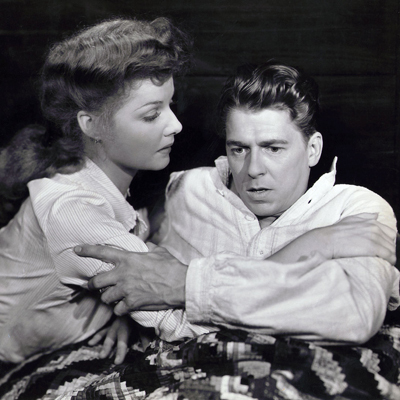
Ronnie had it easy in "King's Row"---he just woke up missing his legs.

A Kentucky truck-driver, 64-year-old Phillip Seaton, went into surgery to remove his inflamed foreskin in what began as a simple circumcision.  Dr. John Patterson, the surgeon, began the procedure and saw that Seaton’s penis was riddled with cancer. He amputated more than just the foreskin, and Seaton awoke one full inch shorter than when he arrived. And Extenz wasn’t going to help.

He and his short-changed wife sued Patterson for malpractice, arguing that he had been mutilated and unmanned without his consent, and that Patterson should have performed only the circumcision, sewn him up, and consulted with the truck-driver and his wife regarding their options.

Clever law suit. We can’t blame the lawyer who took it on: a sawed-off penis is a good bet to get jury sympathy. All that is required for a lawsuit to be ethical from a lawyer’s perspective is for there to be a good-faith and reasonable belief that the suit could prevail under the law. This one could have. Generally it’s a good idea, and only polite, to ask before cutting off a piece of someone’s penis. I know it’s the rule in our house. Continue reading

The Ethics of Interviewing Kids on Camera


Art Linkletter was right: "Kids say the darndest things!"

When I initially learned about  Chicago TV station WBBM editing  an interview with a 4-year-old boy last month to make him sound like an aspiring gang-member when he actually said that he wanted to be a policeman, I decided to pass. I try to avoid making obvious observations, and nobody could defend the conduct of the station’s editors, who intentionally truncated the child’s remarks to the interviewer to make them sound chilling. The larger question of whether the child should have been interviewed at all, however, is more challenging. We see kids being interviewed on TV all the time, and it is far from certain that reporters are doing so ethically.

In the wake of  the WBBM incident, journalistic ethics expert Al Thompkins reprinted his guidelines for interviewing juveniles on the Poynter site. I’m an admirer of Thompkins, but I found his guidelines almost as chilling as the distorted interview itself. Here is his guidance on the issue of interviewing kids, with my reactions: Continue reading