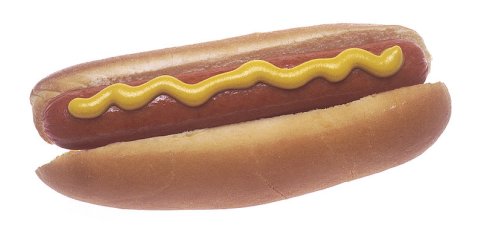
Darren Smith, one of the less-circumspect guest-bloggers that law professor Jonathan Turley inexplicably entrusts his blog to on weekends, wrote a post critical of Washington State for a law criminalizing the advertising of food as “Kosher-Style” when it is not, in fact, kosher.
Maybe he’s just a big fan of the offending restaurant chain he highlights, Five Guys, and is thinking with his stomach. Otherwise, he has no excuse for essentially giving a pass to intentional misrepresentation and fraudulent advertising as “no big deal.” Smith writes:
“Your author visited a Five Guys restaurant in Washington and did note that the “Kosher Style” hot dogs are cooked on the same grill as the beef, which would be a mixing of kosher and non-kosher foods in the making of the end product….The company has made an effort, on the company website at least, to note that these hot dogs are in the style of kosher and not actually kosher, but this might not be enough in Washington….There are numerous examples of products in the U.S. economy that use the word “Style” to declare that the food product is not actually as pure as might be expected of a product marketed without the word “Style”. Some examples might be “Artisan style breads” or “Honey style sauce” and do not necessarily break Washington’s, other states’ or Federal consumer protection laws. Yet Washington’s legislature decided that “style” was not enough with regard to differentiating kosher foods with non-kosher. It is either Pure or Not-Pure, and criminalized violations….It is certainly difficult to operate a business in numerous states having often greatly varied laws and administrative codes and when serving something as ordinary as a hot dog might possibly constitute a crime; it can make any business worry. Five Guys likely just wants to provide a menu its customers enjoy.”
Elsewhere in the article, Smith acknowledges that for certain religions eating non-kosher food can be “quite significant,” yet he pooh-poohs the effort of Washington legislators to stop establishments like Five Guys from using deceitful language to suggest that food is kosher when it isn’t. Disclaimers on websites and even menus come under the category of “fine print,” like “results not typical” in diet aid ads. Here’s a useful ethics tip: if you have to explain why your misleading description isn’t really misleading, a) it’s misleading, and b) you know it. All Five Guys has to do to take itself out of legal peril is to stop misleading its customers. Smith, however, thinks the problem is the law. Continue reading
 Ethics Alarms