Now THAT’S An Apology: Chuck Klosterman (“The Ethicist”) Shows The Way

Chuck Klosterman, "The Ethicist," stands tall.

Chuck Klosterman, “The Ethicist,” stands tall.

In the past I have been very critical of  The New York Times’ current writer of  its “The Ethicist” column,  but there is no denying that Chuck Klosterman knows how to make an apology. Indeed, responding to a sensitive situation, he may have offered the most exemplary apology I have ever heard or read.

“A Typical Son” is a perceptive and moving blog that documents the life experiences of a young boy with Down Syndrome and his parents. His mother occasionally  posted an open letter to Mr. Klosterman on the blog, citing his multiple uses of the words “retard” and “retarded” in various published works (Chuck was a film and TV reviewer prior to “The Ethicist” gig) over the past decade. She wrote in part…

“…Today people with cognitive disabilities and their allies are asking members of society to refrain from using the word “retarded” (along with all mutations of the word)… My question to you: Is it ethical to contribute to the denigration of the vulnerable? I am particularly interested because you, Chuck Klosterman, are The Ethicist for the New York Times” and the author of the following [examples of denigrating or mocking references to the mentally handicapped]…. Mr. Klosterman, you appear to be an unrepentant hater of people with cognitive disabilities. You are not using the word in an “I don’t mean it like that way…” sort of ignorance which I think would be much easier to redress. You are using the word in a “Those people are exactly who I am talking about” way.

Please enlighten me: What are the ethics of using the R-word? I am the mother of a seven-year-old son who has Down syndrome.  I believe your response to my question could make all the difference in the world.”

Here is Klosterman’s remarkable response: Continue reading

Examining The President’s Non-Apology Obamacare Apology

sorry

Those of you who have emailed concern that my field, this blog and the task of exploring the depths of dishonesty in our national politics will make me cynical, I can officially assure you that so far, I am unsullied. Here’s the proof: I am actually surprised that the national news media so eagerly accepted whatever it was the President said in mitigation of his 3.5 year long Affordable Care Act lie as an “apology.”

It was clearly not an apology. Yet in a rare show of solidarity, reporters right and left rushed to their respective keyboards to dash out “President apologizes!”  The solidarity was illusory, of course: while the Right wanted to say the President apologized as proof that all the rationalizations, excuses and tortured explanations from Obama’s allies and enabler were as phony as his assurances, and now, by apologizing, the President had admitted it, the Left’s motive was to pronounce the scandal over so the President could “move on.” Okay, he’s apologized; what more do you want? This is confirmation bias, leading to different mistaken conclusions: both conservatives and liberals heard what they wanted to hear. What they should have heard was an incoherent expression of regret without accountability, retraction, admission, or contrition…in short, not an apology at all.

On the Ethics Alarms Apology Scale, I see no way to rank what the President actually said to NBC’s Chuck Todd as anything better than a 9 or 10 (I’d call it an ugly  hybrid of the two), on the scale, the Stygian realm where dishonest, manipulative, non-apology apologies dwell:

#9. Deceitful apologies, in which the wording of the apology is crafted to appear apologetic when it is not (“if my words offended, I am sorry”). Another variation: apologizing for a tangential matter other than the act or words that warranted an apology.

#10. An insincere and dishonest apology designed to allow the wrongdoer to escape accountability cheaply, and to deceive his or her victims into forgiveness and trust, so they are vulnerable to future wrongdoing.

Here is the section of the interview that generated the “apology.” Todd, who has said that he felt he had to pull an apology out of the President, began the “apology’ sequence (emphasis is mine): Continue reading

Ethical Apology Of The Month: Ryan Braun—Finally

Better late than never, Ryan...I'd almost given up on you.

Better late than never, Ryan…I’d almost given up on you.

Ryan Braun, the 2011 National League MVP who was suspended for the rest of this season for his use of illicit performance enhancing drugs and accepted that suspension without protest or appeal, has released a statement admitting steroid use and apologizing to all, including the testing sample collector whom he had earlier implicitly accused of trying to frame him with a false positive.

I think this ranks as a #1 on the Ethics Alarms Apology Scale, and we don’t see those very often from public figures. That apology is defined as…

An apology motivated by the realization that one’s past conduct was unjust, unfair, and wrong, constituting an unequivocal admission of wrongdoing as well as regret, remorse and contrition, as part of a sincere effort to make amends and seek forgiveness.

Already, critics are taking pot-shots at Braun’s statement. This is, I believe, one reason people so seldom give full apologies: they are never accepted by so many angry pundits, who pick them to pieces. Baseball fans and others in the game have a lot of reasons to be furious with Braun, it is true. His genuine apology comes late, after a terrible one, and there is probably some truth to the theory that he or his PR advisors saw an opportunity to contrast his conduct with that of Alex Rodriquez, who is continuing to deny his PED use and is forcing steroid-hating fans and players to watch him play anyway, while he appeals and collects 5 figures in compensation per at bat. Braun is no Ethics Hero, for his options were limited. Nonetheless, I see nothing to criticize in his apology, and we want to see more apologies that rank at the top of the scale, we need to applaud them when they appear.

Here is Braun’s statement: Continue reading

James Lipton: Proud To Be A Pimp

James Lipton, circa. 1951

James Lipton, circa. 1951

James Lipton, he of the most pompous interview show in the universe, Inside the Actor’s Studio, has decided to celebrate that franchise’s 250th episode by cheerily revealing that he worked as a pimp in Paris in the 1950’s. This was apparently legal there and then, and Lipton, he tells us, was out of a job, so why not earn your money by recruiting desperate women into accepting cash to have sex with strangers, and take a cut of their proceeds for your trouble?

Lipton tells Parade:

“I had to be okayed by the underworld; otherwise they would’ve found me floating in the Seine.The great bordellos were still flourishing in those days before the sheriff of Paris, a woman, closed them down. It was a different time.”

Oh…you mean there was a time when dealing with organized crime was good? There was a time when it was admirable to trap innocent young waifs into the sex trade because of their poverty? To facilitate adultery and infidelity? To tell women who they had to have sex with, and accept a percentage of their fees for doing so? There was a time when doing all of this didn’t mean you were an exploitive, venal, amoral, low life?

I don’t think so. I don’t think there has ever been such a time, no matter what France may think. Continue reading

Jonah Lehrer Shows Us A Level One Apology: Remorse, Regret, Contrition. Sincerity? Who Knows…

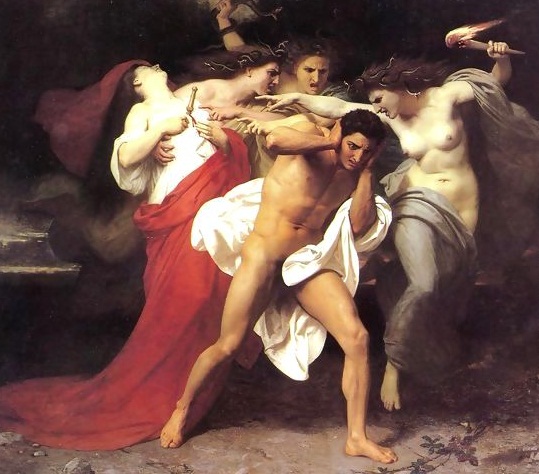
The-Remorse-Of-OrestesWhen we last looked in on writer Jonah Lehrer last summer, he had detonated his career and credibility with a series of incidents of serious professional misconduct that led to his ignominious firing from The New Yorker, where he once was regarded as a rising star. First he was caught plagiarizing himself, recycling a previously published work as an original  essay for the magazine. That led to an investigation showing that this was not the first time he had taken such an unethical short-cut. Finally, it was discovered that he had fabricated Bob Dylan quotes in his best-selling book about, ironically enough, creativity. When confronted about this, Lehrer lied. Soon he was out of a job and condemned to the limbo reserved for writers who deceive their readers: Jason Blair, Stephen Glass, James Frey, Janet Cooke, and others. It is not a pleasant or profitable place to be.

Lehrer was recently invited to speak to a gathering at the Knight Foundation, and chose the forum to deliver an apology for his conduct. It would be difficult, I think, to deliver a better one. On the Ethics Alarms Apology Scale, the most ethical apology, at the top of the scale, is this one:

1. An apology motivated by the realization that one’s past conduct was unjust, unfair, and wrong, constituting an unequivocal admission of wrongdoing as well as regret, remorse and contrition, as part of a sincere effort to make amends and seek forgiveness.

That is exactly what Lehrer delivered to the Knight Foundation, and through his blog, the rest of us. He said…

“..I am the author of a book on creativity that contained several fabricated Bob Dylan quotes. I committed plagiarism on my blog, taking, without credit or citation, an entire paragraph from the blog of Christian Jarrett. I also plagiarized from myself. I lied to a journalist named Michael Moynihan to cover up the Dylan fabrications.

“My mistakes have caused deep pain to those I care about. I am constantly remembering all those people I’ve hurt and let down – friends, family, colleagues. My wife, my parents, my editors. I think about all the readers I’ve disappointed, people who paid good money for my book and now don’t want it on their shelves.I have broken their trust. For that, I am profoundly sorry. It is my hope that, someday, my transgressions might be forgiven.

“I could stop here. But I am convinced that unless I talk openly about what I’ve learned so far – unless I hold myself accountable in public – then the lessons will not last. I will lose the only consolation of my failure, which is the promise that I will not fail like this again. That I might, one day, find a way to fail better.

“The lessons have arrived in phases. The first phase involved a literal reconstruction of my mistakes. I wanted to have an accounting, in my head, of how I fabricated those Dylan quotes. I wanted to understand the mechanics of every lapse, to relive all those errors that led to my disgrace. I wanted to understand so that I could explain it to people, so that I could explain it in a talk like this. So that I could say that I found the broken part and that part has a name. My arrogance. My desire for attention. My willingness to take shortcuts, provided I don’t think anyone else will notice. My carelessness, matched with an ability to excuse my carelessness away. My tendency to believe my own excuses.

“But then, once I came up with this list of flaws, and once I began to understand how these flaws led to each of my mistakes, I realized that all of my explanations changed nothing. They cannot undo what I’ve done, not even a little. A confession is not a solution. It does not restore trust. Not the trust of others and not the trust of myself. What’s more, I came to see that my explanations were distracting me from the more important reality I need to deal with.

“Because my flaws – these flaws that led to my failure – they are a basic part of me. They are as fundamental to my self as those other parts I’m not ashamed of. This is the phase that comes next, the phase I’m in now. It is the slow realization that all the apologies and regrets are just the beginning. That my harshest words will not fix me, that I cannot quickly become the person I need to be. It is finally understanding how hard it is to change.

“Character, Joan Didion wrote, is the willingness to accept responsibility for one’s own life. For too long, I did not accept responsibility. And by not accepting responsibility – by pretending that all of my errors were accidents, that my carelessness was not a choice – I kept myself from getting better. I postponed the reckoning that was needed.

“There is no secret to good decision-making. There is only the obvious truth: We either confront our mistakes and gain a little wisdom, or we don’t and remain a fool.”

You can read the whole speech here. Continue reading

Accountability For Tawana Brawley

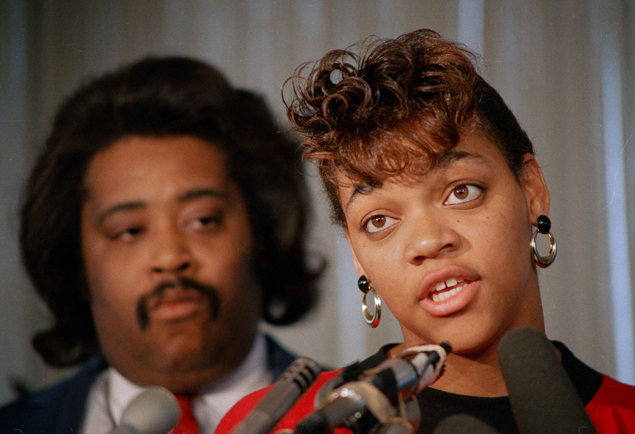
Al Sharpton and Tawana, ruining lives. Nice hair, Al.

Al Sharpton and Tawana, ruining lives. Nice hair, Al.

Tawana Brawley was 15 when she was championed by the Rev. Al Sharpton after she falsely claimed that she had been kidnapped, raped, and smeared with fecal matter by a group of white men. Now Brawley, 40, going by the name of Tawana Gutierrez, and employed at a Richmond nursing home, has received a wage-garnishment order to collect the $431,492 judgment against her in a 1997 defamation case brought by one of those men, Steven Pagones, who at the time of her 1987 accusation was a state prosecutor in New York.

Good!

Sharpton, who also was hit with a large damages verdict in the case, has already paid up. His outrageous race-baiting at the time was worth it to him, since it set set the race huckster on the road to celebrity that culminated in his being anointed as a respectable MSNBC host and commentator. Respectable for MSNBC, that is. Brawley still has public support,  as the tender-hearted raise all sorts of arguments why she shouldn’t have to pay Pagones such a large amount. She is poor, they say. He should forgive her. She was only 15. She was disturbed. Now she is a single working mother, and we are really punishing her child. It was all Sharpton’s fault. And so on. Continue reading

Unethical Quote of the Week: Lance Armstrong

“I deserve to be punished. I’m not sure I deserve the “death penalty.”

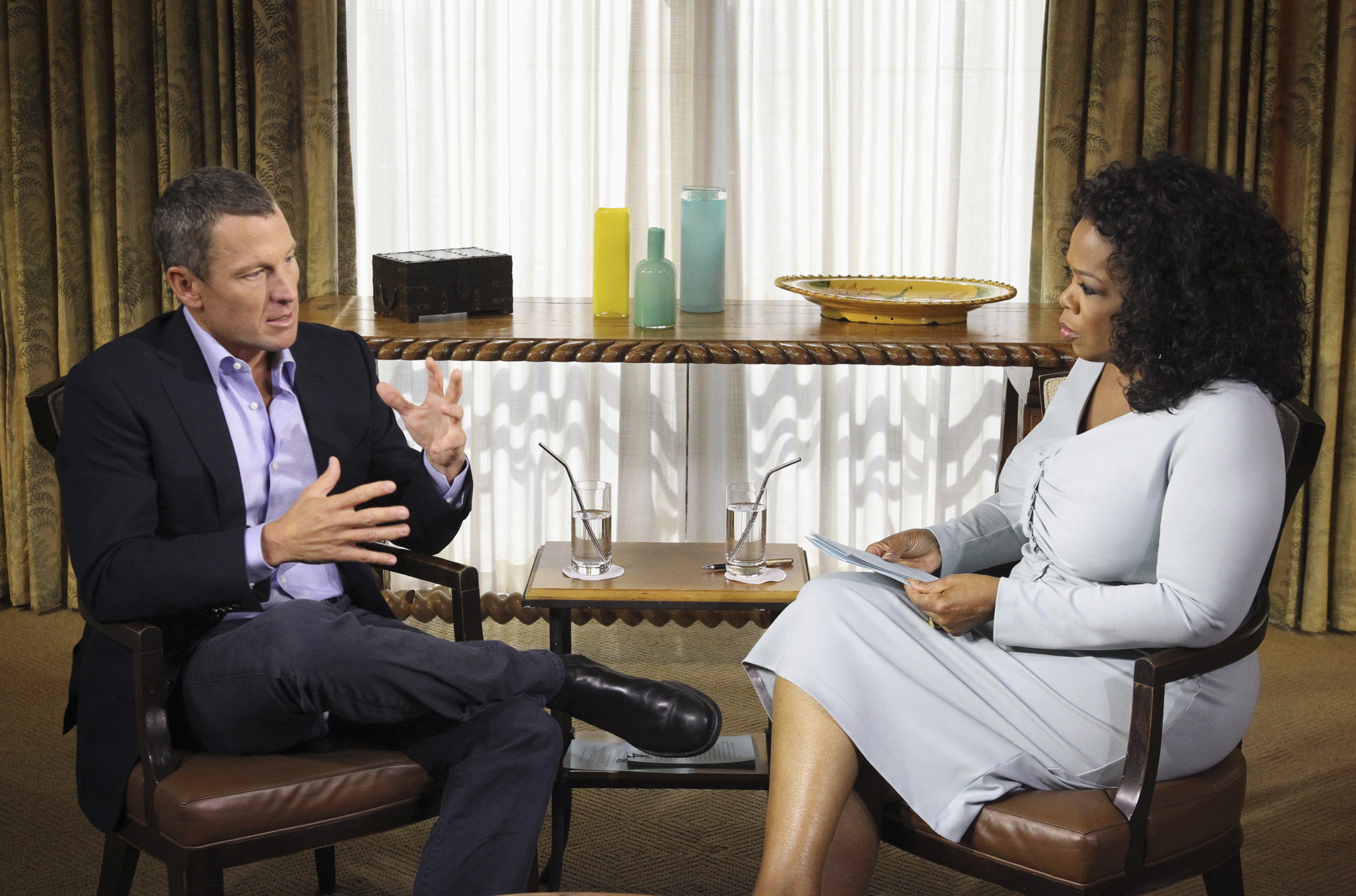
—- Lance Armstrong in his confessional with Oprah Winfrey.

In a word: Astounding.

Sure, why should you be punished any more than any other cyclist..wait, did you really just say that?"

Sure, why should you be punished any more than any other cyclist..wait, did you really just say that?”

Most of the second segment of Oprah’s interview with Armstrong was an anti-climax to the first, with one shocking exception.

Armstrong noted that all of the former team-mates who testified against him made deals that netted them, at most, six month suspensions from competition. Now that he was coming clean to Oprah, Armstrong implied, he deserved a similar deal. “I’m not saying [ how Armstrong is being treated] is unfair…but it’s …different,” he said. Then he uttered the statement about the “death penalty”—his lifetime ban from any professional athletic competition, biking or otherwise.

Armstrong “isn’t sure” that cheating to win the most important competition in his sport seven times, corrupting other cyclists, lying—defiantly, pugnaciously, flamboyantly— for almost two decades…bullying anyone who tried to tell the truth about his deceptions…using his money, influence and power to intimidate and silence…accepting millions of dollars in sponsorships based on lies and fraud…embarrassing sponsors and supporters by linking them to a conspiracy of lies and drug peddling…and arguably worst of all, building a charitable foundation on those lies, while inducing children and cancer survivors to embrace him as a hero…deserves a lifetime forfeiture of trust, not just as an athletic competitor, but as a business partner, associate, and friend?

Despite all his assurances to Oprah that he is a changed man, and that he is truly sorry, and that he understands the enormity of his betrayals, Lance Armstrong hasn’t learned a thing.

Lance Armstrong and Oprah: First Impressions

Lance Armstrong, Oprah Winfrey

I just finished watching the first installment of the Lance Armstrong-Oprah interview–almost twice, in fact. I’ll be watching tomorrow’s installment too (I am scheduled to talk about Lance on NPR’s “Tell Me More” on Monday, to be broadcast Sunday) and maybe it will alter some of my initial impressions.

But I doubt it.

Impressions:

1. Armstrong is not apologetic in the least, in any way, despite the occasional nod to apology-like langauge. He is not somewhat like, but exactly like, a mob hit man testifying before a Senate committee on organized crime. He is doing what he has to do, and if there is any genuine regret or contrition, I couldn’t discern it. Frankly, I am stunned at how unapologetic he is.

2. Most damning moment: Right off the bat, Oprah asks Lance “Why now?” It’s a superfluous question; everyone knows the answer is “Because I’m trapped; because the lies don’t work any more; because this is my best chance of persuading some people, the gullible ones, but we know how many of them there are, to give me a second chance.” I didn’t expect Armstrong to be that candid, of course, but I did expect him to have an answer, probably a contrite, self-serving one, prepared. He didn’t. “That’s a great question,” he said, stalling. Incredibly, he said he didn’t really have a good answer. “I know it’s too late,” he offered. Yes, I’d say thirteen years, marked by lying, doping, posturing and attacking is too late. That’s the best Armstrong could muster. Heck, if he just kept up with current movies, he would have had some great answers, like Denzel Washington, in the climax of “Flight,” confessing a career of flying commercial airlines drunk by saying, (I’m paraphrasing) “I just couldn’t stand telling one more lie.” Or that old stand-by, “It was the right thing to do.”

The sign of a completely unethical person is that they can’t even imagine what thinking ethically is like. On the evidence of this interview, that’s Lance Armstrong.

3. Most telling quote: while explaining that his 2009-2010 comeback is what opened the floodgates of attention and investigation that led to the explosion of his long campaign of deception and lies, Armstrong said, “Without the comeback, I wouldn’t be here now.” Translation: “Without the comeback, I would have gotten away with it, and I sure as Hell wouldn’t be sitting here spilling the beans to you.” He then terms his comeback a “mistake.” Armstrong is sorry he let himself be caught, and he is sorry for the consequences of his lies being discovered.

Continue reading

On Apologies: the Sincere, the Forced, the Cynical and the Harmful

"Apologize! SINCERELY!"

On February 17th, Washington Post political commentator Dana Milbank wrote a column disparaging what he called “forced apologies.” Although the context of his column and the apology he was refusing to make was too silly to bother with* (yes, there really are things too silly for Ethics Alarms to bother with) something told me I should keep his column handy, and indeed, the perfect time to consider Milbank’s argument has arrived. Forced apologies are flying all over the place.He wrote:

“…one of the most annoying components of our decaying political culture [is] false umbrage. Liberals created this form of identity politics, in which an underrepresented group claims persecution, but conservatives have embraced it. One of its most common expressions is the demand for an apology. It’s phony by definition — an apology can’t be sincere if it’s answering a demand — and the reflexive demand (like a demand for a resignation) serves only as an excuse to keep a news story alive. Sorry, but it’s time to put this tired gimmick to rest.”

Milbank’s essay included an impressive catalogue of recent demands for apologies, and since it was published there have been many more, the most recent example, of course, being Rush Limbaugh’s mea culpa for his outburst against Sandra Fluke. His central thesis, however, is wrong.

Here is the hierarchy of apologies, their function and their motivation, 1-10, from most admirable to despicable: Continue reading

The Korean President’s Dinner: President Obama, I Owe You This One

Funny...you don't LOOK Japanese!

Having joined reflexive Obama-bashers by assuming the worst based on an unjustified reading of a leaked diplomatic cable and subsequently criticizing the White House for something it did not do, allow me to continue my contrition and repentance by flagging another example of the same phenomenon, also involving Asian diplomacy and equally unfair, being trumpeted by some of the same sources that led me astray.

The headlines: “ANOTHER WHITE HOUSE STAFF SCREWUP”  (Instapundit) …“Obama Honors South Korean President With Japanese Food” (The National Review)

Where did this come from? USA Today reported the fare for the upcoming  White House dinner honoring South Korean President Lee Myung Bak: Continue reading