Ethics Hero: “Landman” Creator and Writer Taylor Sheridan

The Billy Bob Thornton star vehicle “Landman,” following the stressful life of a West Texas “landman” and operational executive for an independent oil company in West Texas, has a lot going for it, mostly Thornton, who is one of our most interesting and versatile actors. The Paramount streaming series is already better, in my view, then the last two oil dramas I watched, the over-rated “Giant” and the relentlessly unpleasant “There Will Be Blood,” in great part because as with all of his roles, Thornton brings a great deal of humor to the proceedings.

I have not finished the series’ first season (I sure hope there is a second), but I was struck by the long scene above in which Tommy Norris (that’s Billy Bob) gives a quick primer to his company’s attorney on the facile conventional wisdom of the anti-fossil fuel lobby. The rant begins (at the 57 second mark), as Tommy denies the “cleanness” of wind power, and he takes off from there. It was an instant classic that quickly went viral on social media: as soon as I heard it I knew I could find the speech on YouTube and resolved to post it today.

There are also a lot of rebuttals to the speech on line, and that’s great: the ethics point is that for once Hollywood isn’t stuffing smug 21st Century woke politics into its audience’s brains, but is presenting a dissenting analysis. More more amazing yet, this one comes from a series’ protagonist and an appealing one at that.

Taylor Sheridan, who created “Landman,” cast Thornton and wrote and directed the speech deserves thanks and credit for packaging a provocative point of view that is sure to spark debate. Debate is ethical. What isn’t ethical is cultural indoctrination, which is how Hollywood has mostly been approaching the oil issue for decades.

Not surprisingly, the Wikipedia entry linked above states that the series contains “misinformation about renewable energy… “exposed as common propaganda tropes by Big Oil.” This is why Wikipedia should be considered a member in excellent standing with the Axis of Unethical Conduct. If Democrats had won another term in the White House, we would probably see “Landman” forced to include a disclaimer on Tommy’s speech.

Jason Werth, The Shift, And How Baseball Imitates Life, Not In A Good Way

Today’s example from baseball of why the world will never get less stupid:  Jayson Werth, the former firebrand outfielder for the Phillies and Nationals who retired from  professional baseball in June (about a year too late, based on his miserable 2017 performance), blathered on in a podcast interview espousing ignorance over knowledge.

“They’ve got all these super nerds, as I call them, in the front office that know nothing about baseball but they like to project numbers and project players… I think it’s killing the game. It’s to the point where just put computers out there. Just put laptops and what have you, just put them out there and let them play. We don’t even need to go out there anymore. It’s a joke….When they come down, these kids from MIT or Stanford or Harvard, wherever they’re from, they’ve never played baseball in their life…When they come down to talk about stuff like [shifts] … should I just bunt it over there? They’re like, ‘No, don’t do that. We don’t want you to do that. We want you to hit a homer.’ It’s just not baseball to me. We’re creating something that’s not fun to watch. It’s boring. You’re turning players into robots. They’ve taken the human element out of the game.”

Back in the late 1970’s, a man named Bill James, blessed with an amazing ability to look at problems without the pollution of conventional wisdom began writing a little publication in his spare time down in his basement that examined how baseball was played, what practices statistics supported, and which they did not. He revealed, to take just one example, that managers were habitually batting as lead-off players who were speedy runners but who didn’t get on base very often because they never walked. This almost universal practice cost teams runs and victories. He showed that a player with a .300 average who seldom took a base on balls was a less effective offensive weapon than a player with a much  lower batting average but a higher on-base-percentage, the result of being more selective at the plate.  Somehow this obvious observation had never occurred to anyone whose actual profession was managing baseball teams.

Every year, and in articles in between for journals and statistical publications, James proved over and over again that baseball was being played astoundingly ignorantly. A “great” base stealer who only was successful 70% of the time was costing his team runs, because the statistics show that  the the risk of an out is usually a far greater cost than the extra base is a benefit. The sacrifice bunt is almost always a bad percentage play, increasing the odds of scoring one run slightly, but greatly reducing the chances of scoring more than one. A player’s statistics were vastly influenced by the quirks and dimensions of his home park, creating illusions of abilities and flaws that were mirages.Virtually all baseball players reach their peak value at the ages of 27-29, and decline rapidly thereafter: James wrote that paying big salaries for 30-years-old-plus stars was a losing gamble, comparing it to buying a watermelon at a premium price after the previous owner has eaten the fruit’s heart out and pronounced it delicious.

I began reading James books in the 80’s, and found him to be a truly original and courageous thinker. (The concept and term “signature significance,” an Ethics Alarms staple, comes from James.)  From the beginning, however, his research was ridiculed by front office executives, managers and player, many of whom were challenging his research on the basis of a limited intellect, a high school degree and statistical knowledge that consisted of reading box scores. They appealed to authority—their own—to refuse to acknowledge indisputable, mathematical, logical realities. Eventually one or two young turks did pay attention, like Oakland’s Billy Beane. He hired  his own numbers-cruncher and used the principles of the fledgling discipline James helped launch, sabermetrics, the statistical analysis of baseball, to win championships with a minimal budget. It also got him a book written about his success, “Moneyball,” and a movie based on the book where Beane was played by Brad Pitt.

Sweet! Continue reading

Comment of the Day: “Ethics Hero: The Lone Juror, Adam Sirois

Juror 11

Commenter Penn posted a nuanced take on Adam Sirois’s dilemma. It would have been a COTD yesterday, but for some reason WordPress has decided to spam all of Penn’s comments of late, for no reason that I can detect. (I can only discourage commenters I ban by repeatedly spamming them until they go away.) If anyone else has a disappearing comment, e-mail me quick, and I can usually find it. I’m sorry: I swear, it’s not me!

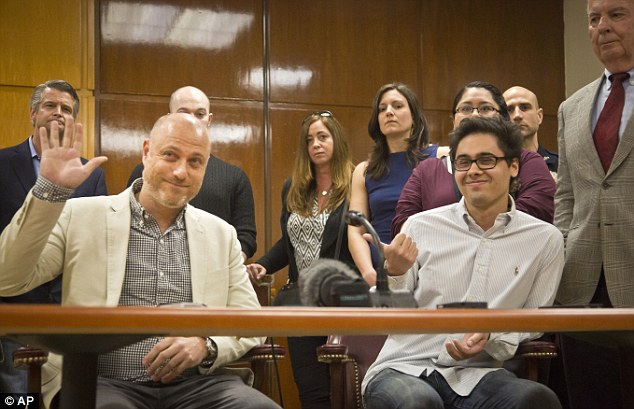
One point before I turn the blog over to Penn. His first comment is about that photo, much criticized, of the lone juror raising his hand in the press conference and “smirking” or looking”sheepish,” or “smug.” I liked Ann Althouse’s take on that:

“The photographers must have taken thousands of pictures of Sirois’s face, and the newspaper editors have chosen one, one that supports the “smirking… sheepishly” characterization. If he “looks like a smug little prick” to you, that’s because the editors decided to help you think that and because the man just had an 18-day experience and was the kind of person who could stand up for his beliefs in a group setting for more than 2 weeks. Most people would cave and go along to get along. These people are much more likely to have a pleasant, unremarkable face.”

Now here is Penn’s spam-rescued Comment of the Day on the post Ethics Hero: The “Lone Juror,” Adam Sirois: Continue reading

Comment of the Day on “Comment of the Day on ‘The Perils Of Over-Regulating The Police: A Case Study'”

Robocop

Stephen Mark Pilling contributes the second consecutive Comment of the Day providing perspective on the issue of police militarization, in response to the first. Here is his Comment of the Day to the post (by dragin_dragon, which you should read first if you haven’t yet), Comment of the Day on “The Perils Of Over-Regulating The Police: A Case Study”

When critics speak of the “militarization” of the police, not all are looking at it from the same viewpoint. Some are, of course, sociopathic or are conspiracy theorists. Some have swallowed the loudly flaunted concept that policemen are evil racists, corrupt ward healers in uniform or just about anything heinous, as they represent law as an absolute, not a relative.

There is a rational based distrust, however. Many of us grew up in a time where the police still walked a beat or patrolled his neighborhood in a squad car, armed with nothing more than a revolver. We’re also the product of an old tradition of law enforcement that stems from the British mold. Unlike the continental European system of paramilitary gendarmes, we adapted a system of localized lawmen, run by an elected county sheriff. The metropolitan police department is still a relatively new phenomenon, started in late 19th Century London.

To many citizens, police who are unaccountable to a directly elected chief and who sport automatic weapons strike a sour note. But recently, people have been seeing them acquiring armored vehicles, military assault training and a tendency to wearing black uniforms. They’ve also noted an increased likelihood of these tactics and weapons being utilized and the increased incidence of “no knock entries”. Likewise, citizens have been imaging police making arrogant idiots out of themselves and caused other cops to become ever more touchy about cell phones, whether they’re right or wrong.

These and other factors have been serving to create a gap between the citizens and the police. That’s never a good thing, of course, because that trust is vital in a free society. Citizen distrust only deepens when they perceive policemen in whom this sense of civil mastery is full blown. As a former military cop, as a private citizen and as a friend or relative of a lot of civilian cops, I’ve seen all this from different angles. I’ve also seen the divide deepen in recent days.

One small note. The funding of police units on all levels directly from federal sources coincides with the worry by many that state and local police units may be more or less within the pocket of federal departments. The actual militarization of once innocuous federal police units and the memory of Obama’s projected National Civilian Defense Force has resulted in fear that this is an intentional part of a program to create an instrument of oppression. For myself, I highly doubt that any street cops would lend themselves to some “martial law” based takeover of the homeland of America. What I’m not sure of, though, is how many in higher authority have not conceived of the notion and would execute it if they could.

Again; it’s vital that the bonds of trust be strengthened between the police departments and those law abiding citizens whom they “serve and protect”. They must never- ever- be heard to make disparaging remarks about “civilians”, as that only deepens the gulf. In the Army Military Police Corps, the official motto is “Of the troops and for the troops”. It’s a good motto. It should also carry over to every local police or sheriff’s department in America. “Of the citizens and for the citizens”. Policemen who embrace that attitude will seldom go wrong. Both they and the communities they serve will benefit.

Continue reading

Comment of the Day on “The Perils Of Over-Regulating The Police: A Case Study”

militarization

ABC News Political Analyst and former Bush advisor Matthew Dowd said on ABC’s This Week  that the recent cases of police violence involving unarmed African Americans were as much due to the militarization of police forces as race.

“We basically dress up officers as if they’re machines,” Dowd said. “And then we expect them to act like human beings. So what happens is, they confuse power with force. Most of the officers in this country do a great job. But when we militarize our police force and dress them up like machines, they act like machines.”

Technically, he was right: there is no evidence that those tragedies were caused by race or militarization. He had exactly no evidence or documentation that the “militarization of police” caused these deaths, or that alleged militarization has caused any deaths. This appears to be emerging conventional wisdom, just one of those things someone says and everyone nods in agreement with no real thought. Why is the so-called “militarization” of police forces such a threat or cause to distrust police? If police are not trustworthy, that’s a reason not to give them fire-power, but having more fire-power doesn’t make them less trustworthy. It simply makes it more important than ever that police be well trained and responsible.

I was preparing a post about this emerging theme as an example of bias, in this case, pre-existing anti-police bias, being translated into false and discourse-warping assumptions by activists and the police when stalwart commenter dragin_dragon delivered this, the Comment of the Day, on the post The Perils of Over-Regulating the Police: A Case Study:

Police departments have been quasi-military for many years, and it has not seemed to hurt their ability to enforce the law. As early as 1974, Austin, Texas P.D. referred to it’s officers on patrol as “the troops”. S.W.A.T. units have traditionally used what they thought of as “Military” weapons, tactics and mode of dress; never mind that a properly trained infantry squad could and would wipe them out in minutes. Note, also, that most states and/or cities ban the mounting of weapons on the surplus (obsolete) armored and tracked vehicles or helicopters. They do NOT ban a man carrying a weapon being mounted on those vehicles. I also point out that many police officers are ex-military so are bringing to the job an environment with which they are already familiar. Rank structures are similar, and the police in the United States, at least, carry weapons, perhaps as a holdover from the Old West, perhaps not.

Given the rise in crime rates (see Chicago, Detroit), many of these escalations of Police equipment and training are needed. This became evident a number of years ago when a Los Angeles bank robbery went south and the robbers began shooting at the converging police with automatic (not the semi-automatic versions described as automatic, but rock-and-roll full automatic) assault weapons. The out-gunned police (9 MM pistols and shotguns) did the best they could and, like Israel, vowed “Never again”. Strangely enough, many in the National Media agreed, at the time. So, what we are referring to as the “Militarization” of the Police is being undertaken for 2 reasons: 1) to provide a higher likelihood that the officers will get to, at the end of the day, go home to family, and 2) so that the public, which they are sworn to protect and defend, will also, at the end of the day, get to go home and family.

Does this increase the likelihood that a perpetrator may not make it to trial? Quite likely. Do I care? Not so much. As I am sure will be pointed out repeatedly, death tends to be relatively final, with no appeal. And, after all, the most dangerous criminal has the right to due process. Unfortunately, crime, violent crime, is not something one does accidentally. It requires a conscious decision, often along with a misplaced almost arrogant sense of invincibility. Getting shot, and probably killed is the most natural consequence in the world of that attitude. Ask Michael Brown. Like it or not he jeopardized the well-being of an armed police officer, apparently arrogantly disregarding the consequences of his behavior and, quite probably putting the officer’s life at risk. I am assuming that Wilson, like many police officers these days, was wearing a very militaristic bullet-proof vest under his shirt, but, since Ferguson is a fairly poor community (and rapidly becoming poorer) possibly not, so he might have been better off if Brown had shot him, first. At least he would still have a job.

All this is by way of saying that militarization of departments is not necessarily a bad thing. The use to which the training and equipment is put may be a bad thing, but I have not seen, in any report, any attempt to oppress or exert Nazi-like control over the citizenry. So, am I in favor of the “Militarization”? You bet. I am in favor of anything that makes it more likely that they will be able to survive the work day. And make no mistake, that is always a question for a police officer, just like it is for the combat soldier. Am I also in favor of more and better training? Also, you bet. Need I repeat? And the management, or “command” element of the police need to be taught How and When to use the equipment and training.

Continue reading

Why Your Child Should Watch “MLB Now”

…other than the fact that teaching your child to understand and enjoy baseball is one of the greatest gifts a parent can give, that is.

Don't be like Harold, son.

Don’t be like Harold, son.

No, the best reason to watch “MLB Now,” a program on the cable MLB channel, has nothing to do with baseball. It does have to do with preparing your child for life, showing him the danger of bias, and teaching her that remaining open to new ideas and information is essential, not only to ethical conduct, but to rational conduct as well.

The show features two commentators, Brian Kenny and Harold Reynolds, debating various baseball questions while coming from different disciplines and perspectives. Reynolds, a former player of some note with the Seattle Mariners, is “old school,” meaning that he belongs to that dwindling cadre of people, in the game and out of it, who rely on traditional wisdom, misconceptions, myths, false assumption and, most of all, their own gut level observations to interpret the deceptively complex game and evaluate its players. Thus he extolls doing the “little things that win,” like bunting and stealing bases, talks a lot about “protection” in the line-up, prattles on about clutch hitting and “pitching to the score,” and other similar thoroughly debunked nonsense that was regarded as cant back when John McGraw was managing but now is about as outdated as the assertion that women can’t drive. Kenny is thoroughly versed in the art of sabermetrics, the statistical measurements of baseball pioneered in the 1980’s by Bill James and others. Sabermetrics has transformed how baseball is watched, operated and played, greatly aided by the availability of computers. They can show how a pitcher with a losing record is both better and more valuable than one who wins twenty games, the traditional measure of excellence. They can prove that a batting champion is actually less of a positive offensive force than some obscure, .270 hitting player few have ever heard of. Sabermetrics can prove that managers with the reputation of being geniuses were really lucky dimwits. They can, that is, if you are willing to learn and pay attention. Continue reading

Is Corporate Philanthropy Unethical? No, But It’s Important to Ask the Question

I gather not very many readers sample the links on Ethics Alarms, which is a shame. They contain a lot of different approaches to ethical issues, from many philosophical approaches. Well, heck…I use them , which is really what they are here for. One of the more original thinkers represented among the various sites is Jason Christopher Cockrell, author of The Worst-Case Scenario. It appears that he has abandoned blogging, which is a shame, but his last post, at the end of 2010, was full of surprises. In it, he offered an argument against corporate charity, something I have never heard anyone criticize on any level, except to say that there isn’t enough of it.

The theory behind corporate philanthropy is that it is a win-win for everyone involved. The corporation enhances its public reputation and visibility, improving employee moral and making investors proud to hold stock. Society benefits from substantial contributions that support everything from cancer research to Sesame Street to regional theater. It is hard to imagine what the charitable landscape would look like without corporate philanthropy, but the thought of eliminating it is sufficient to give any professional fundraiser hives. I know—both I and my wife were development officers for many years. Continue reading