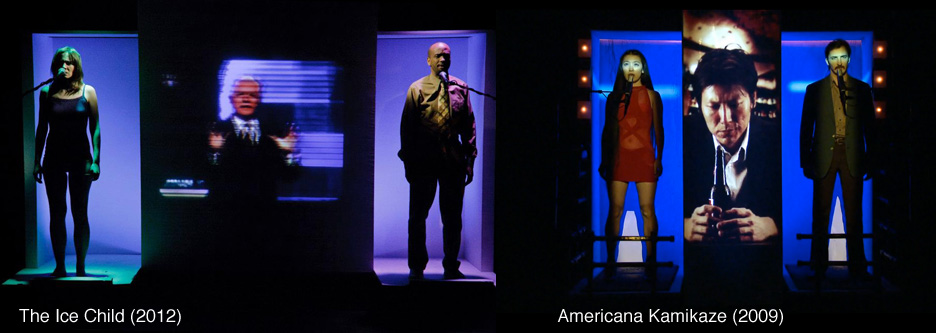
Arts blogger Jeremy Barker contributes a provocative counter-argument to my stance in the controversy over a D.C. based theater company that borrowed/adapted/stole an original production concept from a New York company without attribution or permission. My position was (and is) that no rule, principle or law designed to discourage such conduct could avoid suffocating legitimate adaptations, mutations and new uses of ideas devised by others, with devastating effects on creative expression. This is one of the great ethics controversies in the world of art, and I am glad to see it back in the ring.
Here is Jeremy’s Comment of the Day on my post, “The Ice Child” and Staging Theft Ethics.
“Jack–I just came across this piece and wanted to respond because I think, in quoting me, you ignore part of my argument, and I’m curious if you can clarify your perspective.
“Specifically, I feel like your caveated argument in favor of Factory 449 is based on the sense that it’s common practice to borrow such design or staging elements in text-based theater. I agree, it is. But if we were speaking of a specific author’s text, I think most commenters would have swung the other way. We tend to protect the playwright’s text in a different fashion than we do a design concept. A writer could be accused on plagiarism for either (a) imitating a distinctive plot, or (b) appropriating the same words. Yes, we can argue about what is an acceptable form of “referencing” (no one thinks Arthur Laurents wrote Romeo & Juliet, for instance) and what crosses the line. Often, this applies to how the text is used. But we understand and appreciate a playtext as a protected, distinctive thing.
“Indeed, I’d argue that this logic, which privileges the text, is the basis on which people in this thread are defending Factory 449′s appropriation. Since it wasn’t the same “play,” by which they mean “play text,” it’s not really the same thing, ergo, it’s not ripping someone off wholesale. Continue reading
 Ethics Alarms