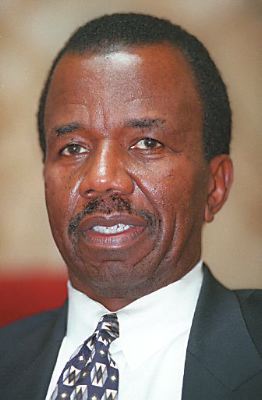
William Aramony and the Fallen Hero Dilemma

As he usually did, the extraterrestrial, mutant, collective or whatever he was William Shakespeare (no human could be that wise) had it exactly right, and a long time ago: “The evil that men do lives after them; The good is oft interred with their bones.” In a dispirited column on the CNN website, obviously inspired by the Paterno debacle, ESPN writer L.Z. Granderson writes that he has become afraid to watch the news, fearing that another of his heroes will be shown to be a fraud:

“And when we find out our gods are not perfect, we’re confused. We don’t know what to do with a storyline where the perceived protagonist is complex. Heroes aren’t supposed to do bad things. That’s what villains are for. So either the good supersedes the bad, or the bad makes it impossible to remember the good. We don’t like it when such duality exists in one person. We don’t want to know our heroes are human.” Continue reading

The Curse of Marion Barry

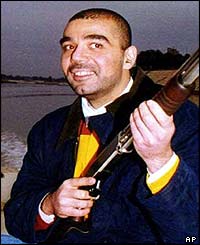
Uday isn't available, but Christopher is

Marion Barry, the former corrupt mayor of Washington, D.C., a convicted crack-user  who was caught a few days after while lecturing D.C. kids on the evils of drugs, a tax-evader, scofflaw and general embarrassment who still serves on the dysfunctional D.C. City Council, is now in his 70’s and thinking about his legacy. Oh, he’s running again in Ward 8, all right, but his long-term plan, not surprisingly, is to turn over his seat to a worthy successor with a record of being arrested for assaulting a police officer and possessing PCP with the intent to distribute.

You know. His son. Continue reading

Ethics Tales From The “Occupy” Movement

1. Integrity Check

"This week only: half-price on all chicken suits!"

Reports out of Occupy Wall Street, unconfirmed but apparently credible enough for New York’s Mayor Bloomberg to rely on them, suggest that the “Occupy” gang is refusing to report the various criminals in their midst, opting instead to protect the colony by ejecting and banishing them….and, of course, inflicting them on somebody else. Such wrongdoers range from simple thieves to sexual predators, or, as in Occupy Oakland,  the violent provocateurs who have seeded riots. They might not even be banished…just protected.

How ironic. The ethical rot in America’s institutions, from government to the business world, to religions and Hollywood, to athletic teams and academia, manifests itself by a progressive willingness to ignore misconduct, lawlessness, and unethical conduct among colleagues and others within the group, cementing a “them vs. us” mentality that encourages increasingly irresponsible conduct and erodes integrity. The so-called 99% have the same vulnerability to corruption as the 1% they revile. Continue reading

Incompetent Elected Official of the Week: Maryland State Senator Ulysses Currie

"I am not a crook!" ---Richard Nixon; "I am not a crook, I am an idiot!"----Ulysses Currie

Blatantly incompetent elected officials stand as indictments of the ethics of more than the officials themselves. The fact that they are in high office reflects poorly on the political parties that support them, the voters who elect them, and the democratic system itself. It is difficult to imagine a more vivid example of this than: Maryland State Senator Ulysses Currie (D), currently standing trial on federal corruption charges. Continue reading

Comment of the Day: “As the Cancer of Corruption Spreads, a Diagnosis and Treatment”

Michael, who knows college culture from personal experience,  elaborates on the University of Miami athletics scandal, which he correctly notes is hardly news, just a predictable escalation of corruption we have tolerated for too long. When the reaction to an instance of corruption is “well, that’s no surprise!” it is a symptom that we are becoming inured to a cultural condition that should not be tolerated.

Here is Michael’s Comment of the Day, on “As the Cancer of Corruption Spreads, a Diagnosis and Treatment”:

“Well, this is not news. This is just someone mentioning the elephant in the room. Some things I have noticed in my years of academia about sports include:

From School 1:

• Riding a bus with the campus football players for 3 years and listening to them talk. Things like “The cops said if they caught me beating someone up outside the bar one more time, they would arrest me”.

• An athlete who “only could afford to go to college because of football because his family has no money” had some problems with the law. Six months into the school year, he was living in one of the most expensive condo complexes in town. His beeper went off to notify him that someone was tampering with his brand-new $35,000 Jeep Grand Cherokee. He went out on the balcony with his brand-new $1000 Glock pistol. When he saw several people around his Jeep, he started shooting at them. They were the police (condo complexes like this have excellent response time). He said he was worried because he had just installed a $6000 stereo system in the Jeep. No charges were filed.

•My brother ended up in a small class (~20 students) with a Heisman trophy winner. He only found out when the “student” athlete showed up once near the end of the semester. That was the “student’s” only appearance that semester.

From School 2:

• A football player from a poor family who needed the scholarship to go to college moved into my apartment complex one building away from me. After about a month, an electronics store van pulled up and delivered a full-wall sized TV. A brand-new Porsche 924 showed up later that day. Boosters are wonderful.

• The geography department issued a memo to the department that all faculty would provide the keys to their exams to the athletic tutors at least one week in advance of the exam. This explained why geography was one of the most popular majors among athletes at that University. Nationally, such majors are known as ‘safe harbor’ majors by the people who study such things.

From School 3:

•Athletes are paid to ‘watch oil wells’ to make sure they are working (they are on timers and automatically monitored.)

•A local car dealership was caught paying football players as shadow employees.

•A former student reports that he is in the same class with a major college football player. He reports that the player listens to his iPod while an Asian girl (his tutor) takes notes. On test days, the tutor takes the exam, in class, in front of all the students and the professor.

“This is going on at all schools. You can’t stop it with sanctions. Everyone knows about it, and everyone accepts it. The only way to stop it is to restructure it. The judge who accepted the ‘student-athlete’ excuse did everyone a great disservice. If they had ruled for the students as employees, we could go about this without such scandals. Athletes would be employees, could be paid, have insurance, disability, and could get a tuition waiver to take classes. They could take classes part-time and if they didn’t make it to the major leagues, they could stay on and complete their degrees in a couple years. No more dishonesty. The downside is, someone might actually start to look at how much taxpayer money goes to support these programs and start asking why we spend so much ‘education’ money on these teams. Don’t say ‘they make money!’, only about a dozen make more money than they cost and that isn’t every year. In the early 2000′s a team that recently was #1 ran out of money and the college cancelled the journal subscriptions at the library to keep it going.”

Addendum from JAM: I feel compelled to note that the idea of paying athletes as employees, which I hear a lot, is a terrible idea. With the tuition at colleges and universities already making paupers out of students, a university’s resources should never be used to pay entertainers, which is what paid athletes are. Require schools to make sure that every athlete is legitimately passing genuine academic courses, or is caused to withdraw from school. Ban athletic scholarships for students who do not have the academic credentials to be admitted without them. Ban schools that cheat from high profile sports for five years or more. Dissolve the NCAA. Schools are for education, not sports. Sports should have no more prominence than the theater program or the chess team.

It is rare that the application of rational priorities will solve a huge problem of long standing, but this is such an instance.
The S.E.C.’s Betrayal and Why Regulation Can’t Cure Unethical Cultures

Your SEC at work....

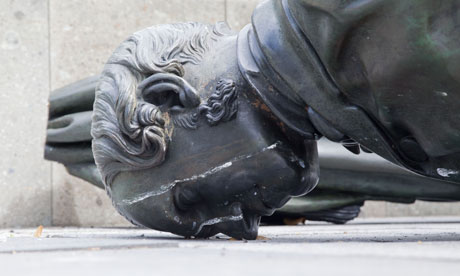
I awoke this morning to read that a former U.S. Securities and Exchange Commission official has credibly claimed that the S.E.C. destroyed thousands upon thousands of records of enforcement cases in which it had decided not to file charges or to launch full-blown probes. The case records dumped included prominent Wall Street firms such as Goldman Sachs, Citigroup, Bank of America, Morgan Stanley and SAC Capital.

Here’s is how Rolling Stone concluded its excellent report on the scandal:

“Forget about what might have been if the SEC had followed up in earnest on all of those lost MUIs(“Matters Under Inquiry”). What if even a handful of them had turned into real cases? How many investors might have been saved from crushing losses if Lehman Brothers had been forced to reveal its shady accounting way back in 2002? Might the need for taxpayer bailouts have been lessened had fraud cases against Citigroup and Bank of America been pursued in 2005 and 2007? And would the U.S. government have doubled down on its bailout of AIG if it had known that some of the firm’s executives were suspected of insider trading in September 2008?” Continue reading

Atlanta Parents’ Verdict: Cheating’s No Big Deal; Grades Are What Matter!

Atlanta's integrity is burning, and its students are the victims

Here is one reason American education is in the sorry state that it is.  And speaking of sorry states, how about that Georgia?

After  revelations of a massive conspiracy among teachers and administrators across Atlanta’s schools to fix the scores on state-mandated tests, parents at least one of the schools vocally supported the teachers involved. At a town hall meeting, parents praised the education their children received from the cheaters.

“We’ve been extremely pleased with the instruction my children have received,” said Quinnie Cook-Richardson, a parent at the West Manor Elementary School. Her child’s teacher had him reading within a year, she said. “They are an example of what is right with Atlanta Public Schools.” Cook-Richardson was among a many parents who defended the school, teachers and  the principal who has been asked to resign as a result of the scandal.

Why are parents defending cheating school personnel? They are defending them because the parents don’t care about cheating, ethics or integrity; they just care about their children getting good grades on the tests. They care about results and credentials and their children succeeding, and if cheating helps, that’s just fine with them. This why their children cheat, as they almost certainly do and will; it is also why the teachers and administrators cheated. It isn’t the culture of the schools that is corrupt;  it’s the culture of the entire community, parents and students included.

And are we so naive that we can believe that this corrupt culture, in which education is seen as nothing but marks on a transcript, and values like integrity and honesty are seen as impediments to “education” rather than  part of it, is confined to a few schools, or Atlanta, or Georgia?

This our nation’s culture in 2011.

We had better start recognizing it, and repairing it.

Fast.

In Marion’s Footsteps: the Jaw-Dropping Shamelessness of Harry Thomas Jr.

A true role model: Washington D.C. politicians ask, "What would Marion Barry do?"

The most notable scoundrel in recent Washington D.C. government history is former mayor and current City Council member Marion Barry, he of  “The bitch set me up!” fame. What marked Barry was and is his remarkable shamelessness. Whether he was caught smoking crack, or giving government salaries to girlfriends, or not paying his taxes, or engaging in any number of other public and personal outrages, his attitude has always been to shrug his shoulders and presume that everyone will just let him go on being an elected political leader, as if his complete disrespect for law, honesty and responsibility is irrelevant to his qualifications to serve. And you know what? In the District of Columbia, he is correct.

He is also not alone in this attitude, in part because Barry has helped mightily to warp the ethical culture in his city over the past three decades. His most recent disciple is D.C. Council member Harry Thomas Jr. (D-Ward 5), who has just agreed to repay the District $300,000 of the taxpayer dollars he misappropriated  for his personal and political use. D.C. Attorney General Irvin B. Nathan announced last week that his office was withdrawing a one million dollar lawsuit against Thomas in exchange for that settlement, saving the District the cost of litigation. The lawsuit had been backed up with strong evidence that Thomas used public funds to fund golf trips to Pebble Beach, buy himself an Audi SUV, and in a nice touch of class, pay for a $143.71 visit to Hooters. Funds budgeted by the council for youth baseball was diverted by Thomas to Team Thomas, a nonprofit founded and controlled by the Council member. Naturally, Thomas also was shown to have engaged in plenty of old-fashioned graft,  soliciting gifts and contributions from private businesses contracting with the city.

Is Thomas ashamed? Contrite? Apologetic? Nah! And he isn’t planning on leaving his job, either. Instead, he issued this nauseating statement, saying in part: Continue reading

“Here’s Our Chance!” Congressional Black Caucus Member Mel Watt Exploits the Debt Crisis to Gut House Ethics Oversight

Don't fool yourself...a lot of our leaders would be happy to turn the US "red."

Although Speaker Nancy Pelosi hardly “drained the swamp” regarding corruption in Congress as she extravagantly promised, she did do more to establish genuine, non-partisan oversight of the genuine, non-partisan sleaziness in the House of Representatives. Last year, 20 members of the Congressional Black Caucus, including Rep Mel Watt, co-sponsored legislation that would have gutted and neutralized the Pelosi-created Office of Congressional Ethics. Why did the Congressional Black Caucus have it in for the OCE? Well, a disproportionate number of its members were being investigated for ethics problems. Rep. Marcia Fudge (D-Ohio), who crafted that bill, suggested that this was because the office was racist. In fact, it was because the Congressional Black Caucus has a disproportional number of wheeler-dealers whose definition of “ethics” is self-serving at best, and the OCE, not being subject to political intimidation like the House Ethics Committee, just followed the money and raised the appropriate questions about members’ activities, Republican or Democrat, black or white.

Fudge’s bill died, never coming to a vote in committee or on the House floor, since the House realized that effectively ending ethics oversight after the disgraceful Rangel affair would not look good to voters. Now, however, ethics isn’t the main focus; cutting spending is. So Congressional Black Caucus member (and one-time target of an OCE investigation) Rep. Mel Watt (D-N.C.) is seeking to add an amendment to the Legislative Branch Appropriations bill that would cut OCE’s funding by 40 percent. Continue reading

A Harsh Lesson We Must Learn From Atlanta’s Teachers

There isn’t much enlightening to say about the unfolding Atlanta teacher cheating scandal, but its implications must be faced, as difficult as that is.

Georgia Gov. Nathan Deal revealed this week that award-winning gains by Atlanta students were based on widespread cheating by teachers and principals. The Georgia Bureau of Investigation identified 178 teachers and principals – 82 of whom have confessed – in the biggest cheating scandal in US history. Not the first one, however; there have been a lot of them recently, across the country. The media is pointing to the U.S. education system’s increasing dependence on standardized tests as “the problem.”

I see: the testing made them do it. Continue reading