The Strange, Seldom Told Story of Ethics Hero Emeritus, Albert Göring (1895-1966)

Good brother, Bad brother.

Good brother, Bad brother.

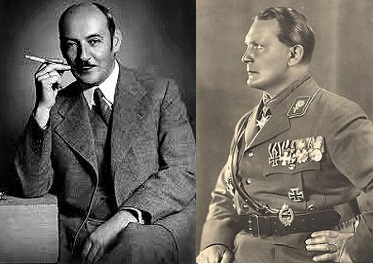
The German and Israeli news media have recounted the exploits of Albert Göring recently , because he is under posthumous consideration for the highest honorary title conferred by the State of Israel, the “Righteous Among the Nations.” These are the heroes of the Holocaust, the brave individuals who risked their lives to foil Hitler’s Ultimate Solution. Since it was created in 1953, the title has been awarded to 24,356 people from 47 countries.

Göring is a strong candidate to join their ranks, for he saved many Jews from extermination during World War II. Honoring him would not be a difficult decision, except for one thing: he was the younger brother of one of Hitler’s vilest henchman, the architect of the death camps and master of the Gestapo, Hermann Göring.

Albert became disillusioned with the Nazis early in their rise to power and moved to Austria, where he frequently spoke out against Hitler and the Third Reich. He would have ended up in prison when the Germans took over Austria, but brother Hermann Goering, Hitler’s designated successor, believed that blood was thicker than genocide: he kept Albert out of the hands of the Gestapo, even though he knew his little brother was an enemy of the state.

Nobody knows exactly how many Jews and non-Jews Albert saved from his brother’s death camps, because Albert Göring himself didn’t know how many the people he helped. Continue reading

Ethics Hero Emeritus: Willie Reed ( 1937-2013)

Willie Reed

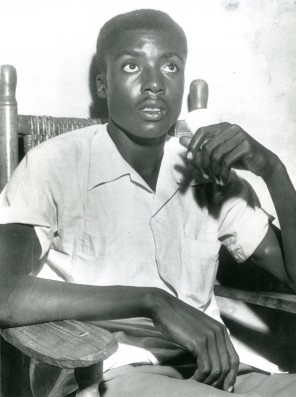
I began the day, to my surprise, with tears in my eyes from reading an obituary on the front page of today’s Washington Post.

The story announced the death of Willie Reed, who as an African American teenager in 1955, risked his life by testifying in a Mississippi court against the white men who had tortured and murdered Emmet Till, another black teenager, for the Jim Crow “crime” of allegedly whistling at a white woman.

The intensity of my emotional reaction surprised me. I think it was the product of being reminded of the horrific tragedy that befell Till and other black citizens at the height of segregation, and being slapped in the face with the reality, known to me but kept deep in the place in my brain where the ugliest things are sealed away to keep me from incurable despair, of the deranged hate that festered so long—and destroyed so many— in the country I love. I was also overcome with admiration and wonder at the almost unimaginable courage of Reed, who knew that by testifying in open court he was simultaneously  guaranteeing that he would be marked for Till’s fate for the rest of his life. Maybe most of all, I wept out of anger at my ignorance and the warped priorities of our culture and educational system, which ensures that we know the names and life stories of insignificant narcissists like Kim Kardashian, embarrassing political leaders like Michele Bachman, greedy athletes like Lance Armstrong, and cynical demagogues like Al Sharpton, but know nothing of the lives and deeds of unglamorous American heroes like Willis Reed. I consider myself an educated man, but I had never heard of him, which means I am not educated enough. I wish I could apologize to Reed. I wish I could shake his hand. I wish I could say, “thank you.” Continue reading

Ethics Hero: Thomas McGregor

"Just paying off my student loans..."

“Just paying off my student loans…”

One of the criteria for admission to the practice of law is proof of good character, and what is considered proof of bad character will keep even a stellar law grad out of the courtroom. Bad character can be inferred from many kinds of conduct—criminal convictions, lies under oath, and failing to meet financial obligations, among others. The latter has occasionally blocked an otherwise qualified young lawyer from entering the profession when unpaid debts get out of hand, and that means that the most prominent unpaid debts in recent headlines, student loans, can sometimes foil a legal career. New York law grad Robert Bowman, last I checked, was still trying to convince the New York Bar that being over $400,000 in debt on his student loans didn’t mean he wasn’t fit to practice law. So far, he hasn’t succeeded.

Maybe he should follow the lead of Thomas McGregor.  Continue reading

The Cabbie’s Ethics Tale

Back of a cab

A frustrating aspect of my business travel, other than that raw fact that travel itself is inherently frustrating, is that I accumulate a backlog of ethics issues but am often unable to take the time to write about them until I return home, where I am again free of airplane delays, unreliable internet connections, sleepless nights and dimly lit hotel rooms apparently designed for the comfort of Jose Feliciano. The occasional compensation arrives in the form of enlightening conversations with fascinating people.

One of these was a cab driver on my latest trip. We shared the same space on an interminable ride from the airport to the hotel, the last leg of a theoretical ninety minute journey that stretched into 6 horrible hours. He was an educated, articulate, lively minded man whose life story (so far) would make an entertaining, if inherently incredible, movie. An African American son of two wealthy academics, he misbehaved in a ritzy private school and was sent, as punishment, to finish his high school years in an inner city private school. There he encountered drugs, gangs, bullying and racism, and became a strong social conservative. He dropped out of high school, entered the military and ended up in the Special Forces in the Middle East; he returned, graduated from college, went into the financial industry, rose quickly, got rich. He told me that he saw all of the cheating and manipulation in his own company and the industry in general, but did nothing about it (the money was too good, he said). Then came the crash. He lost everything, including his wife and kids, in the carnage. Resolved, he said, to work for justice and ethics, my driver had just graduated from law school and flunked his first try at the bar exam. (So did my dad, who would have liked this guy a lot.)

We got on the topic of the “bystander syndrome” and our duty to intervene and sometimes confront wrongdoers even at some personal risk—-the subject came up in the context of the Brooklyn EMT who has  been cleared of criminal charges arising from her refusal to assist a pregnant woman who had a heart attack (The EMT was on break, you see. I wrote about that terrible incident here. ) My cabdriver was a large, burly man, but he said that every time he intervened to confront a wrong doer in public, he feared that he would be shot. Once, when he stopped a man in a wheelchair from beating the man’s apparent girlfriend, he told me, my cabbie found himself staring down the barrel of a .44. This story, however, had a very different resolution: Continue reading

More Ethics Of Terrible Secrets : Falling Bullets, Moral Luck, And The Accountability Check Of A Lifetime

Somebody's happy!

Somebody’s happy!

Seven year-old Brendon Mackey was walking with his father in the parking lot of the Boathouse Restaurant in Midlothian, Virginia at around 9 p.m. last Thursday when a bullet, apparently shot into the air by a Fourth of July celebrant, fell through his skull, killing him.

“We don’t think this was an intentional shooting. We think that somebody in or around the area was celebrating the Fourth of July. Unfortunately we think they were shooting a gun in a reckless manner and this young boy is a victim,” a police spokesman told the media. The bullet, experts say, may have been fired as far as five miles away.

There is an investigation ongoing, but if history is any indication, Brendon’s killer will remain a mystery. Last Independence Day, a Michigan State student, engaged to be married, was killed the same way, by a bullet believed to have been launched into the sky by a celebrating stranger. Michelle Packard was 34. This spring, her still grieving  fiancé committed suicide.

Has a reckless celebrant with a gun  ever stepped forward voluntarily to accept responsibility for causing such a tragedy? I cannot find any news accounts that suggest it. Deaths from stray bullets fired into the air are rare: most fall to earth harmlessly, and even when they hit someone, the result is seldom a fatality. Still, firing a gun skyward is illegal, and truly reckless and stupid. My father told me that during World War II, he warned the men under his command that he would see that anyone firing a weapon into the air without good reason would be court martialed. “They really seemed surprised when I told them that the bullets came down,” he said. Continue reading

Ethics Quote Of The Day: Lou Gehrig, July 4, 1939

“Fans, for the past two weeks you have been reading about the bad break I got. Yet today I consider myself the luckiest man on the face of this earth.”

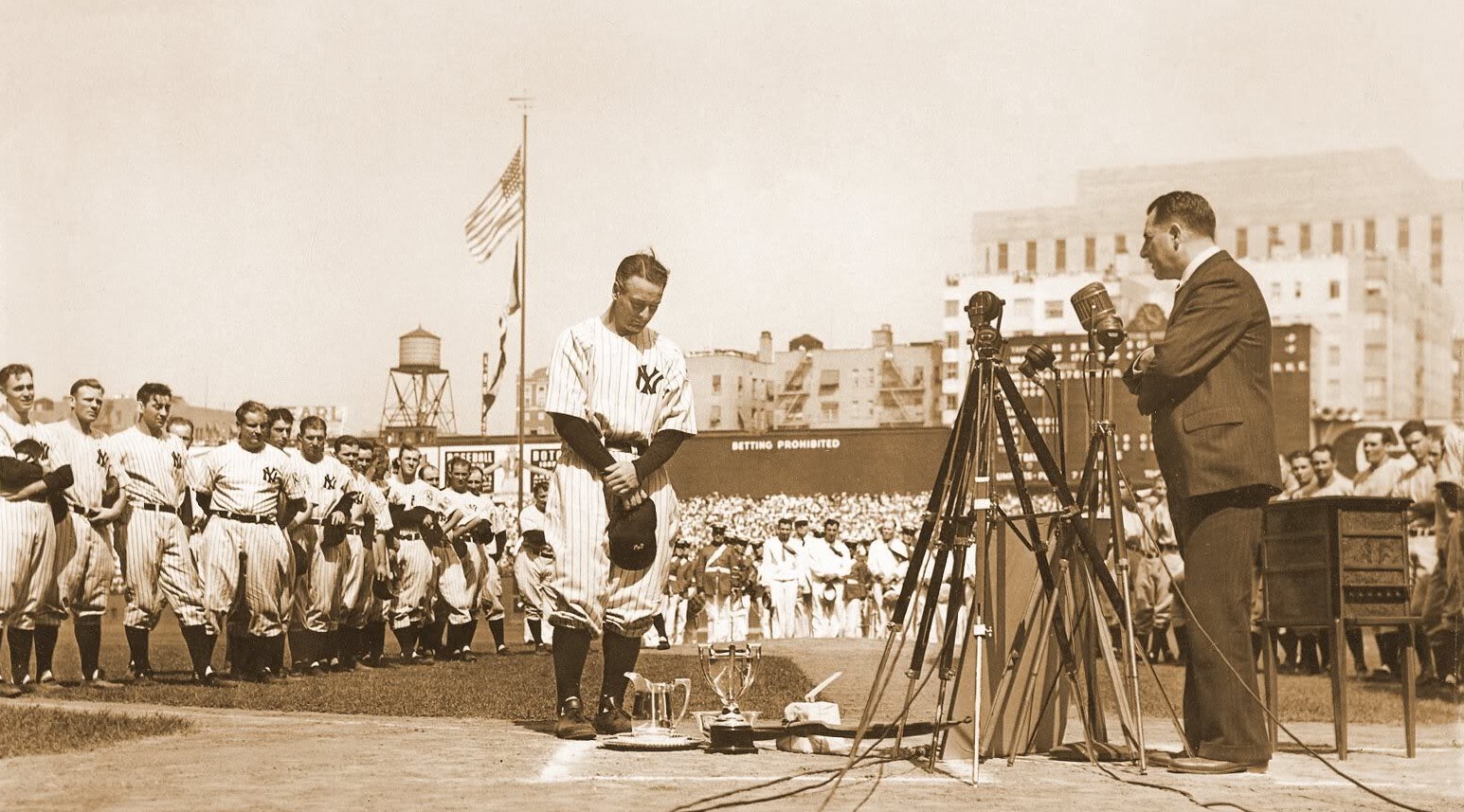
—-Baseball great Lou Gehrig, beginning his farewell speech to Yankee fans on July 4, 1939, as they filled Yankee stadium to say farewell to “the Iron Horse,” who was retiring from the game after being diagnosed with the incurable disease, amyotrophic lateral sclerosis (ALS), known forever after as “Lou Gehrig’s Disease.”

Lous Farewell

Lou Gehrig was only 36 years old when he learned that he was dying. ALS is a terrible wasting disease that has no cure, and in 1939 there was little treatment or assistance that could be offered to a victim as his body slowly ceased to function. It is an especially cruel disease for a professional athlete to face, and even more so one, like Gehrig, who was renowned for his endurance and seemingly indestructible body. When the progress of the illness, still then undiagnosed, caused Gehrig to remove himself from the New York Yankees line-up on May 1, 1939, it ended his amazing streak of 2,130 consecutive games, a baseball record that stood until broken by Cal Ripken, 56 years later.

Gehrig’s speech was from his heart. He was an educated and articulate man, but he had not planned on speaking at the moving ceremony to bid him farewell, as current former team mates, some of the greatest players ever to take the field, gathered to pay their respects. But the Yankee Stadium crowd of more than 60,000 began chanting his name, and after initially refusing, Gehrig moved to the microphone. Continue reading

July 3: A Day To Honor Custer’s FIRST Stand, At Gettysburg… And Reflect On How Our Greatest Strengths Can Be Our Fatal Flaws

custercharge

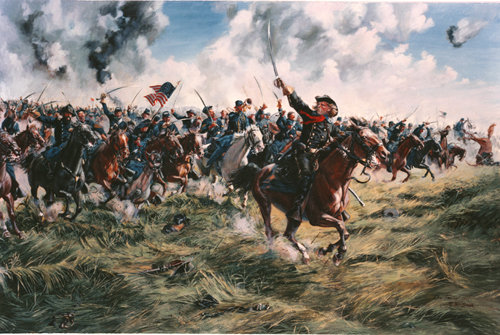
I wrote this post two years ago, concerning my favorite neglected episode of the Civil War, when young George Armstrong Custer shocked Confederate J.E.B. Stuart with his unexpected and furious resistance to Stuart’s attempt at disrupting the Union flank while Gen. Meade’s army defended itself against Pickett’s Charge. As with the First Minnesota’s suicidal stand on the second day of the Battle of Gettysburg, Custer’s crucial moment of truth has been largely neglected in the assembly of the battle’s heroes; I don’t think it has ever been depicted in a Civil War film, for example, though there is at least one book about it.

The incident is especially fascinating to me because of the its multiple ironies. Custer succeeded when his nation needed him most because of the exact same qualities that led him to doom at the Little Big Horn years later. Moreover, this man who for decades was wrongly celebrated in popular culture as an American hero for a shameful botched command that was the culmination of a series of genocidal atrocities actually was an American hero in an earlier, pivotal moment in our history, and almost nobody knows about it.

Thus it is that among the brave soldiers of the Blue and Gray who should be remembered on this 150th anniversary of the greatest battle ever fought on this continent is a figure whose reputation has sunk to the depths, a figure of derision and ridicule, a symbol of America’s mistreatment of its native population. Had George Armstrong Custer perished on July 3, 1863, he might well have become an iconic figure in Gettysburg history. The ethics verdict on a lifetime, however, is never settled until the final heartbeat. His story also commands us to realize this disturbing truth: whether we engage in admirable conduct or wrongful deeds is often less a consequence of our character than of the context in which that character is tested.

Here is the post, slightly lengthened:

July 3, 1863 was the date of Pickett’s Charge, when Confederate General Robert E. Lee ordered a desperate Napoleonic advance against the Union line at Gettysburg in what has come to be a cautionary tale in human bravery and military hubris. The same day marked the zenith of the career of George Armstrong Custer, the head-strong, dashing cavalry officer who would later achieve both martyrdom and infamy as the unwitting architect of the massacre known as Custer’s Last Stand. Continue reading

July 2, 1863: When 262 Minnesotans Saved The United States Of America

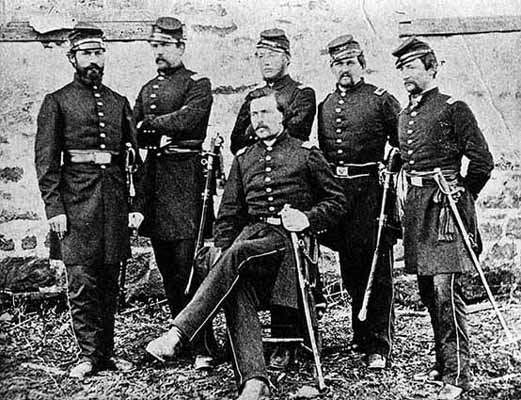
Officers of the First Minnesota Volunteer Regiment

Officers of the First Minnesota Volunteer Regiment

For the last two years, I have posted here about the courage and sacrifice of the men of the First Minnesota Volunteer Regiment at the Battle of Gettysburg. There was more than enough of those qualities, on both sides, to go around that day, and unless you are in the vicinity of that lovely and unbearably sad little Pennsylvania town, it isn’t just the brave Minnesotans who are neglected, but all of the participants. Yesterday was July 1, the anniversary of the beginning of the battle in 1863, and there was scant mention of it in the media. After all, there is the Zimmerman trial, and outrage over Jennifer Lopez accepting a million dollars to sing “Happy Birthday” for a brutal dictator, and whether movie viewers will flock to see Johnny Depp play Tonto. One of the few excellent acknowledgements of the date and its significance was by CBS, which also featured the famous feature on the battle published years ago by the Saturday Evening Post. 

In an ambitious mood, I once resolved to find a different group of battlefield heroes from that day to feature every July 2, the messiest, most important pivotal of the battle that itself has been overshadowed by the tragedy of suicidal Pickett’s Charge on July 3. But I have neither the historical research skills nor time to do justice to such a task, though the injustice of so many forgotten heroes is great. It is best to allow the First Minnesota Volunteer Regiment, who obeyed a desperate order to fill a breach in the Union line, knowing that it meant almost certain death,  “to gain a few minutes’ time and save the position and probably the battlefield,” to stand for all of them.

As for me, I’m going to watch, once again, Ted Turner’s excellent film Gettysburg, and play its soaring score in my home and my car. We have a duty to remember, and honor, every moment of those three days in July, 150 years ago. Continue reading

Inspector Generals, Intimidation, Integrity and The IRS Scandal

IG J. Russell George. NOW I get it!

Treasury Dept. IG  J. Russell George. NOW I get it!

I certainly feel ignorant and foolish about this. Silly me: I always thought that inspector generals, those charged with flagging and investigating incompetence, corruption and wrongdoing in our government, were independent and objective, and beyond political influence from above. Why did I think that? I thought that because without such independence, what we may be getting in these supposedly honest and thorough IG reports is not the whole truth and nothing but the truth, but rather what the particular IG thinks he or she can get away with and still keep the job. Was I the only one who didn’t know this?

Thus the popular shrugging talking point by Obama Administration defenders on the partisan payroll (Jay Carney, White House staff, enabling members of Congress, Axelplouffe, etc.) and off of it (the news media) that the IRS inspector general J. Russell George “investigated” and found no political influence in the decision to target and impede conservative organizations is even more dishonest that I originally thought. That oft-repeated statement was always misleading spin, because George, by his own admission, only performed an audit, which is supposed to be the prelude to a full investigation. Now, however, a former IG has explained that inspector generals who displease the Obama high command risk losing their jobs. (Presumably this has always been a peril of the IG job, so I am not suggesting that this unacceptable state of affairs is unique to this administration.)

In his testimony before Congress, George said that he never was able to determine who, if anyone, directed the ideologically-based scrutiny, because no one would tell him. Former IG Gerald Walpin writes, Continue reading

Ethics Hero Emeritus: Actress Jean Stapleton (1923-2013)

Edith Bunker, being stifled.

Edith Bunker, being stifled.

Jean Stapleton, the superb character actress best known as “Edith Bunker” from “All in the Family,” has died. She exemplified the actor who, given the chance to use her talents for cultural good beyond mere entertainment, not only did so but did so beyond all reasonable expectations.

Edith Bunker, the submissive, not-too-bright, loving, loyal and thoroughly confused character she played on the 70’s sitcom, always broke my heart. I found Stapleton’s portrayal difficult to watch, even when she was too funny to resist. Edith was an abused spouse who didn’t realize she was being abused. I think many women who were similarly abused resolved to change the course of their lives because watching Stapleton accept being “stifled” and insulted by the man she loved made them recognize the pattern they had accepted too. Yet Edith Bunker, in Stapleton’s hands, made “All in the Family” more than the portrait of a redneck bigot and his enabling wife, broadcast to be mocked by smugly liberal viewers reveling in their intellectual and moral superiority. We felt Archie was redeemable—as indeed the show slowly revealed that he was—-beyond his hard-wired prejudices, in part because such a sweet, good woman loved him. (The other parts included the superb writing of the characters and Carroll O’Connor’s nuanced Archie.) What an achievement Stapleton accomplished by playing a negative stereotype in a way that both promoted sympathy, understanding and rejection, while never becoming so ridiculous that the audience stopped caring about her. She deserved every one of her eight Emmy nominations and three awards: in fact, she smoked the competition every year. There wasn’t a better or more important  performance, male or female, on TV while “All in the Family” was on the air.

That’s not why Jean Stapleton is an Ethics Hero Emeritus, however. Continue reading