Inspector Generals, Intimidation, Integrity and The IRS Scandal

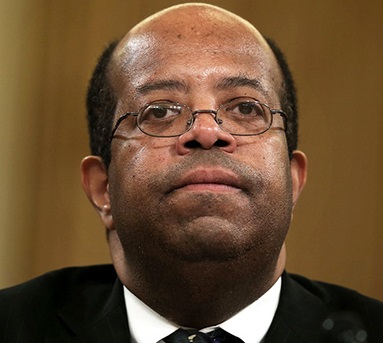
IG J. Russell George. NOW I get it!

Treasury Dept. IG  J. Russell George. NOW I get it!

I certainly feel ignorant and foolish about this. Silly me: I always thought that inspector generals, those charged with flagging and investigating incompetence, corruption and wrongdoing in our government, were independent and objective, and beyond political influence from above. Why did I think that? I thought that because without such independence, what we may be getting in these supposedly honest and thorough IG reports is not the whole truth and nothing but the truth, but rather what the particular IG thinks he or she can get away with and still keep the job. Was I the only one who didn’t know this?

Thus the popular shrugging talking point by Obama Administration defenders on the partisan payroll (Jay Carney, White House staff, enabling members of Congress, Axelplouffe, etc.) and off of it (the news media) that the IRS inspector general J. Russell George “investigated” and found no political influence in the decision to target and impede conservative organizations is even more dishonest that I originally thought. That oft-repeated statement was always misleading spin, because George, by his own admission, only performed an audit, which is supposed to be the prelude to a full investigation. Now, however, a former IG has explained that inspector generals who displease the Obama high command risk losing their jobs. (Presumably this has always been a peril of the IG job, so I am not suggesting that this unacceptable state of affairs is unique to this administration.)

In his testimony before Congress, George said that he never was able to determine who, if anyone, directed the ideologically-based scrutiny, because no one would tell him. Former IG Gerald Walpin writes, Continue reading

Ethics Hero Emeritus: Actress Jean Stapleton (1923-2013)

Edith Bunker, being stifled.

Edith Bunker, being stifled.

Jean Stapleton, the superb character actress best known as “Edith Bunker” from “All in the Family,” has died. She exemplified the actor who, given the chance to use her talents for cultural good beyond mere entertainment, not only did so but did so beyond all reasonable expectations.

Edith Bunker, the submissive, not-too-bright, loving, loyal and thoroughly confused character she played on the 70’s sitcom, always broke my heart. I found Stapleton’s portrayal difficult to watch, even when she was too funny to resist. Edith was an abused spouse who didn’t realize she was being abused. I think many women who were similarly abused resolved to change the course of their lives because watching Stapleton accept being “stifled” and insulted by the man she loved made them recognize the pattern they had accepted too. Yet Edith Bunker, in Stapleton’s hands, made “All in the Family” more than the portrait of a redneck bigot and his enabling wife, broadcast to be mocked by smugly liberal viewers reveling in their intellectual and moral superiority. We felt Archie was redeemable—as indeed the show slowly revealed that he was—-beyond his hard-wired prejudices, in part because such a sweet, good woman loved him. (The other parts included the superb writing of the characters and Carroll O’Connor’s nuanced Archie.) What an achievement Stapleton accomplished by playing a negative stereotype in a way that both promoted sympathy, understanding and rejection, while never becoming so ridiculous that the audience stopped caring about her. She deserved every one of her eight Emmy nominations and three awards: in fact, she smoked the competition every year. There wasn’t a better or more important  performance, male or female, on TV while “All in the Family” was on the air.

That’s not why Jean Stapleton is an Ethics Hero Emeritus, however. Continue reading

My Father, Memorial Day, and Reflections

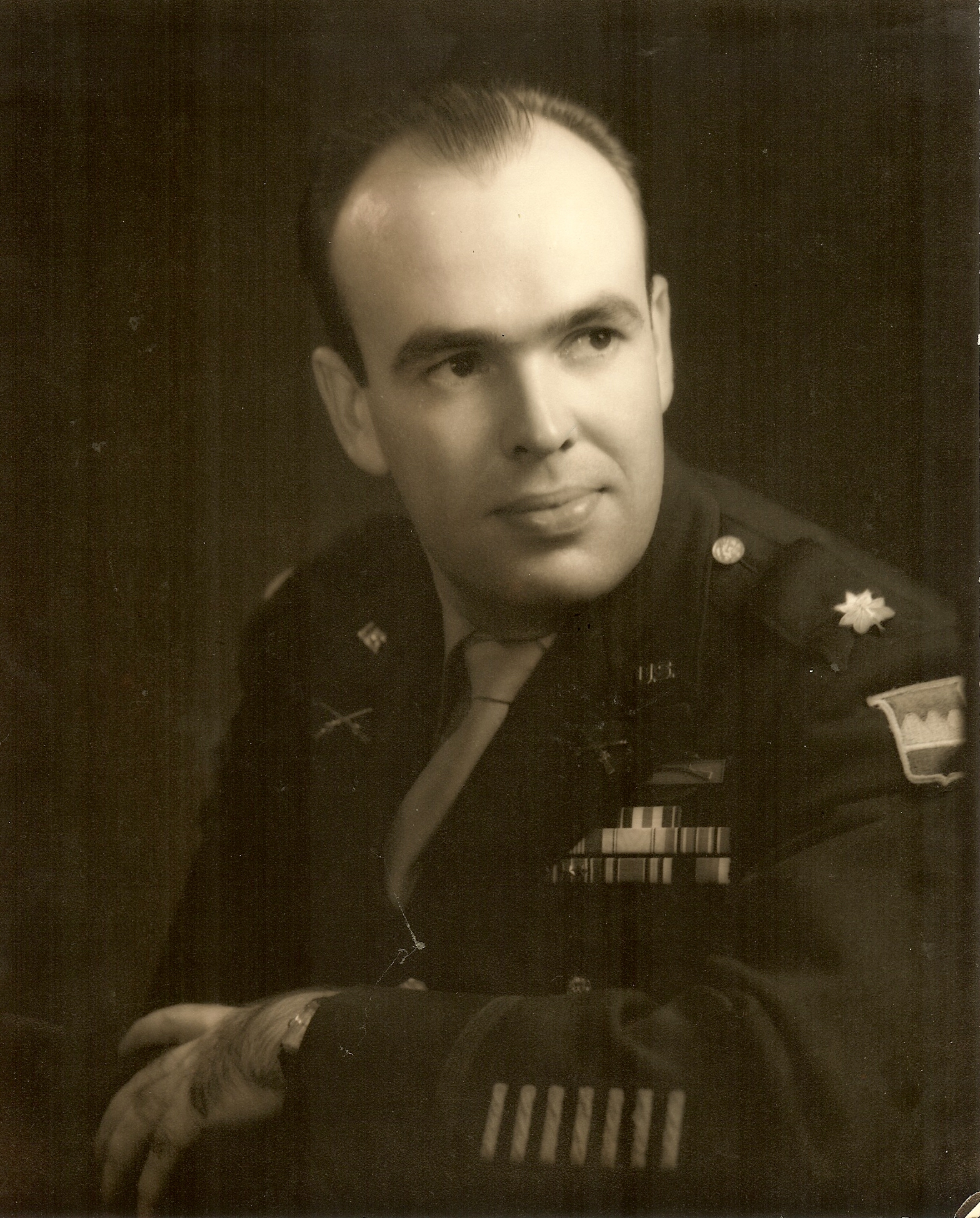
Jack Marshall Sr Army portrait

[In the last few years of his life, my father used to take my sister and me on a pilgrimage to Arlington National Cemetery on the Sunday of Memorial Day Weekend. He was always strangely jolly about it, though appropriately reverent. We always visited the oddly inadequate Battle of the Bulge memorial, where my dad would usually tell us one new story of his horrible experiences in that conflict that he had previously suppressed. We always paid our respects to the humble grave of Audie Murphy, World War II’s most decorated American soldier. We did NOT visit the grave of my dad’s own father, whose betrayal of his mother he would never forgive, though my grandfather, a veteran of the First World War, was also buried at Arlington. Mostly we just walked around the beautiful surroundings, with Dad periodically admiring some grand monument and suggesting, tongue in cheek, that he wouldn’t mind being under something like that some day. Continue reading

Ethics Hero: Angelina Jolie

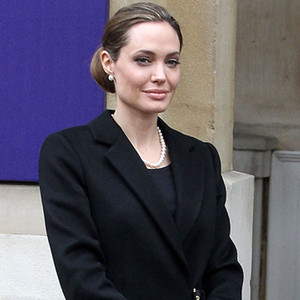
Jolie

I am pretty certain that actress Angelina Jolie could have undergone a prophylactic double mastectomy and never revealed it, She could have had reconstructive surgery and continuing to appeal to the sexual fantasies of moviegoers, which has been a significant aspect of her movie career. She had no need to disclose the operation, which she underwent last month, and no obligation to. Nonetheless,Jolie revealed her choice to the world in an eloquent, powerful, and courageous op-ed in the New York Times this week, and undoubtedly saved lives by doing so. She also made a critical cultural statement about the worth of women and how they are devalued by being reduced to their body parts in popular culture, the media, and the minds of men.

I think it is one of the most courageous acts by an entertainment figure that we have ever witnessed.

Jolie writes in part… Continue reading

Of Hero Ethics, Credit, Fame, And Angel Cordero

Angel Cordero, unsung hero. And in good company.

Angel Cordero, unsung hero. And in good company.

Apparently a Cleveland man named Angel Cordero is every bit as deserving of accolades in the rescue of the three kidnapping victims of Ariel Castro [of alleged kidnapper and rapist Ariel Castro, that is. Reflect on this case the next time someone puffs themselves up to reprimand you for a missing “alleged” and lectures you about how the accused are “innocent until proven guilty.” Yes, we know—and that means we can’t lock them up and throw away the key until they have had a fair trial and been officially proven guilty beyond a reasonable doubt in the judgment of a jury. It does not mean,  in a situation where there is literally no possible interpretation of the facts that would not end with the conclusion that the man who owns the house where three women have been kept prisoner for ten years and who have told interviewers that he beat them, starved them and raped them, that to state the obvious is some kind of human rights violation. By the way, O.J. is guilty too.] as the more colorful, more publicized–and more ridiculed—Charles Ramsey.

I want Cordero to receive the credit and admiration he deserves. I don’t want him to feel bitter and unappreciated. If the media, public and popular culture is inclined to bestow its goodies on the heroes of this horrible story, I hope he gets his fair share. Still, I also hope that he would be sufficiently large of soul and solid of values to adopt the attitude that what is important is that the women were rescued, and not who gets credit for it, now or in the future. Continue reading

The Ethics of Ignorance

Jamestown Cannibalism

I don’t know Albert T. Harrison, though he may well be a neighbor: we both live in Alexandria, Virginia. He is probably a good and decent man, in fact, I’m pretty certain of it, and it pains me to take him to task for what he wrote to, and was subsequently published in, the Washington Post’s weekly “Free for All” page. His letter is already on the web, however, and I’m sure other good, and, like Albert, willfully ignorant Americans are reading it and nodding their heads. His is an unethical, irresponsible, cowardly and dangerous position, and it has too many supporters already.

I’m sorry, Mr. Harrison, but you force my hand.

This week, scientists determined with near certainty that rumors of cannibalism in the colony at Jamestown, Virginia, were true. The remains of a 14-year-old girl from an excavation at the site of the settlement showed unmistakable signs of deliberate butchering. From the Post story: Continue reading

Musings On The Jason Collins Announcement

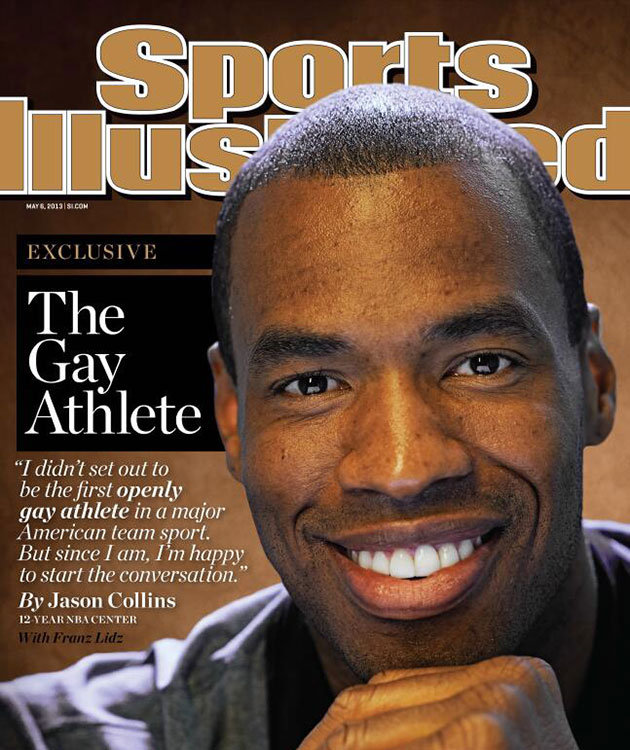
Jason-Collins

Jason Collins, a reserve NBA center, became a huge news story as well as symbol of increasing gay acceptance in America when he announced his sexual orientation in a Sports Illustrated cover story this week. This made him,technically at least, the first active athlete in one of the U.S’s major professional sports to “come out.” Since his team is not in the NBA play-offs, and since Collins is a free agent going into 2014, the NBA has yet to see its first openly gay player take the floor in a game, and Collins may not be the one who does it.

What does it all mean?

  • Collins is courageous.
  • I hate the fact that the state of celebrity economics, fame and popular culture makes me think like this, but it does: How can we know that Collins, a borderline and largely obscure NBA player nearing the end of his career, didn’t see a chance at the kind of fame, stardom and popularity, not to mention guest appearances, sponsorships and endorsements that have eluded him in his playing career, and grabbed it? We don’t. This was the kind of act that has nothing but good results whatever the motives of the actor, and so it is an ethical act by definition. Was it a truly selfless act, as it is being portrayed? I think Collins deserves the benefit of the doubt, but I sure have some. Continue reading

Ethics Dunce + Incompetent Elected Official = Censorship In North Carolina

Thank-you. I see no reason to believe that your funding is in any jeopardy, by the way."

Thank-you. I see no reason to believe that your funding is in any jeopardy, by the way.”

Central Carolina Community College pulled the plug on a public affairs  talk show airing on its radio station after a legislative assistant for State Rep. Mike Stone complained about an online post by one of the show’s hosts, criticizing the  Sanford, N.C. Republican.  Susan Phillips, Stone’s legislative assistant, wrote the school’s president, T.E. “Bud” Marchant, with pointed questions about the program’s affiliation with the school, funding sources, and budget.  Central Carolina Community College is one 58 community colleges in North Carolina that depend on the  legislature for funding, and Stone’s message was received loud and clear. Marchant shut down the show, known as “The Rant,” two days later. He also denied that Stone’s interference had anything to do with it.

Sure.

There shouldn’t be any question over what happened here. An elected official in a supposedly democratic nation decided to abuse his position and power as well as violate his oath of office  by using veiled threats and intimidation to stifle Constitutionally protected criticism of his job performance, and a craven educator caved to his pressure, violating his duty of respecting academic freedom and standing against efforts by the state to stifle free speech and political dissent. Marchant, if he had even a rudimentary backbone, would have told Stone’s minion to back off and reported this clumsy attempt at extortion to the area’s news media. Stone, if he had any integrity or respect for the founding principles of the United States, would have taken “The Rant’s” host’s criticism like an adult and a believer in free speech, and responded with a defense or a rebuttal, not by leaning on the radio station’s management. As for Marchant’s incredible claim that Stone’s complaints and the show’s demise were unrelated, even if that were true, his creating the appearance of censoring campus speech in response to government disapproval would be nearly as offensive as censorship itself, because it would still have the effect of chilling First Amendment rights.

I’m certain, considering what appears to be the generally low quality of state legislators across the country (which figures, given the abysmal quality of national legislators), that this kind of thing occurs far more frequently than we know. Let’s see if Stone’s bedrock, conservative supporters are sufficiently offended by his efforts to use government power to muzzle adverse opinion, and send him on a new career path. My guess? This incident won’t make any difference to his election chances at all, if voters like Stone’s politics and believe the radio host is a nettlesome lefty. We are constantly told how much of the country is willing to dispense with the Second Amendment, as if that proves that amendment is archaic. Sincere public support for the First Amendment is similarly shaky.

All right, let us agree that both legislator and college president are unqualified for their positions by virtue of their abandonment of their ethical obligations in their respective roles—Stone’s duty to respect free speech and observe proper limits on government power, Marchant’s duty to protect academic freedom and oppose government efforts to stifle free expression. That still doesn’t justify the elitist coverage of this story by Jonathan Turley, whose blog post first alerted me to it. For some reason, the noted civil rights expert and law professor believes that it is Stone’s wan academic credentials and humble work experience that explain his bullying tactics. Why else would Turley feel it is germane to note that Stone lists his education as ‘“Attended, Accounting, Central Carolina Business” and lists his experience as “Business Owner, O’’Connell’s Grocery Store”’ ? Why is any of that relevant? The law school professor is evidently a bigot, and believes that one’s ethical instincts and character are directly proportional to one’s degrees and work experience.

Rep. Stone is a citizen of the United States, and like every citizen, should be presumed to know about the Four Freedoms whether he graduated from Harvard or the School of Hard Knocks. There are plenty of well-credentialed bullies, fools and ignoramuses in elected office. It is sufficient to judge Stone by what he did; Turley’s implied ridicule of his educational and work background is a cheap shot, and reflects badly on the commentator, not his target.

_____________________________

Pointer: Res Ipsa Loquitur

Facts: NC Policy Watch

Graphic: Pozniak
Ethics Quote of The Week: Umpire Marty Foster

“I saw the pitch and of course don’t have the chance to do it again. But had I had a chance to do it again, I wouldn’t call that pitch a strike.”

—– American League Umpire Marty Foster, in the wake of the controversy over his game-ending strike call in the Texas-Tampa Bay game last night.

In other words, “I missed it. I was wrong.”

Strike Three?

Strike Three?

Good for Foster. His wildly inaccurate call was strike three on Rays batter Ben Zobrist, who thought that he had worked a base on balls. This would have placed Rays runners on first and second with two outs, creating a reasonable opportunity for the Rays to tie or win the game.  Instead, the Rangers got a gift. Rays manager Joe Maddon, in interviews and in a tweet to his followers, said, “That can’t happen in a major league game,” meaning that the call was beneath major league umpiring standards.  Of Maddon, Foster said,  “He was frustrated and I understand .He acted probably the best he can under that situation.”

Obviously, there have been many, many worse calls, nearly as bad calls, and only a smidge better calls, and there will be this season. In the vast majority of those, umpires have and will remain mum, maintaining that they were in the best position to judge the pitch or the play, and that even video showing their gaffes are misleading. Foster, however, did the hardest thing for many of us: admitting a mistake. Admitting so, to himself as well as the world, doesn’t make him a worse umpire; it makes him a better one.

Note: I apologize for the sparse postings the last few days. I am involved in a night and day project that is preventing me from doing thinking and working on anything else…even baseball. Naturally, the only game update I happened to watch, at 2:20 AM, was an ethics story.

___________________________________

Sources: NBC Sports (and Graphic); Townhall

Ethics Hero: Michael Bublé

This video, and therefore the incident, is three years old now and viewed on YouTube by millions,  but it’s new to me, and it raises my opinion of Michael Bublé , an old-fashioned but youngish Vegas-style crooner in the Andy Williams mold, but cuter.

Here is what’s ethical about the singer’s spontaneous conduct:

  • He was kind. Few performers allow their concerts to be hi-jacked like this.
  • He was courageous. Professionals know that any time you give up control, anything can happen.  Bublé was confident that he could handle whatever came his way, but it is still a risk.
  • He was generous. His reaction to realizing the kid could really sing was pitch-perfect.
  • He demonstrated the Golden Rule, and explicitly so, when he made the decision to bring the 15-year-old on stage, saying, “I remember being your age.”

…all marks of an Ethics Hero, and a lucky one, because this could have gone horribly wrong.

_________________________________

Pointer: Kathleen Dunn (via Facebook)