This is “Young Person,” by Henry Rollins.
Show it to one.
[Thanks to Fark]
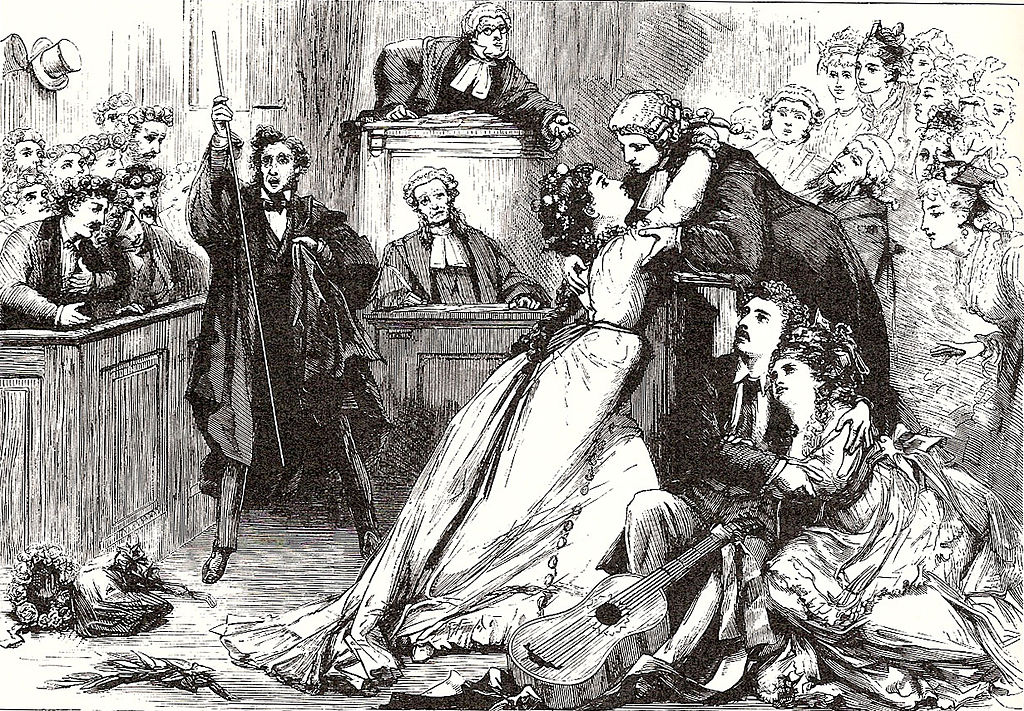
The courtroom chaos of Gilbert and Sullivan’s “Trial By Jury” was nothing compared to this!
One thing we do know for sure: the lawyer was rushed. And therein lies much of the problem.
This mind-blowing scenario, that could have easily been an episode on “Boston Legal” or “Ally McBeal,” occurred in California. After a week long trial in a personal injury case where the brain-damaged plaintiff’s lawyer had asked for millions in damages, jurors deliberated only four hours and announced they’d reached a decision. Both lawyers were certain a defense verdict, against the disabled man, was coming. Plaintiffs attorney C. Michael Alder pulled defense counsel into the hallway for last-minute settlement negotiations, hoping that the defense would agree to some damages as insurance against a surprise plaintiff’s verdict. With his developmentally disabled client (who had suffered brain injuries in a fall from an ambulance) and his mother by his side, Alder exchanged figures and rejections with defense lawyer James Siepler, who had an insurance claims adjuster on his cellphone.
Los Angeles County Superior Court Judge Michael Johnson was impatient, for the jury was ready to give its verdict. Literally at the last second, Alder and Siepler agreed to a $350,000 settlement, and returned to the courtroom. “The parties have advised me that they have reached a settlement of the case,” the judge informed the jurors, adding, “They will be happy to talk with you out in the hallway to get your views.”
They got the jurors’ views, all right. The jurors told the attorneys that they were going to award the plaintiff 9 million dollars. Continue reading

Actually, Matthew Owens DOES look a little like my son...Of course, it's hard to tell...
“Alabama police are trying to track down a mob that beat a man into critical condition — leaving their battered victim with the words, ‘Now that’s justice for Trayvon.’ Cops told WKRG that Matthew Owens got in an argument with some kids playing basketball at a court in the city of Mobile on Saturday night. The kids left and a group of some 20 adults arrived at Owens’ front doorstep, armed with chairs, brass knuckles, pipes and paint cans. The group, all African American, allegedly beat him into a bloody pulp before someone uttered the words that connected the crime to the death of Trayvon Martin, the unarmed teen who was shot and killed in Florida by neighborhood watch captain George Zimmerman.”
____________________________________________________________
UPDATE (4/25): New reports question some of the details above. The dispute may have started over thefts in the neighborhood witnessed by Owens’ niece; a neighbor says that Owens had been in disputes frequently; police now say that the beating was administered by only members of the group, with the rest standing by and watching. There has been at least one arrest. Also of note: Owens’ sister’s claim that one of the attackers said “Now that’s justice for Trayvon” may have been corroborated by other neighbors.
____________________________________________________________
This was completely predictable, and indeed it is only the worst, not the first, incident in which an attack on a white victim was linked to “justice” for Trayvon Martin. Now, the reasons I laid out a month ago that made President Obama’s reckless comments about the Sanford, Florida killing divisive and dangerous ought to be obvious to all, but if not, here are some questions to consider: Continue reading
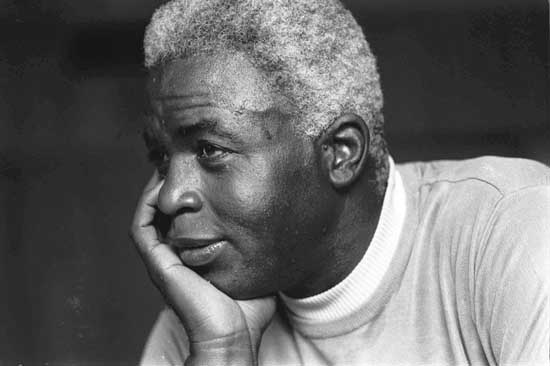
Yesterday, the media, history buffs and Kate Winslet fans were obsessed with remembering the Titanic, sometimes even with proper reverence to the 1500 men, women and children who lost their lives in the North Atlantic on April 15, 1912. A strong argument could be made, however, that the most significant event that occurred on April 15 took place in 1947, in Brooklyn, New York. For that was the day that Jackie Robinson ran out to his position at first base as a member of the Brooklyn Dodgers, and became the first African- American to play baseball in the Major Leagues since the earliest years of the game.
With that act, and his epic heroism for the rest of the season, Robinson changed baseball, sports, American society and history. It was a cultural watershed in a nation that had been virtually apartheid since the end of the Civil War, a catalytic moment that served notice that racism was no longer the future of America. Robinson’s dramatic debut in 1947 was more than a year before President Harry Truman desegregated the military, and seven years before the Supreme Court ruled that “separate is inherently unequal” in declaring public school segregation unconstitutional. Further down a difficult road that has not ended yet were the crusade of Rev. Martin Luther King, the Civil Rights Act, Bill Cosby, Oprah Winfrey and Barack Obama, but it was Jackie Robinson who led the way.
And no one should ever think that he just happened to be in the right place at the right time. It wasn’t merely the opportunity. It was him. Continue reading
Ethics Alarms frequently refers to rationalizations, which lie at the core of most unethical conduct. They are, as one ethicist put it, lies we tell ourselves to allow us to pretend that what we know is wrong, isn’t. Some rationalizations are used so frequently, by us and others, that we come to believe them.
The list of rationalizations has been available on the blog under the Rule Book heading from the beginning, but it is constantly updated, and even though posts frequently link to it, it is clear to me, especially from comments that resort to exactly the same examples of flawed ethical reasoning that populate the list, that a lot of visitors never see it. For those readers, and also those who may not have read the Unethical Rationalizations and Misconceptions page recently, I am posting the whole list of 24 rationalizations here. If you have a candidate for #25, please send it in. Continue reading

A photography site that knows about ethics, too.
SmugMug is a photo sharing website that comes complete with a blog on photo sharing issues, including ethical ones. Here is the blog’s most recent post, a remarkable confession and an apology, as excellent an example of taking responsibility for a mistake, being accountable and apologizing sincerely to the party harmed as there is. The post is entitled, “What Were We Thinking?”
“Sometimes you see the dumb things companies say and you wonder, ‘What were they thinking?’
I never imagined that happening to us, but we did something so dumb in a blog post, we’re now looking at each other blankly and asking, what were we thinking? The post was about image theft and we used examples from pro photographer Valerie Schooling’s site and gave the impression she was doing things wrong, which she wasn’t.
To make matters worse, we somehow embedded screen captures of her site without asking her permission. If it weren’t such a dumb thing to do, I could explain why we did it other than the obvious: she and her photos are awesome. Naturally, her friends and other respected photographers in the industry asked us what we were thinking, and unfortunately the honest answer was, “We weren’t.”
We learned a lesson we’ll never forget because we also betrayed ourselves, since we are photographers. We apologize for the time and angst this caused a lot of wonderful people.”
“Chris MacAskill
President & co-founder
Not usually so clueless”
Perfect. Continue reading
 There are those who say that human beings are incapable of truly altruistic conduct, and that everything we do, no matter how outwardly generous and selfless, is in fact self-serving. There are others, and I am among them, who believe that human beings have natural ethical instincts that lead them to sacrifice for the benefit of society generally, those in peril, and those who are weaker than themselves, especially children. Those instincts can be nurtured by our culture or extinguished by it, but I believe that they are there in most of us….for a while, at least, sometimes weak or dormant, but there, nonetheless.
They were obviously there in Specialist Dennis P. Weichel Jr. of Providence, Rhode Island, a National Guardsman serving in an Afghan province east of Kabul. On March 22, he left the 16-ton gun truck he was riding in to disperse local children who were wandering in front of his heavily armored convoy, searching for treasure, the brass shell casings that could be melted down for other uses or be sold. Suddenly a small girl saw a casing and ran into the path of one of the huge military vehicles. Weichel, a father of three, dashed to her, grabbed her, and threw her to safety unharmed. The gun truck struck the Guardsman instead, fatally injuring him.
Weichel was engaged to be married. He is the first member of the Rhode Island National Guard to die in Afghanistan.
Nothing can erase the tragedy of the U.S. serviceman who turned mass murderer in Afghanistan a month ago, and Weichel’s heroism is unlikely to change any hearts and minds there. That wasn’t Weichel’s objective anyway. He saw a young life in danger and acted, risking his own. It would be a better United States if all of us were raised to react as he did, and if our culture more unambiguously encouraged our best instincts rather than our worst ones. The cliché mouthed by politicians is that our military combat personnel are fighting for American values. Dennis Weichel demonstrated that they also carry American values with them, and in his case, he displayed the very finest.
Weichel was promoted posthumously from specialist to sergeant and awarded the Bronze Star, which is appropriate, and Rhode Island’s flags are being flown at half-mast. The honor he most deserves, however, is to be remembered and emulated by the rest of us.

One takeaway from Claire Lin's death: it's a good idea to have Facebook friends with character.
In Taiwan, a distraught young woman sent streaming photos* of her suicide attempt as she conversed with nine Facebook friends. Some urged her to stop, but none tried to contact police or rescue professionals as she asphyxiated herself with burning charcoal fumes. Yes, her attempt was successful. You can read the disturbing story of Claire Lin’s Facebook suicide here.
Would this happen in America? I wouldn’t be surprised. Sociologists are already weighing in with opinions about the isolation of social media and how the internet makes reality seem less real. I doubt that any of that was especially important in this incident. There have been so many other examples of people left to die with potential rescuers aplenty that were documented on Ethics Alarms and elsewhere, from the Mount Everest climbers who walked past their dying companion, to the more recent case of the Apple store employees who listened to a women get beaten to death in Maryland, that teach us that too many people have the natural inclination not to take affirmative action to help another in distress, and that the instinctive rescuers are the exception, not the rule.
Our culture should teach and reinforce the shared societal duty to come to the assistance of others in peril, but in fact it teaches the opposite. Most of us are told to mind our own business, to think of “Number One”, and make reverse Golden Rule calculations to rationalize inaction (“He wouldn’t have lifted a finger to help me!”) We are taught to fear lawsuits, to wait for professionals (even if they aren’t coming), and to be fearful of making a bad situation worse. And, of course, we are conditioned to let the other person take the risk, so we can have our cake (not get involved) and eat it too ( see the situation resolved without anyone being harmed). And if we wait just a bit too long for that other person to do the right thing, we can always blame him (or her), saying, “I thought someone else would do it!” Continue reading
“If you don’t let things develop, it’s like keeping something in a bag and not letting it out to fly”
—-Bluegrass innovator and legend Earl Scruggs, who died yesterday, in an interview he gave in 2000. He was talking specifically about creating new sounds and kinds of music, but his larger point applies to everything in life, and is an ethical one.
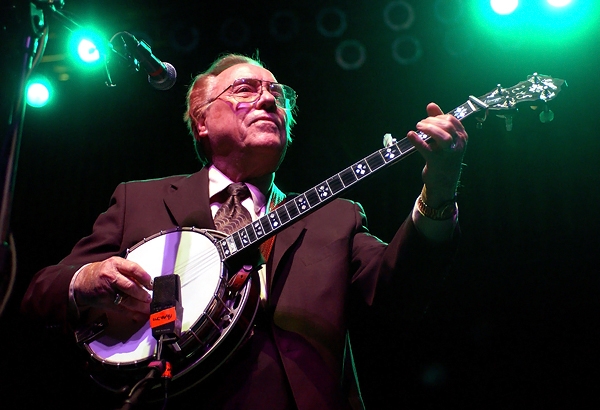
Earl Scruggs almost single-handedly changed the banjo from an instrument associated with clowns and minstrel shows to a vital element in American music. His single-hand was his right hand, as he perfected a three-fingered playing style that gave the banjo as much range and depth as a guitar, cello or violin. With his long-time partner Lester Flatt, he injected bluegrass music into the American mainstream with his music for the film “Bonnie and Clyde,” and, of course, TV’s “The Beverley Hillbillies.”
What Earl Scruggs recognized was that just as the fact that “everybody does it” doesn’t make something right, the reverse is also true. The fact that “everybody” hasn’t been doing something, or even that it has never been done or even considered, doesn’t automatically make it wrong. Ethics doesn’t impose rules to freeze societal standards and values, but to give us systems to evaluate whether standards of conduct and values need adjustment or reconsideration. Often we hear the verdict “Now that’s just wrong!” to condemn something that may not be wrong at all, but just surprising, non-traditional and strange to those who never imagined such a thing. Too often that confusion of wrong and different inhibits creativity, innovation, and change for the better. That’s why innovation and condemnation are frequently linked, and why boldness and courage are prerequisites for positive change. Continue reading

I'm not posting any more Newt Gingrich photos, so here's a Mastiff puppy, in honor of National Puppy Day. And good night, Patience (my late, beloved Mastiff), wherever you are!
I have made myself abundantly clear clear about my assessment of New Gingrich’s ethical instincts, so yet another example of his unethical creepiness is hardly necessary. I will keep this brief:
Bill Clinton, when confronted by a Truther at a public appearance, gave an indignant lecture to the questioner about unjust smears on the patriotism and integrity of American leaders.
John McCain, facing a women in a 2008 campaign stop who declared that Barack Obama was a Muslim, told her she was wrong, saying, “No, ma’am. He’s a decent family man, citizen that I just happen to have disagreements with on fundamental issues and that’s what this campaign’s all about. He’s not, thank you,”
Today, when an audience member at a Newt campaign appearance in Louisiana told him he believes President Obama is a Muslim and a student of Saul Alinsky, and continued, “And I believe that it’s his policy to bring this country to its knees and ruin the United States of America. Your comment?” Newt replied that:
He never addressed the Muslim canard, later telling Gretta Van Susteran that “I don’t have an obligation to go around and correct every single voter about every single topic.”
Interesting which statement Newt chose not to correct.
Creep.
 Ethics Alarms