 “Soul Train” creator and pop culture icon Don Cornelius took his own life at 75 yesterday, using a gunshot to the head to do it. Suicide always conjures up feelings of special sadness for the deceased, sometimes mixed with anger. The act can be cruel and devastating to family members and friends; often it leaves behind crushing problems, financial and otherwise, that the living have to deal with. Suicide is stigmatized in our culture as a coward’s way out of earthly problems; many religions consider it a sin, and many legal systems consider suicide a crime. Yet it may be that American culture will have to undergo a major cultural transformation in the matter of taking one’s own life. While morality tends to ossify, ethics is fluid and adaptable. Changing conditions and new realities can, in rare circumstances, cause societies to conclude that what was once considered right is really wrong, and what was once condemned as wrong is in society’s best interests. I think we may reach that point with suicide. Continue reading
courage
Ethics Quiz: Hair, Rules, School, and the Cancer Survivor

"I think this has gone far enough, son."
I’m really not picking on the schools, though I’m sure it looks that way. There have just been a wave of strange controversies lately in the halls of academe….like the travails of J.T. Gaskins, 17, who is fighting with his charter school near Flint, Michigan.
J.T. is a model student; in fact, he was honored on his high school’s “Wall of Fame” for perfect behavior. But he’s doing his school work from home these days after being suspended by the school governing board of Madison Academy in Burton, Michigan. The reason: the length of his hair. J.T. is a leukemia survivor, and he decided over the holidays to grow out his hair, cut it all off and give it to a non-profit group called Locks of Love, which donates hairpieces to kids undergoing cancer treatments. He was inspired to get growing after learning that the sister of a family friend had cancer.
Gaskins’ long hair is violating school policy, however, and he was told to cut it, or go home. So home he went. “I fought cancer my entire life. I’m going to keep fighting this,” he said. “I’m not going to not give back just because my school says no.” Continue reading
Ethics Hero: Wolf Blitzer

Watch out, Newt! It's SUPER-WOLF!!!
Once again Ethics Alarms finds itself in the sad position of calling conduct heroic that should be routine. Unfortunately, however, competent and responsible broadcast journalism isn’t routine, and if I was looking for a bold and quick-witted journalist to exceed the standard practice, it certainly wouldn’t be CNN’s plodding, timid and often befuddled Wolf Blitzer. Last night, however, as moderator of the latest GOP candidates debate, he did what few journalists ever have the confidence or courage to do: he challenged a politician on an absurd and hypocritical statement.
And yes, I confess…if Wolf fell slightly short of true Ethics Hero status by a couple of points, the fact that the politician involved was New Gingrich the Unethical put him over the top. If that be bias, so be it. Continue reading
Unethical Quote of the Week: Jerry Sandusky
“Joe preached toughness, hard word and clean competition. Most of all, he had the courage to practice what he preached. Nobody will be able to take away the memories we all shared of a great man…”
My advice, Jerry? Skip the funeral.
–—Former Penn State assistant football coach Jerry Sandusky on the passing of Joe Paterno, whose failure to take the necessary steps to prevent Sandusky from sexually molesting young boys (<cough!> allegedly) on and off the Penn State campus scarred the iconic coach’s legacy, not to mention setting up children for a (<cough!> allegedly!) sexual predator’s smorgasbord.
This might be the creepiest tribute in the history of mankind. Why did any reporter ask Sandusky for a statement in the wake of his former boss’s sad end? Who cares what Sandusky thinks about Paterno’s legacy, which Sandusky played a pivotal role in ruining? Continue reading
Ethics Quote of the Day: Rev. Martin Luther King (January 15, 1929 – April 4, 1968)

“On some positions, Cowardice asks the question, ‘Is it safe?’ Expediency asks the question, ‘Is it politic?’ And Vanity comes along and asks the question, ‘Is it popular?’ But Conscience asks the question ‘Is it right?’ And there comes a time when one must take a position that is neither safe, nor politic, nor popular, but he must do it because Conscience tells him it is right.”
—-Rev. Martin Luther King Jr., in his Feb. 6, 1968 speech in Washington D.C. entitled “A Proper Sense of Priorities.”
The Third Annual Ethics Alarms Awards: The BEST of Ethics 2011
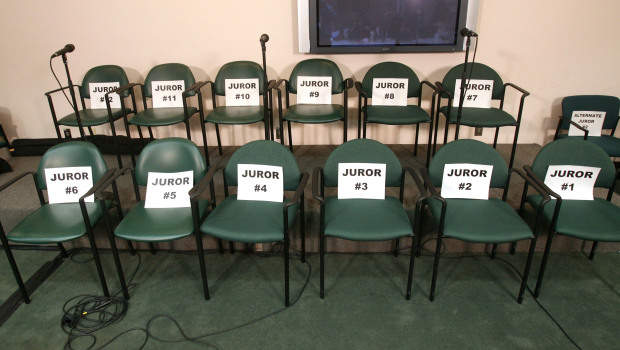
Why is the The Best in Ethics 2011 only about 33% the size of the “Worst”?
This troubles me. My objective is not to be negative. The problem, I think, is that ethical conduct is still much more common than unethical conduct, and it is usually less controversial to identify: most of the time, good ethics is self-explanatory. All of us learn more from mistakes and misdeeds, our own and those of others, than we do from meeting societal standards. Most of what Ethics Alarms does is to try to identify unethical conduct, what was wrong with it, why it happened, and how we can discourage it.
Which is all well and good, but I still would like to make 2012’s Ethics Alarms more positive year than this one, if possible. Help me, will you, find more topics involving good ethics, so next year’s Best list can hold its own with the Worst.
Here are the 2011 Ethics Alarms Awards for the Best in Ethics:
Most Important Ethical Act of the Year: Acquitting Casey Anthony. The Florida jury charged with deciding if Casey Anthony murdered her daughter faced the ire of a lynch mob-minded public that wanted the unsympathetic Anthony convicted, based on suspicious conduct and a dubious explanation, but the evidence just wasn’t there. Thus the courageous twelve upheld the American values of fairness, objectivity, and justice under the law. It is interesting that the most ethical act of the year also sparked some of the most unethical arguments of the year, by too many citizens who benefit from our nation’s ideals without comprehending them. Continue reading
Clark Gable, Loretta Young, and the Betrayal of Judy Lewis

Clark Cable is the one on the right.
Judy Lewis died this week, at the age of 76. She survived and flourished despite being brought up in a community that conspired to hide the truth from her, and famous parents who refused to acknowledge her as their own. The community was Hollywood, and its treatment of Judy Lewis demonstrates the depth of its ethical failings. Her parents were Clark Gable and Loretta Young, and it is difficult to look at them the same way once you have learned what they did to their daughter.
Lewis was a love child, conceived during a movie set fling in 1935 when Gable, married at the time, and the single Young co-starred in “The Call of the Wild”. When Young became pregnant, she hid herself away, had her child, and entrusted her to a nunnery until the little girl was two. Then Young faked an adoption. Throughout her childhood, Lewis (the last name she took from Loretta Young’s first husband, who refused to adopt her) did not know the true identity of her famous parents, or why Gable, then known as “The King” of Hollywood, mysteriously showed up at her boarding school one day for an unannounced visit—the only time she ever saw him in person. Continue reading
The Murderer and the Governor
When a politician announces that he is taking a "moral stand," watch out.
Guess who has more integrity: Gary Haugen, the convicted double murderer whose scheduled execution in Oregon had been scheduled for next week, or Oregon Governor John Kitzhaber, who blocked his execution?
It’s Haugen. The resident of Oregon’s death row had waived his appeals and was voluntarily submitting to his court-decreed fate when Kitzhaber stepped in, declaring his moral objections to capital punishment. But like many politicians’ objections to that other divisive social policy issue, abortion, Kitzhaber’s supposedly moral stand has more fine print than a gym membership. He didn’t commute Haugen’s sentence, or end the death sentences of the other men who have been condemned. The Governor went half way, essentially staying the executions for the term of his governorship, and pledging to seek reforms of what he called a “broken system” in 2013. Why 2013? It’s after the election, of course. Continue reading
Five Ethics Lessons from Jerome Cardano (“Who?”), and One More

Remember his name?
A chance reference in a book I was perusing yesterday reminded me of a fascinating historical figure whom I hadn’t thought about in decades—which still gives me an edge over most people, who have never thought about him at all. He is Jerome Cardano, or, in the Italian version of his name, Gerolamo Cardano, an archetypical Renaissance man from Italy who walked the earth between 1501 and 1576. When I first learned about him those many years ago, his remarkable life didn’t give me any ethical insights because I wasn’t thinking about ethics then. Now, reviewing the facts of his remarkable life, I find that it carries at least five lessons with value for anyone who strives to live in a more ethical culture, and to have his or her own life contribute to making the world a better place.
Lesson 1 : Diligence—Play the hand you are dealt the best you can.
Cardano’s mother attempted to abort him by taking various poisons, but succeeded only in making him unhealthy. He stuttered; he was incapable of sexual relations, and had chronic insomnia, supposedly resulting in an “annual period” where he got little or no sleep for two to three months. He was afflicted at various times with the plague, cancer, dysentery, and many lesser ailments, yet he led a life full of extraordinary accomplishments and adventures, and continued to be active and breathing for 75 years, when most of his class and era died before they reached 45. Continue reading
The Selfish, the Irresponsible and the Cowardly, Pushing the US to Fiscal Disaster

Greek food, America! Better get used to it, becuase we'll have to swallow what the Greeks are swallowing we can't find some leaders with courage.
Failure is now all but ensured by the so-called Super Committee, a gimmick designed by our leadership-averse President and his pathetically inept legislative counterparts in Congress (both parties, now) to provide themselves with bi-partisan political cover when they again ducked their obligation to solve the nation’s fiscal mess. For those of you who, like me, have wondered how Greece and Italy could reach their current miserable status when the fiscal disaster now facing them was obvious years ago, the answer is plain. They tolerated a fatal combination of selfish interest groups, pampered and lazy voters, and elected leaders who distorted, dithered and ducked their duties, until it was too late. And that is exactly what happening here.
There is no need to waste invective on the committee itself, which is beneath contempt. What they have come to was predictable, and I, along with many others, predicted it. But the predictions still did not have to come true, if, for example, these hostages to toxic ideologies really cared about the country as much as keeping the power to ruin it, or if President Obama hadn’t calculated that his best chances of re-election would be to let the committee founder with him being able to claim no role in its betrayal. rather than to do his job—leading–and try to make sure it succeeded at the risk of failing himself…again.
Betrayal is the word that I use, and that is what it is. Continue reading
 Ethics Alarms