In 2011, I wrote an Ethics Alarm post extolling Christopher Columbus, and urging readers to celebrate this day named in his honor. Two years later, I wrote a post arguing that the holiday was a mistake. Which is how I really feel? Which is correct? I have no idea. I just read both, and found each persuasive. You know the famous observation in thethe essay “Self-Reliance” by Ralph Waldo Emerson, “A foolish consistency is the hobgoblin of small minds”? Today I like that line. Sometimes I don’t.
I certainly don’t like the current movement to cancel Columbus Day, and Columbus, out of the culture and historical record because he was not appropriately sensitive to indigenous people by 21st Century standards. That is no better than tearing down statues of Robert E. Lee, airbrushing history to avoid the inherent conflicts and dilemmas that make it invaluable to us going forward into the unknown…like Columbus did.
Here are the two posts. You decide. Meanwhile, I’m thrilled I could find the great Stan Freberg’s version of Columbus’s quest (above). More of my sensibilities about life, humor and history were effected by Freberg’s satire than I like to admit…
I know: just a week ago, I began the last section of the day’s warm-up with “He’s not exactly an Ethics Hero, but…Dave Chappelle’s new concert video, now streaming on Netflix, is thought-provoking, brave, and full of ethical insights and analysis. I could do a two hour ethics seminar using just his material.” Several things have changed since then, however…
I am desperate for ethics heroes. We all are. If the Democrat candidates debate proved anything, it was that.
Chappelle is being attacked, hard, by the very same cancellation culture and political correctness dictators he has been willing to challenge.
There is an organized effort to try to discourage the public from watching his Netflix special “Sticks and Stones,” not because it won’t be funny to anyone still capable of finding things funny, but because it will inspire people to think. Can’t have that…
Only one reader, the usually intrepid and culturally aware Humble Talent, commented on the issue last week. Sometimes I think that including a topic in the warm-up rather than devoting a whole post to it causes some Ethics Alarms readers to gloss over the issues involved, or maybe miss the item itself, as if each warm-up topic is only 20% of a serious ethics topic because there are typically five in a post. The benefit to me of this format is that it saves time (you would not believe how long it takes to set up an individual post after the text is written) and helps me avoid an ethics backlog, but sometimes whether a particular issue is covered in a warm-up item or in a full post is arbitrary, a matter of timing, what else has occurred and my mood at the time.
Upon further reflection, I have concluded that Chappelle is an Ethics Hero.
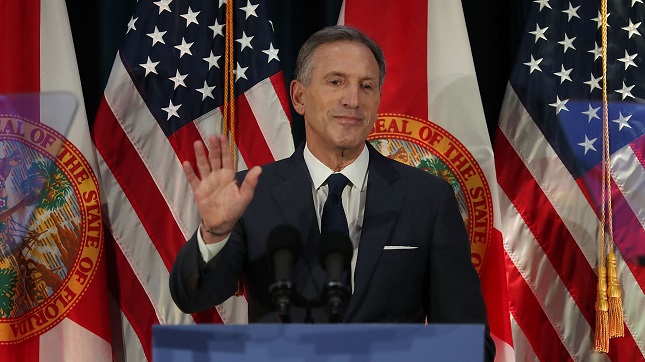
Howard Schultz, the Starbucks CEO who had announced a third party, independent run for President, has withdrawn. Here, in part, is his statement:
Eighty-four percent of Americans do not consider themselves far right or far left. Among them are an “exhausted majority” who want common sense, collaborative and truthful governing. …Statistically and anecdotally, there is an undeniable appetite for meaningful political reform in America. I had hoped to represent this common-sense view, but I’ve come to face a few truths…First, despite a variety of efforts to initiate conversations about political reform, extreme voices currently dominate the national dialogue, often with a vitriol that crowds out and discourages thoughtful discussions. And despite their hunger for reform, the exhausted majority has largely tuned out of political life online and in the news, leaving the extreme voices to define the debate. In addition, not enough people today are willing to consider backing an independent candidate because they fear doing so might lead to re-electing a uniquely dangerous incumbent president. There is considerable concern that four more years of a Trump administration pose a graver threat to our democracy than four more years of political dysfunction. I agree, but I’m also concerned that far-left policy ideas being advanced by several Democratic candidates will further alienate voters who believe those ideas will inflict more economic harm than good. The nomination of a far-left Democratic candidate could result in more votes for Trump—unless a moderate independent is also on the ballot….If I went forward, there is a risk that my name would appear on ballots even if a moderate Democrat wins the nomination, and that is not a risk I am willing to take. Finally, a back injury in April and three subsequent surgeries have required a level of recovery that has prevented me from continuing my travels and engaging with people to the degree that is necessary. My belief in the need to reform our two-party system has not wavered, but I have concluded that an independent campaign for the White House is not how I can best serve our country at this time.I will spend this election cycle and the years ahead supporting bold and creative initiatives to transform our broken system and address the disparity of opportunity that plagues our nation. The money that I was prepared to commit to a presidential campaign will instead be used to invest in people, organizations and ideas that promote honesty, civility and results in our politics, and that move the country beyond two-party gridlock. Common-sense policies and initiatives that can help address widening inequality at home, while strengthening America’s standing in the world, will be a priority. Among my early efforts will be to advocate for increased national service opportunities for young people…. Let us agree that we will always have differences, because that is the nature of the republic we have created, but let’s also acknowledge that we are stronger when we unite under shared values. Let’s agree that we owe our children a less divisive America, and that we have the power to create a healthier climate, one where opinion and truth can stand side by side, where disagreement is followed by compromise, extremes are tempered by moderation, and divisiveness is eclipsed by decency.
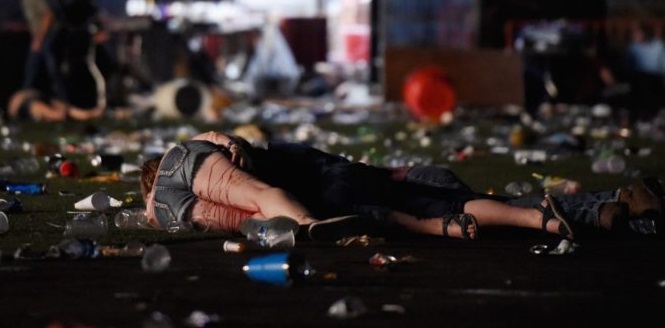
The Las Vegas Metropolitan Police Department this week fired Officer Cordell Hendrex for “freezing” (it’s all on video) as a deranged sniper fired hundreds of rounds into a crowd of county music fans below the Mandalay Bay hotel in Las Vegas in 2017. “I’m inside the Mandalay Bay on the 31st floor,” Hendrex said into his radio as he hid behind a wall. “I can hear the automatic fire coming from one floor ahead, one floor above us.”
As Hendrex stayed there in terror (by his own testimony), the gunman continued to fire, eventually killing 58 people and wounding more than 800 in the deadliest mass shooting in modern American history. His lawyers are appealing the decision. His defense? He was scared, that’s all. It’s unreasonable for the public to expect police officers to rise to heroic standards and place their lives in jeopardy in a public safety crisis. The Las Vegas department’s training didn’t prepare Hendrex for storming the hotel room. He’s been a terrific cop, as long as he didn’t have to put his life on the line.
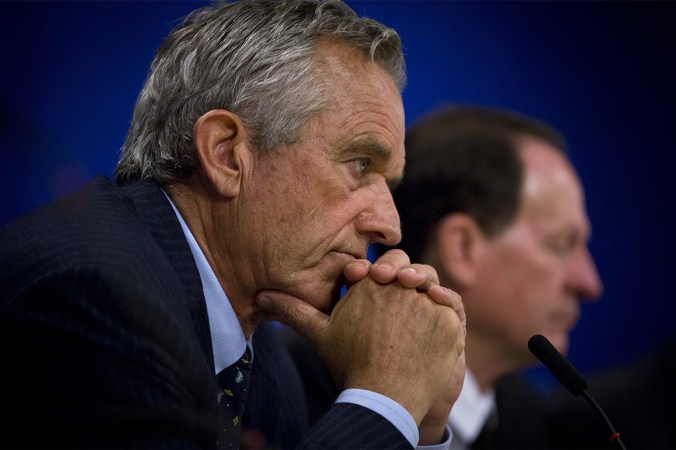
Three members of the fabled Kennedy Clan, that of Joseph P. and Rose, JFK, RFK and Ted, Caroline and the Late John-John, and all the rest, have publicly rebuked their vocal anti-vaxxer family member, Robert F. Kennedy Jr. in a statement signed by his siblings Kathleen Kennedy Townsend and Joseph P. Kennedy II, as well , Maeve Kennedy McKean, who is the executive director of Georgetown University’s Global Health Initiatives, and calls RFK jr, “Uncle Bob.”
Kathleen Kennedy Townsend is the former lieutenant governor of Maryland and the former chair of the Global Virus Network. [Full disclosure:she was also a resident in my undergrad House, Lowell House, while I was in college, and we knew each other a little bit] and Joseph P. Kennedy II, a former member of Congress from Massachusetts, is the chairman and president of Citizens Energy Corporation.
Beginning with an overview of the harm caused by Americans avoiding vaccines, including the current measles outbreak, the three write in Politico,
These tragic numbers are caused by the growing fear and mistrust of vaccines—amplified by internet doomsayers. Robert F. Kennedy Jr.—Joe and Kathleen’s brother and Maeve’s uncle—is part of this campaign to attack the institutions committed to reducing the tragedy of preventable infectious diseases. He has helped to spread dangerous misinformation over social media and is complicit in sowing distrust of the science behind vaccines.
We love Bobby. He is one of the great champions of the environment. His work to clean up the Hudson River and his tireless advocacy against multinational organizations who have polluted our waterways and endangered families has positively affected the lives of countless Americans. We stand behind him in his ongoing fight to protect our environment. However, on vaccines he is wrong.
And his and others’ work against vaccines is having heartbreaking consequences. The challenge for public health officials right now is that many people are more afraid of the vaccines than the diseases, because they’ve been lucky enough to have never seen the diseases and their devastating impact. But that’s not luck; it’s the result of concerted vaccination efforts over many years. We don’t need measles outbreaks to remind us of the value of vaccination.
It is impossible to overstate what a stunning departure this joint essay (titled “RFK Jr. Is Our Brother and Uncle. He’s Tragically Wrong About Vaccines”) is from the traditions and practices of the Kennedy Family. It, they, all of them, have guarded the Kennedy name and legacy like Cerberus at the gates of Hell. They have intimidated historians, artists, government officials, prosecutors and others from actions and revelations that would expose the ugly (ugly, oh-so ugly) side of many of the family’s most celebrated members.
I directed the first professional production of a drama about the Cuban Missile Crisis that avoided or debunked the various myths carefully embedded in the official narrative to make President Kennedy the hero of the event, when he most definitely was not. The play had been blocked by the Kennedys twice. Continue reading →
The speedy Maximum Security, the only undefeated horse in the field, appeared to win the 145th Kentucky Derby at rain-soaked Churchill Downs to keep his streak intact, but an objection lodged by what appeared to be the second- and third-place finishers (Country House at 65-1 and Code of Honor at 14-1) led to his disqualification. After a tense objection period that lasted several minutes, after the apparent winning connections had already been interviewed on live television, the stewards made the nearly impossible decision to disqualify Maximum Security.
During the long waiting period, NBC sports commentators and other noted that in a normal race, and not the most famous and prestigious horse race in the sport, the winner would be disqualified over such a clear foul. But, they cautioned, no Deby winner in the hisrory of the race had ever lost after a foul claim, and—I thought this was ominous–the stewards knew it was important that the “best horse wins.” Maximum Security was by consensus the best horse in the field, but rules are rules.
Feeling blue today, so I had to start off with the great Charles Trenet magic ballad.
1. “I’m smart! I’m not dumb like everybody says!” Yesterday I hypothesized that Southern Poverty Law Center founder Morris Dees was fired because of sexual harassment allegations. Apparently I was right.
2. Another hypothesis! I think I may know why the unhinged media and MAGA-haters went so over-the-top bonkers over Nick Sandmann’s supposedly sinister smile when the Native American jerk was banging a drum in his face. We’ve been streaming 2018’s “The Assassination of Gianni Versace” on Netflix, and it is amazing how much Darren Criss, playing serial killer and sociopath Andrew Cunanan, resembles Sandmann in that unfortunate photo. I suspect that Martinez’s disturbing performance as a gay predator was sill percolating in the minds of some observers, and Sandmann’s “smirk” stirred extreme revulsion that wasn’t entirely his doing.
Look:
3. “Never apologize; It’s a sign of weakness.” Capt. Nathan Brittles’ (John Wayne) rebuke of a young cavalry officer (Harry Caray Jr.) in “She Wore A Yellow Ribbon” is sometimes right, especially recently, when cowardly public figures apologize when they have done nothing wrong.
Yesterday, a group of students at an NYU vigil dedicated to the 49 people were murdered in two mosques in central Christchurch, New Zealand confronted Chelsea Clinton, accusing her of sparking the massacre by condemning the anti-Semitism of Democratic Minnesota Rep. Ilhan Omar. “The 49 people died because of the rhetoric you put out there!” one student told her. If Chelsea had any integrity at all—and to be fair, given her parents, how could she?—she would have told all of the students that blaming a massacre in New Zealand on legitimate criticism of a Jew-bashing Muslim demagogue in the U.S. was moronic, and she should have queried the students about whether they got into college because someone had taken their tests for them, since they lacked the critical thinking skills to run a bait shop. But no…lacking integrity and courage, the former First Daughter grovelled to the mob, because that’s what good progressives are supposed to do in 2019, saying, “I’m so sorry that you feel that way. It was certainly never my intention. I do believe words matter. I believe we have to show solidarity.”
Then there’s the latest entrant into the Democratic Presidential race, Beto O’Roarke, who yesterday apologized for for joking at several events in his first two days campaigning in Iowa that his wife has been raising their three children “sometimes with my help.” After grovelling for that, he apologized for fiction he wrote when he was a teenager, using the pen-name Psychedelic Warlord, about murder written from the murderer’s point of view. He said he was “mortified to read it now, incredibly embarrassed… whatever my intention was as a teenager doesn’t matter.”
No. I want him to apologize to the teenager, the boy he once was. Apologize for saying he doesn’t matter. Apologize for being embarrassed for him. Who the hell are you to be embarrassed for him? You are erasing him. You are misappropriating him. What about the teenagers today who hear you and resolve never to write fiction lest it trip up some aggressively ambitious person they may grow into some day?
4. Meanwhile, another Hader Gotcha! finally fails. Right wing activists Jack Posobiec and Mike Cernovich got James Gunn fired by Disney as the writer-director of Guardians of the Galaxy 3, after he unearthed old tweets in which Gunn made tasteless and politically incorrect jokes. Hundreds of thousands of people signed a Change.org petition asking Disney to reconsider. Of course, Gunn also grovelled sufficiently, saying that his tweets were “stupid, not at all funny, wildly insensitive and certainly not provocative like I had hoped.”
Cernovich and Posobiec maliciously set out to hurt Gunn after he had criticized President Trump on social media. Now Cernovich has demanded that Media Matters boycott Disney , telling TheWrap, “Disney’s rehiring of James Gunn presents an excellent opportunity for Angelo Carusone and Media Matters to show they are principled fighters for social justice. I eagerly await joining Media Matters’ boycott of ‘Guardians of the Galaxy 3.” This is all to prove that Media Matters is biased and hypocritical (like Cernovich), because it has called for a boycott of Fox News pundit Tucker Carlson based on his comments during an old interview with Bubba the Love Sponge.
Ethics note: Kant correctly declared that using human beings as a means to an end is unethical. But no one involved in this episode gave a thought to ethics at all, much less Emanuel Kant.
4. This is why nobody should read Vox. From Ezra Klein’s website:
President Donald Trump just used similar language to describe immigrants coming into the United States that the alleged mass shooter did to justify killing nearly 50 Muslims in Christchurch, New Zealand. On Friday, Trump issued the first veto of his presidency to override a congressional blockade of the national emergency he declared at America’s southern border. During the veto signing ceremony, Trump explained why he felt a national emergency was warranted to stop migrants from entering the US. “People hate the word ‘invasion,’ but that’s what it is,” he said, according to the White House pool report. That is chillingly similar to the language the main suspect in Friday’s Christchurch terrorist attack used to explain why he chose to gun down at least 49 Muslims.
The President has never called immigrants “invaders.” He has called illegal immigrants, who fit the definition of invaders, what they are. The victims of the two Mosque shootings were not illegal immigrants.
The President never uses the term “migrants,” which is another deceitful language tactic to blur the material differences between legal and illegal He does not want to “stop migrants” from entering the U.S. He wants to stop terrorists from entering the U.S., and he wants to stop illegal immigrants.
“Using the same language” as someone who does vile things is a desperately unethical accusation and contrived offense, unless the contexts are identical, the words used mean the same thing, and the intentions are the same. Here, they were not—not even close.
5. Rejecting democracy. Oh, let’s have Stacey Abrams run for President too! She fits. Like her increasingly anti-democratic and ironically named party, she wants to undermine public trust in elections. This week the defeated Georgia Democratic gubernatorial candidate again claimed that she won her November election against Republican Brian Kemp, though the vote tallies say otherwise. “I did win my election. I just didn’t get to have the job.”
She has no proof of this, of course; just the continuing Democratic Party’s corrosive Big Lie that the system is rigged against female and minority candidates. Hillary Clinton started this partisan trend of refusing to accept defeat with grace and magnanimity, as the system requires to remain viable, unless you want to count Al Gore. Now Abrams says that she will never concede that she lost. Naturally, Hillary, the worst loser in U.S. Presidential history, backs her up. (Clinton, you might recall, excoriated Donald Trump for trolling that he might not accept the election results as legitimate…when she assumed she would win.) Clinton said during her speech on the anniversary of “Bloody Sunday” march,
“We know, don’t we, that candidates both black and white lost their races because they had been deprived of the votes they otherwise would have gotten. And the clearest example is from Georgia. Stacey Abrams should be governor, leading that state right now.”
We just know! Just like Democrats just know President Trump has done something impeachable, and just knew Justice Kavanaugh was a rapist, and just know all sorts of things so intensely that evidence and due process aren’t required.
While the Alamo was under siege, the provisional Texas government organized at Washington-on-the-Brazos. On March 2, the convention declared independence and the Republic of Texas was born, at least on paper. The Alamo’s garrison showed its support for independence from Mexico by sending its own delegates to the convention.While they were unaware that Texas had declared independence, the roughly 200 Alamo defenders stayed at their post waiting on help from the settlements. Among them were lawyers, doctors, farmers and a former congressman and famous frontiersman from Tennessee named David Crockett. While the youngest was 16 and the oldest defender was Gordon C. Jennings, age 56, most defenders were in their twenties. Most were Anglo, but there were a handful of native Tejano defenders as well. Legendary knife fighter and land speculator James Bowie was in command before falling ill and sharing duties with Travis. Several women and children were inside the Alamo, including 15-month-old Angelina Dickinson. Just before the final battle, Travis placed his ring around her neck, knowing she would likely be spared. One of the last messages from the Alamo was a note from Travis asking friends to take care of his young son Charles.
The final attack came before dawn on March 6, 1836. As Mexican troops charged toward the Alamo in the pre-dawn darkness, defenders rushed to the walls and fired into the darkness. Travis raced to the north wall but was soon killed. Bowie was most likely killed in his bed, while reports differ as to Crockett’s death. Many believe Crockett survived the initial attack but was put to death by Mexican soldiers soon afterward.
Mexican soldiers breached the north wall and flooded into the compound. The fierce battle centered on the old church, where defenders made a last stand.
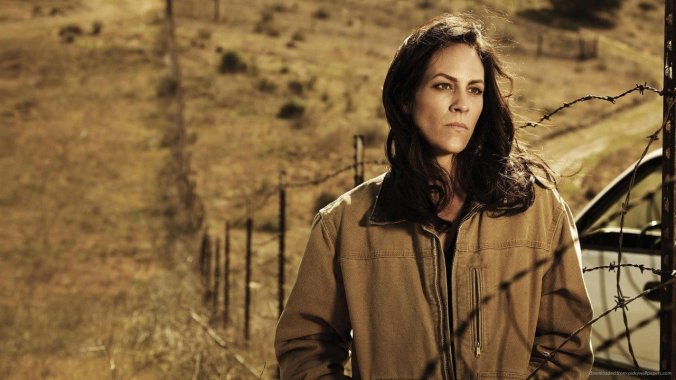
I was watching the (scary, excellent) Netflix series “The Haunting of Hill House,” and it took four episodes to notice that the housekeeper was played by Annabeth Gish. She was not considered stellar enough to include in the opening credits, and her name slipped by quickly at the end. But it was good to see her name.
Annabeth Gish! She’s nearing 50 now, but back in 1988 she was a stunning teenager being groomed for can’t miss stardom. The Hollywood PR machine worked diligently to present her as can’t miss Hollywood royalty, the descendants of silent movie legends Dorothy and Lillian Gish, the latter actress being both alive and actively singing Annabeth’s praises. (In truth, they were unrelated, two random Gishes in the wind.) Annabeth was awarded top billing in a major studio coming-of-age comedy, “Mystic Pizza.” The movie was a critical and box office hit, too, but Gish’s career promise was slammed in the face by a two-by-four named Julia Roberts, who had the “it” factor in such abundance that Gish, despite a more prominent role and a competent performance, seemed palid and outmatched by comparison. She never got a starring role in a major film again, because, as was immediately apparent, Annabeth Gish wasn’t a star. She was just a smart, attractive, hard-working young actress, and that was all she would ever be until she became a a smart, attractive, hard-working middle-aged actress.
Most of us have to face the reality that our greatest aspirations and potential not only won’t be realized, but that we will never approach them. When that awful moment of enlightenment arrives, the ethical response is to just keep charging ahead, trying to get better, work harder, be a good co-worker, colleague, neighbor, friend, parent, spouse, family member, whatever it takes. That moment is disappointing, sure, but it need not be devastating, nor should it be seen as a brand of failure. We succeed in life, and become ethical human beings, not by becoming the best, most powerful, most famous, but by doing the best we can do. What levels of success others achieve is not our standard, except to recognize a fellow Earth occupant’s good work.
Annabeth Gish, like Moonlight Graham says in “Field of Dreams,” came “this close” to her dream and then watched it brush past her “like a stranger in a crowd.” I know what it feels like; you probably do too. I’ve had the proverbial brass ring this close to my grasp, only to have the Merry-Go-Round sweep past, and to see someone else take the prize. That’s just life—my father’s favorite expression. You win by going on, not looking back, not being poisoned by regret. self-recriminations or fury at the universe.
Annabelle Gish has won. She has almost hundred TV and movie credits, and is still a working actress: A new film, “The Rum of the World,” is in pre-production. She’s been happily married for 15 years—no easy accomplishment in her field—and has two sons. She does charity work, and can look at her life so far as being positive and productive, even if she isn’t among the elite of her profession, or any profession. If we are lucky, and learn the right lessons from life’s mistakes, traps and bad jokes, most of us are Annabeth Gish. You’re Annabeth Gish. I’m Annabeth Gish. Annabeth Gish is Annabeth Gish.
I think the fairest way to assess the career of John McCain is that he tried to do the right thing, and like most essentially good human beings, was sometimes misled and confused by emotion, bias, self-interest and careless ethical analysis. Senator McCain was an adherent of the common belief that if you know you are essentially good, your gut will guide you through ethical challenges. That belief is erroneous, unfortunately—ethics is harder than that—and sometimes steered McCain tragically wrong. Nonetheless, I have little doubt that if all elected officials had the approach to ethics that John McCain did and possessed the values that guided him, our politics would be cleaner and more trustworthy, and our nation and our culture would be better. Not perfect, for McCain was not perfect. But definitely better.
The reason this is true is that McCain refused to be locked into ideologies and partisan cant. When he thought his party or its leadership was wrong, he was unusually willing to say so, and to act on his words. This garnered him the over-used label of “maverick,” which trivialized a personal ethical code: Don’t do what everyone else—your friends, allies and followers–is telling you to do just because it’s the easier choice. If there was ever someone who rejected the #1 Rationalization, “Everybody does it,” and all of its variations, it was John McCain. That alone made him more ethical than the vast majority of his fellow citizens, and especially his fellow politicians.
I wish I could designate McCain an Ethics Hero Emeritus, but I can’t. He was certainly a hero in wartime, as a prisoner of war who endured great suffering without succumbing to the temptation to ease his own pain by inflicting more on his comrades in arms. His ethical compass failed, however, in many high-profile situations and events.
He blundered into the Keating Five scandal. He convinced himself that betraying the principles of the First Amendment was necessary to limit corruption in political campaigns, an embrace of “the ends justify the means” that despite being foiled by the U.S. Supreme Court, has undermined public support and understanding of the Bill of Rights. Seeking the GOP Presidential nomination in 2000, McCain refused to condemn South Carolina’s official use of the Confederate flag during the state’s crucial primary, then, after he lost, pandered to the left and moderates by announcing that he had been wrong—a sickening example of flip-flopping for a public figure whose trademark was integrity. (The episode marked the end of my illusions about John McCain.) He behaved similarly when his re-election campaigns in Arizona looked daunting, rejecting his own compromise proposals on illegal immigration and taking the same hard-line that his conservative opponents had taken against him. This was pure political expediency, hardly unusual in a politician, but disqualifying for membership in the Ethics Alarms Hall of Heroes. Continue reading →


 Ethics Alarms