Of Presidents Day, Atticus, a Congressman’s Dilemma and Serial Moms

Short Alarms:

  • With increasing numbers of young Americans knowing embarrassingly little about our nation’s past, the wrong-headedness of President’s Day rankles worse than ever. Rather then designate the February birthdays of our two greatest presidents—Washington, the “indispensable man” who made the United States a reality, and Lincoln, the brilliant leader/philosopher who kept it from tearing apart—as yearly commemorations of their remarkable lives and our debt to them, Congress lumped them into a generic “Presidents Day,” thereby demonstrating that it deemed a three-day weekend and consumer merchandise sales more important than our heritage. Worst of all for ethics fans, George, who “wouldn’t tell a lie,” and Honest Abe are the only U.S. Presidents remembered for their truthfulness. Yet here they are, forced to share their “day” with the likes of Woodrow Wilson, Harding, J.F.K, L.B.J., Tricky Dick and Bill Clinton. The right thing to do would be to go back to celebrating February 12 and 22. Washington and Lincoln deserve it, and so do the values they stood for.
  • Speaking of ethics icons, one of my wife’s favorites,”To Kill A Mockingbird’s” Atticus Finch, has been under attack in some quarters for being passively acquiescent in the Jim Crow morality that convicts his black client despite overwhelming evidence that he is innocent. Continue reading
The Seattle Beating Tape: “Just Following Orders”

I know the Nuremberg defense when I hear it, and this is the Nuremberg defense.

The release of a January security video from a Seattle transit station has triggered a public uproar, and no wonder: it shows a group of girls brutally beating a young woman, including kicks to her head, as three security guards stand by, watching, doing nothing. Well, not exactly nothing: they did call for help.

Gee, thanks, guys. Would you tell them to bring some aspirin, an ice pack and a stretcher while you’re at it?

Seattle officials say that the guards appear to have done their job properly. The training manual the guards follow says “Never become involved in enforcement actions.” Continue reading

Ethics Trainwreck in Kermit, Texas

In the tiny west Texas town of Kermit, just north of Mexico, an ethics train wreck is underway that may have long-term consequences far beyond the Lone Star State.

Anne Mitchell, a nurse with an impeccable record, became disturbed at the conduct of a physician at the Winkler County hospital where she worked. After unsuccessfully attempting to get hospital administrators to deal with what she believed was a matter of patient endangerment, she sent an anonymous complaint to the Texas Medical Board. This was a classic whistle-blower situation, protected by law and encouraged by the ethics code governing nurses. Unless she trumped up her accusations for a personal vendetta, she did exactly what the medical profession says she has an obligation to do, a responsible act of medical system self-policing that all too few nurses are willing to follow. Continue reading

After the Tebow Ad

The Super Bowl ad featuring Tim Tebow and his mother that caused so much angst and controversy before it aired turned out to be mild, understated and forgettable. Now we know why CBS felt it could use the spot to move away from its long-time ban on issue advertising during the NFL’s big game. We also know that the actual ad made the argument by abortion rights groups that the ad would be inappropriately “divisive” for an American sports ritual designed to bring us together seem even more ridiculous than it was—no mean trick.

In the ad, Quarterback Tebow and his mother never did tell the story of his birth after Pam Tebow had been counseled to terminate her pregnancy. You had to go to a website to read about it. Indeed, had the various advocacy groups that opposed the ad just kept their collective rage to themselves, few viewers would know about the pro-life aspects of the Tebow story. All of the ad’s work was done before it ran, thank to the pre-Super Bowl sputtering of NARAL, NOW, and their colleagues. Continue reading

The Ethics of Workplace Personality Tests

If you have been in the workforce for any length of time at all, the chances are that you have taken one or more tests designed to determine your “personality type.” These tests, the most common of which is the Myers-Briggs, typically ask you to choose among various tasks, occupations, reactions to various situations and self-identified character traits, and then apply those choices to a formula that yields a particular workplace personality type. Myer-Briggs, for example, has sixteen categories; all of them are described in positive terms.

Thus test-takers whose answer reveal themselves as “ENTJ” personalities are…

Frank, decisive, assume leadership readily. Quickly see illogical and inefficient procedures and policies, develop and implement comprehensive systems to solve organizational problems. Enjoy long-term planning and goal setting. Usually well-informed, well read, enjoy expanding their knowledge and passing it on to others. Forceful in presenting their ideas.

The tests are often administered by the Human Resources staff, and are common features of retreats and team-building exercises, with everyone sharing their test results. More often than not, employees enjoy the tests, which are a little like finding your sign in astrology. They can be traps, however. Continue reading

Wanted: Ethical Teaching Aide to Stop Abu Ghraib, Jr.

Yesterday, I wrote about the disturbing incident at an Ohio elementary school, where a sixth grader was systematically mortified and subjected to ridicule because of the length of his hair. That was bad; this is worse.

A teacher at a New York City public school, P.S. 65 in the Ozone Park neighborhood, turned his fourth-grade classroom into a fighting ring and forced two children to duke it out. Continue reading

What Rudyard Kipling Taught My Father

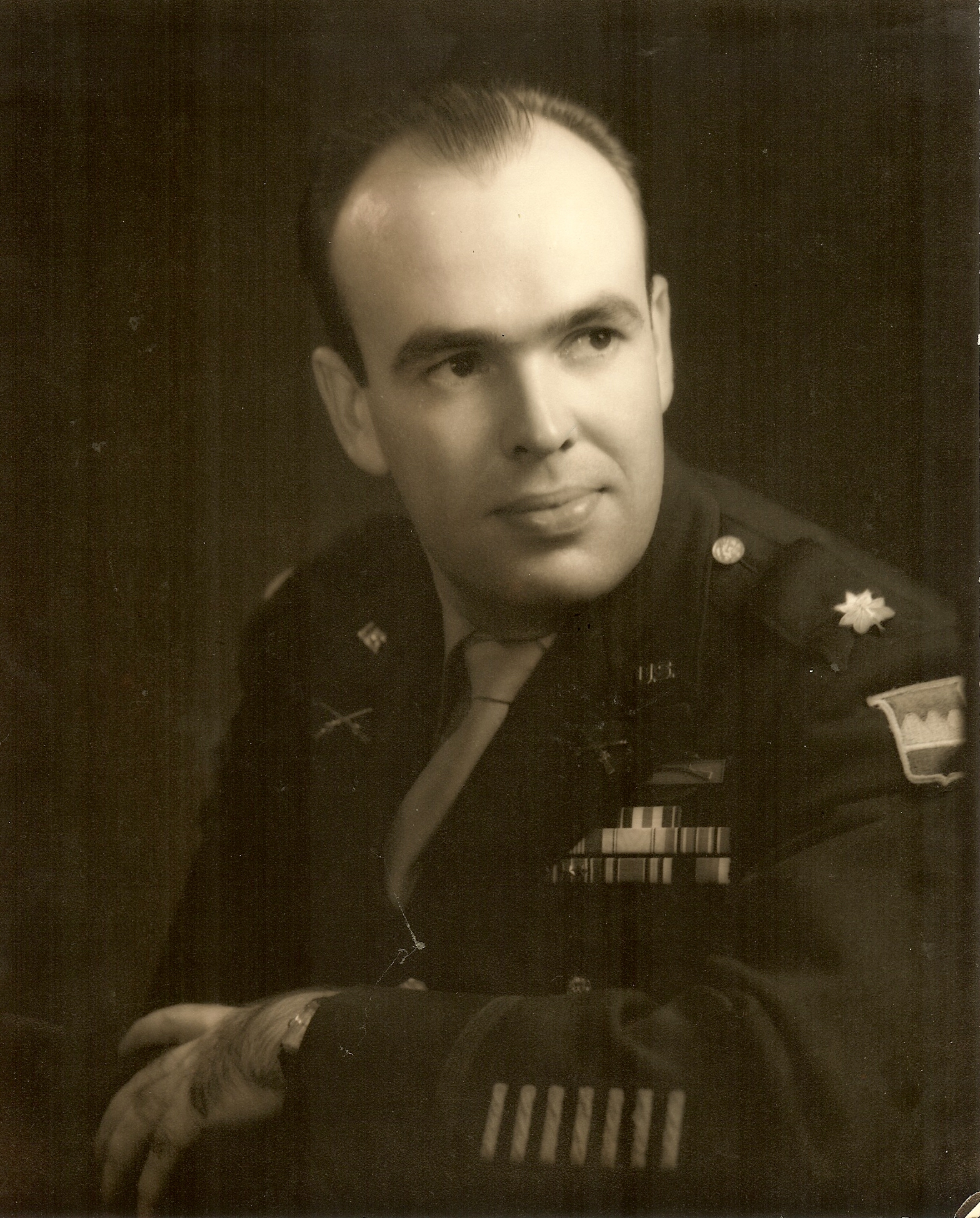
Jack Marshall Sr Army portrait

Today the Army buried my father, Major Jack Marshall, Sr., with full military honors. He had earned them, for he was a hero in World War II. Let me correct that: every soldier who serves in battle is a hero, but my Dad had a few special distinctions, like a Silver Star and a Bronze Star to go with his Purple Heart.  He  sustained a crippling wound to his foot from a hand-grenade, healed enough to jam what was left of it into a boot, and went on to fight in the Battle of the Bulge.

Under the clearest of blue skies, with the cemetery covered in snow, a caisson drawn by black horses, one without a rider, carried my father to a gravesite ceremony where the American flag draping his casket was carefully folded by six soldiers and given to my mother, following a 21-gun salute. My father was a hero off the battlefield as well, a profoundly ethical and courageous man throughout his life, and how he got that way is worth examining. Continue reading

Dr. Tiller’s Executioner: Martyr, Monster or Ethical Murderer?

Scott Roeder was guilty of first degree murder by any legal definition. He decided that Dr. George R. Tiller had to die. He bought a gun and practiced shooting it. He studied his target, learned his habits, knew where he lived and where he went to church. It was inside that church where he finally killed Dr. Tiller after a full year of planning, shooting him in the forehead last May 31. He admitted all of this to the jury, and said he was not sorry. Short of jury nullification, a “not guilty” verdict was impossible, and there was no nullification. Roeder broke the law and was found guilty. He will probably be sentenced to life imprisonment.

I have no objections to this result. Society cannot have citizens performing executions or carrying out their own brand of vigilante justice. Scott Roeder, however, while not denying that he performed an illegal act, maintains that his act was an ethical one.

He has a point. Continue reading

Obama’s Preference: Ethically Correct, Historically Impossible

“I’d rather be a really good one-term president than a mediocre two-term president,” President Obama told Diane Sawyer. That is the right attitude, unquestionably. It correctly places responsibility over popularity, accountability over expediency, courage and conviction over cowardice, and generally endorses ethics and duty over unethical considerations.

The statement is admirable, but interestingly, almost completely unrealistic. For historically it has proven virtually impossible for a one-term President to be good, or even successful. Continue reading

The Rutgers Sorority Hazing

Here are three brief ethics observations on a horrible story that mostly speaks for itself.

Police arrested members of a Rutgers sorority after a pledge reported being beaten by paddles over a period of seven days, causing her blood clods, welts, bruises and excruciating pain. The young woman said that the six members of  the Rutgers chapter of Sigma Gamma Rho told her that the beatings were not hazing, which is banned on the Rutgers campus, but rather an experience that would “humble” her, and build love and trust between her and her sorority sisters. Police say that there were at least six other women who were similarly “humbled.” Continue reading