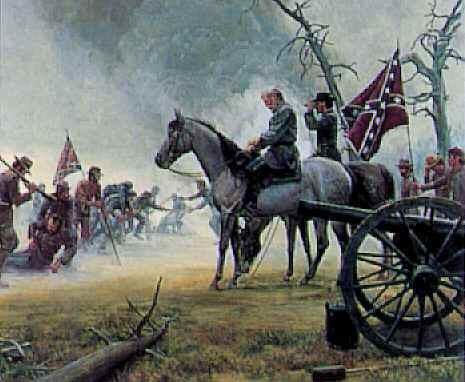
"It is all my fault."
After the catastrophic miscalculation of Pickett’s Charge led to the slaughter of his soldiers and the loss of the pivotal Battle of Gettysburg, Confederate General Robert E. Lee met the bloody survivors returning from the field of fire, telling them, one by one, “It is all my fault!” To Pickett, whose division was all but wiped out, he said, “Upon my shoulders rests the blame.”
I am no admirer of Robert E. Lee, but this was his finest moment as a leader, and an example for all leaders who are followed in faith and meet disappointment or worse. I wrote two days ago that Harold Camping, the evangelical broadcaster who proclaimed with absolute, 100% certainty that his calculations foretelling the end of the world on May 21 were correct, had better be prepared to be held accountable when we were all still here on May 22. He wasn’t. From Reuters:
” With no sign of Judgment Day arriving as he had forecast, the 89-year-old California evangelical broadcaster and former civil engineer behind the pronouncement seemed to have gone silent on Saturday. Family Radio, the Christian stations network headed by Harold Camping which had spread his message of an approaching doomsday, was playing recorded church music, devotionals and life advice unrelated to the apocalypse.” Continue reading

 Ethics Alarms