Quote of the Day: Theodore Roosevelt

On this date in 1910, former President Theodore Roosevelt made his famous “Man in the Arena” speech, one of the most inspiring calls to courage and personal character ever spoken. Its most quoted passage is this:

“It is not the critic who counts; not the man who points out how the strong man stumbles, or where the doer of deeds could have done them better. The credit belongs to the man who is actually in the arena, whose face is marred by dust and sweat and blood; who strives valiantly; who errs, who comes short again and again, because there is no effort without error and shortcoming; but who does actually strive to do the deeds; who knows great enthusiasms, the great devotions; who spends himself in a worthy cause; who at the best knows in the end the triumph of high achievement, and who at the worst, if he fails, at least fails while daring greatly, so that his place shall never be with those cold and timid souls who neither know victory nor defeat.

It’s an important quote, and not only because it carries the essence of a great man and leader. Teddy’s words should be revisited regularly by all those, including me, who stand on the sidelines passing judgment on the words and deeds of men and women who devote themselves to public service and elected office. It is not that we should not hold them to high standards and subject them to just criticism, for we should. We must always remember, however, that they have had the courage to undertake great responsibility and personal risk to accomplish what they believe is right, and though they may be misguided, mistaken, flawed or unsuccessful, they deserve our respect for that.

[Many thanks to my friend, Tom Vesper, a great trial lawyer and legal ethics specialist, for reminding me of the date and the speech.]
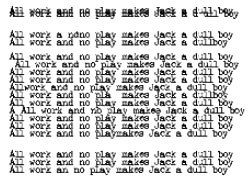
The Strange and Telling Case of the Illiterate Novelist

True, it was a lousy book, but at least the sentences were grammatical.

I have noticed of late a disturbing trend, the literary equivalent of those who play their car radios and sound systems at ear-splitting volume with the windows down, or youths who converse in shouts in public places. The trend is proliferation of the proud and unapologetic illiterates,  authors of e-mails, blog posts or even published material who regard the basics of punctuation, grammar, spelling and rhetoric as an annoying inconvenience, and who not only pay little heed to these archaic matters, but also display no regret about the barely readable products that result.

At this point, I am less concerned with why so many of those who communicate in writing are so shamelessly sloppy, and more interested in what the trend signifies for our society. Perhaps some insight can be gained by examining a recent exchange between a grammar and spelling-challenged novelist and a reviewer of her work on a book review blog called “Books and Pals.” Continue reading

Unethical Website of the Month: Eater.com

I would not have been able to resist giving the the Unethical Website title to Gizmodo [see previous post] unless there was a more typical candidate (as in “not criminal”) available. Thanks to a tip from Ethics Alarms quote-maven Tom Fuller, I give you Eater.com. It hasn’t stolen anything. It just sold out the interest of its own readers—lovers of fine foods and patrons of excellent restaurants—for a splashy feature destined to attract a flood of traffic, and to stick a knife in the backs of its competition. Continue reading

Why Professional Reviewers Are Unethical, and Why We’ll Be Better Off Without Them

When Variety recently announced that it was firing its in-house film and drama critics, there was much tut-tutting and garment-rending over the impending demise of professional reviewing in magazines, newspapers and TV stations. The villain, the renders cry, lies, as in The Case of the Slowly Dying Newspapers, with the web, which allows any pajama-clad viewer of bootleg videos to write film reviews, and any blogger who cares about theater to write a review of a play. “I think it’s unfortunate that qualified reviewers are being replaced,” said one movie industry pundit, “but that’s what’s happening.”

I say, “Good. It’s about time.” (And also: QUALIFIED?”) If there has ever been an excessively influential non-professional profession that caused as much damage as reviewing, I’m not sure I want to know about it. The end of full-time film and drama critics as we know them can only prove to be a boon for artists and audiences alike. Continue reading