The Washington Post, Protecting a Young Villain

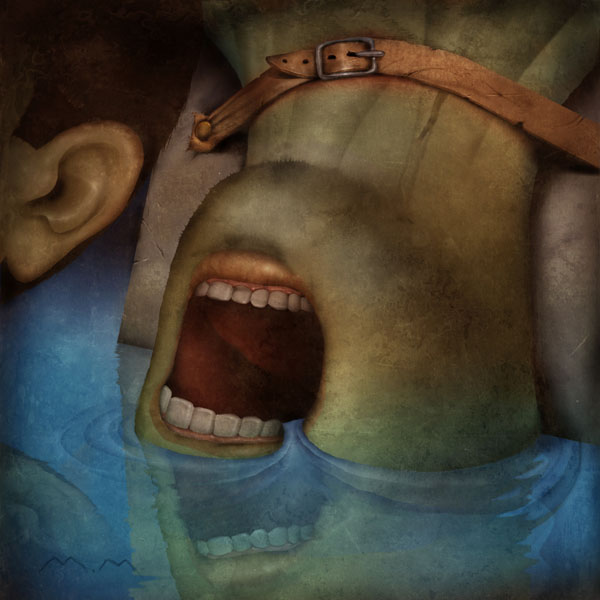
"Even if she is a "bad seed", we have a duty to make sure nobody knows little Rhoda did those horrible things..."

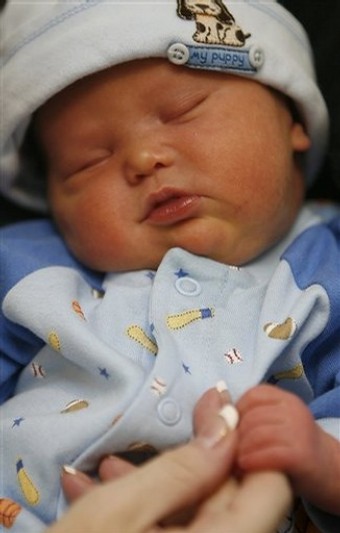
The Washington Post has revisited the epically tragic story of Fairfax, Virginia teacher Sean Lanigan, who in 2010 was falsely and maliciously accused of sexual molestation by a vengeful 12-year old girl, launching him into a Kafkaesque sequence of incompetent law enforcement and bureaucratic callousness. Though he was acquitted of all charges, his life, career, personal finances and reputation remain shattered. As for the female student at  Centre Ridge Elementary School who set out to destroy Lanigan because he had reprimanded her, the Post does not reveal her name “because she is a minor.”

This is warped ethics, warped journalism, and warped logic. Every day one can read news stories about named elementary, middle school and high school students who have been disciplined for various non-criminal offenses, minor or otherwise. In the case of criminal arrests involving minors, there is a legitimate legal reason for withholding the name of an accused juvenile, for youthful offenses are often expunged or sealed, provided there is a conviction and a sentence served. This story is different, however. No criminal charges have been made, though what the girl did to the teacher was certainly worthy of one. A jury ‘s verdict has shown, and the news media has confirmed, that a girl used the devastating social stigma of  child molestation to settle a personal vendetta. I don’t care if she is thirteen or twenty-two; there have to be consequences for such vicious conduct, and being identified by name is just a starting point for her accountability. Continue reading

The Giordano Decision, Sympathy and Malfunctioning Ethics Alarms

Sympathy and empathy are wonderful and admirable qualities, but they can mess up ethics alarms but good, causing them to ring out with gusto when perhaps they shouldn’t be set off at all.

This, I’m sorry to say, is what seems to be going on with the public and the media in the wake of a North Carolina judge denying Alaina Giordano primary custody of her two children,  in part because Giordano has Stage IV breast cancer, and in part because she is unemployed. Giordano is upset and nobody can blame her for that. She has also started a website exhorting readers to “Say NO! to CANCER discrimination!” There is a Facebook page (of course) rallying support for her, and it already has over 14,000 fans. An online petition to the governor called “Do Not Allow NC Judge To Take Alaina Giordano’s Children Just Because She Has Cancer ” has more than 75,000 signers.

Yet there is nothing inherently unethical, illogical or unfair about family law Judge Nancy E. Gordon awarding custody of 11-year-old Sofia and 5-year-old Bud to their father, who lives and works in Chicago, rather than to their mother, who lives in Durham, and has breast cancer that is most likely terminal. Continue reading

Death Photo Ethics

Even before Achilles dragged the corpse of Hector behind his chariot through the dust around the walled city of Troy, the tradition of demoralizing the enemy by degrading and displaying the bodies of its dead heroes was well-established. The United States was horrified when this was done to our fallen servicemen in Somalia, and it is one of the most barbaric and unnecessary practices of war.  While the Geneva Convention doesn’t mention the displaying of enemy corpses, a 2005 publication by the Red Cross called Customary International Humanitarian Law does. It was written to address issues that international treaties omitted, and its Rule 113 reads:

“Each party to the conflict must take all possible measures to prevent the dead from being despoiled. Mutilation of dead bodies is prohibited. Continue reading

The Conclusion to “Texas Cheerleading Ethics: Cheer Your Rapist” (And You’re Not Going To Like It)

"Give me an R! A! P! I! S! T!---RAPIST!!!"

Back in November, Ethics Alarms reported the awful story of the Silsbee, Texas High school cheerleader, identified only as “H.S.”,who was kicked off her cheerleading squad for violating “the Cheerleader Code of Ethics” after she refused to cheer at a game for the player who, it was later determined, had sexually assaulted her. She stood silent in mute protest, and when her parents sued the school, the Fifth U.S. Circuit Court of Appeals ruled that H.S.’s silent protest was not protected speech under the First Amendment, meaning that she could be disciplined for violating the cheerleading conduct code.

Now the Supreme Court has turned down the case, refusing to review it, meaning not only that H.S. loses, but also that her parents have to pay court costs and legal defenses to the tune of $45,000.

This is a perfect example of the distinction between the law, justice, and ethics. Continue reading

No, It Still Doesn’t Justify Torture

No.

The news of how Osama bin Laden was finally tracked down and killed has caused a predictable outbreak of consequentialism. It appears that Khalid Sheikh Mohammed provided some of the key intelligence that led to the successful operation in Pakistan while he was undergoing “enhanced interrogation” in CIA prisons in Rumania and Poland. “See?” Dick Cheney’s fans are saying today. “Rendition and torture work. We wouldn’t have killed Bin Laden without them. So what do you think of those tactics now?” The opponents of torture who foolishly argued against it based on pragmatic considerations—“Torture doesn’t work!”—rather than ethical ones–-“It is absolutely wrong!“—set themselves up for this.  Now what should they say? Continue reading

Unethical Website of the Month: Wonkette

That's right, Wonkette---GET HIM!!!

Wonkette the left-leaning political snark site, showed its true colors ( I flagged the site as ethically unbearable in a post six years ago, when it defended Dan Rather during “Memogate”) when it allowed editor Jack Steuf to post “satire” early this week  ridiculing Sarah Palin’s toddler son Trig, who is a Down Syndrome child. Entitled “Greatest Living American: A Children’s Treasury of Trig Crap On His Birthday,” the post contains sick-humor jokes about the 3-year-old ( After quoting from a Palin posted birthday poem for Trig referencing his dreams, Steuf snickers, “What’s he dreaming about? Nothing! He’s retarded!”) and proceeds to use the child as its target while demeaning Palin.  A sample:

“That strange man yelling unintelligibly at Sarah Palin? He’s merely a lowly shepherd proclaiming the birth of our savior. Today is the day we come together to celebrate the snowbilly grifter’s magical journey from Texas to Alaska to deliver to the America the great gentleman scholar Trig Palin. Is Palin his true mother? Or was Bristol? (And why is it that nobody questions who the father is? Because, either way, Todd definitely did it.) Continue reading

Unethical Quote of the Week: Actress Reese Witherspoon

Him: "AchOO!" Her: "You disgust me!"

“He had a very runny nose. It wasn’t appealing. It wasn’t pleasant.”

Actress Reese Witherspoon, describing to MTV in decidedly negative terms her sex scenes with “Twilight” hearthrob  Robert Pattinson in the soon-to-be-released film “Watter for Elephants.”

I’ve always liked Witherspoon, but it just doesn’t get much meaner and unprofessional than this.  Love scenes and sex scenes are potentially embarrassing for any actor or actress, and film and stage professionals recognize this and scrupulously apply the Golden Rule. If “kissing and telling” is bad, “fake sex and telling” is worse, not merely a breach of trust and confidence, not simply unfair and disrespectful, but a stunning  violation of professional standards. It is also irresponsible for an actress to attempt to shatter a film’s premise before it even opens.

I don’t know what Pattinson did or said during the shoot that provoked the actress to go out of her way to publicly embarrass him, but good luck to Witherspoon the next time she has to play a love scene with an actor. The ironic part is that Pattinson was being thoroughly professional by gamely sticking to the shooting schedule that required him to portray passion when he was suffering from a bad cold….and this is the thanks he gets.Wow.

Reese Witherspoon’s stock in trade has been playing spunky, nice girls. It seems she’s a better actress than we ever realized.

Consenting To Be Beaten

Bought and paid for.

Ethics Alarms has frequently used the analogy of a drunk paid by cruel bar patrons to dance for their entertainment as an example of how using money to persuade a desperate, impaired or foolish individual to allow himself to endure humiliation or harm is still unethical and cruel, despite the supposed “consent” of the victim. PETA’s attempt to pay Nadya Suleman, a.k.a. “Octomom” was recently cited in this context in the post about painting homes as billboards. Now, from St. Petersburg, Florida comes an even more horrible example. Shefights.net, a locally operated website that sells videos (for up to $900) of scantily clad or semi-nude women beating up men, has been paying homeless men, drug addicts and street alcoholics $50 for submitting to  12-minute videotaped beatings by attractive females. Continue reading

Silly Job Interview Ethics

What does a silly interview tell you about your prospective employer?

A website called Glassceiling.com has been collecting strange job interview questions, and Fortune has reprinted some of them, offering guidance to job interviewees who might panic when asked such questions as this one, apparently part of the Goldman Sachs interview process:

“If you were shrunk to the size of a pencil and put in a blender, how would you get out?”

The trick, say the experts, is not to lose your cool. Such questions are asked, the experts explain, not to elicit a correct answer, but rather to gauge an applicant’s poise, grace, reaction to stress, creativity and humor. Continue reading

Backtracking on Virtual World Ethics


Anything unethical about these guys?

I was wrong.

New technology challenges our ethics because we have no immediate frames of reference to rely on. The situations created by the use of new technology require us to reach back to things we are more familiar with for guidance, and we risk choosing comparisons that prove to be superficial and inaccurate over time. This is the trap I fell into when I first approached the question of whether a player’s misconduct —or rather his avatar’s misconduct—in virtual worlds like World of Warcraft and Second Life could be unethical. My frame of reference was video games, role-playing games like Dungeons and Dragons,  and games generally. If engaging in Second Life is analogous to playing a game, then vandalizing someone’s home in cyberspace is no different from invading another player’s country in Risk. If “Warcraft” is essentially similar to playing a video game, then “killing”  an avatar is no more unethical than mowing down enemy soldiers in Medal of Honor.

And if virtual games were fantasies, I reasoned, then declaring anything that took place in their boundaries unethical was tantamount to policing thought. Thoughts are not unethical;  actions are. Case closed, right? Continue reading