When Ethics Alarms Don’t Ring: A Coach With CTE Continues To Allow Young Players To Risk Brain Damage

…but he felt really guilty about it, so that’s OK.

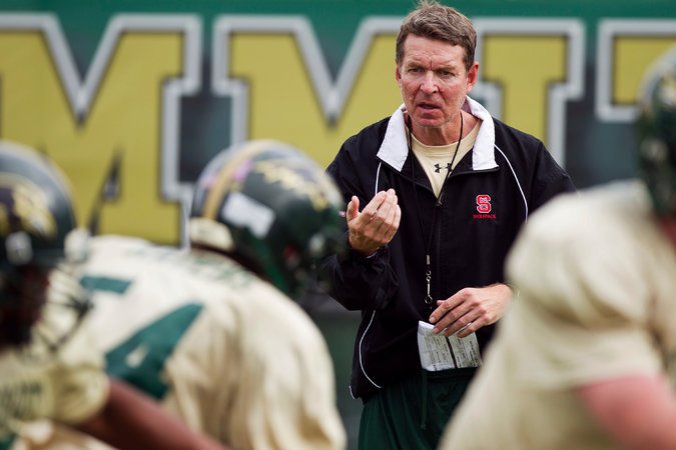
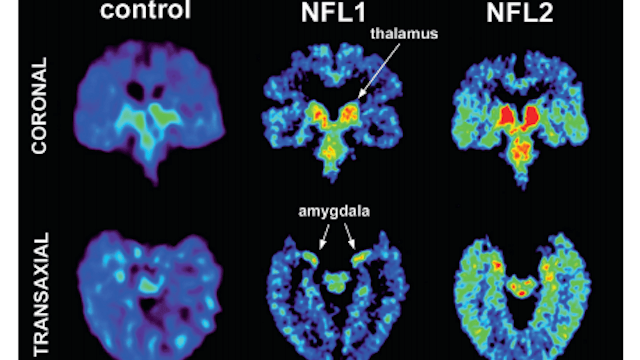
The New York Times had a very strange sports story yesterday. Its subject was the late Don Horton, a prominent assistant coach at Boston College and North Carolina State for nearly 20 years who was diagnosed with Parkinson’s disease but was also experiencing symptoms linked to chronic traumatic encephalopathy, or C.T.E., a degenerative brain disease caused by repeated hits to the head strongly linked to football. The sensitive reporter, Bill Pennington asks,

“Was his deteriorating health, Horton wondered, a consequence of his many years as a football lineman?” Even worse, he worried, was he responsible for exposing hundreds of players to the kind of head trauma now impairing his life? After all, as he had recruited and encouraged scores of athletes to play major college football….There was only one way to be sure if he had C.T.E. His brain would have to be examined post-mortem, the only way to confirm the disease since there is no reliable test for the living. At first Horton balked, but as his cognitive difficulties intensified, he relented and even insisted that the findings of his brain examination be made public.”

The Times article makes this sound like a noble and brave resolution of his crisis of conscience. It was not, however. Having his brain dissected after his death was no sacrifice at all; Horton would be dead, of course.  In the meantime, Horton, despite his symptoms and his wife’s investigation into them, continued sending young men out to get their brains beat in.

We learn,

In 2009, seven years before Horton died, [Horton’s wife] called Chris Nowinski, a co-founder and the chief executive of the Concussion Legacy Foundation, and told him that she thought her husband had C.T.E. She also raised her suspicions with Horton’s doctors, but they said that, even if true, it would not change the course of his treatment.

Horton continued his duties at North Carolina State.

“He never missed a day of work and still produced great offensive linemen,” said Jason Swepson, an assistant coach at North Carolina State at the time. “You could see him struggling sometimes, but he never opened up about it because, I think, he didn’t want to feel like he was letting the group down.”

At home, however, Horton’s illness was leading to a variety of changes, physically and philosophically. His daughters, Libby, 14, and Hadley, 9, had begun playing soccer, but Horton pointedly refused to allow them to head the ball in games or in practices, aware that some studies had linked heading to brain injury.

“Don told them, ‘If I ever see you head the ball, I’ll run onto the field and yank you off myself,’” Maura said.

Although Horton kept his misgivings about football’s potential consequences within his household, he talked about it regularly.

“Don would ask, ‘Are we just carrying this cycle on?’” Maura Horton said. “That was a question I couldn’t answer. But it’s definitely the right question to ask.”

It’s not just the right question to ask, it was a question with an obvious answer, and both Hortons knew it. YES he was just carrying the cycle on. YES, he was continuing to coach college players when he had first-hand, personal knowledge of the horrible fate in store for some or many of them as a result, and said nothing.Was he responsible for exposing hundreds of players to the kind of head trauma now impairing his life?” If he refused to let his daughters head the ball while playing soccer, we know he was responsible, and so did Coach Horton. Was he in denial? Was he willing to let his player risk crippling cognitive impairment because he wouldn’t and couldn’t give up the only job he knew? Why does the Times suggest that there was any question about his culpability or breach of duty?

Continue reading

Ethics Observations Upon Viewing “The People v. O.J. Simpson: American Crime Story”

oj-show

I never got to see all ten episodes of last year’s ambitious and star-studded mini-series about the O.J. Simpson trial before this weekend. Thanks to Netflix, I was able to watch them all in two nights. I watched most of the televised trial at the time, so the program brought back a lot of bad memories.

Overall the production was excellent, and some of the casting was creepily good, especially Sarah Paulson  as Marcia Clark, Sterling K. Brown as Chris Darden, Kenneth Choi  as Judge Ito, Courtney B. Vance in a magnificent portrayal of Johnnie Cochran, Rob Morrow as
Barry Scheck,  Robert Morse, unrecognizable as Dominick Dunne, and Joseph Siravo as Fred Goldman. Unfortunately, Cuba Gooding, Jr., an excellent actor, is so unlike O.J. that it kept reminding us that this was a TV show. Nathan Lane and David Shwimmer also were unable to disappear sufficiently into their roles as F. Lee Bailey and Robert Kardashian. I couldn’t help thinking of “The Bird Cage” and “Friends.”

The script was  remarkably even-handed, and for the most part, accurate. However, there were three legal ethics howlers that require some exposition, as well as some other matters that came to mind.

1. The Defense’s Secret Redecoration of O.J.’s home.

In the episode “The Race Card,”  Johnnie Cochran was shown redecorating  O.J. Simpson’s house before the jury came for a judge-approved viewing. Pictures of half-nude models were replaced by benign photos of Simpson’s mother and children, and Cochran scattered pieces of African art around the rooms, taken from his own collection.

Could the lawyers do this? Of course not! It’s a visual lie, and an attempt to mislead the jury. Ito ordered that the heroic statute of Simpson in his back yard be covered with a sheet to avoid biasing the jury in favor of the defendant. Had the prosecution team suspected that Cochran had pulled such a stunt, as the dramatization suggested, it would have alerted the judge, a mistrial would have been likely, and Cochran as well as every lawyer involved would have faced serious bar discipline.

The question is, did this really happen as portrayed? Defense attorney Carl Douglas said in a Dateline NBC’s special THE PEOPLE vs. OJ SIMPSON: What the Jury Never Heard that it did, and that he organized the redecoration. Douglas said the intention was to make the estate look “lived-in and stand with all of its regalness so that the jurors would say ‘O.J. Simpson would not have risked all of this for this woman.'”  Douglas said that “photos of Simpson with white women were swapped out for pictures of him with black people. A Norman Rockwell painting from Johnnie Cochran’s office and a bedside photo of Simpson’s mother were placed in prominent view.”

Douglas should be suspended from the practice of law at the very least for this confession of outrageous ethics misconduct. (Cochran, who is dead, is beyond punishment.) Clark, Darden and Ito also failed their duties to justice and the public by allowing such a deception to warp the jurors’ perceptions. Continue reading

Unethical Quote Of The Month: Jon Gruden

youth-football

“There are a lot of geniuses that are trying to damage the game, and ruin the game. Do you feel it? There are a lot of geniuses that want to eliminate all sports, including recess. Not on my watch, and clap your hands if you’re with me on that!”

   —-Jon Gruden, ESPN analyst and former NFL coach, speaking at last week’s annual U.S.A. Football convention, the three-day  meeting of  the national governing body for amateur football.

This will be my annual Super Bowl week post,  one of the “watch the game if you have to and enjoy your nachos, just understand that by doing so you are supporting a billion-dollar industry that pays young men to cripple themselves and that is covering up the real risks of brain damage as long as it can” essay that I have written here the last few years.

The New York Times reports that U.S.A. Football is experimenting with a radically altered  version of the game for kids that is designed to reduce head trauma:

Each team will have six to nine players on the field, instead of 11; the field will be far smaller; kickoffs and punts will be eliminated; and players will start each play in a crouching position instead of in a three-point stance…

“The issue is participation has dropped, and there’s concern among parents about when is the right age to start playing tackle, if at all…There are, legitimately, concerns among parents about allowing their kids to play tackle football at a young age,” [Mark Murphy, the president of the Green Bay Packers and a board member at U.S.A.] continued, “so they can look at this and say they’ll be more comfortable that it is a safer alternative.”

Later we are told that the new, supposedly safer version will only be tested in a few locales, and that it may be years before the new rules are widely instituted. And how many kids will sustain brain damage in the meantime, I wonder? From the Times piece…

Continue reading

Ethics And Sports: Maybe It’s Confirmation Bias, But The TV Ratings Give Me Hope

And these days, when the goal is a more ethical society, I’ll take hope anywhere I can find it.

The big story in the NFL right now is that for the first time ever, its TV ratings are dropping. Through the first seven weeks of the season, ratings were down for every prime-time NFL show: “Sunday Night Football” by 19 percent, “Monday Night Football” by 24 percent and the Thursday night game by 18 percent. For the season as whole, ratings are off in regional games too. The NFL is doing what it always does with bad news: obfuscating and lying. It has blamed the drop on the Presidential race, as if anyone wouldn’t do anything to escape that, and the generational abandonment of network TV and even cable for the internet. Various polling results, however, show that a big factor is the league’s increasingly obvious lack of values.

The concussion issue-–finally—is hurting interest in football, especially as parents try to steer their children toward less risky sports. A recent study that researchers took pains to insist was only troubling, not conclusive, found brain chemistry changes in children who had played one season of junior football. I don’t know about anyone else, but if there is any evidence that a sport might reduce my kid to a brain-damaged invalid by the time he’s 60, that’s plenty for me to limit his recreation choices. The public is also finally reacting to the NFL’s evident cover-up of its responsibility for ex-players who have perished as a consequence of CTE, a brain disease caused by repeated head trauma. I wish this was the main reason that fans are turning off pro-football games, but at least it’s a factor. Continue reading

The Warped Values Of NFL Fans

nfl-poll

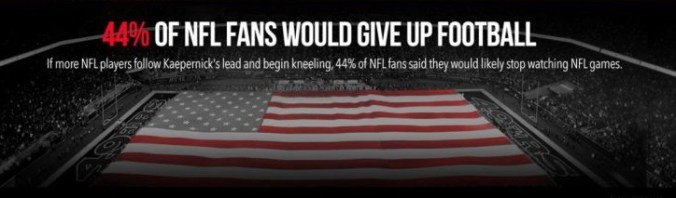
Yahoo Sports posted an infographic on polling results regardingthe ongoing national anthem protests following the example of  San Francisco 49ers quarterback Colin Kaepernick. Part of it shows that 44 percent of NFL fans would likely stop watching NFL games if more players protest the movement.

This suggests that 44% of NFL fans have more  ethical objections to a sport that panders to hypocritical, Black Lives Matter-supporting dim bulbs like Kaepernick than to the fact that the same sport pays young men to cripple themselves while raking in billions and denying that there is a “causal link” between the concussions it routinely inflicts on players and the debilitating brain disease that is being found in autopsies of more former NFL players than not.

This month a class-action lawsuit was filed against Pop Warner, the nation’s largest youth football league. It alleges that the organization knowingly put its young players in danger by ignoring the risks of head trauma. The complaint also accuses USA Football, the youth football arm of the N.F.L. that  creates football helmet safety standards, of failing to protect football-playing kids from the long-term consequences of repeated head hits, while ignoring medical research (as described in the documentary “League of Denial” and the film “Concussion”) that has raised serious concern about whether football is a safe sport, especially for children.

The suit was filed in federal court in California by Kimberly Archie and Jo Cornell, whose sons played football as youngsters and were found to have chronic traumatic encephalopathy or CTE, a neurological condition linked to repeated blows to the heads. In March, Pop Warner settled a lawsuit with a family whose son played Pop Warner football and later committed suicide. He was found to have CTE. Continue reading

Ethics Clean-Up: Carson’s Negligence, Cruz’s Creepiness, And One Last Super Bowl Complaint

3 thingsBefore I run off to see a movie that will occupy my time while so many of my friends and colleagues disgrace themselves supporting brain damage for profit (here is Sally Jenkins on the NFL’s disgusting imitation of tobacco executives), there are three topics related to recent posts that bear mentioning.

  1. Ted Cruz’s Creepiness

Many Ted Cruz supporters were dismayed that even while flagging the biased and unfair tactics being used by the news media to discredit the most reviled of the seven GOP presidential contenders, I sympathized with those who find the Texas senator creepy. They don’t seem to understand that defense from a non-Cruz supporting ethicist is infinitely more credible and useful to their cause than support from a mouth-foaming conservative pundit, but never mind: nobody understands me, and it’s comforting to be attacked from the right for a change. However, I am thoroughly sick of people who don’t know what an ad hominem attack is accusing me of engaging in it.I ahve never used Ted Cruz’s creepiness or any of his other personality flaws to attack Cruz’s positions or political views. Doing that is an ad hominem attack. In the context of viability as a Presidential candidate, Cruz’s appearance, manner, and vibes, including what many see as creepiness, are relevant to their fitness to run for President, because fitness includes electability.

Thus it is relevant that Jeb Bush comes off as a bumbling weenie; that Chris Christie is fat, that Ben Carson looks and sounds like he is on barbiturates, that Marco Rubio is short, and that Kasich is dorky. Do you think it’s a coincidence that most Presidents are taller than average, and almost never bald? Charisma is rare, even in Presidents, but having it is a huge advantage (See: Trump, Donald) and having the opposite of charisma—Nixon, Dole, Gore, Ted Cruz—is a serious handicap. I’m really sorry that your hero seems creepy, Cruz fans, but it’s a fact, and it matters. Don’t shoot the messenger.

By the way, you will notice that Chris Christie is working at losing weight. Ted???? Continue reading

Watching the Super Bowl Last Year Was Unethical. This Year It Is Indefensible.

superbowl-50

Next year, it will be close to criminal.

The American public can no longer plead ignorance when it comes to supporting, financing and enabling the cynical exercise in human carnage for cash that is known as professional football. Since the last Super Bowl was played, “Concussion” visited the movie theaters, putting in dramatic form the undeniable facts exposed in the documentary “League of Denial.” Both “Concussion’s” director and its star, Will Smith, have stated in interviews that they don’t think they can enjoy watching football any more.Reaching this conclusion should not require the experience of making a movie  about the facts of the deadly concussion epidemic that the NFL blithely promotes, nor months of bringing to life a script describing how players have been misled and lied to in order to keep them sacrificing their bodies, minds and future to the greedy maw of a billion dollar. It should only require logic, humanity, decency, and bit of sacrifice.

In just the last several days, the casualty list of NFL stars found to have damaged their brains has lengthened significantly.

Former Oakland Raiders star quarterback Ken Stabler’s brain was found to have chronic traumatic encephalopathy or CTE, the concussion-triggered brain disease. A day after that announcement, the late Colts star quarterback Earl Morrall’s brain was found to be similarly damaged.  Stories were published around the same time about former Minnesota Viking linebacker Fred McNeil, who died in November and was also suffering from CTE. He had become a lawyer after his playing days, but began losing his memory and ability to concentrate. He had violent mood swings, and by his mid 40s, had lost his career, his job, his family, and his home. Former NY Giants star and famous broadcaster Frank Gifford died last year: he had chronic traumatic encephalopathy too.

On September 8, former Giants safety Tyler Sash was found dead at age 27 of an accidental overdose of pain medications at his Iowa home.  The results of an autopsy announced at the end of January showed that Sash already had advanced CTE. So did the brain of a 25-year-old former college football player whose brain was discussed in a February article in “Neurology Today.” From the case study:

The case, reported in the January 4 online issue of JAMA Neurology, involved a young man whose cognitive, mood, and behavioral symptoms progressively worsened following a history of 10 concussions incurred while playing football from age 6 till his junior year in college.

The patient completed a neurocognitive battery of tests prior to his death (due to an unrelated cardiac infection) at age 25. Although those tests revealed multiple deficits, and his symptoms steadily worsened for three years after he stopped playing, a consensus panel of clinicians blinded to his pathology report was unable to reach a primary diagnosis of CTE.

“Although CTE was considered,” the report stated, “the lack of delay in symptom onset, his young age, and his family history of depression reasoned against CTE as the primary diagnosis. Consensus members thought that neuropsychological performance, while impaired, did not discriminate postconcussive syndrome or major depression from CTE.”

That pathology report, however, was conclusive for a diagnosis of CTE, based on mild ventricular dilation, hippocampal atrophy, and pathological lesions of hyperphosphorylated tau consisting of neurofibrillary tangles, neurites, and astrocytes around small blood vessels found at the sulcal depths of the frontal and temporal lobes.

It’s not just the NFL that is crippling young men. It’s college football too. Continue reading

Just in Time For The NFL Championship Games, Football Fans…

NFL brains

In his interview with the Pittsburgh Post-Gazette, former NFL star wide receiver Antwaan Randle El revealed that at the age of  36, he can barely walk down stairs, and his mind is failing:

“I ask my wife things over and over again, and she’s like, ‘I just told you that. I’ll ask her three times the night before and get up in the morning and forget. Stuff like that. I try to chalk it up as I’m busy, I’m doing a lot, but I have to be on my knees praying about it, asking God to allow me to not have these issues and live a long life. I want to see my kids raised up. I want to see my grandkids.”

The odds are against him. Resaerchers believe that a majority of NFL players suffer from chronic traumatic encephalopathy (CTE), a form of brain damage caused by repeated head trauma.  CTE was at the center of the film “Concussion,” as well as the documentary that inspired it, “League of Denial,} about the NFL’s efforts to deny and obscure that fact it was slowly killing its players….for entertainment. And money.

Randle El says of the game he now wishes he had never played:

“There’s no correcting it. There’s no helmet that’s going to correct it. There’s no teaching that’s going to correct it. It just comes down to it’s a physically violent game. Football players are in a car wreck every week.”

Immediately after this story aired on CNN this morning, the network cut to an upbeat, exited preview of this weekend’s AFC NFL  championship. It was chilling.

Has there ever been a greater irrational, irresponsible, ethics disconnect in our society?

Enjoy the games…