The Wrenching Problem Of David Ortiz, The Human Slippery Slope

papi_fame

Ethics conflicts force us to choose when multiple ethical principles and values point to diametrically opposed resolutions.  Often, a solution can be found where the unethical aspects of the resolution can be mitigated, but not this one. It is a tale of an ethics conflict without a satisfactory resolution.

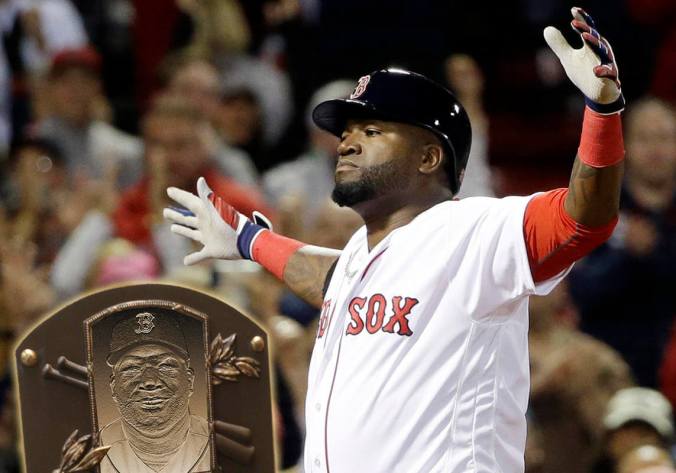
I didn’t want to write this post. I considered waiting five years to write it, when the issue will be unavoidable and a decision mandatory. Today, however, is the day on which all of Boston, New England, and most of baseball will be honoring Red Sox designated hitter David Ortiz, who will be playing his finale regular season game after a 20 years career.  His 2016 season is quite possibly the best year any professional baseball player has had as his final one; it is definitely the best season any batter has had at the age of 40 or more. Ortiz is an icon and a hero in Boston, for good reason. Ortiz was instrumental in breaking his team’s infamous 86-year long “curse” that saw it come close to winning the World Series again and again, only to fail in various dramatic or humiliating ways. He was a leader and an offensive centerpiece of three World Champion teams in 2004, 2007, and 2013. Most notably, his record as a clutch hitter, both in the regular season and the post season is unmatched. You can bring yourself up to speed on Ortiz’s career and his importance to the Red Sox, which means his importance to the city and its culture, for nowhere in America takes baseball as seriously as Beantown, here.

That’s only half the story for Ortiz. Much of his impact on the team, the town and the game has come from his remarkable personality, a unique mixture of intensity, charm, intelligence, generosity, pride and charisma. After the 2013 terrorist bombing of the Boston Marathon, which shook the city as much as any event since the Boston Massacre, Ortiz made himself the symbol of Boston’s anger and defiance with an emotional speech at Fenway Park. Then he put an exclamation point on his defiance by leading the Red Sox, a last place team the year before, to another World Series title.

Performance-based arguments against electing Ortiz to baseball’s Hall of Fame are, at this point, untenable. Entering his final game, Ortiz had 541 home runs, (17th all-time), 1,768 RBI, (22nd), and 632 doubles, (10th).  He is only the third player in history to have more than 500 home runs and 600 doubles.  He ranks among the greatest post season hitters in baseball history with 17 home runs, 60 RBI and 21 doubles. His postseason average is .295 with an on base percentage of .409, a slugging percentage of .553 and a .962 OPS (the sum of the two.) Most great players did worse in the post season than during the regular season, for the obvious reason: the competition was better. Ortiz was better, which informs regarding his character and dedication.

The one lingering argument against admitting Ortiz to the ranks of Ruth, Williams, Aaron, Mays, Cobb, Hornsby, Griffey and the rest is that he has spent most of his career as a designated hitter, the American League’s 1973 invention, much reviled by National League fans and baseball traditionalists, designed to allow real batters relive fans from watching pitchers make fools of themselves at the plate. This makes him “half a player,” the argument goes. No designated hitter has ever been elected to the Hall, so that argument has prevailed so far. It was always a weak one—how did being lousy fielders like so many Hall of Fame sluggers make them greater players than one who never hurt his team at all with his glove? Now that a designated hitter has shown himself to be in the elite ranks of all the greatest batters, the argument sounds more like hysterical anti-DH bias than ever.

I should also note, before getting to the main point of this post, that I love Ortiz. I am a lifetime Red Sox fan, Boston born, bred and marinated, and Big Papi is special. He is one of the most interesting and admirable sports figures of my lifetime, and what he has meant to my city and my favorite sport is beyond quantifying. Few great athletes demonstrate persuasively that they are also great and admirable human beings. Ortiz is one of them.

Nonetheless, it is crucial that David Ortiz not be elected to the Hall of Fame when he becomes eligible five years from now, and that he never be admitted. On the matter of assessing the fitness for baseball honors of those who defiled the game by inflating their statistics, changing the outcome of games and harming players who abided by the rules, David Ortiz is a human slippery slope. Ortiz deserves to be in the Hall based on all admission criteria, including character and sportsmanship, but his admission will open the doors wide for players who are unfit, polluting the Hall of Fame and baseball’s values forever.

It’s not worth the trade off. This is the ethics conflict: one cannot be fair and just to “Big Papi” without doing widespread harm to the sport, and I would argue, the entire culture. Continue reading

Why It’s Unethical For Journalists To “Fact Check” Donald Trump—Especially CNN Journalists

Donald Trump

In Donald Trump’s meaningless statement yesterday, which was covered by the news media as if it was the revelation of the millennium, he  officially conceded that Barack Obama is a natural born U.S. citizen. He also used the silly media attention to drag out his announcement into a long campaign infomercial for which he didn’t have to pay a cent. Nice, and it serves the broadcast media right for giving any significance to a five-year-long trolling exercise.

Trump used the phony controversy over President Obama’s birth certificate to get publicity five years ago, because he is shameless. That’s all. Did he really think Obama was born in Kenya? Oh, who knows? He is an idiot, after all. Then again, he is a skilled professional troll. Whether he believed it or not, Trump used the issue to get attention then, and now has used his 180 degree reversal to get attention now. Obviously nothing has changed that would justify this flip-flop if he believed what he insisted was true for five years. A more transparently cynical and insincere retraction I cannot conceive. Who cares what Trump says he believes at any point, about anything?

But I digress. What really seemed to enrage the journalists who have embraced Rationalizations #28. The Revolutionary’s Excuse: “These are not ordinary times,” and #31. The Troublesome Luxury: “Ethics is a luxury we can’t afford right now” to anoint themselves as full-time volunteer members of the Hillary for President campaign, was that Trump said this:

“Hillary Clinton and her campaign of 2008 started the birther controversy. I finished it.”

Quoth the thoroughly partisan news media,

“ARRGH!!!!:

Continue reading

“Flipping A Man’s Meat” Ethics

Is this what the culture has accomplished with its hard won respect for and acceptance of gay Americans? Really?

Neil Patrick Harris has done a series of quirky, benign spots  for Heineken Light, perhaps to lure us into a false sense of ease.  For in his most recent commercial,  Harris notes, as he stands next to a man grilling barbecue, that Heineken Light makes it OK “to flip another man’s meat.”

This is another in a long and growing list of TV ads based entirely on the assumption that adults think it’s hilarious to suggest obscene or vulgar innuendos. I’ve written about this phenomenon before, which is merely the normalization of crudeness in our discourse, nothing more, but nothing less either. So now we have gay sexual innuendo  by an openly gay actor to advertise beer. Isn’t that great? Boy, Heineken must be so proud.

The grill guy replies to the puckish—or flirtations?—former-Doogie that no man can do that, but late,  Harris asks him: “Can I flip your meat?”

Wow, that’s just hilarious! Why is it hilarious? Because it’s naughty? Because it’s daring? It’s certainly not clever, and if virtually defines the word “gratuitous.” It it a challenge to viewers, daring them to question the taste of joking about “flipping a man’s meat” when they routinely accept gross commercials with vulgar and gratuitous—you know, like this —heterosexual double entendres?  Is the assumption that gays will giggle, guffaw and slap each other on the back when they see this! “Good own, Neil!” Really? How insulting.

I can’t wait for the masturbation double-entendres in credit card and bank commercials. Continue reading

Doesn’t Islam Endorse Sportsmanship? Even In The Olympics?

At the Rio de Janeiro Olympics today, Egyptian Olympic judo fighter Islam El Shehaby refused to shake the hand of his Israeli opponent Or Sasson.

After Sasson defeated El Shehaby he put out his hand, which is customary in judo. Competitors are expected to either shake hands or bow at the beginning and end of matches. El Shehaby, however, insulted his opponent by rejecting the gesture and backing away, shaking his head. The referee called him to returnto the mat to bow, and he gave a perfunctory nod. Then he walked off.

Ah, that glorious Olympic spirit! Continue reading

The Olympic Games Are An Ethics Train Wreck, And Have Been For Quite A While

Olympic mascots

The 2016 Rio Games Opening Ceremony was the apotheosis of a rotting tradition that has lost the slightest resemblance to its so-called ideals. The Olympics are a TV spectacle justified by dollars now, using fake and dubious values to obscure the obvious.

Some moments that gave my ethics alarms twinges last night—

  • Political propaganda. It’s sporting event, not a PSA for climate change regulations. Shut up and play. Or perhaps “Shut up and cheat” is more accurate.
  • Speaking of cheating, the ceremony featuring Tom Brady’s Brazilian model wife as a special effect was jarring, but maybe that’s just me.

This was all just yucky frosting on the unethical cake, however. Before the Games began, the continuing corruption of the Games was again approved when the IOC announced that 270 Russian athletes would be allowed to compete despite a major doping scandal last year that indicated that the Russians routinely cheated, and that there was no reason to presume that any Russian athlete wasn’t. Never mind: the desire for ratings—the US vs. Russia!—and/or bribes paved the way.

Meanwhile, the swimmers are competing in raw sewage. Ocean water along Rio de Janeiro’s famed beaches are contaminated with bacteria and viruses, so much so that the World Health Organization  warned athletes participating in open water sports to not swallow water, to cover any open wounds during competition and to wash off immediately after exiting the water. Why is the US subjecting its athletes to this kind of peril? Why are any of the nations?

I don’t watch football players damage their brains while the NFL pays them to do it, and I’m certainly not going to cheer young athletes risking brain eating amoebae so NBC can sell beer for Anheuser Busch.

When did the Olympics start churning my stomach? It may have been when the U.S. started using NBA stars in the basketball competition, and relishing the opportunity to beat amateur Angolan players 154-12. Yecchh. It may have been when I learned how the female gymnasts were kept sprite-like long into their teens by inhibiting their puberty, and how many young gymnasts were sexually molested on their way to Gold.  Or when I listened to some of my scuzzier male friends explain what they liked about watching them…. Continue reading

Comment of the Day: “Ethics Dilemma: What Do You Do With Steve King?”

Pennagain, who also acts as the volunteer and indispensable Ethics Alarms proofreader, submitted this Comment of the Day, packed with ethics, and trenchant observations about how diverse cultures have enriched civilization. It begins with a quote from another commenter on Rep. King’s descent into white-supremacistspeak, and heads to wonderful places.

Here is Pennagain’s Comment of the Day on the post,  “Ethics Dilemma: What Do You Do With Steve King?”

Still, most of the really big failings over the ages have been ah, east of Suez.

Rewrite: Still, most of the big failings over the ages have been during the first couple of thousand years of any particular civilization. That’s considering national and natural barriers that don’t go along any particular meridian. If they last beyond a millennia or two, they’ve usually learned a thing or two.

Some of those things might be an understanding of the concept of comparative values and why basic ethical principles have always been in vogue – including under the Shogunates, the Mughal emperors, the dynasties of China (going back to 2100BC, by the way), and other long-lived non-democracies). Or why certain types of governments or power structures work best with certain cultures at certain times, barring catastrophic disasters and military dictatorships (North Korea is still in its 68-year-old infancy and ailing). Or why philosophies of aesthetics differ to an extent that makes comparing art or architecture, or its presence or absence idiotic. Or why a majority of us believe our own way is best (and some of the latter think they need to Disneyfy, Democratize, and Develop everyone everywhere else on the planet).

Example of some basic Asian principles aka Their Ethics: harmony, benevolence, righteousness, courtesy, wisdom, honesty, loyalty, filial piety.

All of the above can be incorporated into the principles of what us non-Asian, non-African folks call universal ethics; our ethics:

Continue reading

“Bewitched” Ethics: A Startling Lesson In How Increased Sensitivity To Other Cultures Constitutes Progress

The Sixties witchery sitcom “Bewitched” is a guilty pleasure, mostly because of the superb cast and unabashed silliness of the enterprise. (I do avoid the episodes with Darrin 2, Dick Sergeant, who took over the role of Samantha’s befuddled mortal husband—without any explanation in the series—after the Definitive Darrin, Dick York, became unable to perform.) A new cable channel is running the series in the morning, and today I saw an episode that delivered a series of shocks that never would have registered in 1968, when it first aired. Some of them should have, though.

The episode, “A Majority of Two” (the title evokes the stage and film comedy “A Majority of One,” about a romance between a middle-aged Japanese man and a Jewish widow from Brooklyn)  involves Darrin’s boss, the weaselly Larry Tate, conning Samantha into hosting a dinner for important advertising client Kensu Mishimoto, who is flying in from Japan. Sam agrees—after all, a nose twitch or two is all it takes—but asks Larry what to serve, Japanese or Western cuisine. Larry is prepared: he gives Samantha a note with the name of what Mishimoto’s secretary told Tate was the businessman’s favorite  dish: Hung Ai Wan Goo Rash. There being no internet, Sam worries about how she will get the recipe.

Let’s count the insensitivity jolts here: Continue reading

Unethical Research, Unethical Headline, Unethical Media Report: “Many Parents Will Say Kids Made Them Happier. They’re Probably Lying”

I think this made me 12% less happy than when I passed the bar exam...

I think this made me 12% less happy than when I passed the bar exam…

[An UPDATE is HERE]

On the Washington Post’s Wonkblog, Ana Swenson breathlessly writes “that research suggests …[p]eople who have kids in the United States and in many countries around the world report being less happy than people who don’t have kids.”

Ah-HA! This must be why DirecTV is certain that promoting a device that it facetiously suggests would make your kid disappear will appeal to its customers!

Except that Swenson’s headline is click-bait, her article is irresponsible and incompetent, and the study is politically motivated junk, as such things usually are.

“Research” doesn’t suggest this politically manufactured finding.  A single dubious study may suggest it to those who already are inclined to be dubious about parenthood, and who could also be persuaded to buy valuable swampland property in Florida. If you aren’t smart enough to bale on both the “study” and Swenson after this statement central to the issue, I have little hope for you:

“On average, an American parent reports being 12 percent unhappier than a non-parent in America – the biggest gap in the 22 countries the researchers looked at, followed distantly by Ireland.”  

What (the hell) does it mean to be “12 per cent unhappier,” or “12 per cent happier”? Happiness is not quantifiable like that, nor can it be measured with that kind of precision, or any kind of precision. Gee, what is the margin of error in that 12 %? Is it 12%, +/- 3%? I’m trying to think of two states of happiness I have experienced in which I could say with any certainty that I was 12% happier/ 47% happier or 71% happier  in one more than the other, and if I can’t determine that, how are a bunch or researches going to do it?

Let’s see—did discovering I had to undergo a circumcision at the age of 30 make me 12% more unhappy than I was when the Red Sox lost Game 6 of the 1986 World Series? Did watching the T-Rex beat the Indominus Rex in the dino-showdown in “Jurassic World” make me 12% happier than when bought our home for a bargain, or 12% less? You know, I really can’t answer that. Both made me happy in different ways. Did my happiness that my dad died the way he wanted, with dignity and in his sleep just short of his 90th birthday, exceed by 12% the happiness I felt when my final performance at my theater company got a deserved standing ovation, though I was also saddened that my dad wasn’t there to see it?

Please, O Wise and Researchers, enlighten me! They can’t. Of course they can’t. Nor can they tell me how to quantify the happiness my son has given his mother and me, even though he has driven and almost certainly will continue to drive us out of our minds with worry and worse on a regular basis, and has cost us a lot of money we will surely miss when we are dreaming about finally seeing Paris. Am I 12 % less happy than I would have been with a son more like I was, a non-rebellious, conventionally obedient, healthy and lucky kid who sailed through school and never got in any serious trouble? No, because then my son wouldn’t be the unique, amazing, gutsy and original individual he is.

Swenson’s report is filled with statements that make it clear that this is politically motivated  entitlement and anti-child propaganda (and thus pro-abortion propaganda). The smoking gun comes early: Continue reading

The Quest For A Positive Argument For A Donald Trump Presidency Continues: The Pathetic Professor Kesler

Searching

I am not a “Never Trump” advocate. I can conceive of a Presidential race that would force me to vote for Donald Trump, over, say, a Gorn, frightful Florida Congressman Alan Grayson, “Simple Jack” or Darth Vader. None of those, fortunately, are likely to be running in 2016, however, so the issue is moot. I have stated that there is no rational reason to vote for a candidate as undeniably unfit as Trump when the alternative is a candidate as undeniably as unfit as Hillary Clinton. Unlike Trump, Clinton does have positive features in her resume. As a Senator and former Secretary of State, she presumably has a passing comprehension of how the government works, and she comprehends the importance  of  public decorum and civility for a national leader, meaning that she knows that boasting about her penis or doing this…

Trump-Mocks-Disabled-Reporter-CNN-USA-Today

…is not remotely Presidential. Hillary’s positive features are, we all know, buried beneath the avalanche of her dishonesty, venality, incompetence and corruption,  but still, she has something. +1 beats – 1,606…even zero beats – 1,606.

Months ago, I challenged Trump supporters, Trump fans, Trump defenders and even Trump “oh come on, nobody is that bad”-ers to present a single, substantive, positive feature of Donald Trump that could justify voting for him as President. I have searched for and read alleged posts by professional pundits and others; I have listened to (until overcome with depression and nausea) Trump’s uniformly idiotic surrogates, and I have invited submissions. The results? Zilch. Nada. Bupkis.

“Hillary is evil!” is not a positive argument for Trump. Other submissions— “He’ll destroy the Republican Party, those collaborating traitors!”“I’m mad as hell, and I’m not going to take it any more!,” “He says what he thinks!,” “I hate political correctness!,” “He’ll stick it to the elites!” and the ever-popular incoherent grunt—are similarly non-responsive. I don’t think it is too much to ask, and the lack of any entry remotely meeting the modest requirements (the best so far is, “At least the news media might do their job with someone like him as President”) makes me more certain by the day that 1) I am correct to reject him and 2) that Gorn may not be so bad.

Clearly I am not the only one engaging in this quest. The Washington Post obviously searched under every rock to come up with an academic who would put his name on an op-ed last week titled “Why ‘Never Trump’ conservatives are wrong about Trump.”

He is Charles R. Kesler, a professor of government at Claremont McKenna College, and the editor of the Claremont Review of Books. My heart soared like a hawk when I saw the column:  Claremont McKenna is an excellent institution, and finally someone who does not communicate in howls, hocks and memes had written down a substantive argument to vote for Donald Trump!

But no.

Here, alas,  are his “substantive” points: Continue reading

Ethics Quiz: Satirical Baby Hate

scary baby

I’m still getting hate comments about my verdict on the Bon Jovi DirecTV commercial that extols the virtue of erasing one’s children from existence, so this piece of New Yorker satire, by real parents about a real newborn child, gave me pause. Here is how  “An Honest Birth Announcement” starts…

Dear friends and family,

Jen and I are utterly horrified to announce the arrival of our son, Jasper Heusen-­Gravenstein, born May 21st at 4:56 A.M. For nine long months, we’ve wondered who this little creature would be. Well, now we know: he’s the living embodiment of our darkest imaginings, with a nefarious agenda and Grandpa Jim’s nose.

At seven pounds four ounces, Jasper may be small, but he’s large enough to have triggered our most primal fears. We’ve already been driven to the brink of madness with unanswerable questions such as: How can we sustain the life of a creature whose incessant, blood­curdling screams communicate nothing but blind rage and indeterminate need? What if he senses our fear and, like a wild hyena, is instinctively triggered to attack? Will we ever finish the most recent season of “House of Cards”?

It goes on in that tongue-in-cheek-but-you-know-we’re-half-serious-right-fellow-parent-vein…

But it names the child, who is, or course, helpless, blameless and defenseless, and creates a permanent record of parental faux-hate for Jasper to read…when he’s a parent, and old enough to get the joke, or when he’s 8, and a classmate sends it to him.

Your Ethics Alarms Ethics Quiz of the Day is…

Even as obvious humor, would it be ethical for Rob and Jen Heusen-­Gravenstein to have this published?

Continue reading