Food Network Thought Crimes

[Now that is a headline I never conceived of having to use.]

"Love your cooking, Paula, but that joke you laughed at in 1996 means that you're racist scum. Rot in Hell."

“Love your cooking, Paula, but that joke you laughed at in 1996 means that you’re racist scum. Rot in Hell.”

Paula Deen, Southern cuisine star of the Food Network, has been fired because of the public uproar after she admitted in a law suit deposition that she had, on occasion and in the past, used the term “nigger” and tolerated racist jokes. This outburst of honesty (she was under oath at the time) apparently justifies social network hatred being directed her way in waves, and Jake Tapper, on CNN (WHY do I keep watching CNN?) conducting an inquisition this afternoon in which he asked third parties whether formerly using “the N-word” means Deen is a racist.

I don’t give two hoots about Paula Deen or her career. I watch the Food Network about as often as I watch MSNBC or YES.  She has always seemed more than a little bit silly and dim to me, and the reasons for her popularity elude me. But if there are many Americans who grew up in the South when Deen did who never used “nigger” and who never laughed at a racist joke, I’ll be shocked. That isn’t a “everybody does it” excuse. That is a “stop condemning people who reflected their narrow culture until they gained some perspective and wisdom” explanation. My father grew up in Kentucky in the 20’s and 30’s. Do I think he would have answered a deposition the same way Deen did? I sure do, and if one percent of those attacking Deen now possess sufficient integrity, honesty and essential fairness to be worthy of licking my Dad’s combat boots, I’ll be even more shocked. Dad is hardly the only admirable individual who spoke this way in his younger years. During his successful campaign for the U.S. Senate in Virginia, former Democratic Senator and war hero (and my classmate) Jim Webb bravely admitted that he had also used “nigger” when he was younger, and that crucifying his Republican opponent, George Allen, for similar, long-past indiscretions was unfair. He was right about Allen, and his  defense applies to Deen as well. Continue reading

“Rubbish” and Ethics

That's me!

That’s me!

Cognitive scientist and philosopher Daniel Dennett has a brilliant and original mind. One of the seven tools he advocates (in his most recent book) for those of us who want to think more clearly and make better use of our time caused me to reflect on one of the most persistent criticism I receive about Ethics Alarms. one of America’s foremost thinkers. Here are the seven, with a sample of Dennett’s comments about them:

1. USE YOUR MISTAKES

“Try to acquire the weird practice of savoring your mistakes, delighting in uncovering the strange quirks that led you astray. Then, once you have sucked out all the goodness to be gained from having made them, you can cheerfully set them behind you and go on to the next big opportunity. But that is not enough: you should actively seek out opportunities just so you can then recover from them.”

2. RESPECT YOUR OPPONENT

“Just how charitable are you supposed to be when criticizing the views of an opponent? If there are obvious contradictions in the opponent’s case, then you should point them out, forcefully. If there are somewhat hidden contradictions, you should carefully expose them to view – and then dump on them. But the search for hidden contradictions often crosses the line into nitpicking, sea-lawyering and outright parody. The thrill of the chase and the conviction that your opponent has to be harboring a confusion somewhere encourages uncharitable interpretation, which gives you an easy target to attack….” Continue reading

Ethics Heroes: Criminal Defense Lawyers Katie Kizer And Amanda Graham

It's hard to picture Perry in a skirt.

It’s hard to picture Perry in a skirt.

Setting out to change a culture is a daunting challenge, and most of us, given the opportunity to succeed without attempting such a risky task, opt for an easier path. Yet whether it is Jackie Robinson, Danica Patrick, Rosa Parks or Jason Collins, cultures need courageous reformers to keep evolving into more ethical horizons, and fortunately, the heroes eventually come along.

One culture that has been remarkably resistant to change is the practice of law, and the criminal defense bar in particular. Criminal defense is still  overwhelmingly a man’s realm, and a self-perpetuating one. The classic image of the defender of innocent (and guilty) accused criminals has been masculine for centuries, and as a result, few defendants needing a champion are likely to entrust their freedom and perhaps their lives to a defense attorney who looks like one of Clarence Darrow’s young mistresses, Perry Mason’s comely secretary Della Street, or Ann Rutledge. They want Clarence, Perry, or Abe: why take a chance?  Obstructed by such entrenched stereotypes and the need to pay off massive student loans, capable female law grads reasonably choose other legal fields, like family law, where female stereotypes work to their advantage, and avoid criminal law entirely. Consequently, no high-profile criminal trial lawyers with two x chromosomes break through the public’s consciousness, and the bias, the stereotype, and the cycle continues. Continue reading

Comment of the Day: “Ethics Hero: David Blankenhorn, Former Same-Sex Marriage Opponent”

eeyore1

In many ways, I love this post. I love it because it is passionate and serious, and from the heart, and because I am certain that it reflects what many Americans, especially those of a certain age, feel with frustration and a little fear and anger.  I also agree with much of what it concerns, the lack of respect for accumulated wisdom in many aspects of the culture, and the rush to discard old standards not because they have failed us, but just because they are old. The comment comes from a regular commentator, Eeyoure (not his real name, you’ll be relieved to learn, and yes, we both know how to spell the A.A. Milne character he honors) who is educated, decent, smart and articulate.

But regarding his lament’s  applicability to the controversy at issue, gay marriage, he is absolutely, utterly, tragically wrong. The conventional wisdom is that we should just try to ignore Americans who feel similarly to Eeyoure, because demographics are relentlessly removing them from the scene. As the politically active public becomes younger, the support for equal rights for gays, trangendered and bi-sexual citizens will grow into an overwhelming majority.  I think that’s a lazy and obnoxious way to win an argument, even when you are right. Smart but misguided people, like Eeyoure in this matter, should be able to evolve, learn, and realize when what they once thought was right, isn’t.  Realizing that one aspect of entrenched belief was, upon knowledge and reflection, wrong does not mean the whole foundation of civilized society has to crumble—this is the classic, irrational, self-defeating fallacy of conservatism. Change in the presence of enlightenment and experience is the essence of ethics, which constantly evolves. We should be able to explain what is wrong with this post so that even the poster agrees.

Here is Eeyoure’s Comment of the Day, on the post (and comment thread t0) Ethics Hero: David Blankenhorn, Former Same-Sex Marriage Opponent: Continue reading

Ethics Hero: David Blankenhorn, Former Same-Sex Marriage Opponent

Same sex

In a well-reasoned and sharply written op-ed in the Los Angeles Times, former gay marriage opponent David Blankenship writes eloquently and persuasively about why he has reversed his position. He writes in part:

“In the end, I didn’t change my mind on gay marriage because I stopped believing in the importance of intact biological families. Nor was it because of new studies or additional facts. (Gay marriage still strains biological family bonds, although research also points to the potential stability of gay marriage and family structures.) And I didn’t change my mind because I got tired of being criticized. I changed my opposition to gay marriage because of personal relationships. In my case, it began with the writer Jonathan Rauch, who I’d been publicly debating on the gay marriage issue. But at some point we stopped debating and started talking about our lives, including about my wife, Raina, and his husband, Michael. Did Jonathan’s marriage threaten the idea of marriage? Perhaps in theory. But in real life, was I able to see it? No. In fact, quite the opposite. It may sound trite, but for me the key was the gradual breakthrough of empathy. I found that as friendships develop, empathy becomes at least possible, no longer kept at bay by a wall of fixed belief. Put simply, becoming friends with gay people who were married or wanted to get married led me to realize that I couldn’t in good conscience continue to oppose it.”

Bingo.

_______________________

Pointer: Advice Goddess

Sources: LA Times

Ethics Quiz: The “Breastaurants”

Playboy bunnies

All right, class…put away your books.

This quiz will count toward your final grade in Ethics 101.

Please watch the following video…about the growing culinary trend of so-called “breastaurants,” Hooters wannabe establishments that sell food service and ogling rights.

Now here is your Ethics Alarms Ethics Quiz for today, a multiple choice. Choose as many of the following to describe the trend as you feel is appropriate:

a. This is entertainment, that’s all. Nothing ethically or culturally objectionable at all.


b. If you thought Playboy Clubs and their “Bunnies” were sexist and demeaning to women, you can’t regard these places as harmless. Same thing, different packages, and more unethical now than then, because we supposed  have learned since then.


c. It’s legal and nobody is making the women do anything they don’t want to do. There’s no offense here. If you don’t like it, don’t eat there.


d. Women desperate for a job in a bad market are being forced to debase themselves. They are victims of exploitation and sexism, that is wrong, and anyone who patronizes such a place is encouraging and endorsing unethical conduct.


e.  The very existence of these establishments encourages sexual harassment and discrimination. There is way to legally prevent them, but no ethical person would own or operate such a place.


f. The “Breastaurants” encourage attitudes and conduct that society is trying to discourage, disapprove, and eliminate. They are ethics corrupters.


g. Allowing children in these places is irresponsible.


h. Voluntarily patronizing any of these places is unethical, as it encourages damaging attitudes toward women.


i. All those cheap breast double-entendres in the ABC story were unprofessional and sleazy.


j. Oh, lighten up! Look at movies. Look at TV. Look at cheerleaders. Look at how high school children dress. It’s just sex, that’s all. Weenie!


k. ARRRRRRRRRGHHHHHHHHH!!!!!

Good luck.

—————————————————

Facts:ABC

Graphic: Betseyj

A Side Benefit of the I.R.S. Scandal: Self-Identification By Dishonest Partisan Hacks

You know better, Gov.

You know better, Governor.

I mentioned this once already, but it bears repeating: any spinner, excuser, minimizer or defender of the I.R.S. scandal who uses the “it was a Bush appointee” talking point has insulted your intelligence or impugned his own, as well as marked himself or herself as an untrustworthy hack. I’m taking names and making lists myself now, and it’s growing by the hour.

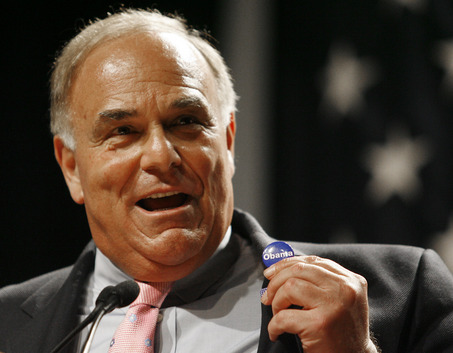
Yesterday I added Pennsylvania Governor Ed Rendell, whom I once believed had some integrity, and Donna Brazile. Today Richard Cohen, among others, joined the list. It really is shocking, and it’s increasingly more difficult to shock me. It is also ominous. Things we haven’t yet learned must really be ugly for such a transparently desperate excuse to be trotted out so early by people who almost certainly know what garbage it is.

Yesterday I heard Rendell literally drive Joe DiGenova, the former Attorney General, to apoplexy—Joe’s eyes were popping out of his head and I though he was going to fall over to the floor foaming at the mouth— by stating repeatedly that the I.R.S. fiasco “couldn’t be a conspiracy because a Bush appointee was in charge.” This is either unbelievably ignorant or despicably dishonest, and I suspect the latter. As I wrote in a previous post, Continue reading

Ethics Quote of the Week: Bob Woodward

“You’re talking about government not working, but who’s in charge of the Executive Branch? You go to the Constitution, and the President has sole responsibility for the Executive Branch. This rests on him.

You were talking earlier about kind of dismissing the Benghazi issue as one that’s just political, and the President recently said it’s ‘a sideshow.’ But if you read through all these emails, you see that everyone in the government is saying, ‘Oh, let’s not tell the public that terrorists were involved, people connected to al-Qaida. Let’s not tell the public that there were warnings…’  One of the documents with the editing [shows] that one of the people in the State Department said, ‘Oh, let’s not let these things out.’ And I have to go back 40 years to Watergate, when Nixon put out his edited transcripts of the conversations, and he personally went through them and said ‘Let’s not tell this,’ ‘Let’s not show this.’

“I would not dismiss Benghazi. It’s a very serious issue. As people keep saying, four people were killed. You look at the hydraulic pressure that was in the system to not tell the truth, and, you know, we use this term and the government uses this term ‘talking points.’ Talking points, as we know, are like legal briefs. They’re an argument on one side. What we need to do is get rid of talking point, and they need to put out statements or papers that are truth documents. ‘OK, this is all we know.’”

—Bob Woodward, Watergate legend, on MSNBC, making the case that the altering of the Benghazi “talking points” and subsequent use of misleading statements about the origins of the attack is not, as the President has said, ” a side-show,” but rather a serious and disturbing event worthy of criticism and attention.

truth-graphic

“Quick! Let’s hide it!”

One reason I like this quote is that I feel that in the long run the Benghazi talking points scandal—for that’s what it is, a scandal—may be the most significant, if not the most egregious, of the three scandals now rocking the Obama Administration. For the reason this is true, we only have to consult Jay Carney, who incredibly told Piers Morgan yesterday that in referring to the I.R.S. targeting of conservative groups for obstructive treatment, the Justice Department’s intrusion on AP phone records and the false “anti-Muslim video” narrative,  the CNN host was “concocting scandals that don’t exist…especially with regard to the Benghazi affair that was contrived by Republicans and, I think, has fallen apart largely this week.”

Wow. Continue reading

Twelve Ethics Observations On “The Scandal Trifecta”

Obama

1. “The Scandal Trifecta” may be gaining traction in D.C. and in the news media as the hot term to handily describe the Obama Administration’s three instances of serious and significant misconduct: the Benghazi deceptions, the I.R.S. harassment of conservatives and conservative groups, and the Justice Department’s surveillance of Associate Press reporters. It should be rejected. I know conservatives and Republicans are especially smug and gleeful right now to have their suspicions and warnings confirmed, but this is a national crisis, at a time of dire challenges to the nation, and tragic in many ways. It is not a game, and should not be likened to one. Nor should the three situations be lumped together, though they have, to some extent, common seeds. They are each important in and of themselves, and packaging them like stop-light peppers risks allowing all or some of them receive less than the individual attention they must have. This is the first and last time I’m using the term, and I urge everyone, in the media or out of it, to similarly drop it. Labels matter, in this is a bad one.

2. Here’s someone Democrats and the rest of us can blame, in part: the left-biased news media. You see, knowing that the news media is looking to expose them when they make mistakes, blunder, show corruption and otherwise do a bad job when entrusted with the welfare of the greatest nation on earth makes our leaders better, more responsible, more objective, and more competent, out of fear, if nothing else. The media does nobody any favors when it lets its biases take over and lies down on the job—not the public, not Republicans, certainly; not the nation, not their profession, but also not even those they are desperately trying to help succeed. Continue reading

The Steubenville Ethics Train Wreck: So Far, So Bad

steubenville

There has been no mention here of the awful Steubenville, Ohio rape case before today, and there was a reason for that. This is a massive ethics train wreck that is not only still rolling and accumulating passengers and victims, but is also too full of debris and wreckage to fully understand. At the end of this month, a grand jury will begin examining the looming question of whether others besides the two high school football players already convicted of the rape should be indicted.  The town is also doing an investigation of its own. These will help. My hesitation in diving into this gothic American nightmare is that recounting the obvious instances of miserable, heartless, ethically incomprehensible conduct by participants, observers, public officials and commentators doesn’t begin to make sense of it.  We will be analyzing and discussing this episode for a long time—we will have an obligation to do so. It is every bit as important and alarming as the Penn State scandal, and more significant than the infamous New Bedford pool table rape case, which was adapted into the Academy Award-winning film, “The Accused.”

The crucial cultural questions that will have to be answered are these: Continue reading