
Ethics Observations On The Dartmouth Cheating Scandal

DartmouthSixty four Dartmouth students have been charged with cheating in a special religion and ethics class that was designed for student athletes. The details can be found here.

1. The reports quote the professor as saying,

“Part of the reason I designed this course was that I had the sense that some athletes coming here to Dartmouth might have felt just a little bit overwhelmed or intimidated academically. I wanted to design a course that would appeal to their interests and allow them to have an early success in the classroom, and I’d hoped that they would be able to build on that success throughout their time at Dartmouth.”

Translation: The students were accepted for their athletic prowess, and this was a baby-steps course just for them.

Why is Dartmouth admitting students who need such phony courses?

2. An admittedly non-challenging course to allow athletes an easier route to graduation sends the clear message that integrity isn’t valued at the institution. The professor’s expressions of disappointment and sadness are either naive or disingenuous. The university was cheating to keep them in school: why should he be shocked that they would cheat in return? Continue reading

University Trustee Investment Conflicts: When the Stumps Start Showing

University boards are great for mutual back-scratching

Deep water hides all stumps, as the saying goes, and while the endowments of rich universities were piling up cash during the investment-friendly period before 2008, nobody questioned the universities’ choices of which companies and funds to invest in. Then came the meltdown, and endowments of over a billion dollars lost an average of 20% or more. That kind of hit has consequences, and among them were that a lot of programs got cut and a lot pf people lost their jobs.

That, in turn, provokes scrutiny: the deep water had receded, and the stumps were out to see in all their ugliness. As an article in Inside Higher Ed explains, among the stumps on display was the fact that many prominent universities invested their funds in places where their trustees had financial interests: Continue reading

Now Here’s A Terrible Idea: Mandated Disclosures for Photoshopped Images of Celebrities!

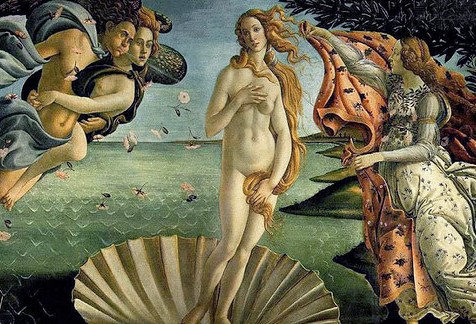
And if you look real closely at the lower left corner, you'll read, "The model for Venus was a short, middle-aged bald man named Gino. His appearance was altered by the painter in the creation of this painting."

Here is another candidate for enshrinement in the Pantheon of Well- Intentioned But Terrible Ideas.

In an article published Monday in the journal “Proceedings of the National Academy of Sciences,” Dartmouth researchers Hany Farid, a professor of computer science, and Eric Kee, a doctoral student, propose a rating system of publicly displayed photographs of models, actors and celebrities to let viewers know exactly how and how much an image has been altered by photoshopping, airbrushing or other means.

“Impossibly thin, tall, and wrinkle- and blemish-free models are routinely splashed onto billboards, advertisements and magazine covers,” the two write. “The ubiquity of these unrealistic and highly idealized images has been linked to eating disorders and body-image dissatisfaction in men, women, and children.” In the interest of limiting the damage caused by unrealistic images of human beauty, the researchers argue that graphic images should include labels that disclose  “geometric adjustments” such as slimming legs, hips and arms, as well as adjusting facial symmetry—reducing a nose in size, or slightly enlarging eyes.  Users of such photos should also flag photometric adjustments that change the appearance of skin tone, blemishes and texture, such as wrinkles, dark circles under the eyes or cellulite, say the researchers.

Please, for the love of God, nobody introduce these guys to Sarah Deming and her lawyer, who are suing the distributers of the film “Drive” because the trailer was more exciting than the movie. And let us all remember this proposal when we are tempted to pooh-pooh accusations that the government is regulating creativity, commerce, art and enterprise right out of existence, and with them, individual liberty as well.The tea parties should use Farid and Kee’s article for recruitment. Continue reading