Ethics Quote of the Week: Sen. Lindsey Graham

“If you can give nothing but bad information, isn’t it better to give no information?”

—- Sen. Lindsey Graham (R-SC), during a press conference on Nov. 27th, during which he reiterated his position that U.N. Ambassador Susan Rice had knowingly and intentionally misled the American public regarding the fatal attack on the Benghazi compound on 9/11, in her appearances on multiple news shows five days later repeating “talking points” to the effect that the attacks had been spontaneous and sparked by an anti-Muslim video.

Apparently.

Even many liberal commentators are now conceding that Rice was being a “good soldier” on September 16, carrying a technically accurate but intentionally misleading message that seems to have been designed by Obama campaign strategists to make sure the death of an American ambassador in Libya wasn’t seen as a refutation of Obama’s claims to a successful handling of that nation’s struggles or a contradiction of the argument that “his” killing of Bin Laden had Al Qida on life support. After all the attacks on Republicans Senators McCain, Graham and Kelly Ayotte for their condemnation of Rice for her part in the Obama campaign’s spinning, including accusations of racism from Congressional Black Caucus members and the affirmatively weird complaint by President Obama (which seems to be that as long as Rice was repeating what she had been programmed to say by others she shouldn’t be held personally responsible for the content of her own public statements),Graham in particular has refused to back off his criticism, and cheers to him for that. Continue reading

Virginia Campaign Lies: the Unethical Use of the Dishonest “Would”

The next U.S. Senator from Virginia? You could do worse! In fact, Virginia might.

I’m going to vote for Tim Kaine, the ex-Democratic Governor of Virginia running against George Allen, the Republican trying to regain the seat he lost in 2006 to James Webb. After the slimy, dishonest campaign Allen ran against Webb ( full disclosure: I went to law school with the Senator, and know him personally. A more honorable, courageous, principled man doesn’t walk the earth), Allen lost any chance of a vote from me forever, and it wouldn’t matter if his opponent was a toilet brush.

Nonetheless, Kaine’s ads are making me think he’s only a step or two above toilet brush level. Especially outrageous is this line, from a “war on women” ad “approved” by Tim Kaine, intoned by an announcer as the camera shows a woman:

                   “Allen would take away her Constitutional rights by reversing Roe v. Wade.”

Even counting “v.” as a word, this inexcusable statement includes four misrepresentations in just twelve words, an impressive total, though I’m sure Bill Clinton has topped it at one point of another. Let’s see: Continue reading

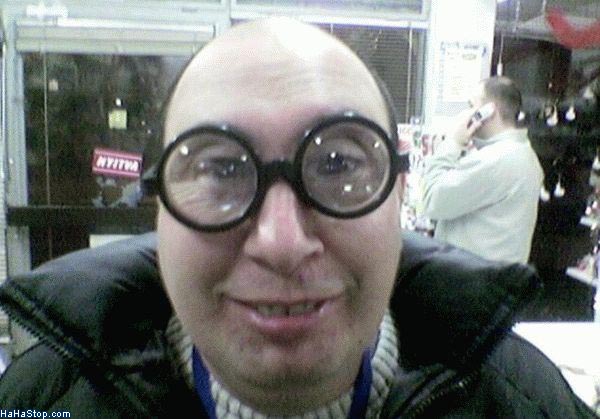
Undercutting the “Nerd Defense”

“A killer? Him? Come on, look at him. He couldn’t hurt a fly!”

More than a year ago, Ethics Alarms discussed the ethics of a current criminal defense tactic employed by lawyers with clients accused of violent crimes, putting them in nerdy glasses:

“It’s not a guarantee, but  the Daily News report says that criminal defense lawyers “swear by the gimmick, believing the right spectacles can make a sinister-looking murder suspect seem like a perfect gentleman.” “Glasses soften their appearance so that they don’t look capable of committing a violent crime,” veteran lawyer Harvey Slovis told the paper.”I’ve tried cases where there’s been a tremendous amount of evidence, but my client wore glasses, dressed well and got acquitted.” Cordero, who was represented by Slovis, wore bifocals throughout his trial, but threw them away the moment he was free.”

I’ve quizzed lawyers about the ethics of this tactic in my CLE classes, and they nearly unanimously agree that the tactic crosses no ethical lines that can be drawn with appropriate precision. I’m not so sure. I think it goes beyond merely giving your axe-murderer a shave and a haircut so he doesn’t look like an axe murderer, and edges into the realm of intentional deception. Apparently some courts may agree. Continue reading

If You Liked “Enhanced Interrogation,” You’ll Love The “Disposition Matrix”

Is THIS the Administration’s secret weapon against terrorists?

The Washington Post launched a three-part series today about the U.S. drone strike program, in which terrorists abroad are targeted and assassinated from the sky. I’m not prepared to attempt an ethical analysis of this deadly tool against international terrorism, although I will acknowledge that my initial, gut level assessment is that the unique nature of terrorism requires adjustments in the ethics of national security and warfare, and drone killings seem to be a fair and reasonable adjustment.

Yet it is still killing. It is also controversial, with many human rights activists, international law specialists and ethicists vehemently condemning the tactic, especially when used against turn-coat Americans abroad without due process of law. Consequently, the Post’s revelation that the Administration’s “kill list” is called something else rings the ethics alarms.

The Post:

“Over the past two years, the Obama administration has been secretly developing a new blueprint for pursuing terrorists, a next-generation targeting list called the “disposition matrix.” The matrix contains the names of terrorism suspects arrayed against an accounting of the resources being marshaled to track them down, including sealed indictments and clandestine operations. U.S. officials said the database is designed to go beyond existing kill lists, mapping plans for the “disposition” of suspects beyond the reach of American drones.” Continue reading

The Ryan Soup Kitchen Photo: Everybody Does It, But It’s Still Unethical

In the early 1960s, as the Great Leap Forward led China into political, social and economic disasters, the opposition to Mao Zedong’s leadership grew; Chairman Mao’s reaction was to purge the party leadership of intellectuals and officials in what is now termed, “the Great Proletarian Cultural Revolution.”

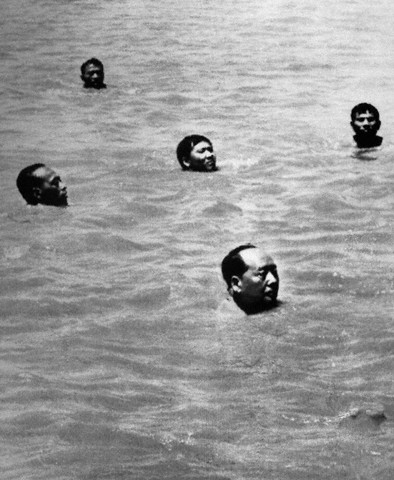
Mao Zedong’s hold on the leadership of China was shaky as he passed 70; even slaughtering more of his enemies and rivals wasn’t working. On July 16th 1966, Mao sought to debunk rumors that he was frail and ill by staging photographs of him vigorously swimming in the Yangtze River.  It was called, “The Swim Seen Round the World.” The Chinese press did its job, describing Mao’s cheeks as “glowing” and “ruddy,” his stroke steady and strong. “Our respected and beloved leader Chairman Mao is in such wonderful health!” one press report enthused.

In the West, however, there was more skepticism. Time reported that Mao swam “nearly 15 km in 65 minutes that day–a world-record pace, if true.” The photos of the swim, which showed an oddly solemn group of floating heads, were widely believed to have been doctored. As it turned out, the photos were real; Mao really did take a swim, though the event was staged, and nobody knows how long the swim lasted or how far Mao paddled. What are such photo ops? Are they deceptive? Are they ethical? Continue reading

Ethics Alarms Verdicts: The Second Debate

Some Ethics-related conclusions on Wednesday’s second Presidential debate:

Were the candidates uncivil?

I didn’t think so. There were a lot of Twitter comments about Gov. Romney being disrespectful to the President. The deference due to the President of the United States isn’t an issue when debates hew to the formal, detached format of the past. In those debates, the tone of the exchanges are so muted that the two candidates could be in different time zones. Once a different tone is set, with either candidate directly challenging statements while the other candidate is speaking, that tradition has fled, as it did last night. The challenger to a sitting President can hardly be told that he needs to be deferential in a debate; that is the equivalent of asking him to fight with one hand tied behind his back. I thought that both candidates were within the bounds of civility under the circumstances. It was certainly not the civility that I complimented in the second debate—it was a heated, sometimes rancorous argument, but it was the argument of two passionate, forceful, serious public servants, and it served the public well. Neither candidate displayed the contemptuous, rude attitude that Joe Biden adopted in the Vice-Presidential debate. Biden crossed the civility line, but the President and his challenger did not.

Was the moderator biased? Continue reading

Debate Alarm: The Fake Statistic Strikes Again

Outrageous.

That damn statistic again. Well, there goes THAT head!

Candy Crowley, disgracefully, chose another question at a Presidential debate—the last one was 12 years ago—based on the completely false and misleading statistic, made up by activists, that women earn “72%” of what men do in the workplace, suggesting that there is widespread gender discrimination in wages. It’s not true; it hasn’t been true for decades. It’s a myth, and one that misleads the public by being given this kind of publicity and credibility. ( The question Crowley allowed even lowered the fake percentage an extra, and fake, 5% from the “77%” Bernard Shaw negligently used in a question to Joe Lieberman. in 2000.) I’m glad Romney didn’t dignify it with a direct answer—he was placed in the position of either telling the questioner, “That stat is imaginary,” or furthur imbedding it by treating it as reality.

I’m generally a fan of Candy’s, but this was irresponsible, and I’m disappointed in her. Public policy debate shouldn’t be framed by simple-minded, misleading factoids, and it is the duty of journalists to insist on facts.

“And Now We Welcome You To Another Episode of “As The Media Shrugs”! Elizabeth Faces Exposure As a Dishonest and Unlicensed Lawyer…Will She Finally Reveal The Truth? Will Voters Care?”

“Nope, no way to Texas; can’t get to New Jersey…maybe I should just bite the bullet and get a Massachusetts law license? Nawww, who’s going to care?”

No major newspapers or broadcast news outlets seem to care, but what was originally dismissed as a partisan blogger’s over-reaching accusation has been bolstered by more than one smoking gun, proving Elizabeth Warren’s untrustworthiness and lack of fitness for high office.

Robert Eno of Red Mass Group, who joins Prof. William Jacobson as a blogger doing dogged and necessary research on the Massachusetts Senate candidate, has convincingly shown that Warren’s justification of her practice in Massachusetts, sans law license, doesn’t work, because what she says can’t possibly be true.

Earlier this week, Warren tried to rebut Jacobson’s allegations by explaining, “I haven’t practiced any law since 2010 since I went down to do the Consumer Financial Protection Bureau. I’ve been a member of the bar in Texas for all of my career, in the Supreme Court bar, and until a few weeks ago the bar in New Jersey.” Warren and her defenders also argued that Jacobson’s claim that she was operating a regular law office out of her Harvard faculty office, which would make her an unlicensed Massachusetts practitioner, was inaccurate. Warren periodically was involved in cases in Federal court, which did not require a  Massachusetts license, they said. All that was necessary for Warren to appear before various Federal Courts was for her to be duly licensed in a state or territory, and file a statutory request to the court to appear.

Warren’s problem: it is beginning to appear that she may not have been properly authorized to practice law anywhere, or, if she was, she had to be using her Harvard office as a regular law office, meaning that she was practicing Massachusetts law. Without a license.

Here is what Eno discovered:

1.  Warren says she has been a continuous member of the Texas bar,which is technically true but misleading. After following her constantly changing spin while explaining her undocumented status as an affirmative action beneficiary, I believe misleading us is her intent. Yes, she has been a member of the Texas bar during her whole career, but during most of that period she was not allowed to practice Texas law, which was the topic under discussion when Warren cited her membership. Kim Davey the Public Information Officer for the State Bar of Texas told Eno that Warren has been on inactive status in Texas since June 1, 1992. Inactive status means a lawyer is not authorized to practice law. Warren says that she only stopped practicing law (while living and working  in Massachusetts) in 2010, which means that she could not rely on her Texas license while she was at Harvard.

2. Thus it must have been her New Jersey law license that made Warren eligible to appear in Federal Court. But there’s a problem there, too. New Jersey rules hold that a lawyer can only be a licensed attorney in good standing in New Jersey if that lawyer maintains a bona fide office for the practice of law. The office can be in any state, but it must qualify as a law office, or New Jersey’s license to practice law is no longer valid.

This means that Warren is mired in a Catch 22. If, as her defenders and Warren have maintained, she was not engaged in the practice of law because her Harvard office did not constitute  “a systematic and continuous presence in Massachusetts for the practice of law” (because Warren was just a typical Harvard law professor who now and then helped write a few briefs for the U.S. Supreme Court and out-of-state federal courts), then she could not meet New Jersey’s licensing requirements, and was practicing law without any valid law license in any state once she went on inactive status in Texas. If, in the alternative, her Harvard office was a bona fide office for the practice of law, rather than a place where she just “dabbled,” then she was practicing in Massachusetts without a Massachusetts license. Continue reading

Liars For President

I don’t know about you, but I don’t want a liar as President. I’m not talking about the kind of lies that are periodically unavoidable in leadership and governance, as much as we would like to pretend they are not. I’m talking about “I did not have sexual relations with that woman” type of lies, intentional falsehoods designed to deceive the public for  political advantage with no benefit to the nation or its occupants whatsoever. Unfortunately, we are about to elect a liar as President, because lying in political campaign ads, and particularly negative ads, is sunk deep into the system like an inoperable brain tumor. It is fair to say that every President since George Washington has done it, and thus the public accepts it, and the news media shrugs it off. Continue reading

The Supreme Court Upholds The Individual Mandate and Obamacare: The Ethics Opinion

This morning the Supreme Court announced its decision upholding the key provision in the Affordable Care Act, a.k.a Obamacare. It is apparently a huge and complex decision, and is now available in text form online here.

The political and legal analysis will be coming soon from others far more qualified than I [UPDATE: The legal dissections have begun, and you can’t do better than to start here] , and while I am deeply interested in them, that’s not my job. I won’t be able to read the opinions and the various concurring opinions and dissents, not to mention digest them, for quite a while, but some ethical verdicts are already evident from what I do know: Continue reading