Ethics Dunce: Glenn Kessler, Washington Post “Fact Checker”

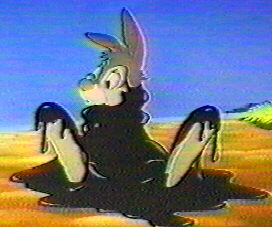
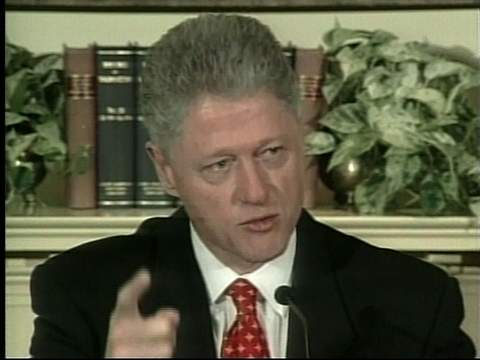
President Clinton, in a famous "true but false" moment. No Pinocchios, Glenn?

It pains me, it really does, to make Glenn Kessler, the Washington Post’s “Fact Checker,” an Ethics Dunce. He is one of the best of an often incompetent breed that, as exhaustively and repeatedly shown by Wall Street Journal blogger James Taranto, frequently defines “fact” as “the way we see it.” Kessler is notable for at least trying to keep his political biases out of the equation, and generally does an outstanding job.

His most recent column, however, took on President Obama’s repeated use of the statistic that the U.S. uses 20% of the world’s energy but only has 2% of the world’s oil reserves. Kessler correctly points out that the statement is confounding:

“…But measuring the U.S. consumption against its proven oil reserves makes little sense. Europe, with the exception of Russia, Kazakhstan and Norway, has virtually no oil reserves. Japan, a major consumer, has zero. China’s oil reserves are about half the size of the United States. In fact, in the relative scheme of things, the United States is relatively blessed with proven oil reserves — and, given the U.S. technological advantage, also with potentially large resources of oil yet to be tapped.

 “That’s why we said the president is using “non sequitur facts.” It would make much more sense to note that the United States has just 4.5 percent of the world’s population and yet we consume 20 percent of the oil, which is a finite resource, in order to urge Americans that we need to have greater energy efficiency. But in the context of higher gas prices — which is how the president often uses these figures now — it just is not logical to compare consumption to “proven oil reserves.” This is a lowball figure that does not begin to describe the oil known to be within the U.S. borders.” Continue reading

Unethical Quote of the Week: The Washington Post

"I am wearing this bag for the benefit of my former employer while I rip him to shreds."

“A person involved in Paul’s businesses, who spoke on condition of anonymity to avoid criticizing a former employer, said Paul and his associates decided in the late 1980s to try to increase sales by making the newsletters more provocative. They discussed adding controversial material, including racial statements, to help the business, the person said.”

The Washington Post, in a story by Jerry Markon and Alice Crites (“Paul pursued strategy of publishing controversial newsletters, associates say”) that contradicted Rep. Ron Paul’s denials that he was aware of or endorsed racially offensive content in newsletters published under his name during the 1990s.

The inherent dishonesty of the anonymous source of the Post’s story apparently didn’t register on the paper’s reporters or editors. It wasn’t that the source wanted anonymity to avoid criticizing Paul; he, she or it wanted anonymity to avoid accountability for the information being revealed in order to attack Paul.

How credible is a source whose anonymity is justified by an obvious lie? Not very, but apparently credible enough for the Washington Post to base a 1700 word story on anonymous allegations, essentially branding Paul as a liar without giving its readers any basis on which to assess the motives or credibility of the accuser.

[Ethics Alarms thanks James Taranto for the point.]

Spin, Rationalizations and Denial From the Ron Paul Faithful: An Ethics Lesson

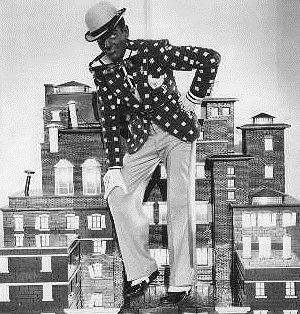
What does Fred Astaire in blackface have to do with Ron Paul? Not much.

There are a lot of reasons to regard Rep. Ron Paul, currently facing what should be his last hurrah in the idiosyncratic Iowa Caucuses, as the model for politics and leadership as we wish it could be. He says what he means. He doesn’t pander. He isn’t afraid of uncomfortable truths. He has integrity. This explains why the supporters of the one true libertarian in the U.S. Congress seem ready to fight to the end to preserve his presidential candidacy, though its long-term prospects are about the same as those of Frosty being elected President of Hell. They are, as a result, providing the rest of us with a textbook example of how loyalty and dedication can spawn intellectual dishonesty, cause otherwise good and intelligent people to substitute rationalizations for reason, and lead to corruption. How did all those idealistic young lawyers end up in jail supporting the plots of Richard Nixon?  Why did otherwise honest and ethical Democrats, elected officials and feminists twist their principles into pretzels to defend Bill Clinton’s using White House staff as a personal dating bar and lying about it under oath?  This is how. When you believe that a leader is good, then affirmative proof of flaws that disqualify him for leadership must be justified and explained away. It often isn’t even a conscious decision: this is cognitive dissonance at its strongest. The results, however, are the same as intentional deception.

Over at The Daily Caller, Wesley Messamore, who is Editor in Chief of the HumbleLibertarian.com, has registered an impassioned and angry defense against Paul critics who, like me, regard the content of his newsletters from the Eighties and Nineties an automatic disqualification for Paul as a presidential nominee. I don’t mean to pick on Messamore: his arguments are typical of Paul defenders; he’s no worse than the rest. His article, however, neatly covers all the unethical tactics Paul’s followers have had to embrace to convince themselves that their hero hasn’t failed the leadership test.

Here they are: Continue reading

Why Would Anyone Trust A Company That Tricks Them Into Opening Its Junk Mail?

" Disclaimer: This document isn't intended to be as misleading as it obviously is."

The firm is Ideal Tax Solutions, and I’m sure, really I am, that the people who run it, which include lawyers bound by the professional ethics rules prohibiting them from engaging in misrepresentation, dishonesty, deceit or fraud, are dedicated and well-intentioned. From an ethics stand-point, however, why anyone would trust a company that markets its services in a blatantly misleading way is beyond my comprehension. Someone must; a lot of someones must. Yet the company introduces itself to potential customers by deceiving them.

The letter arrives in an envelope that works very hard to look like it will contain an official IRS document. The mailing stamp has an elaborate eagle and flag logo; a large 2011 is posted in the lower right-hand column. Also there: a statute number TITLE 18 SEC. 1702 US CODE. There is a window in the envelope, and the address that is visible appears on institutional pink paper.

Oh-oh. Continue reading

Ethics Dunce: Wall Street Journal Blogger James Taranto

Useful fact: Mitt Romney is running for President, and Maureen Dowd isn't. You can't use her to judge his ethics, just as you shouldn't use him to judge her hair.

Oh James, James. What am I going to do with you? For the third time this year you have barged into Ethics Dunce territory, surely a place one of the most consistently perceptive, witty and reasonable of conservative commentators never belongs.

But what is an ethicist to do when you attempt to trivialize an outrageously dishonest and misleading campaign ad by Mitt Romney, in which a statement by President Obama [ “Sen. McCain’s campaign actually said, and I quote: ‘If we keep talking about the economy, we’re going to lose,’ “referring to the 2008 economy under Bush ] is edited to suggest something completely different [ “If we keep talking about the economy, we’re going to lose,” implying that “we’ means the Democrats] from what he was really saying, by showing that other politicians and New York Times columnists play the same unethical game? So what? How do the unethical journalistic practices of the Times columnists you deftly expose on a regular basis in any way make Romney’s ad less reprehensible? Continue reading

Yes, I Am An Idiot. That Doesn’t Make It Ethical To Take Advantage of Me.

I just fell for an online marketing scam, and am considering putting my brain up for auction on eBay in the hopes that it may net me enough to buy the complete DVD set of “Police Academy”. Failing that, I plan on devoting the rest of my days to exacting my revenge on the supposedly honest companies that were willing participants in my disgrace.

They caught me in a weak moment, surfing the net, having just lost a winnable game of Spider Solitaire. A screen popped up with the words,

“Congratulations, ALEXANDRIA! You have been selected to receive a free Apple iPad, Smartphone, or a thousand dollars worth of merchandise for taking a brief survey! It will only take a few minutes.”

As it turned out, there were two instances of deceit and three outright lies in this message, and I had several clear warnings that this was likely the case. For one thing, I wasn’t born yesterday. For another, I know my name isn’t ALEXANDRIA.

Yet I went to the next screen.  Why? Curiosity, which killed the cat; avarice, because the idea of getting something for nothing was appealing. Amnesia, because I’ve seen these things before.  Cockiness, as I was certain I would be able to determine whether this was a scam or not without losing much time or anything else. And, of course, abject stupidity, because I am an idiot. Continue reading

The Deceitful, Illogical, Unethical Disclaimer

Don't be fooled by Voldemort's disclaimer!

I once worked for a company that was specifically targeted by an industry group for coordinated attacks and anti-competitive tactics. We obtained a copy of the agenda for the planning meeting for this onslaught, and the bullet points looked like part of a hypothetical in an anti-trust class law school exam. This was the most blatant collusion in restraint of trade imaginable. But the  lawyers for the group apparently thought all could be made benign and legal by a disclaimer on every agenda copy that  said, in effect, “Don’t pay any attention to what this agenda says—trust us, it’s all fair and legal.” The disclaimer stated that the organization fully supported and followed all provisions of U.S. anti-trust statutes, and would never, ever do anything to violate them. This is roughly the equivalent of a mugger telling his victim that he is non-violent while he’s punching him in the face.

I am reminded of that agenda when I see commercials for new drugs, which show healthy, happy, beautiful models frolicking with their families or lovers in idyllic settings while the announcer, usually at breakneck speed, warns that the drug may cause violent flatulence, boils, locusts, insanity, cannibalism and excruciating death. I was reminded of the agenda again when I learned of the latest gambit by PublishAmerica, which earlier this year got in trouble with “Harry Potter” author J.K. Rowling by soliciting money from authors by promising to bring their works to her attention: Continue reading

Solyndra, the White House, and the Most Dangerous Conflict of Interest of All

It isn’t a Republican or a Democratic Party problem, and it isn’t unique to the Obama Administration. It is a structural problem in American government, a conflict of interest that pits the best interests of the American people against the political interests of the party in power. The only solution to the problem, since it is here to stay, is leaders who acknowledge the conflict, are dedicated to doing the right thing anyway, and have the courage to demand that their staffs do likewise.

The Soyndra scandal shows that Barack Obama is not such a leader. That does not make him unique, but it is a serious ethical flaw nonetheless. Continue reading

Comment of the Day: “CNN, Burying the News to Protect Its Own”

And since you brought it up...

In the Comment of the Day, Dwayne N. Zechman expands usefully on the Ethics Alarms post about CNN ignoring the developing story about its own talk show host, Piers Morgan.

  So I’ll return the favor and expand on his comment.

For every post on Ethics Alarms regarding unethical journalism or media bias, I could write ten. Believe it or not, I try hard to keep the topic to a minimum number of posts; it is a close second to politics among the daily temptations I have to resist in fulfilling the blog’s mission as a broad and eclectic, rather that narrow, examination of U.S. ethical issues and controversies.

Fresh distortions of the news by the media and its often jaw-dropping deceitfulness in reporting stories create potential topics for me every  day, and usually many times a day. Here’s an example from yesterday: I was shocked to find out that the FAA funding, which was held up in limbo while FAA workers missed paychecks, was stuck in the Democratic-controlled Senate, having been duly passed by the Republican-controlled House. The previous day, both President Obama and scores of news stories and TV news features had harshly criticized “Congress” for leaving D.C. for vacations while Federal workers were being stiffed. I assumed, as almost everyone presumed, based on the “hostage” rhetoric being used by pundits and columnists and the just-completed debt-ceiling deal, that it was the GOP-controlled House of Representatives that was causing the problem. And that, unquestionably, is exactly what the White House wanted the public to believe, as well as what the media went out its way to make certain the public did believe, by what its reporters and pundits didn’t report and didn’t clarify. Continue reading

Word Use Ethics

"Super Glue doll? "Mucilage buddy?" "Fly-paper friend"

Ah, politics! Words that are dishonest are winked at by the media without objection, and harmless terms generate apologies that support ignorance and vagueness.

I. Colorado Republican Congressman Doug Lamborn apologized yesterday for using the term “tar baby” during a Friday appearance on a Denver radio program.  Lamborn said this: “Even if some people say, ‘Well the Republicans should have done this or they should have done that,’ they will hold the President responsible. Now, I don’t even want to have to be associated with him. It’s like touching a tar baby and you get it, you’re stuck, and you’re a part of the problem now and you can’t get away. I don’t want that to happen to us, but if it does or not, he’ll still get, properly so, the blame because his policies for four years will have failed the American people.” Continue reading