
Ethics Hero: Rep. Ron Paul

One of the benefits of absolutist ethical systems is that they can force you to maintain your integrity when unethical positions are convenient or temporarily beneficial. So it was that libertarian Rep. Ron Paul (R-Tx) emerged from Monday’s New Hampshire debate among GOP Presidential hopefuls as the only candidate who rejected limiting the participation of gays in the military and the infamous “Don’t Ask Don’t Tell” policy. While Herman Cain, Michele Bachmann, Mitt Romney, Rick Santorum (naturally), Newt Gingrich and Tim Pawlenty all said, in various and convoluted ways, that they supported DADT, Paul cut precisely to what is ethically offensive about the policy.

“We have to remember, rights don’t come in groups,” Paul said. “We shouldn’t have gay rights. Rights come as individuals….it would be behavior that would count, not the person who belongs to which group.”

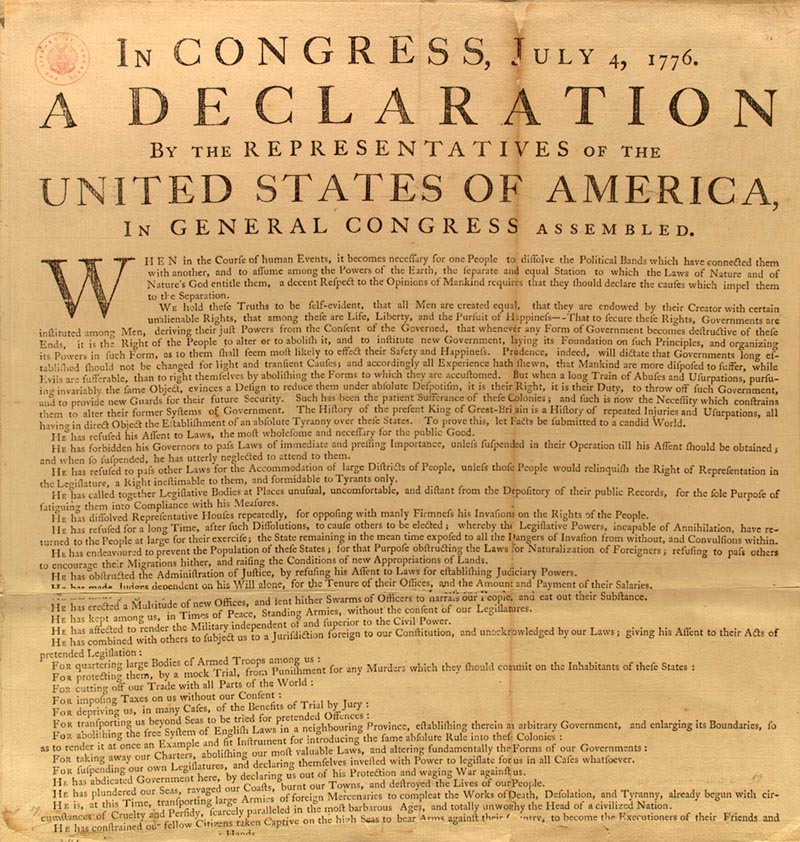
I am far, far from being a Ron Paul fan, for his libertarian principles lead him to as many irresponsible positions as ethical ones. And he is certainly emboldened to risk the displeasure of the Republican base as a candidate with about as much chance of getting the Republican nomination as I do (though more of a chance than Newt Gingrich).  But on a night when six of his rivals pandered to homophobia and embraced a policy that both violates core American values and endorses lying, Ron Paul alone had the courage and principle to correctly place “Don’t Ask” where it belongs, in conflict with the Declaration of Independence and the Constitution.
Herman Cain Flunks The Presidential Candidate Competency Test

Herman Cain's Consitution

The legal ethics standards do not require that a lawyer be fully knowledgeable and competent to handle a particular representation when he or she accepts the assignment, but does require that the lawyer be sufficiently up-to-speed in the legal area at issue when the work commences. That standard is reasonable for the law,  but the American public should expect more when an individual has the audacity to pronounce himself fit to be President of the United States. One area I would hope a candidate wouldn’t need to bone up on after the fact: the nation’s founding documents.

Former pizza CEO and conservative radio host Herman Cain officially entered the contest for the GOP nomination over the weekend with this statement, following his exhortation to America’s public to read the Constitution:

“Keep reading! Don’t stop at life, liberty and pursuit of happiness.”

Meet me at the bridge; I’ll be jumping at noon. Continue reading

Egypt Ethics: Integrity Deficit on the Right

It has been fascinating and troubling listening to conservative radio talk-show host Mark Levin lambast fellow conservatives who have been siding with the revolutionaries trying to end the 30 year rule of Hosni Mubarak in Egypt. Levin argues that such support is foolish and ignorant, because there is no way for the United States to be sure that the resulting new government, even if it is more democratic than the current one (hardly a difficult bar to clear), wouldn’t be worse for the interests of the United States. Continue reading

Perry v. Schwarzenegger: Choosing Ethics Over Morality

Predictably, Judge Walker’s decision in Perry v. Schwarzenegger striking down California’s voter approved Proposition 8 has infuriated foes of gay marriage, who have condemned his opinion as judicial activism, a rejection of democratic process, and an agenda-driven farce. Walker himself is being attacked for having a conflict of interest, because he is widely believed to be gay himself. (The belief that a gay judge cannot rule objectively on the issue of gay marriage while a straight judge can is itself an expression of bias.) This is not surprising. What is surprising, at least to me, is that the only substantial argument critics of the opinion can articulate is based on the exact proposition Walker rejected in his opinion: that laws should be able to prohibit conduct based on morality and tradition alone, without quantifiable and verifiable reasons relating to the best interests of society. By insisting that a California law that would withhold a fundamental right—marriage—from a class of Americans must justify itself with reason rather than tradition, Judge Walker ruled that it is ethics, not morality, that should govern American law and justice. Continue reading

The Damage of Health Care Reform “By Any Means Necessary”

I have no idea whether the health care reform bill, assuming it finally gets passed in one form or another, will make things better or worse, and if you are honest about it, neither do you…and neither, I am certain, do most of the elected representatives who will have voted for it or against it (or for it and against it) by the time the dust clears. To only cite the most obvious proof, the bill’s current form was just posted yesterday, giving Congress 72 hours to read and understand over 2,000 pages of technical jargon and badly-written prose. I don’t believe I have ever read 700 pages a day for three days at any point in my life, and if I have, I know it had to be something more diverting than a health care bill.

Relying on second-hand analysis—also by individuals who haven’t read the current bill—simply puts us (and the members of Congress) at the mercy of the biases of those rendering the opinions. For example, one of my favorite commentators, Robert Samuelson, has persuasive arguments against the bill here and here, while one of my least favorite, Paul Krugman, weighs in on the bill’s virtues here and here. Now, I think Krugman has squandered his credibility by blatant untruths in the past (One howler, his infamous statement about the national health care systems of Canada and Great Britain that “We’ve all heard scare stories about how that works in practice; these stories are false” is derisively quoted almost daily by Wall Street Journal blogger James Taranto as he relays tales of national health care horrors from the London press), but the man has won a Nobel prize: maybe he’s right and Samuelson is wrong. I really don’t know.

I do know this, however: whether the bill proves to be disaster or panacea, the manner in which President Obama and the Democrats have gone about passing it has done real and lasting harm.  Continue reading