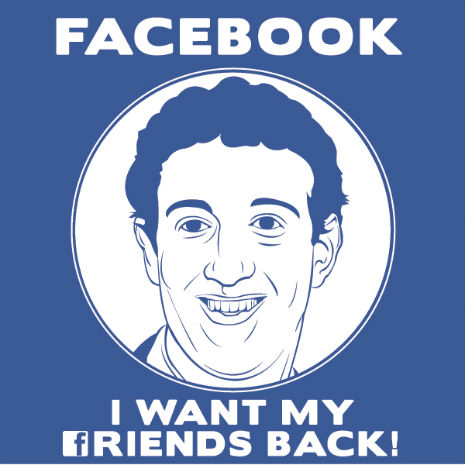
Facebook’s Promote Policy: Annoying And Perhaps Stupid, But Unethical?

Zuck34_fbblue2

I have been wading through the many online complaints about Facebook’s  aggressive policy, begun in earnest back in 2012, of reducing the number of “friends” a Facebook user’s posts reach (by about 85%) and then charging the Facebook user a fee to reach more of them. Frankly, as a less-than-intense Facebook user who necessarily spends most of his web-content time running a blog, I didn’t even pay attention to the “promote” button, and wasn’t even aware of the change. The Facebook revenue-generating move is described here and here, but what happened is pretty simple  and easy to understand. Having sucked a lot of people, groups and businesses into using their free service to reach family, friends, like-minded souls and potential customers, Facebook then changed the rules and is now charging for them to get the same reach that was free for quite a while. Is this unethical?

Some, indeed many, think so. Here is the New York Observor:

“This is a clear conflict of interest. The worse the platform performs, the more advertisers need to use Sponsored Stories. In a way, it means that Facebook is broken, on purpose, in order to extract more money from users. In the case of Sponsored Stories, it has meant raking in nearly $1M a day.”

This is Dangerous Minds, in a widely circulated attack on Facebook called “I want my friends back”:

“It’s perhaps the most understated stick-up line in history, worthy of a James Bond villain calmly demanding that a $365 million dollar ransom gets collected from all the Mom & Pop businesses who use Facebook. How many focus groups do you reckon it took until Facebook’s highly paid marketing and PR consultants finally arrived at such an innocuous phrase for describing information superhighway robbery?”

Robbery? Conflict of interest? A hold-up? Bait and switch? This is the kind of tantrum that shows how easy it is for unscrupulous politicians to use the profit motive, free enterprise and capitalism as cheap scapegoats for every problem under the sun, all the better to build support for a massive, all-powerful government that will make everything right, and ensure that we all have lollipops and rainbows regardless of talent, effort, hard work or the cruel turns of fate.* Facebook created this service millions use for free—how dare the bastards try to make money out of their ingenuity and enterprise? Don’t we all, in a real sense, own Facebook? Shouldn’t we? Continue reading
Comment of the Day: “Ethics Quote of the Week: Yu Jie”

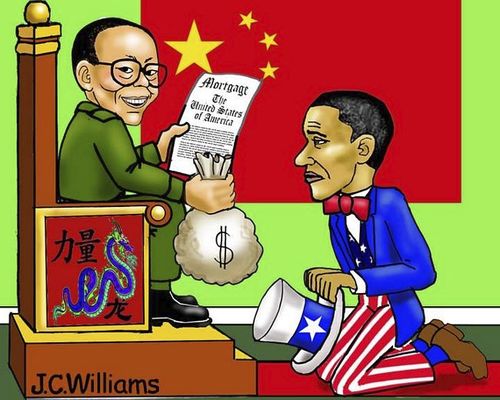
Michael, fortunately, focuses attention back on the actual meaning of the quote from the Chinese dissident, Yu Jie, that I had posted as an Ethics Quote of the Week. I then confused the issue by expanding my commentary to the dangers (or, as commenter properly corrected me, theoretical dangers) of  U.S. indebtedness to China. My error, and I am grateful to Michael both for returning to the issue and his thoughtful comments.

Here is his Comment of the Day on the post, Ethics Quote of the Week: Yu Jie:

“…No matter how craven our federal government has been, why are the Universities allowing themselves to be censored by the Chinese? There are two reasons: Continue reading

Ethics Quote of the Week: Yu Jie

“I arrived in the United States a month ago, thinking I had escaped the reach of Beijing, only to realize that the Chinese government’s shadow continues to be omnipresent. Several U.S. universities that I have contacted dare not invite me for a lecture, as they cooperate with China on many projects. If you are a scholar of Chinese studies who has criticized the Communist Party, it would be impossible for you to be involved in research projects with the Chinese-funded Confucius Institute, and you may even be denied a Chinese visa. Conversely, if you praise the Communist Party, not only would you receive ample research funding but you might also be invited to visit China and even received by high-level officials. Western academic freedom has been distorted by invisible hands.”

Yu Jie, Chinese dissident and author recently relocated to the U.S., in an op-ed column in the Washington Post, exposing how America’s dependence on China for trade and financing has not only made the nation vulnerable, but is also eroding its integrity and values.

Every budget cycle that the United States permits to expand its debt makes the nation more indebted to China, and places more power in the hands of its leaders to exert influence over American policies. Yu Jie’s disturbing article shows how our values are being undermined as well. China’s is a repressive, undemocratic and often brutal regime that the United States has foolishly allowed itself to become dependent upon. What will the consequences of this be? How can the United States lead the free world while being under the thumb of the Chinese? Corruption is inevitable. Yu Jie writes, Continue reading