Baseball Park Naming Ethics Again: Getting Closer and Closer to “Chico’s Bail Bonds Park”

Bad News Bears

The Detroit Tigers will be playing in a ballpark named “Fifth Third Park” next year.

They have no shame. It’s bad enough that there is a bank with the ridiculous name of “Fifth Third Bank” (In 1908, Third National Bank and Fifth National Bank merged and nobody had the wit to come up with a better name. I wouldn’t entrust my money to a bank run by such dimwits), but a ballpark? What’s a fifth of a third out? A third strike? Houston briefly had its park named after Enron, and San Diego’s ball park is named after supplier of dog and cat merchandise, but at least “Petco Park” is alliterative.

I was sure that I had already written a rueful post about baseball teams that sell out their fans, history, traditions, cities and dignity for filthy lucre and name their home fields after any company who will pay to turn a stadium into its billboard. In 2010 I wrote a  post  about the adultery website Ashley Madison tried to by the naming rights to the NFL Giant’s stadium, and sure enough, decade ago I covered this revolting topic thoroughly. In honor of Fifth Third Park, I’m posting it again below, with a couple of additions and edits.

***

The Washington Nationals announced this week that it has partnered with Major League Baseball Advanced Media and the consulting firm Korn Ferry to sell naming rights to Nationals Park, as the team’s home field has been known since it opened in 2008.

After all, the team explains, plastering a corporation’s name on the ballpark could add between ten and twenty million dollars a year to the team’s revenue, and imagine how much better the team will be with another starting pitcher or slugging outfielder. Why wouldn’t a team sell its home’s name, and a large chunk of its identity, to a bank, a website, or a pet supplies company?

[Update: I am happy to announce that the Nationals did not ultimately give in to greed and name its stadium MSNow Park. It is still Nationals Park.]

I admit it: being a life-time fan of the Boston Red Sox, who play in one of the the ten major league parks ( the others: Angel Stadium of Anaheim, Dodger Stadium, Fenway Park, Kauffman Stadium, Marlins Park, Nationals Park, Oriole Park at Camden Yards, Turner Field, Wrigley Field, and Yankee Stadium ) belonging to teams that have not accepted filthy lucre to mar their stadium entrances with the names of companies Bernie Sanders would hate, I find the idea revolting.  A baseball team represents its community; its lore becomes part of the culture and shared memories passed down through generations.. That has value, and symbolic significance. How much is it worth? It’s priceless, or should be. Continue reading →
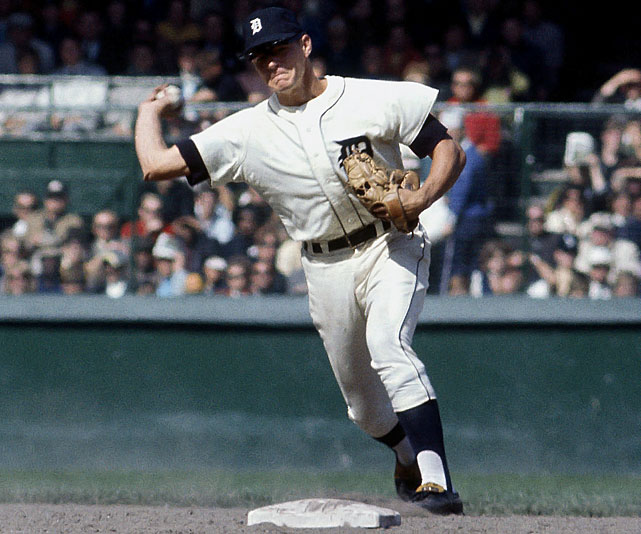
Case Study In How Sports Encourages Consequentialism: The 1968 Detroit Tigers

Mickey Stanley in 1968: learning a new position in the World Series, making us dumber...

Mickey Stanley in 1968: learning a new position in the World Series, making us dumber…

Frequent readers here know that I often inveigh against consequentialism in its various forms, from labeling sound decisions “mistakes” when they don’t pan out due to uncontrollable factors, to pronouncing unethical conduct as ethical because it chanced to have some beneficent results. This particular hydra seems to be a tough one to kill, and one of the reasons is, I realize, the pervasiveness of sports in our culture.

Reflecting on sporting contests, particularly those involving teams, routinely generates hindsight bias on the part of fans and sports commentators….for one thing, it’s fun to second guess managers and coaches from the safety of an armschair or from behind a computer screen. Unfortunately, the practice endorses consequentialism. Decisions that result in a win are seldom criticized, no matter how moronic or misguided they may have been; tactics that ended in defeat are always called “mistakes,” or worse.

The baseball post-season began yesterday. We won’t see a World Series game until October is almost over, but there was a time, children, long ago, before divisions and the designated hitter, before steroids and ESPN, when in major league baseball, the World Series was the post season. This was the case 45 years ago, in 1968, when the Detroit Tigers, who had clobbered the American League competition on the way to a 103-59 record, including the last 30 game-winning season by any pitcher, turned in by Denny McLain. They were about to face the reigning baseball champions from 1967, the NL’s St. Louis Cardinals, led by future Hall of Famers Lou Brock, Orlando Cepeda, and Bob Gibson. Both were veteran teams and well-balanced; there was every reason to believe that each had a good chance at victory. Certainly, neither was in need of any last-minute overhaul.

Nonetheless, Tigers manager Mayo Smith decided to take a gamble. Continue reading →

Deadly Incompetence in Seattle….Luckily, It Was Just a Game

I know about the ADA, but still...hiring blind umpires who can't count just isn't working out...

It is rare that an ethics outrage repeats itself so closely that I could recycle a previous essay and just change the names. This occurred, however, in Seattle this past Saturday, in the baseball game between the Mariners and the San Diego Padres. San Diego’s Cameron Maybin walked on a 3-2 count (four balls are required by the rules) and eventually scored the only run of the game on Antonio Gonzalez’s fifth-inning single, allowing the Padres to defeat the Mariners 1-0 on Saturday night.

With one out in the fifth, Maybin walked when a pitch was called high by home plate umpire Phil Cuzzi. A video review of the at-bat by official scorer Dan Peterson confirmed the count should have been 3-2 when Maybin trotted to first base, meaning that his turn at the plate wasn’t completed. But Cuzzi, who like all umpires carries a pitch counter, saw that the stadium scoreboard showed a three-ball count before the pitch, and since 1) technology is always right 2) he wasn’t paying attention 3) he can’t count to “4” and 4) (or is it 3?) it isn’t like calling balls and strikes is his job or anything, he decided that the player had earned a base on balls. Continue reading →

Ethics Hero: Detroit Pitcher Armando Galarraga

When Umpire Jim Joyce apologized to Detroit pitcher Armando Galarraga, the man whose perfect game he destroyed with an erroneous “safe” call on what should have been the 27th and final out, he gave him a hug and graciously accepted it without rancor. In interviews, Galarraga has said, “What else could I do?” A great many of his colleagues would have had some alternatives, and they would have not been pleasant. Galarraga is handling his disappointment, frustration and bad luck with superb grace and kindness, in the best tradition of the Golden Rule.

“Nobody’s perfect,” he told ESPN, accepting Joyce’s mistake as human and not malicious. But Armando Galarraga was perfect, both on the mound in Detroit, and in his noble response to misfortune.