Two photography technology ethics cases erupted this week.
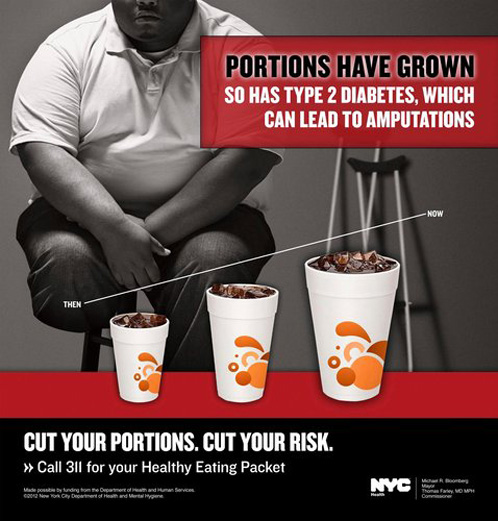 The Case of the Fake Amputee: A recently unveiled New York public health campaign warning against Type 2 diabetes uses a photo of an overweight man who is missing his leg. The man, however, had both legs when the photo was taken. One was digitally removed to make it appear that his right leg had been amputated. The American Beverage Association, fighting the city’s efforts to reduce consumption of sweetened soft drinks and fast food, seized on the photo to press its case. “Clearly, the straight facts don’t support their singular attacks on our products, so they keep falling back on distortions and scare tactics that are over the top,” association spokesman Chris Gindlesperger said in a statement. “That’s disappointing.” Well, diabetes does increase the risks of amputations, and a fake amputee is no more scary than a real amputee. Real amputees do exist; having a graphically-created one doesn’t change the accuracy of the ad’s message one bit. What does the association’s argument have to do with the photo-manipulation? Nothing. Continue reading
 Ethics Alarms