A Brief Rant Against Irresponsible Misinformation

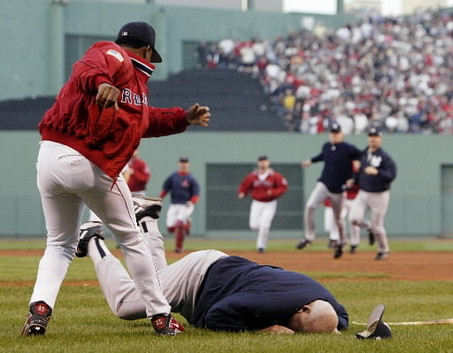
Bill Wambsganss makes an incredibly easy play in Game 5 of the 1920 World Series

I was watching baseball on television all day yesterday, and had to see more commercials than are good for me. It struck me that despite the advent of the so-called “Information Age,” commercials seem to be written by increasingly ignorant writers, and ads that contain blatantly incorrect facts make it to the air where they rot innocent young brains and delight badly-educated  old ones.

Since the average TV commercial must be seen by literally hundreds of writers, executives and technicians on its way to this carnage, what does this tell us? It tells us that the education system is just as bad as we feared, and that these irresponsible people don’t care enough about being accurate to do a 20 second Google Search so they won’t misinform people. Making such a search is called due diligence and responsible conduct. Not doing so is called lazy, negligent and unethical. Continue reading

Ethics Quiz: Which Musical Comedy Censor is More Unethical?

How could anyone predict that this show would be risque?

Rick Jones brought these sorry tales to my attention, and they are perfectly suited to an Ethics Quiz.

Your challenge: Explain which of the censors in these two incidents was more unethical.

Censor A: The mayor of Carrollton, Georgia, Wayne Garner, who ruled last week that a city-funded professional production of The Rocky Horror Picture Show was not suited for a community production. The city council had contracted with a theater group of actors, singers, dancers, musicians and crew, and had committed $2,500 of taxpayer funds in up-front production costs to prepare for four performances in October. The mayor’s spokesperson said that the production was going to contain racy choreography,despite the fact that it was supposed to be a “PG show.”

How a counter-culture musical specifically about gender bending, kinky sex and transvestites was supposed to be “PG” is anybody’s guess.

Censor B: Thomas Fleming, Superintendent of Schools in the Richland School District in western Pennsylvania.   He prompted District officials to veto the high school’s choice of the classic 1950s Broadway musical Kismet as a 2012 production, because it suddenly occurred to him that the characters in the play, which takes place in old Baghdad, are Muslims. Continue reading

Solyndra, the White House, and the Most Dangerous Conflict of Interest of All

It isn’t a Republican or a Democratic Party problem, and it isn’t unique to the Obama Administration. It is a structural problem in American government, a conflict of interest that pits the best interests of the American people against the political interests of the party in power. The only solution to the problem, since it is here to stay, is leaders who acknowledge the conflict, are dedicated to doing the right thing anyway, and have the courage to demand that their staffs do likewise.

The Soyndra scandal shows that Barack Obama is not such a leader. That does not make him unique, but it is a serious ethical flaw nonetheless. Continue reading

Major League Baseball, Forgivability, and List Ethics

Unforgivable?*

Bleacher Reports is an enjoyable sports website, and it gives opportunities to aspiring writers and bloggers, some of whom are quite talented.  In addition to typical opinion pieces and reporting, the site has a fondness for lists, often trivial to the extreme, like “The 50 Ugliest Athletes of All Time.” The titles are all misnomers, because there is almost never any criteria given for the choices or their relative ranking. An accurate title would be, “The Fifty Athletes I Think Are The Ugliest.”  And of course, who cares? (Don Mossi, by the way, was the ugliest athlete ever, no matter what anybody says.)

A recent list, however did bother me. It is called “The Fifty Most Unforgivable Acts in Baseball History,“ and much of the problem with it lies in the title itself. If you are going to write about history, there is a duty perform diligent research, even for a silly online list. Misrepresentations online have a large probability of misleading people.  The title is a misrepresentation, like “The 50 Ugliest Athletes,” but unlike that list, there is some harm done. The list isn’t close to complete; it isn’t consistent; it isn’t well-researched. I’d bet that the author, Robert Knapel, wrote it off the top of his head.  Anyone who looked at the list and assumed, as the author represents, that these are truly the low points—“the dark side,” as the author puts it—of major league baseball would be seriously misinformed.

There are unequivocally, probably universally recognized incidents and events that are infinitely worse that most of the items on the list.  Just a  few samples: Continue reading

“Congratulations! Here’s a Bonus for Doing Such An Outstanding Job Investigating That Fiasco That Happened Because You Screwed-Up In The First Place!”

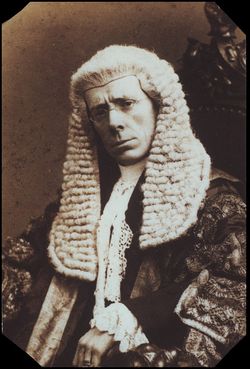
"Iolanthe's" Lord Chancellor has nothing on me: his nightmare* was only "love unrequited." Mine is the SEC.

[  I read about the following outrage before going to bed last night, and vowed to write a post on it in the morning. It literally gave me nightmares and an upset stomach, so disrupting my repose that I gave up and headed to the keyboard. I am writing this at 4:30 AM. I have never written anything at 4:30 AM before, but I have learned something useful for future reference: I’m not in a good mood then.]

And here we have a prime example of why 1) many people don’t trust the Federal government and 2) why they are 100% right to feel this way.

I’ll take “Incompetence, Failure of Accountability and the Appearance of Impropriety” for a thousand, Alex!

SEC  Inspector General H. David Kotz has issued a thorough report on the U.S. Securities and Exchange Commission, revealing that an employee who investigated Bernie Madoff in 2005 and 2006 and failed to notice that he was running a $50 billion Ponzi scheme was later rewarded by the agency with a cash bonusfor his fine work on the Madoff scandal after it was discovered, the lives ruined, the damage done. Continue reading

Thanking Dick Williams…Finally

The late Dick Williams, doing what great leaders do

If you are not a baseball fan, or under the age of thirty, you probably never heard of Hall of Fame manager Dick Williams, who died yesterday at the age of 84. I never met Williams myself, but I have been indebted to him for four decades. I never told him the immense difference he made in my life, just by doing his job.

In the winter of 1967, I was a devoted fan of my home town team, the Boston Red Sox, and had been since 1962.  Over that period I had listened to every single baseball game on my transistor radio when a game wasn’t on TV, which was most of the time, or when I wasn’t at the game, which was almost always the case. I was the only person I knew who followed the team, and for good reason: it was torture. The Red Sox were hopelessly mediocre on the way to awful, and hadn’t had a winning season in more than ten years.

It is a great character builder to follow the fortunes of a terrible baseball team. Almost every day, for six months, you are let down, and yet return to the scene of your despair the next, attempting to muster hope while steeling yourself against likely disappointment. You find yourself finding things to appreciate other than winning: the gallant veteran player who “plays the right way” (Eddie Bressoud, shortstop, 1962-1965); the exciting rookie who gives promise of a better future (Tony Conigliaro, right fielder—rest in peace, Tony); the unique talent who is worth watching for his own sake (Dick Radatz, relief pitcher, 1962-1966). These things help, but following a perennial losing team and caring about them is like being punched in the gut four or five days a week without knowing which day you’re getting it.

Since 1965, I had always reserved seats for the first day of the season and one of the last two home games, just in case those last games would be crucial to a (hahahaha!) Red Sox pennant drive. This was especially pathetic, since the team was getting worse. They had finished in a tie for 9th place in 1966, and as the 1967 season loomed, Vegas had them installed as 100-1 underdogs to win the American League pennant. In truth, the odds should have been longer. Nonetheless, I wrote the Red Sox and got my tickets, this time for the next to last day of the season.

The team was full of rookies and near rookies, and appropriately had hired a minor league manager, Dick Williams, to be the new skipper. Williams was something else, however: he was a gifted leader. One day, in the middle of Spring Training, a Boston scribe asked the new manager what the prospects were for the upcoming season. Would the team escape the cellar? Would there be forward progress? Williams’ answer was instant front page news:

“We’ll win more than we lose.” Continue reading

A Harsh Lesson We Must Learn From Atlanta’s Teachers

There isn’t much enlightening to say about the unfolding Atlanta teacher cheating scandal, but its implications must be faced, as difficult as that is.

Georgia Gov. Nathan Deal revealed this week that award-winning gains by Atlanta students were based on widespread cheating by teachers and principals. The Georgia Bureau of Investigation identified 178 teachers and principals – 82 of whom have confessed – in the biggest cheating scandal in US history. Not the first one, however; there have been a lot of them recently, across the country. The media is pointing to the U.S. education system’s increasing dependence on standardized tests as “the problem.”

I see: the testing made them do it. Continue reading

Deadly Incompetence in Seattle….Luckily, It Was Just a Game

I know about the ADA, but still...hiring blind umpires who can't count just isn't working out...

It is rare that an ethics outrage repeats itself so closely that I could recycle a previous essay and just change the names. This occurred, however, in Seattle this past Saturday, in the baseball game between the Mariners and the San Diego Padres. San Diego’s Cameron Maybin walked on a 3-2 count (four balls are required by the rules) and eventually scored the only run of the game on Antonio Gonzalez’s fifth-inning single, allowing the Padres to defeat the Mariners 1-0 on Saturday night.

With one out in the fifth, Maybin walked when a pitch was called high by home plate umpire Phil Cuzzi. A video review of the at-bat by official scorer Dan Peterson confirmed the count should have been 3-2 when Maybin trotted to first base, meaning that his turn at the plate wasn’t completed. But Cuzzi, who like all umpires carries a pitch counter, saw that the stadium scoreboard showed a three-ball count before the pitch, and since 1) technology is always right 2) he wasn’t paying attention 3) he can’t count to “4” and 4) (or is it 3?) it isn’t like calling balls and strikes is his job or anything, he decided that the player had earned a base on balls. Continue reading

Sorrell v. IMS Health: Legal, Ethical, and Unjust

The case of Sorrell v. IMS Health, which the Supreme Court decided yesterday, sharply focuses the philosophical disagreement over the role of the courts in public policy. The legal question was rather straightforward; the ethical issues are complex. Is it the Court’s duty to make bad—but constitutional— laws work, or is its duty to follow the laws, and leave it to the legislature to fix their flaws?

This was a case about incompetent  lawmaking. Gladys Mensing and Julie Demahy had sued Pliva and other generic drug manufacturers in  Louisiana and Minnesota over the labels for metoclopramide, the generic version of Reglan. The drug, used to treat acid reflux, had caused them to develop a neurological movement disorder called tardive dyskinesia. None of the generic drug’s manufacturers and distributors included warnings on the labels about the danger of extended use of the medication, even though the risk was known to them. Neither did the manufacturers of the brand-name drug. The problem was that the state statutes required generic drug manufacturers to included warnings about dangerous side effects, while federal regulations required generic drugs to carry the exact same label information as their brand name equivalent.  Continue reading

What America Has Learned From Sarah Palin

Thanks for the enlightenment, Sarah!

When Ethics Alarms last left Sarah Palin, she had delivered a description of Paul Revere’s famous ride on the evening of the 18th of April in 1775 that would have earned her an F in speech class and, at best, an Incomplete in American History.  Incredibly, however, Palin and her indomitable supporters have tried to turn the tables on her critics, aided by several history pedants, by claiming that her collage of words and thoughts was really a sophisticated account of Paul’s evening that her historically ignorant critics failed to appreciate.

Uh huh. Let’s revisit her statement, shall we? She said:

“[Revere] warned the British that they weren’t going to be taking away our arms, by ringing those bells and making sure as he was riding his horse through town to send those warning shots and bells that we were going to be secure and we were going to be free.”

This was, by any standard, an eccentric representation of Paul Revere’s ride, and a spectacularly inarticulate one. In assessing whether Palin’s statement can, by any stretch of the imagination, be said to indicate that she either said what she meant to say or has the vaguest idea of what Revere’s ride was all about, we answer these questions: Continue reading