This is “Young Person,” by Henry Rollins.
Show it to one.
[Thanks to Fark]
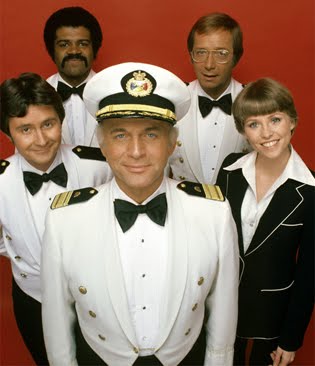
If Captain Stubing had been at the helm, a tragedy might have been averted.
Rescue is a frequent topic on Ethics Alarms, usually in a disturbing context. We all have a duty to rescue others in peril, but we should never underestimate the powerful forces that often work against that duty. Rescue can be dangerous or frightening, and often there are perplexing questions about when an individual has done enough to ensure a rescue, and what constitutes “enough,” especially if the rescue fails.
In March, the Star Princess—a luxury cruise ship operated by Carnival—was on a cruise around South America. Three of the passengers were bird-watchers, who eschewed shuffleboard and the other fun activities organized by whoever was the counterpart to Lauren Tewes on “The Love Boat” to use their binoculars and telescopes to spot seabirds from the ship’s decks.
It was March 10 when one of the bird-lovers, Jeff Gilligan from Portland, Oregon., saw a boat with a person standing up in it, waving a dark piece of cloth. The vessel was at least a mile away. Another Oregon bird-watcher, Judy Meredith, told reporters that when she focused her lenses on the boat, it was clear to her that the man waving the cloth was trying to get the Star Princess’s attention, and that the boat was drifting, without an engine. She went inside to try to alert the crew about the situation. After she talked to one crew member, she says, he called the bridge and she talked him through what she and Gilligan had seen.”I was trying to have a sense or urgency in my voice — and tell them that the boat was in distress, and they were trying to get our attention.” Another crew member used Gilligan’s telescope to look at the drifting boat, and confirmed their assessment. The boat was drifting in the open seas and in peril. Gilligan said that at that point “We were a bit relieved because he had confirmed that he had seen what we were describing. We expected the ship to turn back or stop or something.” Continue reading
 My favorite baseball player retired a few days ago. Tim Wakefield, a knuckleball specialist who had pitched the last 17 years with my home town Boston Red Sox, finally decided to hang up his spikes at the age of 45. There were several remarkable aspects to his long and successful career (he won 200 games, something the vast majority of major league pitchers never do), not the least of which was throwing the knuckleball almost exclusively, an infamous and rare pitch that is almost as difficult to throw as it is to hit or catch. (Former catcher Bob Uecker famously quipped that the best way to catch a knuckleball was to wait until it stopped rolling, and pick it up.) The most remarkable, however, was the way Wakefield always exhibited exemplary character, on the field and off of it. Continue reading

The Martin Luther King Memorial Commission meets to address the quote controversy
When we last left the star-crossed Martin Luther King Memorial on the National Mall, Secretary of the Interior Ken Salazar had boldly declared that the Interior Department was ordering the embarrassing misquotation of the martyred civil rights leader changed, so he would not sound to future generations like “an arrogant twit,” in poet Maya Angelou’s neat phrasing. Now a war of words and intentions has broken out, with Salazar declaring that the entire made-up quotation (“I was a drum major for justice, peace and righteousness.”—something King never said, and probably never thought, either) had to be removed, and the correct quote (“…if you want to say that I was a drum major, say that I was a drum major for justice. Say that I was a drum major for peace. I was a drum major for righteousness. And all of the other shallow things will not matter.”) added, and Ed Jackson, the architect who oversaw the memorial’s development for years, saying that Salazar’s plan would wreck the structure. Asked if there was any way to remove the inscription from the memorial without destroying it, Jackson answered, “No.” Continue reading

Actually, this is just a cartoon of the former Congresswoman from Erie, but then a Toon could have cast a vote for a bill without reading it too.
Former Democratic congresswoman Kathy Dahlkemper, a Catholic from Erie, Pennsylvania, voted for the health care mega-law in 2010. Now she says she would have never voted for the bill had she known that the Department of Health and Human Services would require all private insurers, including Catholic charities and hospitals, to provide free coverage of contraception, sterilization procedures, and the “week-after” pill .
In a press release sent out while the HHS ruling was still pending, the pro-life Dahlkemper said,
“I would have never voted for the final version of the bill if I expected the Obama Administration to force Catholic hospitals and Catholic Colleges and Universities to pay for contraception,. We worked hard to prevent abortion funding in health care and to include clear conscience protections for those with moral objections to abortion and contraceptive devices that cause abortion. I trust that the President will honor the commitment he made to those of us who supported final passage.”
To which I reply, “Oh, shut up!” Continue reading
 Sunday morning, I am duty bound to play roulette with the talking head shows on the networks, watch “Reliable Sources,” Howard Kurtz’s weekly journalism ethics critique on CNN, and scour the Washington Post, all in search of contentious or interesting ethics topics.
But rather than listen to endless rehashes of the South Carolina Republican primary, endure Newt Gingrich’s gloating, and again hear so-called experts repetitively apply their imaginary expertise to musings about what will happen in the next primary, Florida—-last week’s consensus: Romney had South Carolina wrapped up– I am watching “MVP: Most Valuable Primate” on Encore Family. It’s about a hockey-playing chimp (named Jack, appropriately enough).
It’s not bad.
Screw it. A man can only take so much.
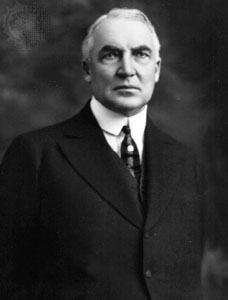
Warren G. Harding, the patron saint of "Nobody's perfect!" presidencies.
“I don’t think anybody in the world has been perfect on management, everybody that’s ever worked for them. So, yes… it’s a flaw. But I think it’s a human flaw… I admit that I’m an imperfect person and didn’t monitor that as well.”
––GOP presidential candidate Ron Paul, responding to ABC’s Jake Tapper’s question about whether his accountability for racially inflammatory statements made in his name in newsletters published by him 20 years ago raise legitimate doubts about his management abilities.
Anyone who’s read this blog much knows what I think of the “nobody’s perfect” excuse for misconduct. To be precise in this case:
1. Nobody said you weren’t human, Ron. Humanity is a rather low bar for a presidential candidate, don’t you think?
2. There is a lot of territory between “perfect” and “letting people write racist and homophobic content under your name in a for-profit newsletter.” For example, the rest of the Republican field is as far from perfect as one could imagine, yet none of them have done that.
3. People who fail to fulfill core management functions when they oversee a project are imperfect, flawed and human, and also called “inattentive and incompetent leaders.” Imperfect, flawed and human individuals can be good and effective Presidents of the United States. Inattentive and incompetent leaders, however, cannot.
 Michael E. McLaughlin resigned as Chelsea, Massachusetts housing director last month, after it was revealed that he had manipulated his way into a $360,000 salary. Now it is being discovered, thanks to some investigative reporting by the Boston Globe, that McLaughlin wasn’t merely overpaid as perhaps the highest compensated state housing official in the nation. He apparently worked only 15 full days in Chelsea for the entire year, in an epic example of official deception and sloth at taxpayer expense.
The Globe’s smoking gun evidence consists of interviews and phone records, which clearly show that McLaughlin went to extraordinary lengths to avoid performing much work related to his job managing low-income housing in Chelsea. He didn’t appear in Chelsea for half the working days in 2011, choosing to spend 47 weekdays in Maine and Florida with his top assistant and “close personal friend” (ahem!), Linda Thibodeau. Then there were another 21 work days spent at conferences in warm cities like Phoenix to Miami, also usually with the comely Thibodeau to keep him company. Continue reading
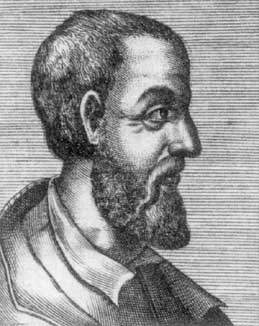
Remember his name?
A chance reference in a book I was perusing yesterday reminded me of a fascinating historical figure whom I hadn’t thought about in decades—which still gives me an edge over most people, who have never thought about him at all. He is Jerome Cardano, or, in the Italian version of his name, Gerolamo Cardano, an archetypical Renaissance man from Italy who walked the earth between 1501 and 1576. When I first learned about him those many years ago, his remarkable life didn’t give me any ethical insights because I wasn’t thinking about ethics then. Now, reviewing the facts of his remarkable life, I find that it carries at least five lessons with value for anyone who strives to live in a more ethical culture, and to have his or her own life contribute to making the world a better place.
Lesson 1 : Diligence—Play the hand you are dealt the best you can.
Cardano’s mother attempted to abort him by taking various poisons, but succeeded only in making him unhealthy. He stuttered; he was incapable of sexual relations, and had chronic insomnia, supposedly resulting in an “annual period” where he got little or no sleep for two to three months. He was afflicted at various times with the plague, cancer, dysentery, and many lesser ailments, yet he led a life full of extraordinary accomplishments and adventures, and continued to be active and breathing for 75 years, when most of his class and era died before they reached 45. Continue reading
 The Martin Luther King Memorial was unveiled without the commission responsible for it bothering to fix what has been almost unanimously condemned as an embarrassing mistake, a rephrased, out-of-context quote on the sculpture base (“I was a drum major for justice, peace, and righteousness”) that misrepresents Dr. King’s career and was also something he never said. This is inexcusable, but at least the boob who unilaterally made the decision spelled “righteousness” correctly. The sign above is emblematic of a different ethical problem, the widespread abdication of the shared obligation to speak up when one sees someone else making a really stupid mistake. Continue reading
 Ethics Alarms