An Easy Ethics Call: The Flasher In The Girl’s Locker Room (UPDATED)

Proudly defending the right to freak out little girls.

How society should treat individuals with one gender’s genitalia but who identify with the opposite gender is a question that involves much more than ethical considerations. At this point, I haven’t been able to devote sufficient thought and research to the problem to propose an answer. The current controversy of Colleen Francis, however, inspires no such hesitancy on my part, because the correct solution to that problem is purely a matter of ethics. I’ll stipulate, for the time being, that it is right, legal and proper for Colleen, a transgendered student at Olympia College in Evergreen, Washington, to use the women’s locker rooms there, despite the fact that the 45-year-old still has a complete set of male genitalia, since she identifies as a woman, and as far as the school is concerned, a woman she is. Sold. I buy it.

However, Colleen apparently likes to display her alien genitalia with abandon in the ladies locker room, despite the fact that she often is surrounded by members of a high school swim club and a children’s swimming academy, many of whom are high school age or younger, and some of whom are as young as six.

Unethical. Inconsiderate. Offensive.

Disrespectful. Irresponsible.

Wrong. Continue reading

Ethics Hero: Jeffrey Warren

You’ve probably heard or read the story by now.

Wait! Maybe he’s Cherokee!

17-year-old Jeffrey Warren rose to accept the $1,000 college scholarship awarded by the local Martin Luther King Senior Citizens Club during seniors night at Martin Luther King High School in Riverside, California, and provoked both laughter and awkward gasps. He was obviously white—as white as Elizabeth Warren—and the scholarship for intended for black students, though Warren didn’t know that when he applied.

Later, Warren decided to give back the money. His family said they didn’t want the African-American women who gave out the award to be foiled in their attempt to help young black scholars, and that it was the right thing to do. I would say that it was a right thing to do, and showed exemplary kindness, compassion, empathy, generosity, charity and altruism. Jeffrey had every right to accept the money. The Club’s requirements were vague, and did not make it clear that he was not eligible when he applied. If he and his parents had wanted to make a political and philosophical statement about the hypocrisy of a race-based scholarship in the name of Martin Luther King, this was an ideal opportunity, and an argument could be made that this would have been the “right” thing to do as well, if not “righter.” Continue reading

Ethics Quiz: Are Fake Dwarves Unethical?

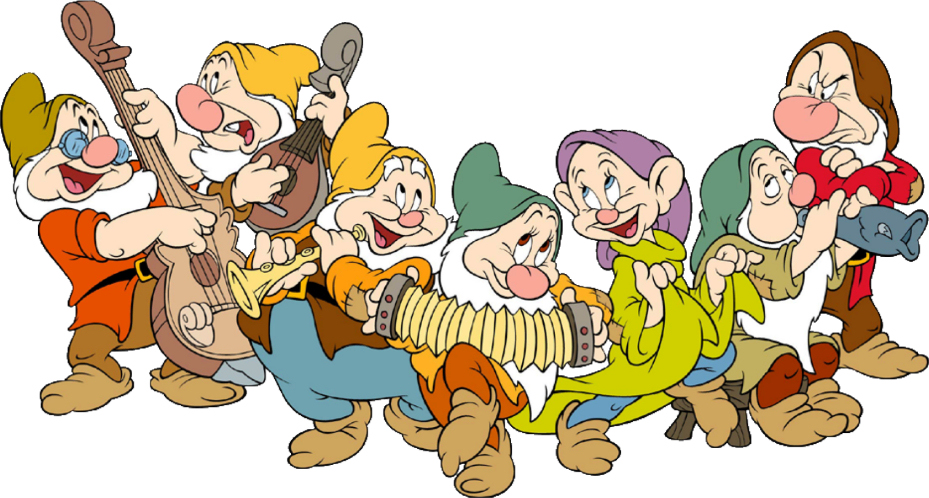
Remember, Disney didn’t cast little people as the dwarfs either…he cast ink.

The advocacy group “Little People of America” is crying foul because the seven dwarves (or dwarfs, if you’re Walt Disney) in “Snow White and the Huntsman” were played not by real little people (who don’t like being called dwarves, just playing them for money) but by digitally-altered normal-sized actors.

A representative of the group told the gossip web site TMZ that the studios should be “casting people with dwarfism as characters that were specifically written to be played by little people … and other roles that would be open to people of short stature.”

Your Ethics Quiz of the Day: Do movie makers have an obligation to cast small people in small people’s roles? Is it unethical to use special effects to do avoid casting them? Continue reading

Is It Fair For A Business To Discriminate Against the Homely?


Take your pick!

The EEOC is investigating a popular Boston area coffee shop chain, alleging that it discriminates in favor of attractive young waitresses to the detriment of older or more homely waitresses. The management of Marylou’s disputes the accusation, arguing that its hiring pool is disproportionately young and attractive.

I don’t want to get into the actual guilt or innocence here, but rather muse about the ethical issue. Should there be laws preventing employers from using attractiveness as a criteria in hiring, if it is relevant to the success of the business, or even if it is not? If a coffee shop owner’s patrons are overwhelmingly male, and the owner believes that having waitresses who look good in a starched uniform makes the customers happy and more likely to spend their money, why should the law prevent that? Is there anything really wrong with the conduct? Continue reading

Amendment 1: When Apathy Is Unethical

As you probably know by now, North Carolina voters went to the polls yesterday and passed a constitutional amendment that made same-sex marriages and even civil unions invalid under the law. Amendment 1, as it is called, is unusually brutal, as it will almost certainly take away the health insurance of many individuals in long-term committed relationships who were covered by their partner’s workplace insurance, and if they have pre-existing conditions, it will be difficult and expensive finding new coverage. Even that however, is less harmful and hurtful than having their home state declare that they are a second-class citizens, which is what this and similar provisions around the country do. Continue reading

A Worm In The Culture: Warped Competition Ethics

I'm sorry, Serena, but you're just too good to be on the tennis team. We've decided that you should be on the chess team.

It is difficult for me to comprehend the kind of thought processes that Southampton (New York) High School to ban student Keeling Pilaro, the only boy on  the school’s field hockey team, from playing this season because he is too good at the game, which he learned as a child in Ireland.  I do know their logic is unethical, un-American, and unfair, at least as unfair ought to be defined in the land of the free and the home of the brave.

“They told me I wasn’t allowed to play because I had advanced skills that I learned in Ireland,” Keeling told  local TV reporters. “They told me because I have an ‘adverse effect,’ but they didn’t even explain what the adverse effect was, so that’s what I’m kind of confused about.”
The executive director of the Suffolk County field hockey organization told the local Fox affiliate that the boy was being banned because field hockey “is a girl’s sport.” “When a boy plays,” he explained, “it leads the way for other male players to come in and take over. “[Keeling is] having a significant adverse effect on some of his opposing female players. The rules state he would be allowed to play if he wasn’t the dominant player.”

“Adverse effect,” in field hockey-speak, apparently means an unfair physical advantage, danger to opponents,  keeping a girl from getting more playing time or taking away from a female’s ability to garner postseason awards.

Ah. So we’re talking about discrimination, then, are we? Just so we have our terms straight.

If the woman’s movement has integrity, and it often doesn’t, we would see women protesting this indefensible treatment of the sole male player on a female team. The only field hockey team in the school is the girl’s team: Keeling, by the same principles of fairness and equal opportunity that have been enforced to allow girls to try out for boy’s wrestling, football and baseball teams in high schools and colleges around the country if they have the skills to make the team, should have every right to play on the only field hockey team there is, and not be penalized for his superior skills. Have authorities ever kicked a girl off a field because she was too fast, too strong, too skilled, too good? Would they? I certainly hope not.

Imagine if Ted Williams, LeBron James, Joe Montana, Bobby Orr and Serena Williams had been kicked off their high school teams because they dominated. What kind of Maoist, mediocrity-rewarding, excellence-stifling values is Southampton High trying to infect the nation with by penalizing high performance and achievement? Apparently they don’t understand the nature of competition, which is a serious handicap for a school, and a malady that should not be passed on to a single student. The outstanding competitors make every other player better, unless a player doesn’t want to make the effort, doesn’t have the character to accept that one doesn’t have to win to achieve something important in a contest, or is playing for the wrong reasons. I remember that I was once admonished by a stage director of an amateur production that I was too skilful and experienced for the rest of the cast, and was making them look bad. I was aghast then, and that conversation makes me angry even now, decades later. “Tell them how to be better, then, ” I told her. “Because I’m sure not going to try to do any less than my best.”

We have to decide if we’re really serious about gender equality or not. Keeling is not bigger than the girls on his team, and he doesn’t have a beard and 18 inch biceps. There are two things different about him, and two things only: he is really good, and he has male genitals. I thought the lesson of the women’s movement was that one’s genitals shouldn’t matter, that what mattered was whether you could do the job. Or does that rule only apply to female genitals?

I can certainly understand, if not the logic that is stopping Keeling Pilaro from playing the sport he loves, where the seeds of such illogical logic come from. The seeds come from the bizarre regulations that allow women to be firefighters with upper body strength that would disqualify male recruits, and female soldiers to be certified as combat ready without having to meet the same requirements as a male soldier. They come from affirmative action. When equality doesn’t mean equality in our nation’s increasingly warped, discrimination-is-fairness culture created by regulators, activists and bureaucrats, “Through the Looking Glass” decisions like this one, telling a player he’s too good to be eligible for the team, can begin to make sense.

It doesn’t make sense. It’s not fair, it’s not healthy, and if one applies Kant’s Rule of Universality to it, we end up with a nation of gray, where, as the old Chinese proverb cautions, “the protruding nail will he hammered down.” No more Babe Ruths, no Dana Torreses; no David Beckhams, no Michael Jordans, no Carl Lewises, no Muhammad Alis, no Tiger Woods. And also, as this infection spreads, no Meryl Streeps, Thomas Jeffersons, Thomas Edisons, Eugene O’Neils, or Barbra Streisands. After all, we mustn’t make the less talented and accomplished look bad, feel bad, or make them have to aim higher and work harder to achieve their dreams. It’s wrong to excel. It has an “adverse effect” on those who can’t or won’t.

We all have a stake in whether Keeling Pilaro gets to play field hockey this fall.

Abusing Stutterers: I Am Surprised and Disappointed

A prominent stutterer. She managed to be rather popular in groups despite the problem, or so I hear.

The New York Times related the story of County College of Morris student Philip Garber Jr., who stutters badly. He is also confident and inquiring, and likes to participate in class discussions, though naturally his speech problems make that process challenging for him, his teachers, and his classmates.

One instructor, an adjunct professor named Elizabeth Snyder, simply refused to call on him, and informed him that his stuttering was disruptive, and to keep his questions to himself or write them down. He reported this to the Dean, who told him that he should transfer to another class.

What? Continue reading

Comment of the Day: “America’s Untouchables, Continued…”

Commenter Shelly Stow has the Comment of the Day, with some useful calculations inspired by the post “America’s Untouchables, Continued…”:

“Every time I read about the creation of “child-safe” zones, I just shake my head. According to the latest statistics from the Juvenile Justice and Delinquency Prevention Division of the DOJ about who child molesters are, for victims age 6 and below, 58.7% are family members, 39.7% family acquaintances, and 1.8% strangers (and not all of the stranger group are registered offenders; in fact, few are); for victims age 7-11: 50.5% family; 46.7% acquaintances; 2.7% strangers; and for victims age 12-17: 21.7% family; 72.9% acquaintances; 5.7% strangers–keeping in mind that only a tiny percentage of the stranger groups are registered offenders.

“Based on this, the only “zone” that would keep children out of the reach of potential molesters and therefore safe from sexual abuse is a zone that would exclude their parents, siblings, grandparents, entire extended family, baby sitters, neighbors, teachers, playmates’ parents, siblings…..everyone in their lives.”

America’s Untouchables, Continued: Persecution in Huachuca City, Arizona

Wait! I've got a great solution! Why not a YELLOW STAR for registered sex offenders?

Huachuca City, Arizona has approved an ordinance banning registered sex offenders from all public facilities, including schools, parks, libraries, pools, gymnasiums and sports facilities. As discussed in an earlier post, the willingness of municipalities to continue to oppress and stigmatize law-abiding citizens who the justice system has deemed fit to re-enter society is ignorant, cruel, and unconscionable. And it is getting worse.

Mayor Byron Robertson is mouthing the same rationalization that others in his position have: it’s all for the children. “As a town and as a community, we have to protect our children. As a council, we have to make the right calls. Our police chief indicated that we were having a serious problem with some pedophiles that were being a nuisance and we took steps to overcome that.” The “steps” involve forcing innocent American citizens to move out of town, because “some” individuals, who are not necessarily registered sex offenders, are posing problems.This isn’t good for the children, because it isn’t good for children to grow up in a community that engages in cruel and invidious discrimination based on presumed criminal tendencies. Continue reading

Ethics Train Wreck Warning: Affirmative Action for the Hideous

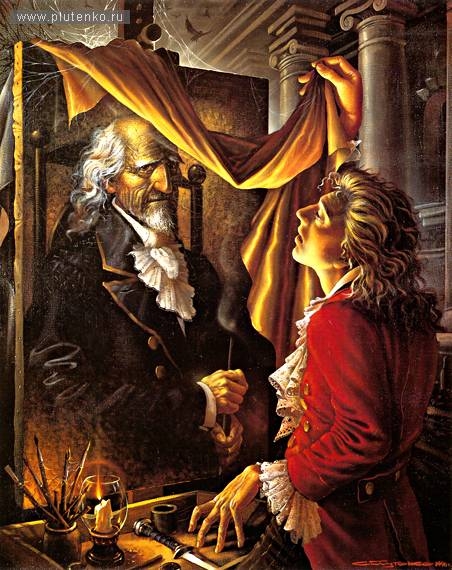
You won't need that portrait any more, Dorian...the Americans with Disabilities Act has you covered!

It is rare that an ethics train wreck of culture-wide proportions can be prevented with a firm, “Shut up, and go away!” This appears to be one of those times, however, and if anyone is reluctant, I hereby volunteer for the job.

Daniel S. Hamermesh, a professor of economics at the University of Texas, is shilling for his book, “Beauty Pays,” in which he proves the unremarkable fact that being attractive is an advantage in society , and being unattractive is an impediment. He recently hit the op-ed pages of the New York Times, writing, among other things, this:

“Why this disparate treatment of looks in so many areas of life? It’s a matter of simple prejudice. Most of us, regardless of our professed attitudes, prefer as customers to buy from better-looking salespeople, as jurors to listen to better-looking attorneys, as voters to be led by better-looking politicians, as students to learn from better-looking professors. This is not a matter of evil employers’ refusing to hire the ugly: in our roles as workers, customers and potential lovers we are all responsible for these effects.”

“How could we remedy this injustice?”

Whoa! There it is, the magic words that open the door for ham-handed social architects to do what they always to do, try to remedy the results of natural human proclivities and preferences with laws. Continue reading