Ethics Quiz: You Now Know That Your Neighbors Are Irredeemable Creeps—Now What?

“Now that you are all grown up, I want to tell you about the Duffs, and you can decide what to do…”

And you think you have rotten neighbors! Meet the Duffs.

Scott and Roxanne Duff of Leechburg, Pennsylvania found their neighbor’s Golden Retriever and new Rottweiler puppy  wandering in their yard. They called the police, who said to describe the dogs and hand them over to a local animal shelter. They finally returned the Golden to the owners, who lived on the same street, but told the police and the owners that the puppy had run away. Actually, the Duffs were in the process of trying to sell the Rotty on Craig’s List.

The next day, the owner of the dogs called police to say he had heard that the puppy was still at the Duffs’ house, as someone reported seeing it in their yard. Police inquired, only to be told, “Puppy? What puppy?”  Eventually the Dastardly Duffs confessed to selling the dog for $50. The puppy was duly retrieved from a Pittsburgh woman who police said was unaware of the theft, and reunited with its owner. Continue reading

Writers Writing About Ethics, Without Any

Sorry, can’t use you.

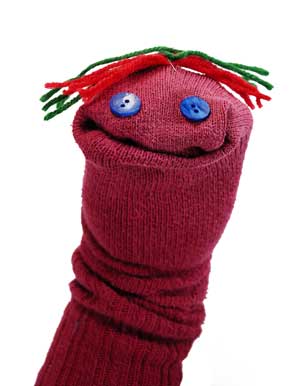
Writer Joe Konrath has written one of those blog posts about ethics that makes me want to defenestrate myself, a post that expounds on rationalizations as a substitute for ethical analysis because he is incapable of the latter, arriving at fatuous and misleading conclusions. Naturally his post was picked up and expounded upon by another blogger, Ben Galley, who has even launched an ethics-challenged website called Ethiks to promote similar ethics rot.

Both writers are holding forth about recent scandals in the publishing world, involving so-called “sock puppetry,” where a writer anonymously praises his own books on-line or trashes the work of competitors, and writers paying for positive reviews. Both are also laboring under juvenile ethical delusions, and obnoxiously so, among them:  that “everybody does it” is a valid excuse for cheating, that the fact that a critic of unethical behavior might engage in such behavior himself under certain conditions invalidates the ethical criticism, and that unethical people insisting that unethical conduct isn’t puts such conduct in a “grey area.” None of these is true; none of these is remotely true.

The ethically-clueless tenor of both posts can be gleaned from this section, by Galley:

“Ethics in life are a grey area. No less in the book industry. To borrow JA’s analogy, the claim of “I would never kill” goes out of the window pretty quickly when protecting your family against a murderous intruder. The line of ethics is never a straight one, often zig-zagging through a charcoal no-man’s land of right and wrong. The question is this: Where does the line lie for you? It’s nothing less than personal. Some people simply shrug at the thought of sock-puppetry. Others go a shade of red and grit their teeth. Sadly, we can write all the codes and edicts we like, the point is that not everyone will a) agree, nor b) abide.”

Let me see: wrong, wrong, irrelevant, wrong, not necessarily, no it isn’t, NO, it REALLY ISN’T, and so what?

Most ethical questions are not gray at all: these definitely aren’t. They are clear as clear can be. “Sock puppetry” is dishonest and unfair. An author paying for positive reviews, and a critic accepting payment from an author to review his work, is blatantly dishonest and a conflict of interest. There is no “gray” about it; they are just wrong. Anyone who draws the “line” anywhere else is wrong too. It doesn’t matter whether everyone agrees: those who don’t agree are unethical. So are those who can’t “abide.” Their unethical conduct doesn’t alter right and wrong.

Konrath’s piece wastes our time with a long argument claiming that unless one is as pure as the driven snow, not only can’t you call unethical conduct what it is,  the fact that you can’t calls into question whether the unethical conduct is really unethical at all. Here’s his “quiz,” which Konrath presents triumphantly as if it is a real brain-buster, when anyone with a modicum of honesty, decency and common sense should be able to score 100% without straining a neuron.

Here it is, with my answers in bold: Continue reading

Unethical Quote of This And Any Other Month: Bonnie Pollack

“It was a real dilemma. I decided to do the right thing.”

—-58-year-old Bonnie Pollack of Manhattan, a doctoral student in social welfare who lives in Manhattan, telling the Wall Street Journal about the time she threw away her husband’s absentee ballot after promising to mail it, because she knew he was voting Republican. She didn’t tell him about the fate of his vote for years.

This photo of a baby polar bear has nothing to do with Bonnie Pollack, but it cheered me up after having to think about her. UPDATE: Now I find out that it’s a toy, so I’m depressed  all over again. If you can’t even trust cute, all is lost.

Ms. Pollack’s jaw-dropping admission appears in an article called “The Marriage Problem That Comes Every Four Years,” but is an example of the year-round ethics problem that makes life intermittently miserable for us all: people whose concept of right and wrong consists of arrogance, self-righteousness, and a full embrace of “the ends justify the means” without any moderation.

Let us do an ethics audit of Bonnie’s words and deeds: Continue reading

When Late Is As Bad As Never: The Thalidomide Apology

Such a nice apology to the Thalidomide victims! Why no applause?

Harald Stock, Chief Executive of the Gruenenthal Group, has issued the company’s first apology and acknowledgment of responsibility for its role in manufacturing Thalidomide, the drug taken by pregnant women for nausea in the ’50’s and ’60’s. The women who took the drug, primarily in Europe, gave birth to children with deformed limbs or no limbs at all.  Stock  apologized to the surviving mothers and to their children, saying,

“We ask for forgiveness that for nearly 50 years we didn’t find a way of reaching out to you from human being to human being. We ask that you regard our long silence as a sign of the shock that your fate caused in us.”

Wow, that’s some case of shock—50 years! And the shock affected not just the executives of the company that were around when the drug was distributed without adequate testing and so-called “flipper babies” were being born in the thousands, but two generations of subsequent Gruenenthal management too. Let’s translate this apology, shall we? Continue reading

Ethics Quote of the Week: Harvard Dean Jay Harris

“We always stress academic integrity with our students. It’s very hard to explain to someone that this raises ethical concerns and that it’s not OK.”

—-Jay Harris, Dean of Undergraduate Education at Harvard College, where about 125 students in a Government course are under investigation for cheating on a take-home final. Similarities in the tests handed in for Government 1310 ( Introduction to Congress) raised suspicions of copying or collaboration. It is the largest cheating scandal in Harvard history.

Wait…what?

Yeah, right.

Harvard stresses academic integrity, but about half a class cheated as soon as some lazy professor was willing to trust the students with a take-home exam? Well, you’re not doing a very good job stressing integrity,are you, Dean? But why does Harvard have to stress integrity—aren’t these supposed to be the best and the brightest? Doesn’t the nation’s most prestigious college only admit students with integrity, or did they cheat to get into Harvard, too? Isn’t part of “best” being honest, and doesn’t “brightest” mean “doesn’t have to cheat”? I’m so confused!

Please help us understand, Dean Harris! Continue reading

Unethical Quote of the Day: Slate’s David Weigel

“The Washington Post condemned Reid for “smear tactics not unlike those of Joseph McCarthy,” which makes sense if you think that refusing to release your tax returns is like being unfairly accused of membership in the Communist Party. It’s a nice idea, that the majority leader of the United States Senate should operate under some rules of decorum about truth, even if it is only randomly applied.”

—-Slate’s David Weigel, in a post dismissing Harry Reid’s Big Lie attack on Mitt Romney as “politics as usual.”

Somewhere at the bottom of the journalism barrel you may see David Weigel, mangling ethics

David Weigel is a Democratic flack posing as a political reporter, and my standards for his writing is low—but not this low.

The Post’s quite correct condemnation of Reid does not, as Weigel disingenuously suggests, amount to saying that “refusing to release your tax returns is like being unfairly accused of membership in the Communist Party.” It amounts to saying that publicly accusing a political adversary of evading his taxes for ten years using nothing more than hearsay from anonymous, dubious and unrevealed sources is like accusing a political adversary of belonging to the Communist party using similar tactics. Romney’s choice not to release his taxes doesn’t justify or excuse Reid’s smear, any more than McCarthy’s victims’ associating with Americans who exercised their Constitutional rights by espousing Communist sympathies justified McCarthy’s smear. Weigel is using a false and flawed analogy to excuse the inexcusable, because, like Reid, he’s on Team Obama. Continue reading

Worst Apology of the Month: First Baptist Church of Crystal Springs, Mississippi

A prominent member of the First Baptist Church of Crystal Springs, Miss.

It’s time to add a new Ethics Alarms category— the Worst Apology. Apologies seem to be flying around faster than usual as campaign season intensifies, though some individuals who desperately need to apologize—like, say, Harry Reid, are not.

I’ll be using the Ethics Alarms Apology Scale to rank the rotten apologies in our future. Ironically, the first winner in the category is a rare form of putrid apology that doesn’t even appear on the scale. The lowest ranking on the scale is a 10 ( “An insincere and dishonest apology designed to allow the wrongdoer to escape accountability cheaply, and to deceive his or her victims into forgiveness and trust, so they are vulnerable to future wrongdoing”), but the recent apology by the First Baptist Church of Crystal Springs, Miss. pulls an 11. Continue reading

A Directory of Answers For the “Instalanche” on “Funny! But Wrong: The “Harry Reid Is A Pederast” Rumor”

Ethics Alarms just isn’t constructed for large waves of angry commenters, as are occasionally generated when I touch on some interest group third rail. I try to respond to as many coherent comments as possible, but when too many of them arrive on the same topic, my “civilized colloquy on ethics” model breaks down, and I find myself spending too much time writing dangerously hasty responses to trolls, fanatics, web terrorists and others who have as much interest in ethics as I have in stamp collecting. I also have to individually green light every new commenter, and this alone takes up time that could be better spent researching and writing new posts.

Legendary conservative blogger Glenn Reynolds generously linked to my recent post on the “Harry Reid is a pederast” campaign online, and that’s generally a good thing, one that most bloggers would give their right arm for,since his blog Instapundit is one of the most popular (and professional) on the web. This, in turn, triggered the so-called “Instalanche” at Ethics Alarms, which has resulted in this blog getting the equivalent of two weeks of typical traffic in 24 hours. Sadly, the vast majority of the comments following the Instalanche are examples of the kind of thinking this blog was established to combat, and as a whole, the group is a graphic example of why political discourse, and indeed the political system itself is so toxic and dysfunctional. This is no knock on Prof. Reynolds, whose blog I read most days, and who is almost always rational and fair. It is a knock on the majority of his readers (not all) who chose to leave comments here.

The comments were, in addition to being non-ethical in nature, brain-meltingly repetitious in their fallacies and themes. It’s bad enough having more comments than I can keep up with; having to read nearly identical sentiments over and over again is more than I can stand. And since it is clear that most of the commenters aren’t  bothering to read the thread, never mind the links in the posts they are railing about or the rest of the blog, this is not going to cease anytime soon. Yes, I know that most of this breed of commenter doesn’t want a response, because their comments are seldom thought through or carefully crafted, and they are shocked to have their sloppy reasoning called so. (Then they accuse me of ad hominem attacks.) Too bad. This isn’t a bulletin board or a graffiti wall.

So I’m no longer going to answer individually the vast majority of the comments on the post in question, “Funny! But Wrong: The “Harry Reid Is A Pederast” Rumor,” just as most of you will not have the time, stomach or stamina to wade through all the comments to it. What I offer for the convenience of everyone concerned, but mostly me, is this, a directory of the most common comments from the current Instalanche, and my answers to them. I will direct all future commenters on the original post here, and the odds are that they will find their reply waiting for them. Continue reading

Unethical Quote of the Week: Senate Majority Leader Harry Reid

“He didn’t pay taxes for 10 years! Now, do I know that that’s true? Well, I’m not certain. But obviously he can’t release those tax returns. How would it look?… You guys have said his wealth is $250 million. Not a chance in the world. It’s a lot more than that. I mean, you do pretty well if you don’t pay taxes for 10 years when you’re making millions and millions of dollars.”

—-Senate Majority Leader Harry Reid, in an interview with The Huffington Post. Reid’s source for the accusation that Romney “did not pay taxes for ten years” is a an individual he refuses to name, and thus one whose allegations cannot be checked or substantiated.

Sen. Harry Reid

In the dirty, slimy world of politics, you can’t get much dirtier or slimier than Senator Reid. Richard Nixon would be proud of him;  Joe McCarthy would applaud, Joseph Goebbels too, and every low-life, gutter-dwelling lie-monger who has used innuendo and rumor to smear candidates, opponents and strategically-chosen victims in between.

Reid is a leader of the Democratic Party, and the Party is accountable for his words. Fair Americans have been justifiably disgusted with the likes of Donald Trump, who has suggested that President Obama’s reluctance to release his scholastic records, and before that his birth certificate, were proof of something nefarious. Guilty until proven innocent—this is the secret ingredient of Big Lie politics, and that is what Reid, who really is beneath contempt here, is practicing. Reid makes Trump look fair and Newt Gingrich look moderate by comparison, and any Democrat, whatever they think of Mitt Romney, that doesn’t have the integrity to condemn this kind of abuse should be have himself fumigated. Continue reading

Signature Significance, Jonah Lehrer, and That Sinking Feeling

Yes, uh, a little TOO MUCH creativity there, Jonah…

At the New Yorker, star writer Jonah Lehrer has resigned after it was shown that he fabricated quotes from Bob Dylan for his well-reviewed book “Imagine: How Creativity Works.”

This was the final shoe dropping that began with one untied shoelace, the discovery in June that Lehrer had plagiarized from himself, lifting a section of a piece published earlier in one publication to include in a piece written for The New Yorker. This is a minor ethical incursion—-Lehrer had represented the second essay as original, so using prior published material was dishonest even if he was the author—but it launched his employers on a mission of scrutiny, investigating to see if the one transgression was part of a trend.

When it comes to professional ethics, you see, it often is. The principle of signature significance holds that in some pursuits just one episode can be enough to make certain conclusions. A writer of true integrity never borrows from his own published work without flagging the fact. Doing so even once indicates shaky integrity, and a willingness to cut corners. It may well indicate a proclivity to cheat in more egregious ways. Continue reading