Comment of the Day: “’Is We Getting Dummer?’ The Primaries This Week Tell Us ‘Yes’”

Master commenter A M Golden had a stand-out week, with several COTD-worthy posts, including this one, and a Guest Post that arose out of yesterday’s Open Forum.

I am also grateful any time I’m given an excuse to re-post one of my favorite—and, sadly, most relevant—clips from the Ethics Alarms archive.

Here is A M’s Comment of the Day on “Is We Getting Dummer?” The Primaries This Week Tell Us “Yes”:

“Is We Getting Dumber?”

There is some evidence for that. Beyond statistical proofs that we are failing to properly educate generations of students in basic skills, there is a sort of – shall I write it? – malaise about being responsible adults in this country. I don’t know where it came from. Maybe it’s our high standard of living that emboldens it. Maybe is a misapplication of American individualism that has turned into the oft-unethical slogan, “My way or the highway.” It may, in fact, be a broader misapplication of the also oft-unethical slogan, “The customer is always right.” Because, in fact, the customer is not always right.

It is a rationalization that encourages a form of classism (customers consider themselves socially, educationally, financially above the ones who are tasked with serving them), incentivizes unethical behavior, such as fraud, theft, demands for special treatment and, occasionally, results in horrific behavior like sexual harassment, assault and/or battery.

We have started to commoditize large aspects of our lives. Whatever you may say about poorly-educated, biased teachers, there are plenty of good teachers out there who cannot run their classrooms because the administration acts like the store manager who allows customers to abuse the employees under some misguided notion that this is how to run a successful business. The teachers who can teach but are expected to look past misbehavior and abuse while still doing their jobs eventually leave and what are left are the ones who can’t and won’t teach. That’s what happens in a poorly-run business such as the one I described above. Eventually, you have only the employees who don’t care about their jobs.

Some reasons for this lack of maturity and growth include what (commenter) Steve Witherspoon pointed out above – laziness. We have large swathes of the population who can’t be bothered to do very basic things. They are manchilds and womanchilds, prioritizing their shallow wants over their very real responsibilities. Expecting them to pick up a broom and sweep the floor rather than playing four hours of video games per night is tantamount to crushing their souls. Expecting them to be fiscally aware, to save, to monitor spending, means they can’t spoil themselves with destination weddings and pricey vacations.

I am also going to add distraction to the list. Prior to mobile phones, we had to memorize important telephone numbers. Now, there are people who cannot even provide their own numbers without looking them up. The internet and the capabilities of the internet have made brain muscles weak. It has also contributed to the collapse of the work ethic and civility in general. Restaurants routinely have to put up with people on their phones while ordering in person which often leads to miscommunication and to the aforementioned abuse of staff when the order is wrong. Increasing numbers of restaurants will not serve customers until the phone is put down.

Before Offering Second Thoughts J.D. Vance’s “Childless Cat Ladies” Controversy, These Relevant Horror Stories:

I was literally in the middle of a preparing a post about the cultural sickness J.D. Vance was allegedly trying (and failing miserably) to focus public attention on when he mocked “childless cat ladies” dictating U.S. policies when these two awful stories came across my screen.

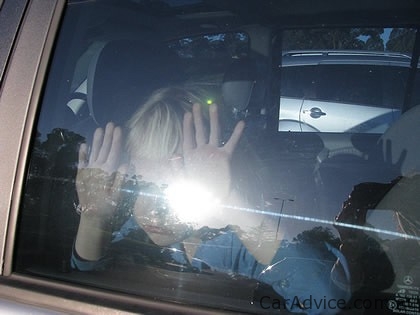
In the first, I learned that Parker Scholtes, 2, was found dead in her parents’ Honda SUV parked outside their home in the Tucson suburb of Marana. Her father, an irresponsible man-child named Christopher Scholtes, had left the baby “to nap,” that is, to broil, for more than three hours on July 9. He said he left her in the car with the air conditioner on (like a good dad, or his warped idea of one), but got involved playing PlayStation video games and didn’t check on her until three hours had gone by. He confessed to police that he knew the car’s engine would automatically shut off after 30 minutes, but just got, you know, carried away and lost track of time. You know how it flies by when you’re having fun.

Continue reading

Ethics Quiz: Four Young Children Locked In A Hot Car

kid-in-hot-car

Mom and mom advocate Lenore Skenazy writes the Free Range Kids blog, which I have to remember to check out regularly. She is the source of today’s Ethics Quiz, which she obviously believes has an easy answer. We shall see.

Charnae Mosley, 27, was arrested by Atlanta police and charged with four counts of reckless conduct after leaving her four children, aged 6, 4, 2, and 1, inside of her SUV with the windows rolled up and the car locked.  It was 90 degrees in Atlanta that day. The children had been baking there for least 16 minutes while their mother did some shopping. A citizen noticed the children alone in the vehicle and reported the children abandoned.

Skenazy believes that the arrest is excessive—that the mother made a mistake, but that compassion is called for, not prosecution:

“[T]he mom needs to be told that cars heat up quickly and on a hot summer day this can, indeed, be dangerous. She does not need to be hauled off to jail and informed that even if she makes bail, she will not be allowed to have contact with her children…No one is suggesting that it is a good idea to keep kids in a hot, locked car with no a.c. and the windows up. But if that is what the mom did, how about showing some compassion for how hard it is to shop with four young kids, rather than making her life infinitely more difficult and despairing?The kids were fine. They look adorable and well cared for. Rather than criminalizing a bad parenting decision (if that’s what this was), how about telling the mom not to do it again?”

Do you agree with her? Here is your Ethics Alarms Ethics Quiz of the day:

Was it cruel, unfair, unsympathetic or unkind for Atlanta police to arrest Mosely for leaving her four young children locked in a hot car?

I am an admirer of Lenore Skenazy, but her pro-mother bias led her seriously astray this time. I think she is applying rationalizations, consequentialism and dubious, indeed dangerous reasoning to let this mother off a hook that she deserves to stay on. In her post, she even suggests that the car’s air conditioning was on, though there is no reason to believe that it was based on the reports. If the A-C was on, that changes the situation: I very much doubt that a mother would be charged with leaving four children in a locked, hot car if the car was not, in fact, hot. (One report states that the SUV windows were open, but that wouldn’t support the charges. If the windows were open, then Mosely left her children alone in public, which is a different form of child endangerment, but still dangerous. For the purpose of the quiz, I am assuming that the windows were shut, and that the air conditioning was not on. So does Skenazy.)

Let’s look at Lenore’s analysis errors:

  • She notes that the children were “fine.” What if they hadn’t been fine? That wouldn’t change what Mosely had done in any way, and what she did was irresponsible, dangerous and potentially deadly. Sixteen minutes, scientists tell us, is more than enough time for temperatures in a closed car to rise sufficiently high to cause heat stroke. Mosely, and obviously her children, were lucky—this is classic moral luck—and that shouldn’t be allowed to diminish the seriousness of what she did. (Aside: I just realized that to find that link, I made the same Google search that Justin Ross Harris made before leaving his infant son to die in his own hot vehicle, which has added to the circumstantial evidence causing him to be charged with murder.)
  •  The rationalizations peeking through Slenazy’s excuses for the mother’s conduct are quite a crowd. Along with #3. Consequentialism, or  “It Worked Out for the Best,” there is #19. The Perfection Diversion: “Nobody’s Perfect!” or “Everybody makes mistakes,” it’s twin, #20, The “Just one mistake!” Fantasy, #22. The Comparative Virtue Excuse: “There are worse things,” #25. The Coercion Myth: “I have no choice,”  #27. The Victim’s Distortion, #30. The Prospective Repeal: “It’s a bad law/stupid rule,” and #33. The Management Shrug: “Don’t sweat the small stuff!” There are probably some more, but that’s plenty.
  • If Skenazy believes that the “it was just a mistake” explanation should protect the mother from prosecution here, presumably she would make the same argument if all four kids (or just one) died. A lot of prosecutors feel the same way. I don’t.
  • If Mosley did this once, she may well have done it before, and is a risk to do it again. The best way to teach her not to do it again is, at very least, to scare her, inconvenience her, publicly embarrass her, and use the legal system to show how serious her wrongful conduct was, and how seriously society regards it. There is no guarantee that a lecture from a cop wouldn’t have just produced just an eye-rolling “Whatever…my kids were just fine, and I know how to take care of them” reaction, a repeat of the conduct, and eventually, a tragedy….followed, of course, by public accusations that the police were negligent and abandoned four children to the care of a dangerously reckless and incompetent mother.
  • I’m sorry, Lenore, but this-“How about showing some compassion for how hard it is to shop with four young kids, rather than making her life infinitely more difficult and despairing?” —makes me want to scream. How about not having more children that you can take care of safely? How about recognizing that your children’s safety comes first, with no exceptions, ever? How about meeting the minimum level of parenting competence, and not remaining ignorant about conduct that has been well publicized as cruel and potentially fatal to dogs, not to mention young children? In this case, compassion is a zero-sum game: compassion for the mother means showing none for her children.

When ethics fails, the law steps in. Too many children die every year from this tragic mistake that arises from distracted parenting, ignorance, and poorly aligned priorities. Prosecuting parents like this one for non-fatal incidents is exactly how the law serves as a societal tool to increase public awareness and encourage better conduct. It is in the best interests of Mosely’s four children as well as the children of every parent who reads about or hears her story to prosecute her to the full extent of the law.

_______________________________

Pointer and Source: Free Range Kids

Facts: Yahoo!, WSB

Revisiting the Tragedy of the Dead Child in the Locked Car

Almost two years ago, I wrote about Washington Post feature writer Gene Weingarten’s provocative and sensitive 2009 exploration of the tragic cases in which a distracted parent leaves a small child in an over-heated car. The issue, now as then, is how society should treat such parents, who are without exception crushed with remorse and guilt, their lives and psyches permanently scarred. Weingarten’s original piece, which won him a 2010 Pulitzer, did not take a position on how such parents should be treated by the criminal justice system. In today’s Washington Post, he does.

Weingarten writes:

“The parents are a continuing danger to no one, nor could anybody sanely argue that fear of prison is even a minuscule factor in preventing this. So we are left with the nebulous notion of punishing, for punishment’s sake alone, an act of accidental negligence that by its nature subjects the doer to a lifetime of agony so profound that it is unfathomable to anyone who has not lived it. Prosecution is not, in my view, warranted.”

Weingarten is thoughtful, analytical, reasonable, compassionate and fair. He is also, in this case, dead wrong. Continue reading

Ethics, Punishment and the Dead Child in the Back Seat

Washington Post columnist Gene Weingarten received a Pultitzer Prize for his feature, “Fatal Distraction: Forgetting a Child in the Backseat of a Car Is a Horrifying Mistake. Is It a Crime?” Focusing on the grief of parents who caused the deaths of their own children by negligently leaving them locked in over-heated cars, Weingarten, to his credit, doesn’t advocate a position in his article, although it would be impossible to read it without feeling compassion and empathy for his subjects, both those who have been prosecuted and those who have not.

The article squarely raises a classic ethical conflict, as well as the question of the role of punishment in society. As always with ethical standards, the issue ultimately encompasses how we decide what is in the best interests of society. Weingarten points out that there is no consensus on whether parents who inadvertently kill their children in this way should be brought to court: some prosecutors bring charges, others do not. Which is right?

I don’t like my answer much, but I think it is inescapable, once the emotion is left behind. Continue reading