Medical Ethics: The Insideousness of Bias

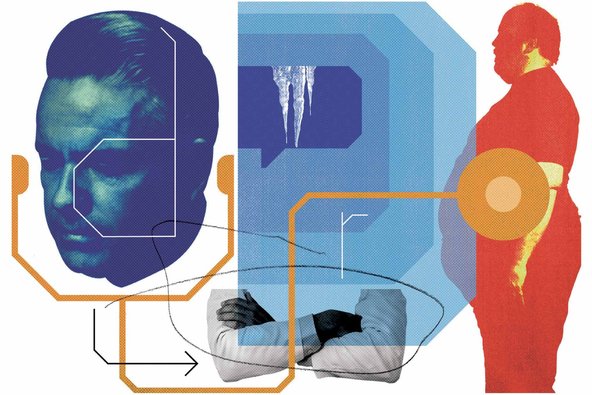
Obesity biasThe New York Times had an enlightening article about bias in its Science section this week. Apparently a study of the interactions between patients and their primary care physicians suggests that doctors are more pleasant, encouraging, empathetic, kinder—just nicer, in short—to their normal weight patients than they are to those who are obese.

From the article:

‘“It’s not like the physicians were being overtly negative or harsh,” said the lead author, Dr. Kimberly A. Gudzune, an assistant professor of general internal medicine at the Johns Hopkins School of Medicine. “They were just not engaging patients in that rapport-building or making that emotional connection with the patient.” …While such expressions of concern and empathy are not remarkable on their own, what was surprising was how absent they were in conversations with overweight and obese patients. And statements like these are no small thing. Studies show that patients are far more likely to follow a doctor’s advice and to have a better health outcome when they believe their doctor empathizes with their plight.

‘“When there is increased empathy by the doctor, patients are more likely to report they are satisfied with their care, and they are more likely to adhere to recommendations of physicians,” Dr. Gudzune said. “There is evidence to show that after visits with more empathy, patients have improved clinical outcomes, so patients with diabetes have better blood sugar control or cholesterol is better controlled.”’

Continue reading

Ethics Quiz: Let’s Play “Icky… or Unethical?” !

Hi everybody! It’s time to play everyone’s favorite play-at-home ethics quiz show, 

“Icky or Unethical?”

…where you, the audience, have to decide whether our guest’s conduct is truly unethical, or just so disgusting, strange or creepy that it just seems like it!

Ready to play? Great! Let’s all welcome our special guest, Dr. Michael Niccole, founder of the CosmetiCare Plastic Surgery Center in Newport Beach, California! Thanks for being here, doctor! Now let’s show our studio audience and those playing at home what you have done to bring you to the show! Here it comes:

“Dr. Niccole gave his daughter Brittani breast implants when she was just 18. He also gave her a nose job. Dr. Niccole performed surgery on his other daughter, Charm,* to turn her “outtie” belly button into an “innie ”when she was 10. Now that both daughters are 23, he regularly gives them Botox injections to prevent wrinkles as well as performing other cosmetic procedures on them!”

All right, there you have it!

Show that picture of Brittani, Don Pardo!

What a lovely young woman! You sure did right by her, Doc!  Hubba-hubba!  And now, it’s time to answer:

Is Dr. Niccole’s work on his daughters just icky, or is it unethical? Continue reading

Comment of the Day: “The Legal Profession’s Muddled Standard For ‘Fitness To Practice’”

...and that's why they wear masks!

Interested Blogger, or “IB,” makes some interesting observations about professional ethics enforcement generally and medical ethics in particular in the Comment of the Day, responding to the post, The Legal Profession’s Muddled Standard For “Fitness To Practice.” Her insight regarding the reasons why professionals are so reluctant to pull the licenses of misbehaving colleagues is astute, I think.  Lawyers and doctors are hesitant to punish individuals for doing something they could imagine themselves doing, though the Golden Rule is  being misapplied. It’s a disturbing thought, but an illuminating one: perhaps John Edwards keeps his law license because other male lawyers think, “Boy, that could happen to me: get smitten by some hot babe in the office, we fool around, she sandbags me on birth control…heck, I might panic. I might try a crazy scheme to cover it up, especially if it was all going to be played up in the tabloids. Poor guy! How can we disbar him?”

Here is IB’s “Comment of the Day”: Continue reading

Home-Grown Mengeles, And What We Must Learn From Them

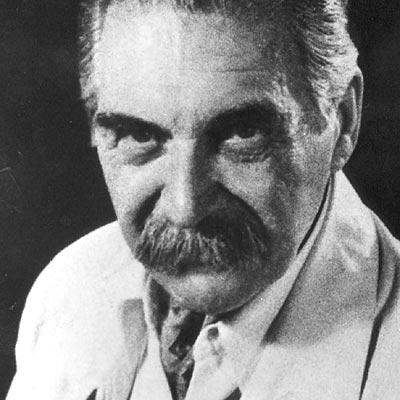
Josef Mengele: researcher, utilitarian, monster

We knew, or should have known, that this extremely ugly shoe was bound to drop eventually.

Last autumn, when the U.S. apologized for federal doctors infecting prisoners and mental patients in Guatemala with syphilis 65 years ago, it put us on notice that a vile and unethical cultural standard had taken hold of the American medical and scientific communities in the 20th century, one that held  it was “right” for the weakest, most powerless and most disposable of human beings to be tricked, coerced or bribed into serving as subjects for experiments that could lead to miraculous cures and treatments for the rest of the population. This–depriving human beings of their rights and lives in the interest of science—is “the ends justify the means” at its worst. But the Guatemala experiments proved that this was once flourishing and respectable in the U.S. scientific and medical research communities, so it would have been surprising if there weren’t more stories of home-grown Mengeles, and sure enough, there were. The U.S. acknowledged as much when it apologized for the Guatemalan tests. Now we have details. Continue reading

Ethics Carnage in Wisconsin: The Ethics Grades So Far

The battleground

The story to date: Wisconsin’s Republican Gov. Scott Walker announced a budget-repair measure to address  looming budget deficits (in a state with a balanced budget mandate in its constitution) by requiring state employees to contribute a larger proportion of their pensions and health care plans, and  restricting their long-standing  collective bargaining rights. Wisconsin’s deficit is projected at $30 million for the remainder of the 2011, with a shortfall of $1.5 billion projected for next year. In response to Walker’s announcement and the near certainty of his plan being passed by the Republican dominated state legislature, 14 Democratic legislators fled the state to prevent a quorum and block a vote, teachers left their classes to protest in Madison, where they were joined by thousands of pro-union protesters, many of whom were organized and bused in by Organizing for America, a White House operated political group.

Let’s try to separate the ethics wheat from the chaff—amazingly, there is actually some wheat–and get an early line on the heroes, dunces, villains, and the rest as the Wisconsin budget battle threatens to become a full-fledged Ethics Train Wreck. Continue reading

Gallup’s 2010 Ethics Poll: Little Trust Where We Need It Most

As it does periodically, Gallup has released the results of its surveys to determine what professions Americans regard as ethical, and which ones they don’t. Gallup notes that there has been very little change over the last two years; on its site, it compares the results to those of polls taken from 2004 to the present.

The professions that have positive ratings from the public are nurses, the military, pharmacists, grade school teachers, doctors, police, clergy, judges, and day care providers.

The rest are in the red, trust-wise, with TV and newspaper reporters coming in below auto mechanics and bankers, lawyers below them, business executives even below lawyers, and well below them, Congress, which comes in barely above car salesmen—and more people actually have a low opinion of Congress members than of car salesmen. Congress inches ahead because a larger number also think that members of Congress are ethical.

Probably federal workers… Continue reading

Unethical Lawsuit Files: The Golfer and the Diner

The tort system  evolved to ensure that those injured by the recklessness, maliciousness or negligence of others can enlist the courts and juries to help them be made whole. It presumes, but, sadly, does not require, a measure of fairness, proportion, personal responsibility, forbearance, prudence, empathy, and common sense, as well as a lack of greed.

Two recent lawsuits, involving a golfer and a diner, illustrate how an otherwise good system can be used unethically.

First, the Diner: Continue reading