UPDATE: Even More Reasons To Distrust Katie Couric, Which Means More Reasons To Distrust The Journalists Who Want To Excuse Her

film editing

The Washington Post criticized Katie Couric’s role in approving the deceptive “Under the Gun” documentary edit but also noted that it is “one instance of bad judgment in a long career.” This was an instance of the “Just One Mistake” rationalization…

20. The “Just one mistake!” Fantasy

Related to #16 but still distinct is the excuse that a particular unethical act should be ignored, forgiven or excused as an aberration because “it was just one mistake.” This argument intentionally glosses over the fact that one mistake can be so blatantly unethical and harmful that an ethical person literally never does such a thing, and thus the “one mistake” is a reliable indicator that the actor does not deserve to be trusted. Abuse of power is in this category. Defenders of the unethical also often use this excuse dishonestly and deceptively to designate as one mistake an ongoing episode of continuous unethical conduct. For example, Bill Clinton didn’t make “one mistake” regarding Monica Lewinsky, but hundreds of them, involving lies, deceits, cover-ups and betrayals.

The versatile excuse was applied by one member of the liberal-biased school of journalism to another, and says more about the Post writer ( Callum Borchers) than it does about Couric. He was actually right on the money when he wrote, only to say later it was “unfair,” this:

Couric thinks the media needs to be tougher on Trump. The reality is the current level of toughness hasn’t dented his campaign. What’s the next level of toughness? One could conclude, based on the misleading edit in Couric’s gun documentary, that it involves distorting interviews to produce manufactured flubs, in hopes that one of them will accomplish what no organic mistake has done so far.

Why yes, one could not only conclude that, but witness it in the media’s successful efforts to turn a dumb Trump quote about a judge’s reasons to be biased against him in a law suit into an imaginary smoking gun that proves he’s a racist. Journalists have been eager to allow the public to forget about Couric’s endorsement of misleading and dishonest editing techniques in the service of the anti-gun rights agenda, because her methods are their methods. The woman should be fired. Journalists must be regarded like accountants and auditors: one they have shown that they will lie, even once, they are worthless. Is that a fair standard? I believe it is. Why then are journalists eager to have Couric held to a lower standard? Easy: they don’t want to be held to the appropriate ethics standard either.

The apologists for Couric have been especially revealing; once again, any journalist who defends Couric can be safely placed along with her in the UNTRUSTWORTHY File. Here’s Mediaite’s Rachel Stockman embarrassing and indicting herself, for example, saying that people are being mean to Katie for impugning her integrity… Continue reading

Update: “A Message From Katie Couric”… A Really Damning One

But she's so cute! How can someone so cute be such a lying, untrustworthy weasel?

But she’s so cute! How can someone so cute be such a lying, untrustworthy weasel?

Katie Couric’s approval of intentionally deceptive editing in the anti-gun documentary “Under the Gun” (which Ethics Alarms discussed here) was and should be regarded as a definitive nail in her metaphorical coffin as a serious and trustworthy journalist. The revelation that she facilitated an unequivocal lie in the documentary, and her failure to acknowledge its unethical nature once it was exposed (instead, Couric endorsed the documentary-maker’s evasive non apology and said she was “very proud of the film” ), has no remedy other than to ignore Katie Couric forevermore. She’s a liberal agenda-driven hack who is not above distorting the truth to bolster policies she likes, in this case, banning guns. After this fiasco,there is no question about it.

CNN’s wishy-washy media ethics commentator Brian Stelter noted in a recent post about the incident that “an assortment of media critics and conservative writers” thought the documentary-maker’s fake apology that Couric rubber-stamped “was not sufficient.” Huh! Excuse me for being impertinent, but why is the practice of alleged journalists with national reputations using lies as a tool of advocacy a partisan issue?

Why are only “conservative writers” bothered when a documentary produced by Katie Couric intentionally uses a deceptive edit to make a group of gun owners look like fools who can’t come up with a response to a basic question about background checks? Why don’t liberal, moderate and honest writers protest as well? Are intentionally dishonest techniques all right with the latter group, as long as they have the purpose of destroying public support for the Bill of Rights?

The flagrant shredding of both documentary ethics and journalism ethics by long-time media darling Couric (who has always been as biased as a journalist can get) received some grudging attention from the non-conservative media, but nothing like the wave of indignation that would have followed a similar breach that made gun opponents look foolish in a documentary by, say, Britt Hume. Compare the treatment of Couric’s deception to the way the mainstream media attacked and discredited the hidden videos of Planned Parenthood ghouls talking about aborting fetuses like it had all the significance of clipping toenails.

Couric signaled, clearly and obviously, that she felt the uenthical edit was just fine, thank-you, when she allowed days to pass without any comment other than that she was “very proud of the film.”  That’s how she feels, folks. There’s no ambiguity or confusion. If she was sorry, or realized she screwed up, or didn’t believe that the scourge of gun violence didn’t have to be stopped “by any means necessary,” including deception, she would have issued a genuine mea culpa immediately. She didn’t.

This is called doing a “Dan Rather.”

Then Katie decided that it wasn’t working. Many of the same “conservative writers” who wouldn’t let NBC shrug off the fact that Brian Williams was a compulsive liar were writing that Couric’s career was toast, so she apparently huddled with her PR crisis gurus and released this on Monday, titled “A Message From Katie Couric”. Here’s the whole, wretched thing: Continue reading

Katie Couric And The Anti-Gun Documentary: Not Just Vanishing Journalism Ethics, But Vanishing Consensus That Journalism Has Any Obligation To Be Ethical

Just in time for the Presidential campaign, old friend Katie Couric has been kind enough to remind us just how little we can trust journalists, how arrogant they are regarding their unethical methods, and how the profession that is supposed to protect democracy is now a threat to it.

Having failed in her effort to be a network news anchor and a talk-show host, the former “Today Show” star  is now biding her time at Yahoo News waiting for a comeback opportunity. She served as executive producer and narrator of “Under the Gun,” an anti-gun documentary written, produced, and directed by anti-gun activist Stephanie Soechtig. In one powerful scene (above) , Couric is seen asking members of the Virginia Citizens Defense League, gun rights supporters all, “If there are no background checks for gun purchasers, how do you prevent felons or terrorists from purchasing a gun?” The pro-gun members of the group with the motto “Defending Your Right to Defend Yourself”can’t answer the question! The documentary shows blank stares and a damning, awkward, 9 second period of total silence.

Fortunately, one of the gun owners in the sequence, VCDL President Philip Van Cleave, recorded the actual event before it was edited to make gun owners look like mutes. There was no pause. The members offered several answers. They were omitted from the documentary, with a pause inserted instead to bolster an anti-gun agenda.

Couric was aware of the deceptive editing, apparently questioned it, but allowed it to remain in the documentary. This is signature significance: no ethical journalist—if there even is such a thing any more—does this, ever, even once. While various media reporters on the left have expressed their disapproval, they have also muted their criticism to try to minimize the damage to their own profession. Here is NPR’s David Folkenflik, for example:

This manipulation — and that’s what it was — would not pass muster at NPR under its principles for fairness in handling interviews. It should be noted that documentaries operate with a different ethos than straight news. “Under the Gun” has a take, strongly suggesting there is a quiet consensus in favor of background checks among gun owners, aside from gun rights advocacy groups. This is not deception on a grand scale, but this handling of the interviews with the Virginia gun owners group is clearly unfair and unwarranted. People deserve to recognize themselves in how they appear in interviews.

Spin. It’s not “manipulation.” Its lying. It is presenting false information, not “manipulated” information. The film affirmatively represented that the response to a question was dumbfounded silence. That is as much a lie as recording fake answers like “Duh, well dang me, I never thought of that! I guess them background checks ain’t such a bad idea after all!” and dubbing them in. Lying isn’t just “unfair;” lying is dishonest and sinister. Continue reading

“Kill The Messenger” And The CIA Crack Story Ethics Train Wreck

I finally saw the 2014 docudrama “Kill the Messenger,” which completed—I hope—the passenger list for a 30-year-old Ethics Train Wreck.

The film purports to be the true story of Gary Webb, the San Jose Mercury News reporter who wrote the sensational “Dark Alliance” series of investigative reports in 1996. The series attributed the inner city crack cocaine explosion in part to Nicaraguan anti-government Contra rebels in  the 1980s funding their efforts by drug smuggling and sales, all with the knowledge and assistance of the  CIA. The agency, the series claimed, was acting to support the Contras despite Congress rejecting the Reagan administration’s request for aid. Like most Hollywood accounts of anything, the film distorts and misrepresents facts to make a better story. Unfortunately, Webb’s story is made more dramatic by making him out to be a tragic hero and victim of a sinister alliance between the mainstream media and the U.S. Government. That’s not exactly true, fair or accurate, and in this matter, affirmatively harmful.

The fastest way to survey this particular Ethics Train Wreck is to list the distinguished passengers, more or less in order of boarding: Continue reading

Professional Chauvinism At “Above The Law”

Clooneys

Lawyers really need to get over themselves. This post, by Staci Zaretski at the legal gossip site “Above the Law,” was introduced in my e-mail inbox with this line:

“Amal Clooney’s lifetime achievements are far greater than those of her husband, George Clooney. Where’s her award?”

The flip answer would be: “George Clooney.” But to the point: one has to have an enhanced regard for the profession of the law and a dismissive and culturally ignorant attitude towards the arts to state that “Amal Clooney’s lifetime achievements are far greater” than those of George Clooney.” Zaretski is welcome to her biases, but by any fair measure, the lifetime achievements of an actor of Clooney’s popularity, daring and prominence far outstrips those of a lawyer like Amal Alamuddin Clooney.  “Above the Law” makes its case thusly:

“Amal is a human rights lawyer who worked on the Enron case, was an adviser to Kofi Annan regarding Syria, and was selected to a three-person U.N. commission investigating rules of war violations in the Gaza Strip.”

Hundreds of lawyers worked on the Enron case(s): you will have to prove to me that she had some special impact that another lawyer with similar skills, and there are thousands, would not have. So she was an adviser to Kofi Annan regarding Syria: is Zaretsky aware that Annan’s misguided and naive efforts to broker a Syrian peace saved not a single life, and may well have blocked more substantive and effective initiatives? Then she served on a commission “investigating rules of war violations in the Gaza Strip.” Translation: she is a willing participant in the U.N. effort to demonize Israel for defending itself from Hamas shelling.  She also is defending Julian Assange. I don’t hold that against her: he’s a criminal, but he deserves a defense. Would he have not gotten one without Amal Clooney? Of course he would have. Continue reading

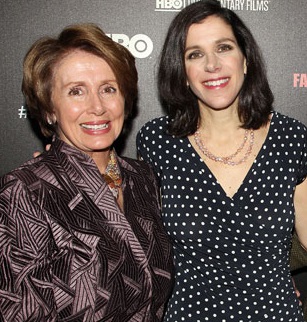
Unethical Quote of the Month: Alexandra Pelosi

“I don’t ask for permission. I think anytime you have to ask for permission your project is doomed.”

—-Alexandra Pelosi, political documentary film-maker (and daughter of you-know-who), speaking about her embrace of the unethical philosophy, “It’s easier to ask for forgiveness than to get permission,” or in her version, “It’s better to beg for forgiveness than to ask for permission.” Pelosi employed a bait-and switch ruse to made former New Jersey Governor Jim McGreavey the subject of her latest documentary.

Mother taught her well...

Mother taught her well…

If Pelosi is correct, then she is in an inherently unethical profession, and shameless about it. If Pelosi is correct, then all documentary film-makers are indistinguishable from other manipulative deceivers like Sasha Baron Cohen, James O’Keefe, Michael Moore, and her. She is not correct, however. There are many celebrated, honest, straightforward documentary makers who get proper permission from subjects before they put them on camera, respecting their autonomy and privacy and engaging with them fairly. The fact that Pelosi sees no need for this tells us all we need to know about her documentaries.  She believes that the ends justify the means, so she can’t be trusted. She will employ chicanery, deception, and lies in order to make a commercially viable film, which will be worth approximately as much, from a documentation standpoint, as her word: nothing.

The context of Pelosi’s smug endorsement of deception as her SOP was the description of how she filmed McGreavey in his new life since resigning as governor and announcing that he was gay. Pelosi persuaded McGreevey to let her follow him around, but not to make a documentary, which McGreevey’s partner, Mark O’Donnell, opposed. Pelosi told Politico, “I don’t think he thought I was making a movie. I think he thought I was just hanging around.” Then, after the documentary was completed, Pelosi says she told her unwitting and deceived star,  “You have a choice. You can support the bigger picture of what the movie is trying to say, which is about the theme of redemption and second acts, or you can not sign a release and this film will go to waste.” McGreevey should have said, of course, “Go to hell. You lied to me. You won’t have my release, and if you show it to anyone, I’ll sue you right back to living in your mother’s house.” Pelosi, however, as master con artist must, chose her victim well. Though “he was not happy,” McGreevey signed the release. Continue reading

Ethics Confusion in Ken Burns’ “Prohibition”

I enjoy all of Ken Burns’ documentary series, and I am grateful for them. They do a better job of teaching history than the schools, and they are always thought-provoking and, of course, beautifully executed. At the same time, I am aware of the limitations in Burns’ approach, beginning with his genre. Documentaries are inherently misleading works, more misleading in the hands of some, like Michael More, than others. The sifting of which material to use, how to balance issues, choices of photographs and film footage and even the inflections of voice betrayed by narrators (To his credit, Burns has all of his narrators deliver their script in the exact same measured and deliberately-paced tones; I found myself wondering how many times Burns forced “Prohibition” narrator Peter Coyote to listen to previous Burns stand-ins David McCullough and John Chancellor in “The Civil War” and “Baseball” until he sounded as much like their clone as they sounded like identical twins) unavoidably slant the final product, sometimes unintentionally, but usually with a motive. To the extent that viewers realize this, it is an ethical medium, but for most, especially those unfamiliar with the subject matter and with no independent knowledge to draw on, it is not.“Prohibition,” Burns’ latest PBS series that debuted last week, has a more obtrusive agenda supported with more dubious logic than his previous documentaries, reminding me, at least, that his historical conclusions should always be taken with a measure of skepticism. Continue reading

Wildlife Documentary Deception

Great. CNN and NBC weren’t enough: now we can’t trust the National Geographic channel and Animal Planet.

Chris Palmer, a veteran wildlife photographer, recently went on NPR to talk about his new book. In Shooting in the Wild: An Insider’s Account of Making Movies in the Animal Kingdom, Palmer reveals the secrets of his trade, which apparently include renting trained animals when the ones in the wild won’t cooperate and putting M&M’s in the carcasses of prey, so the predators eat with gusto. He also expound on the use of a sound-effects technician to simulate sounds of animals breathing, chewing, drinking and flying. “You can’t get close enough to a bear to record his breath or his splashing in the water. If you got that close, you’d be in great danger,” he told NPR.

Although Palmer attributes the increase in the use of staged and fake footage in nature films to tighter budgets and shooting schedules, surely we had an inkling that this went on from the very beginning. The inventor of the form, Walt Disney, used animals as documentary actors in movies like “The Incredible Journey,” and I always assumed that Disney’s “true life adventure” nature films like “Jungle Cat” and “The Living Desert” included staged scenes, including battles between animals that were far from spontaneous.

Disney, however, is in the entertainment business. When wildlife documentaries announce themselves as real, they should be real, and if the producers staged sequences, rented animals, or used M&M’s, they have an ethical obligation to tell the audience. This goes for sounds as well. After all, there are people who think big snakes make the roaring sound the CGI villain makes in “Anaconda”; the fake sounds in nature films mislead many more. Real life footage is supposed to teach us something, not stuff our heads full of more misinformation.

That’s the job of CNN and NBC.

There is a lot of amazing wildlife footage that is not staged; the question now, in light of Palmer’s book, is how we are supposed to identify the fakes. The sound effects are a good clue. I will say this: if I find out that the story of Christian the lion was faked, I’m going to be angry.

But there is always “the battle at Kruger.”

[Thanks to Lauren Larson for the tip.]

Fake or Real, “I’m Still Here” is Unethical

Now, having had his film reviewed by most major critics as a genuine documentary and being widely assailed as an exploitive creep (including here), Casey Affleck is telling the media that the film is a put-on. If it is (and why anyone should believe a liar when he admits he is lying is an unanswerable question), then he exploited the audience and defrauded them into seeing a film under false pretenses. The movie isn’t funny, like “Borat,” and there is no legitimate entertainment purpose in staging a fake portrayal of a drugged out,  self-absorbed jerk, who is really only a lying, self-absorbed jerk. Just as James Frey’s  A Thousand Little Pieces was a lousy novel that attracted interest because he falsely represented it as non-fiction, “I’m Still Here” only could attract an audience if they were lied to—because nobody would care about Juaquin Phoenix’s idea of satire. Andy Kauffman he’s not. They will, however, pay to watch a human train wreck. Is Affleck trying to make the audience feel foolish? They are only foolish for trusting him. They won’t do it again.

I still think it’s 50-50 whether the hoax admission is another hoax, as a desperate effort to gin up box office. But it really doesn’t matter. Whether the film is truth or fabrication, Phoenix and his pal Affleck are despicable…just for different reasons.

Casey Affleck, Worst Brother-in-Law of the Year

Imagine that your wife’s brother, who is also one of your best friends, is in trouble. He is ruining his health, career and reputation with habitual drug use and other self-destructive behavior. He seems to be deluded, yet his business associates and friends are enabling his behavior. A tragedy is  unfolding, and no one seems to care.

What do you do? Continue reading